
What does the PCI index tell us?
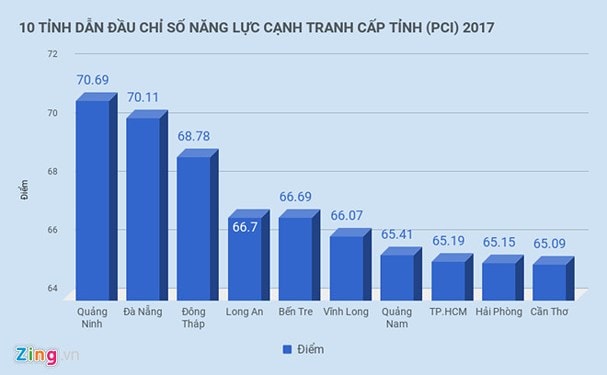
(Baonghean.vn) - Conducted for the 13th consecutive year, the 2017 PCI report is based on feedback from more than 10,000 domestic private enterprises and nearly 1,800 foreign-invested enterprises in Vietnam... In the 2017 PCI ranking, Nghe An is in position 21, leading the North Central region (up 4 places compared to 2016) with a score of 63.25 out of 100.

Nghe An's PCI index rose 4 places, ranking 21st nationwide.
(Baonghean.vn) - This information was provided by Comrade Nguyen Xuan Duong - Deputy Secretary of the Provincial Party Committee, Chairman of the Provincial People's Committee, on the morning of March 22nd at the online quarterly meeting for the first quarter of 2018.
Over a long journey, PCI has now become the voice representing the needs, hopes, and aspirations of Vietnam's private business community, directly and powerfully conveying this voice to policymakers at both the central and local levels.
What is PCI?
 |
PCI stands for Provincial Competitiveness Index, which translates to "Provincial Competitiveness Index" in Vietnamese. It's an index that assesses and ranks the governments of Vietnamese provinces and cities based on the quality of their economic management and the creation of a favorable business environment for the development of private enterprises. This is a collaborative research project between the Vietnam Chamber of Commerce and Industry and the Vietnam Competitiveness Initiative (a project funded by the United States Agency for International Development - USAID).
This index was first piloted in 2005 for 42 provinces and centrally-administered cities, and from 2006 onwards, all provinces and cities in Vietnam were included in the ranking, with the component indicators also being strengthened.
Purpose of developing the PCI index
 |
The PCI index is not intended for purely scientific research or to praise or criticize provinces with high or low PCI scores. Instead, the PCI index seeks to understand and explain why some provinces and cities outperform others in private sector development, job creation, and economic growth, thereby providing useful information for provincial and city leaders to identify areas and methods for implementing economic governance reforms most effectively.
The unit responsible for implementing and publishing the PCI index.
The Provincial Competitiveness Index (PCI) is currently compiled by the Vietnam Chamber of Commerce and Industry (VCCI) with support from the United States Agency for International Development (USAID). The PCI is a collaborative effort by a team of domestic and international experts from VCCI.
Who participates in the PCI assessment?
The PCI (Provincial Competitiveness Index) is based on the perceptions and assessments of private sector businesses operating in various localities. State-owned enterprises, foreign-invested enterprises, and other investors are not included in the PCI survey.
PCI construction methodology
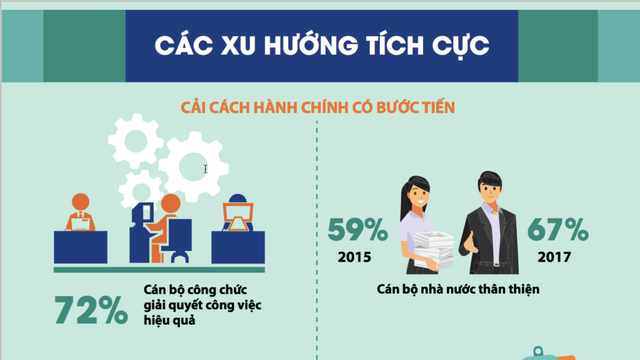 |
To develop the PCI (Provincial Competitiveness Index), VCCI conducts surveys of businesses in provinces and cities using a randomized, stratified sampling method. Each year, approximately 10,000 private businesses respond to the PCI survey. In addition to survey data, the VCCI PCI research team also utilizes other published information from ministries and agencies to build this index.
First published in 2005, the PCI had 8 component indicators; in 2009, the PCI methodology was revised to 9 component indicators, including: 1) Low market entry costs; 2) Easy access to land and stable business premises for businesses; 3) A transparent and open business environment, with businesses having equal access to necessary information and legal documents; 4) Minimal informal costs; 5) Minimal time spent by businesses on administrative procedures and inspections; 6) Dynamic and pioneering provincial leadership; 7) Business support services provided by the public and private sectors; 8) Good labor training policies; and 9) A legal and judicial system for fair and effective dispute resolution.
What is the significance of PCI in local business operations?
 |
By standardizing scores around economic governance practices, the PCI index encourages provincial governments to improve the quality of their governance. And by excluding the influence of fundamental factors contributing to economic growth in a province such as geographical location, infrastructure, market size, and human resources, the PCI index helps identify and focus on achievable good economic governance practices at the provincial level.
The PCI (Provincial Competitiveness Index) is built on the basis of assessments from businesses, therefore this index objectively and truthfully reflects the investment and business environment of a locality. The PCI reflects the actual economic management of provincial governments, its strengths and weaknesses, and identifies which governments have good economic management and which businesses are satisfied with. From this, provincial governments can identify weaknesses in their business environment that need to be addressed to meet the requirements of businesses.
Therefore, the PCI is considered an important "voice" of private enterprises regarding the local business environment, a reliable source of information on investment locations, and a crucial driving force for reforming the provincial business environment.