
Admire the tea harvesting scenery and witness breathtaking sunsets.
During this time, visitors to Moc Chau can admire the bustling scene of tea harvesting by local farmers and plantation workers.
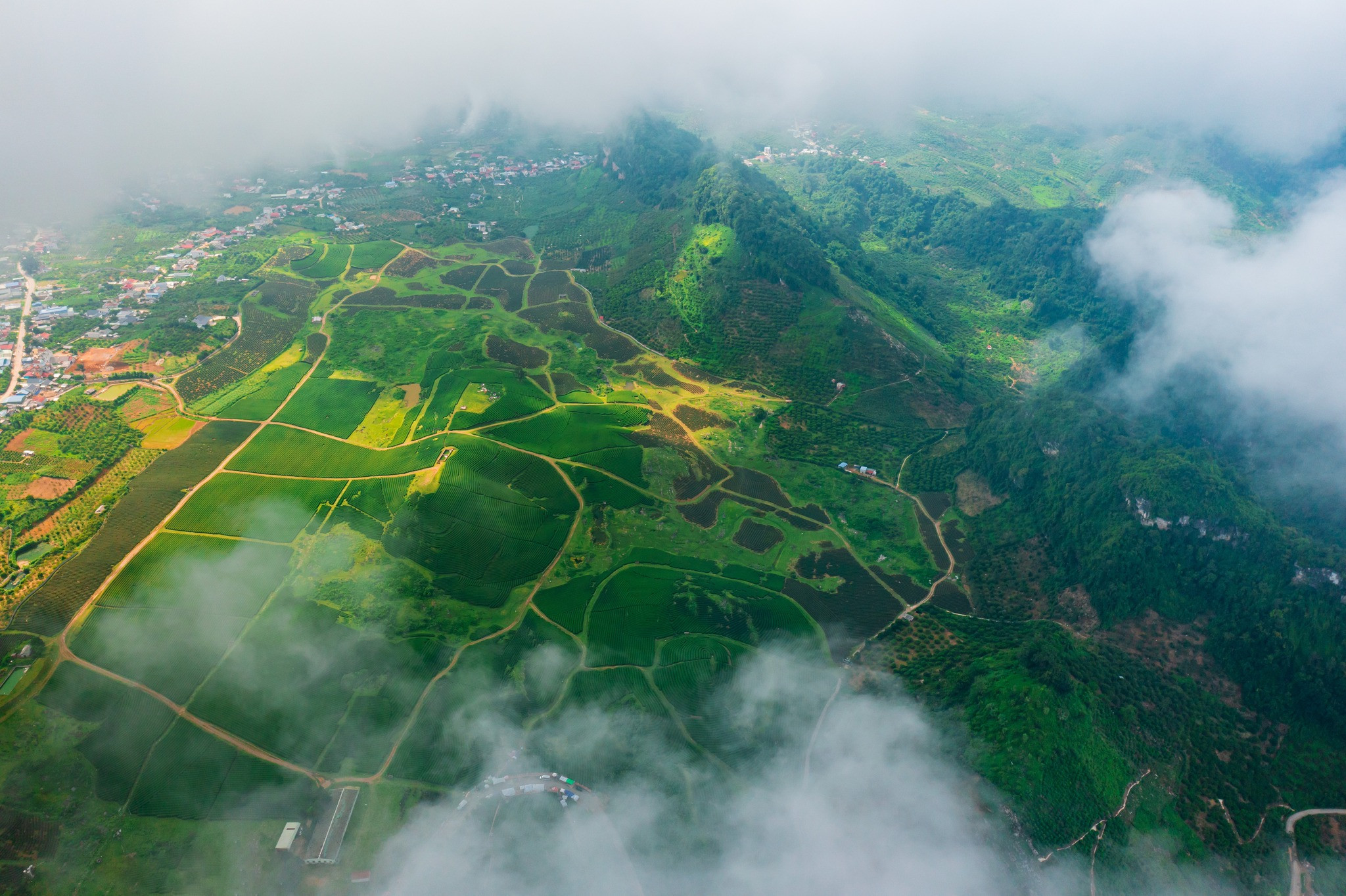
At any time of year, Moc Chau (Son La) is always enveloped in the vibrant green of its tea hills. For over 60 years, tea has been cultivated and taken root on this plateau, through many ups and downs. Tea is not only a specialty that helps local people develop their economy, but also attracts tourists from all over to admire the scenery, take photos, and contribute to building the image of Moc Chau as a tourist destination.
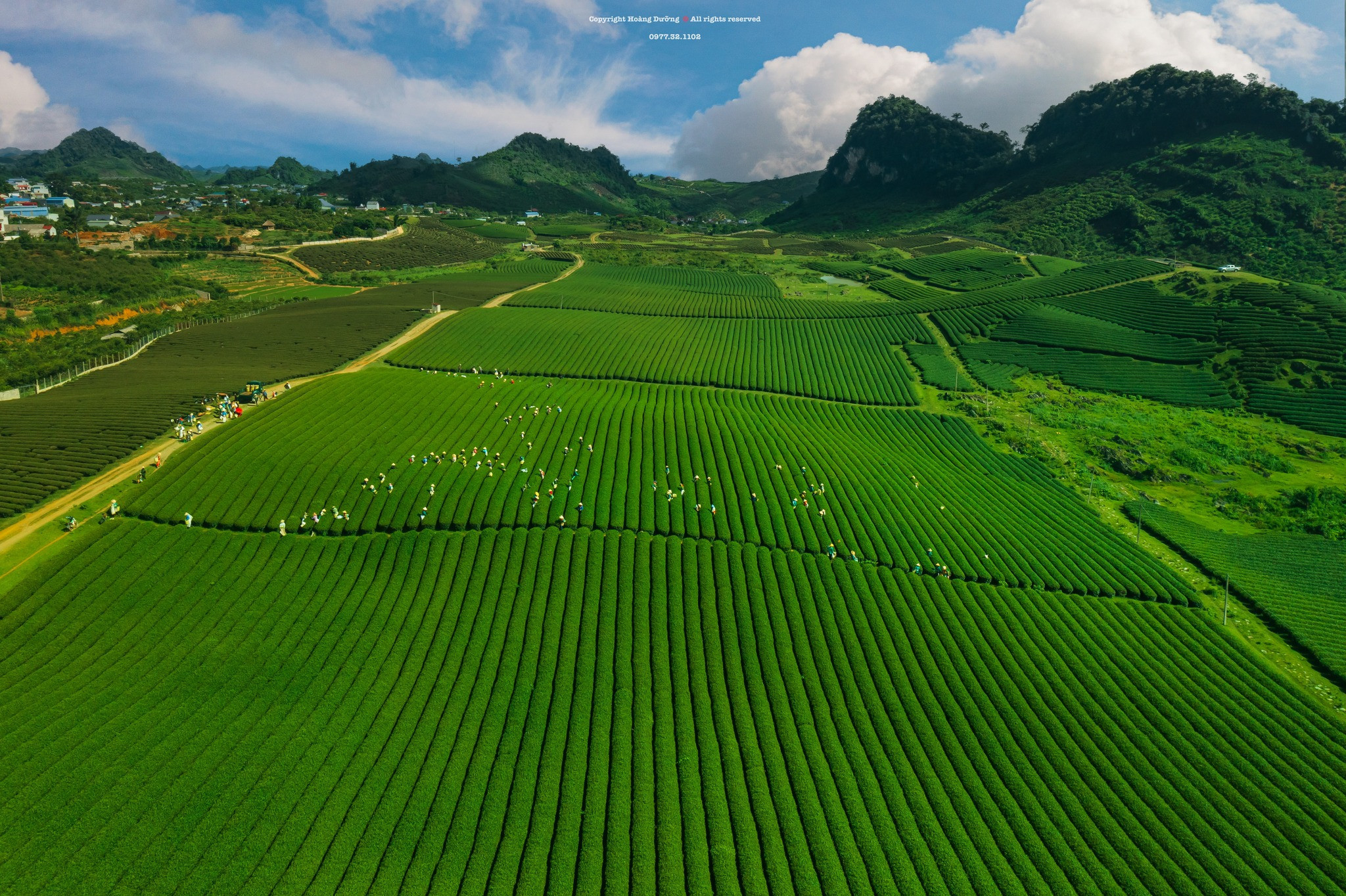
Visitors can ride motorbikes, navigating winding hairpin bends to cross from hill to valley, admiring the magical transformation of the natural landscape. The fragrant aroma of tea wafts through the air.
Moc Chau boasts four of the most beautiful tea hills for tourists to visit: Tan Lap Tea Hill 1, 2, 3, and the Heart-shaped Tea Hill. Each location possesses its own unique beauty, attracting photography enthusiasts and tourists alike.
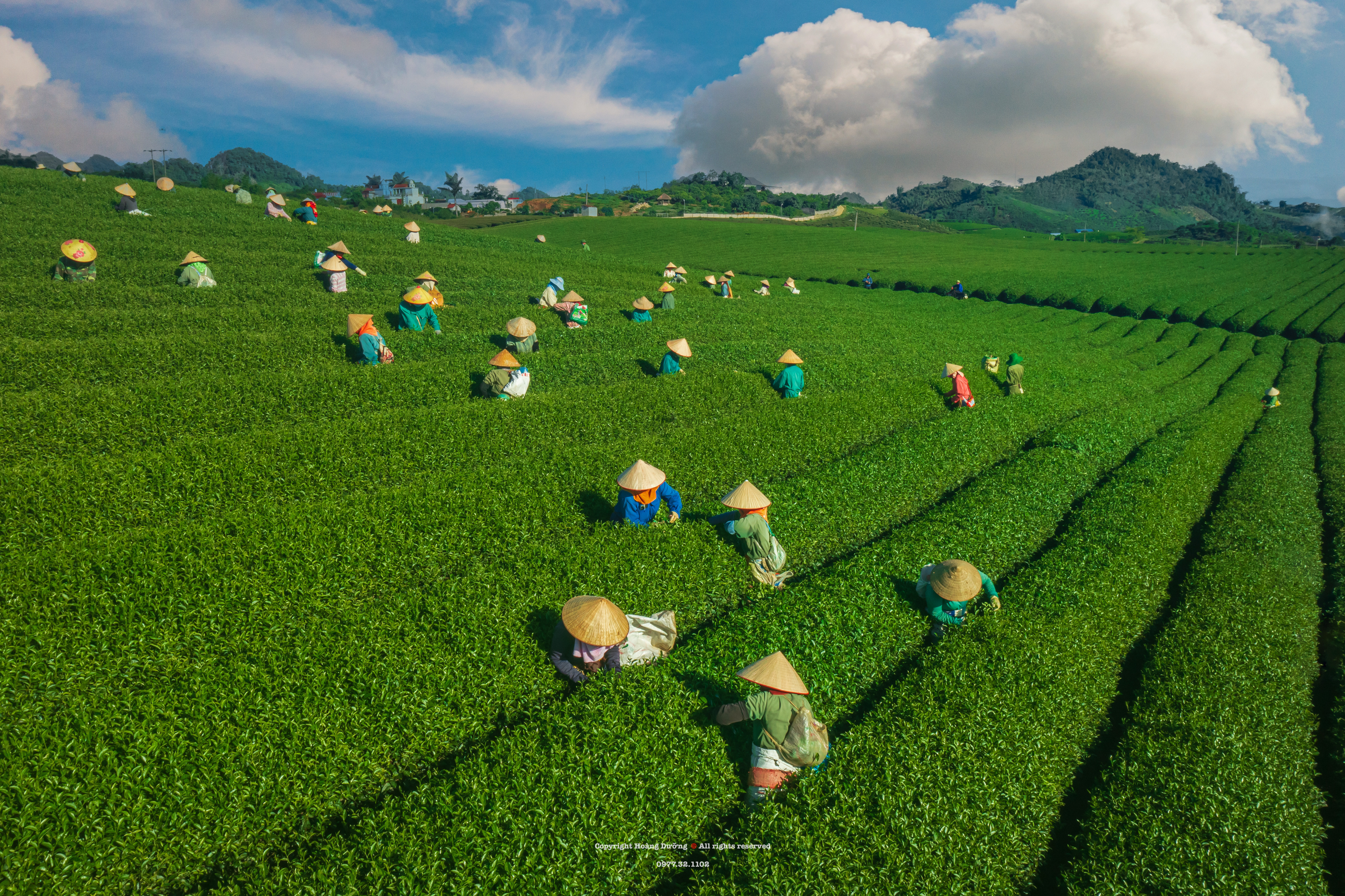
During the summer months, visitors to Moc Chau can admire the bustling scene of tea harvesting by local farmers and plantation workers.
In mid-July, photographer Hoang Duong (Hanoi) went to Moc Chau to create a series of photographs of the tea harvest. The location Duong chose was the Sugar Cane Sub-area - Heart-shaped Tea Hill, about 7 km from the town center.
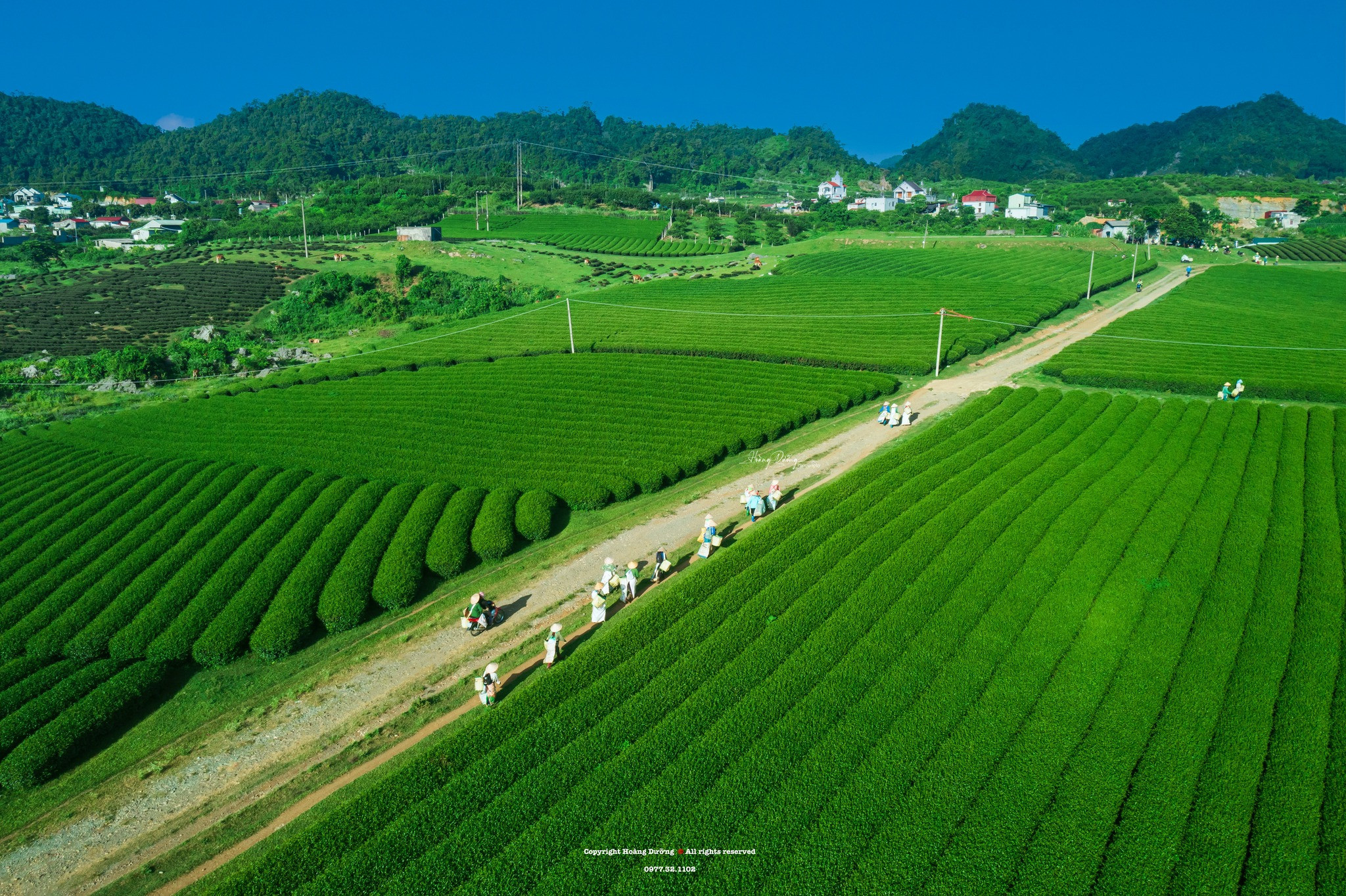
“Unlike the hustle and bustle of the district center, this place has a peaceful, gentle, and romantic beauty. I’ve been to Moc Chau many times, but this is the first time I’ve witnessed the people harvesting tea so busily,” Mr. Duong said.

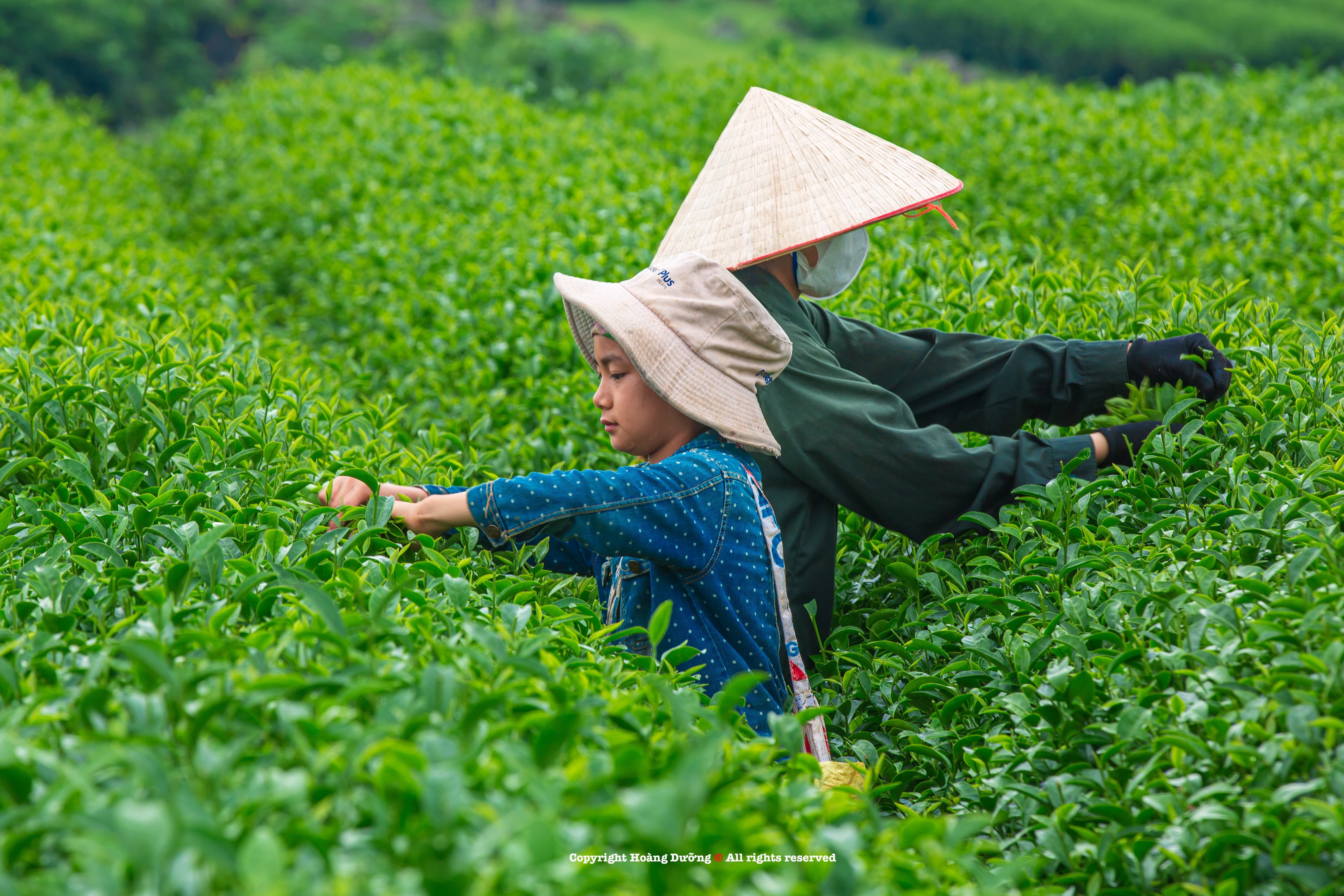
Tea plantation workers or local farmers usually start work at 7 a.m. Their hands move rhythmically and quickly. On average, they receive 3,000 dong per kilogram of tea. Those who pick quickly can earn 300,000 dong per day.

The two best times to photograph tea hills are from mid-March to mid-April and from mid-July to mid-August each year - when the young buds sprout and the tea hills change their colors, bursting with vitality.
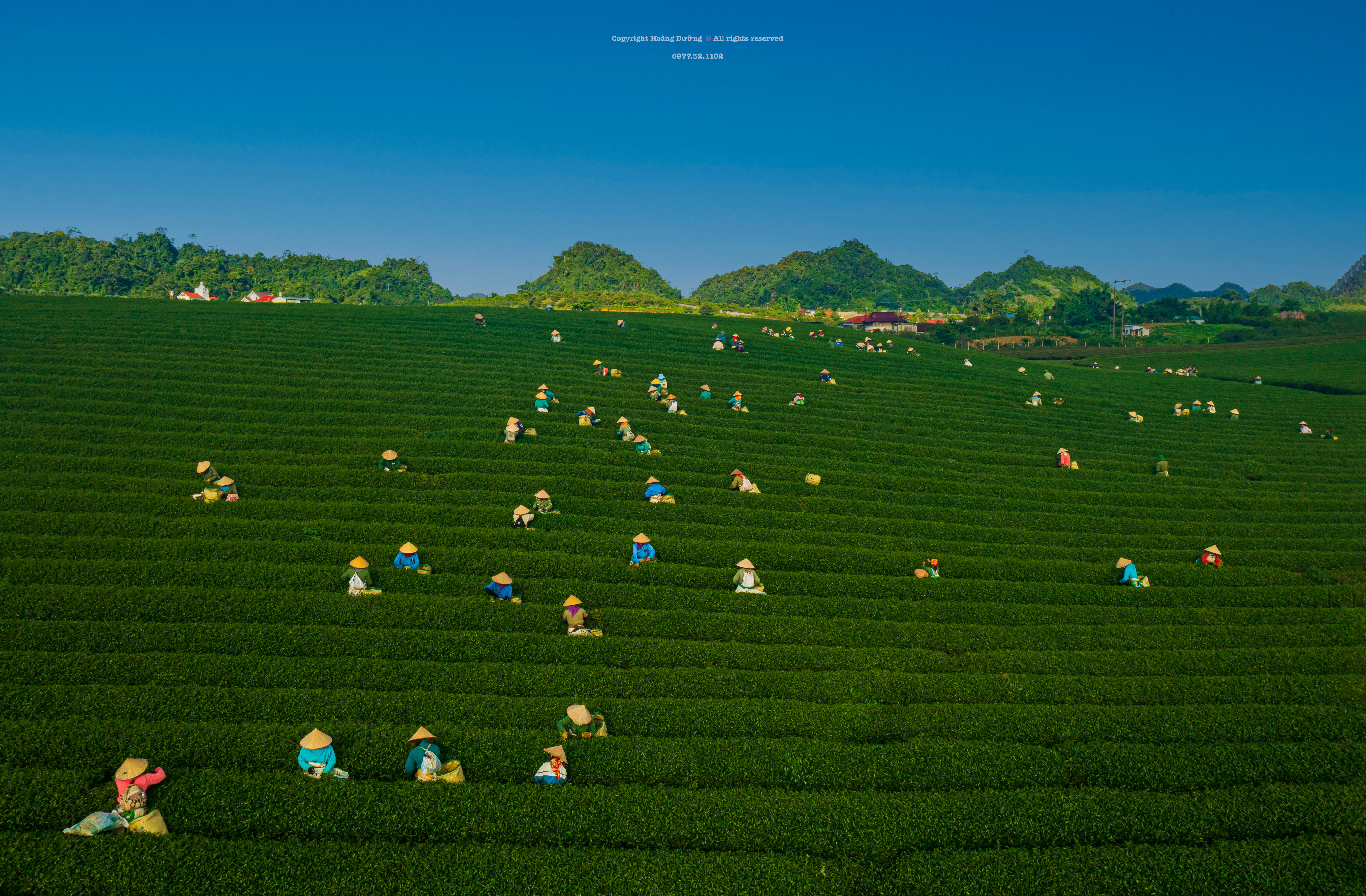
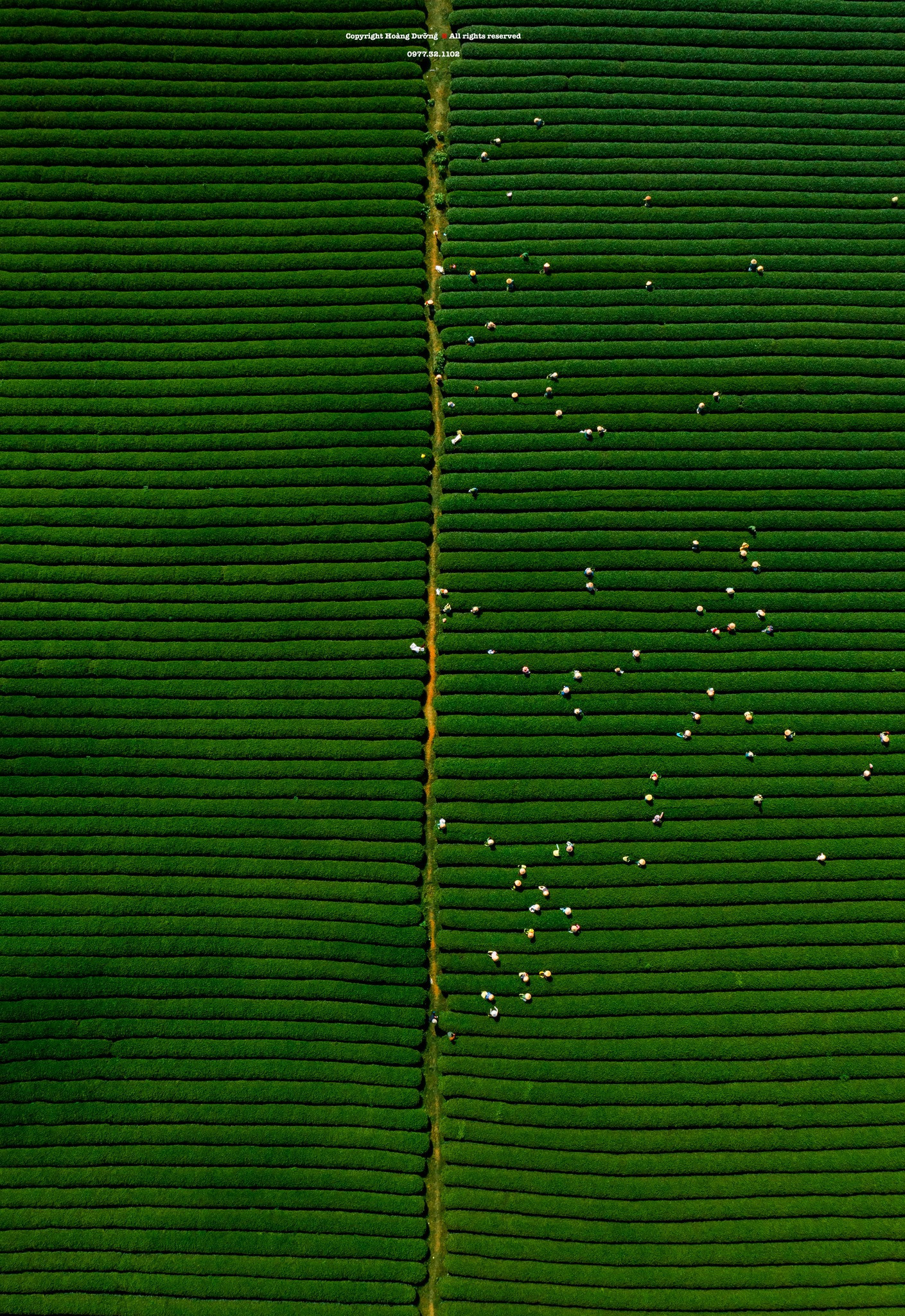
Mr. Duong spent three days following the tea pickers to "capture" many different impressive moments. Most of these were aerial shots showing the "giant," vast tea hills, with people appearing and disappearing amidst the scenery.
When visiting the tea hills, tourists can borrow baskets from farmers to take photos, learn about their tea-picking methods, or participate in agricultural experience activities.
After harvesting, the tea leaves are placed in baskets, ready to be cleaned, dried, and packaged as the final product.

Visitors should go to the tea hills in the early morning or at sunset, when the weather is cool and pleasant, and the scenery is most picturesque.

Moc Chau Plateau is a region blessed by nature with soil and climate conditions very suitable for tea cultivation. Currently, Moc Chau district has over 2,100 hectares of tea plantations, with an annual production of over 25,000 tons of fresh tea leaves. In addition, there are over 10 companies, enterprises, and factories processing fresh tea leaves, with a capacity of approximately 300 tons/day; providing employment for over 3,000 households in the raw material area and about 600 regular workers in these companies and enterprises.
Moc Chau has now developed a conservation plan for its grasslands and tea hills to serve tourism.


