Po Klong Garai Tower is the most magnificent and beautiful remaining Cham tower complex in Vietnam, possessing significant historical and cultural value, and attracting tourists from all over the world.
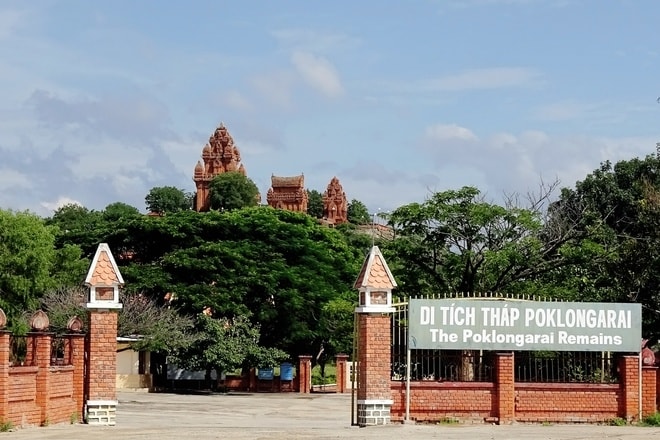 |
| The Champa kingdom has declined, all that remains are ancient, dilapidated temples and towers such as My Khanh Tower in Hue, Banh It Tower in Quy Nhon, and Nhan Tower in Tuy Hoa… But along the Champa land from North to South, to the Ninh Thuan and Binh Thuan regions, formerly known as Panduranga, Champa villages still exist, maintaining their culture, worshiping and referring to the towers by the names of their divine kings: Po Rome, Po Tam, Po SahInu… |
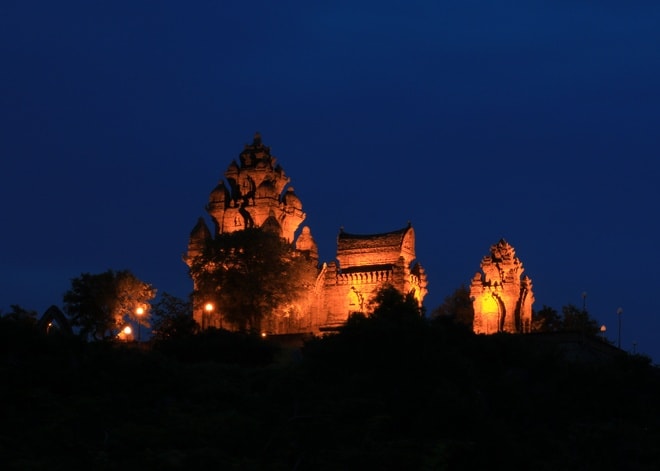 |
| Among the remaining relics, the tower complex named after the god-king Po Klong Garai is the most sacred and magnificent. |
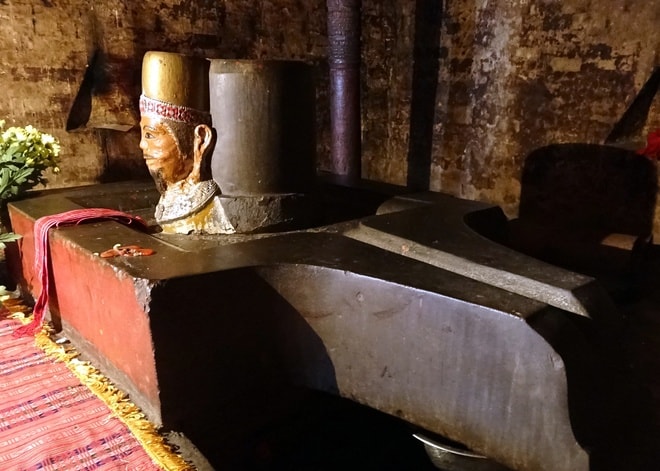 |
| The Po Klong Garai Tower is a memorial to Klong Garai, a king who has been mythologized. According to legend, the king's mother was of unknown origin, found by an old couple in a bundle of cloth on the Nha Trinh dam. She became pregnant after drinking water from a large rock in the forest and gave birth to an ugly child covered in sores, whom they named Po Ong. Growing up, Po Ong herded buffalo and, while sleeping, a dragon wrapped itself around him, and all his sores disappeared. When the king died, a white elephant from the royal court ran out, knelt before Po Ong, and invited him to the royal court. From then on, the people revered him as king, taking the name Po Klong Garai. |
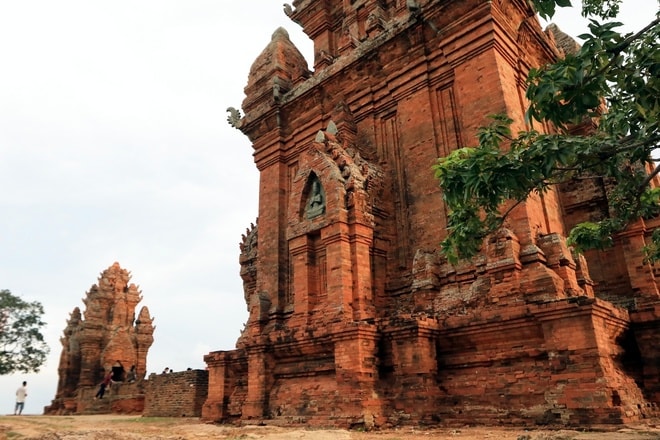 |
| The Po Klong Garai Tower is built on the summit of Trau Mountain, 5 km northwest of Phan Rang city, Ninh Thuan province. It is one of the largest and most well-preserved Cham tower complexes to date. |
 |
| The towers were built by King Jaya Simhavarman III (Che Man) in the late 13th century. Currently, three towers remain: the gate tower, the fire tower, and the main tower. A small shrine to the west was recently established by the Cham people after liberation (1975) to worship the king's wife, Bia Kol. |
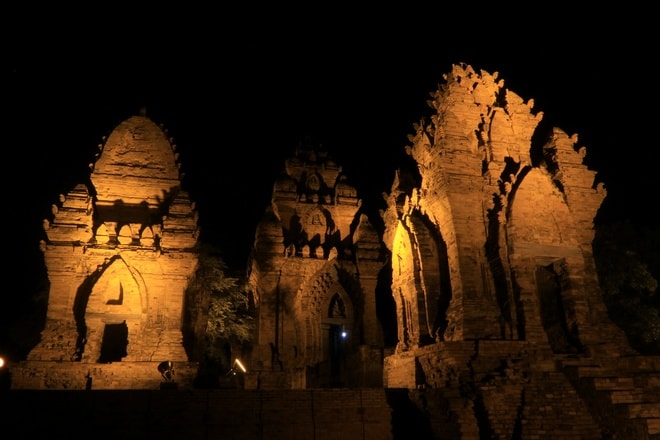 |
| The beauty of Po Klong Garai is not concentrated in each individual tower, but rather in a harmonious whole with the view towards the mountaintop. |
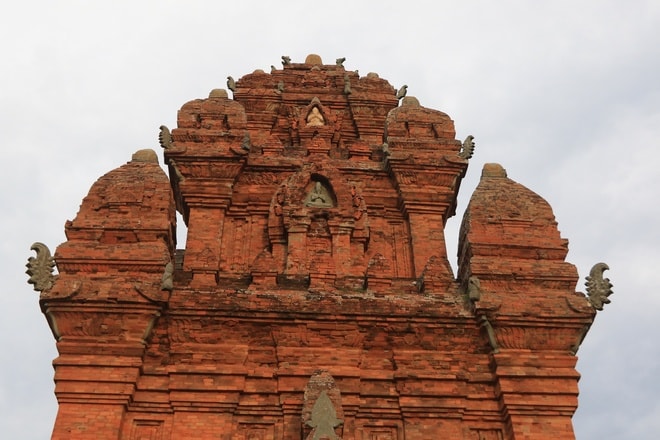 |
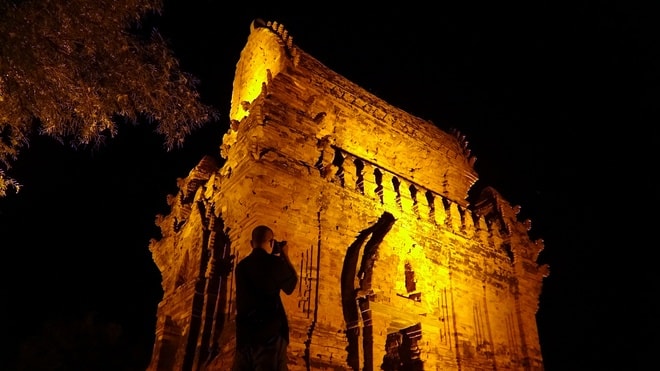
| The three towers are arranged in a continuous sequence along a horizontal axis, oriented east-west. From a distance, layers of roofs gradually rise, mimicking the majestic Mount Meru with its ear-shaped leaf motifs. |
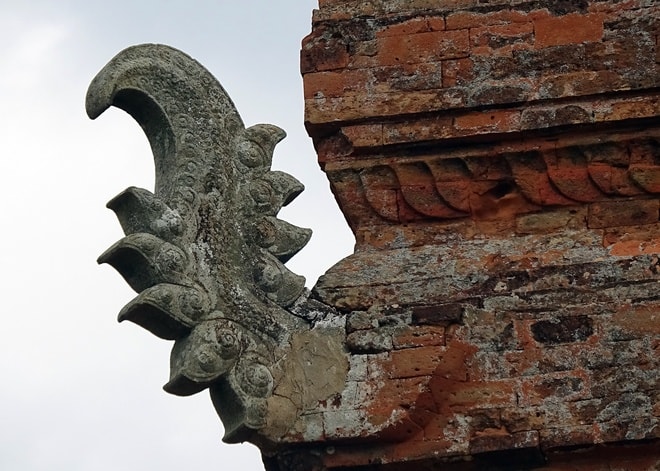 |
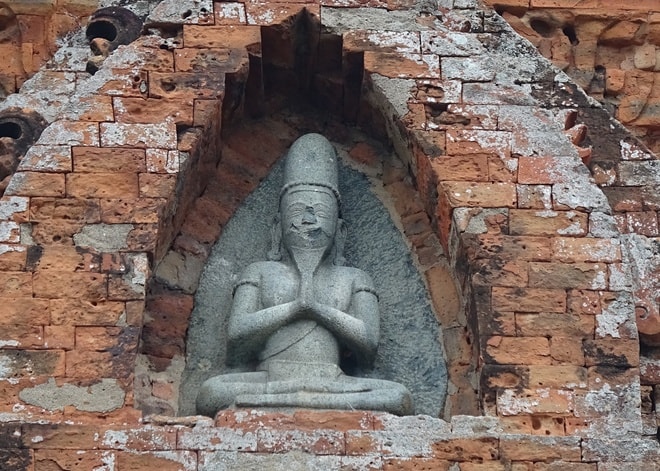
| Most notable in the tower architecture is the system of sculptures on the main tower roof. Every Cham tower has a roof that mimics Mount Meru from Indian mythology. At Po Klong Garai, layers of roofs overlap, interspersed with sculptures hidden from all four sides, or reliefs of seated figures hidden in the hollows of Bodhi leaves, and statues of fairies protruding from the corners. |
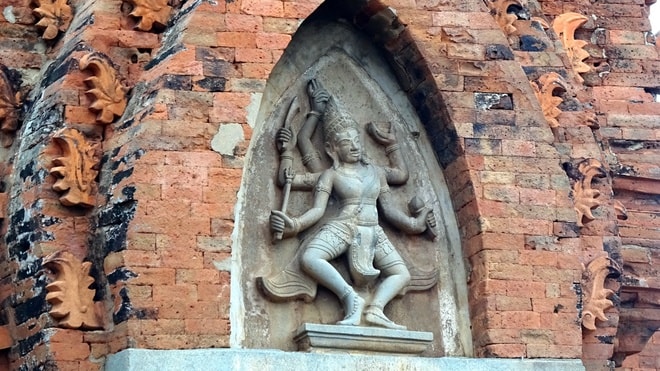 |
| The statues and tower spires are layered, casting shadows on each other, creating a sense of both hierarchical order and a mesmerizing interplay. A relief depicting Shiva dancing is located on the main tower's entrance, visible through the gate. |
 |
| Each year, the Cham people hold three festivals at the tower: the Tower Opening Ceremony, the Kate Festival (worshipping the Father God), and the Cambun Festival (worshipping the Mother God). During these days, the main tower gate is opened, and people from Cham villages in the area flock to participate in the ceremonies. On other days, Po Klong Garai Tower is a tourist attraction and green park that draws visitors from all over. |
According to VNE



