
Russia's tactic of using inexpensive UAVs to repel successive Ukrainian counterattacks.
Besides suicide drones, Russia is also actively using reconnaissance drones to gain the initiative and create new turning points on the battlefield. Thanks to this, as soon as the defensive line is breached, Russia can detect it in time and devise a plan to repel the counterattack.
Since October 10, 2022, when Russia retaliated fiercely for the bombing of the Kerch Bridge (Crimea), international observers' attention has been focused on Russia's increased use of the UAV that Russia calls Geran-2 (and India calls it Shahed-136).
These UAVs, reportedly purchased from Iran, cost less than $20,000. According to multiple sources, these UAVs have eliminated one-third of Ukraine's power infrastructure, despite Ukraine receiving Western-supplied man-portable air defense systems (MANPADS) and airborne early warning and control systems (AWACS).
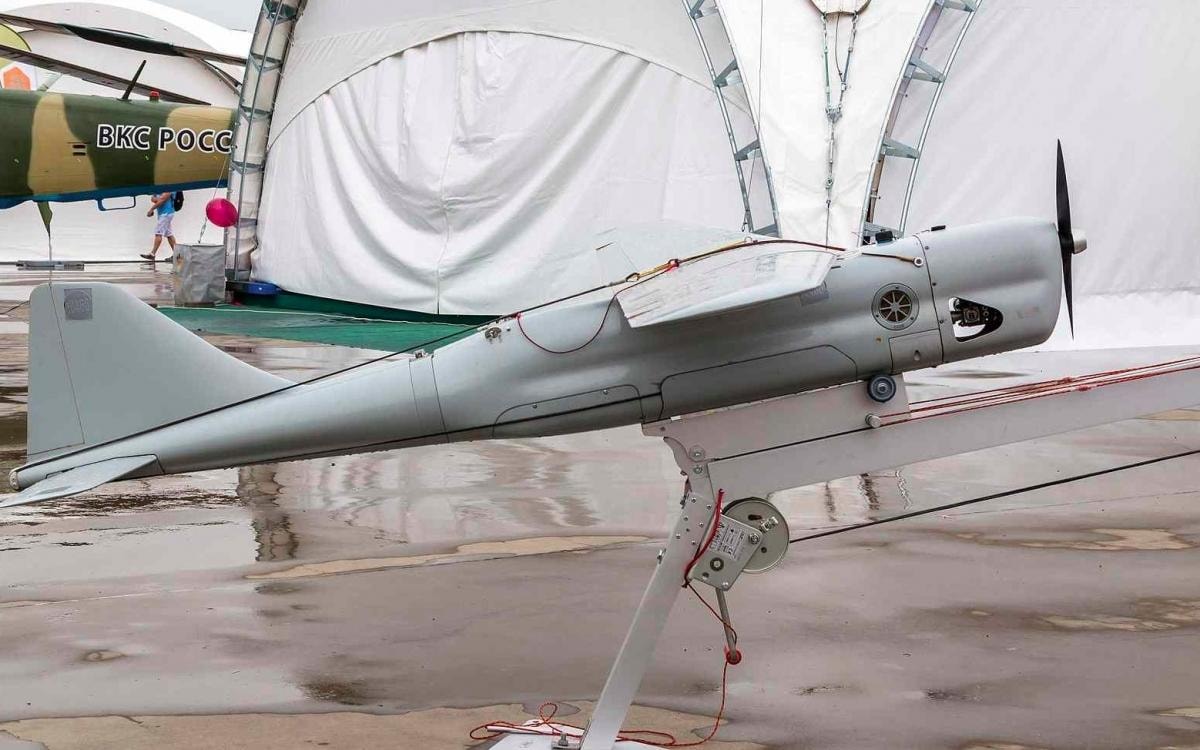 |
Russian Orlan-10 reconnaissance UAV on its launch pad. Photo: Wikipedia. |
Aerial vision and hearing are incredibly sharp.
Russia did not stop at the aforementioned imported Shahed-136 suicide drone. While Ukraine and Western advisors were trying to counter that drone, Russia intensified the use of inexpensive drones (including reconnaissance drones) that it developed and manufactured itself, this time along the entire front line, thereby greatly complicating Ukraine's counterattack.
Since the beginning of October, Russia has not had to relinquish any additional territory it previously occupied from Ukraine, even though Ukraine still holds a numerical advantage along the front line.
Ukrainian forces have employed highly mobile offensive tactics to fiercely attack the numerically outnumbered Russian forces, and this has yielded significant results for Ukraine since it began its counteroffensive on September 6th.
Initially, Ukraine's frontline troops easily found gaps in their defenses.Russian front lineAnd the breakthroughs were easy. But now, in October, Ukrainian forces have encountered swift and determined resistance from Russia, resulting in significant Ukrainian casualties.
Ukrainian spokesman Oleksiy Arestovych recently told the media that the situation of the Ukrainian armed forces on the Kherson front “is changing in an unpleasant way.”
In fact, Russia has mobilized some of its reserves, but many of its new recruits are still undergoing training. So, what is the main factor that has given Russia its recent advantage?
Observers believe that one of the factors contributing to Russia's recent success is the large-scale deployment of inexpensive reconnaissance UAVs, operated by Russian forces stationed along defense lines.
In September, Ukrainian forces quickly found gaps in the Russian lines based on intelligence provided by US satellites as well as reconnaissance equipment such as RC-135 aircraft.
Currently, Ukrainian forces continue to spot vulnerabilities and achieve breakthroughs. The difference is that Russian forces quickly detect breaches and rush in to fill them. They detect incursions as soon as they occur.
Russia's secret lies in a reconnaissance UAV developed by Russia. This UAV detected the infiltration of Ukrainian troops.
Russia launches mass production of UAVs, reducing the West's advantage.
Russia's supply of reconnaissance UAVs has increased significantly recently.
Currently, Western speculation suggests a connection between Russian UAVs and the disappearance of several high-speed cameras in Sweden. This is based on the fact that Russia's Orlan-10 multi-purpose UAVs also use Canon EOS 800D cameras. There are reports that the camera body of these Russian UAVs is attached by wire to a steel plate, with an 85mm lens protruding from the UAV's casing.
However, for Russia, the important thing is that they have found a very effective way to counter Ukraine's advantage: access to American satellites and intelligence surveillance equipment.
Furthermore, there is evidence suggesting that Russia may have developed all the necessary hardware to mass-produce surveillance UAVs.
According to the Russian Ministry of Industry and Trade, the Almaz-Antey company recently launched mass production of multi-functional helicopter drones for the civilian market. These drones will be assembled at the Obukhov plant in Saint Petersburg. All components of this type of drone will be manufactured in Russia using Russian materials.
Such a UAV kit would consist of one UAV, two battery packs, a tablet with pre-installed software, spare parts, etc. All of this would be packaged in a special casing.
Almaz-Antey plans to assemble 400 UAVs by November and 1,000 UAVs by the end of 2022.
Although Almaz-Antey is catering to the civilian market, the requirements for serving the Russian military have also been taken into account in their production plans.
Another noteworthy point is that when using reconnaissance UAVs, the time from target detection to firing is significantly reduced compared to using data from satellites and other intelligence-gathering devices. This explains why the Russian military reacted almost instantaneously to incursions by Ukrainian forces.
Thus, in the military race on the Ukrainian battlefield, relying on asymmetrical response measures and economic efficiency, Russia appears to have begun to neutralize the West's advantage in equipment and resources.
27/10/2022


