
Low-cost UAV tactics: The cost challenge for modern air defense systems.
The disparity between the Shahed UAV, priced at around $20,000, and the Patriot missile, costing $4 million, is changing operational thinking and forcing militaries worldwide to reassess their defense strategies.
The cost problem in modern warfare is the imbalance between inexpensive offensive weapons and expensive defense systems. The emergence of low-tech unmanned aerial vehicles (UAVs) is forcing militaries to shift their traditional operational thinking to counter large-scale, low-cost threats.
Swarm tactics and the ability to overwhelm air defenses.
According to Reuters, Iran has spent years developing and supplying UAVs to its allies on a large scale. Since late February, Tehran has deployed hundreds of missiles and more than 1,000 UAVs targeting objectives in Israel and the Gulf region. This approach prioritizes quantity over accuracy, using simultaneous launches to overwhelm enemy defense systems.
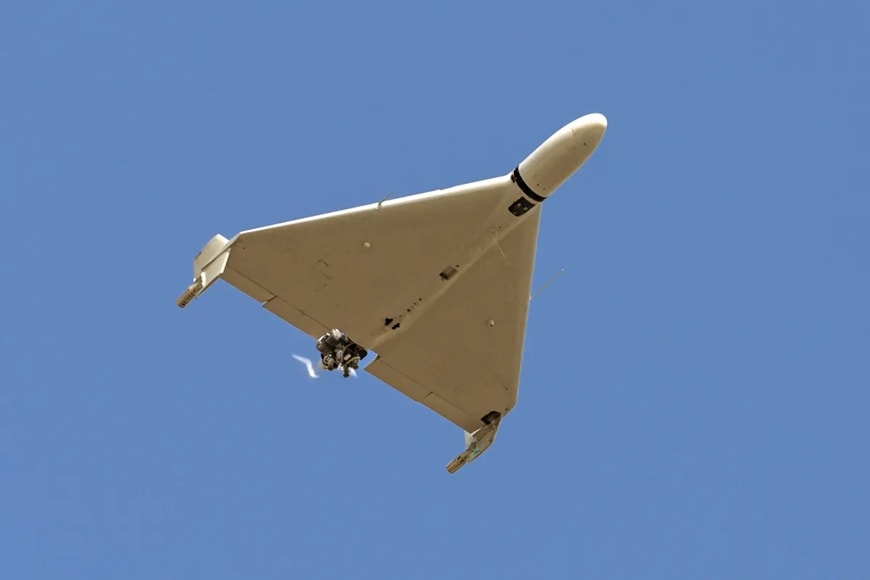
Notably, the production costs of these vehicles are very low. According to the Center for Strategic and International Studies (CSIS), a Shahed-136 UAV costs only between $20,000 and $50,000. With a range of 2,500 km, a 50 kg warhead, and a speed of 180 km/h, this type of UAV is specifically designed for swarm tactics.
The economic disparity between offense and defense.
In contrast to the low cost of UAVs, modern defense systems like the US Patriot cost up to $4 million per interceptor missile launch. These systems were designed to destroy expensive ballistic missiles, not to counter large numbers of slow-flying UAVs assembled from commercially available components.
Ian Langford, a former senior officer in the Australian Defence Force, believes this tactic aims to deplete expensive missile stockpiles. Once air defenses are overwhelmed and ammunition is depleted, the enemy will then deploy its main weapons, such as hypersonic missiles or cruise missiles, to attack critical infrastructure like seaports, airports, and oil refineries.
In addition, the human factor also makes a difference. While fighter jets like the F-15 require rigorous pilot training and carry a high risk to human life, remotely controlled UAVs offer greater safety for operators and are easily replaced if destroyed.
Seeking cost-effective defense solutions.
Elizabeth Buchanan, an expert from the Australian Strategic Policy Institute, argues that scale and cost will be key factors for innovative solutions in modern warfare. Currently, military forces are focusing on developing new countermeasures technologies to reduce reliance on expensive interceptor missiles.
Potential solutions include:
- Electronic jamming devices are used to disable control signals.
- Reusable interceptor UAVs.
- High-energy laser systems use electrical energy to destroy targets instantly at low cost.
However, most of these technologies are still in the testing phase or have limitations in range and capacity. In the near future, militaries will still have to rely on traditional air defense missile systems to protect bases and cities, despite growing economic challenges.


