
Socio-economic development policies for mountainous areas support livestock farming in the highlands of Nghe An province.
Thanks to the breeding of black chickens, black pigs, and goats supported under Sub-project 4 “Support for Livestock Development” of the National Target Program for Socio-Economic Development of Ethnic Minority and Mountainous Regions (2021-2030), the appearance of many villages in western Nghe An is gradually changing. These initial small-scale models are paving the way for the development of commercial livestock farming, creating momentum for sustainable development in the highlands.
Livestock farming thrives thanks to policy incentives.
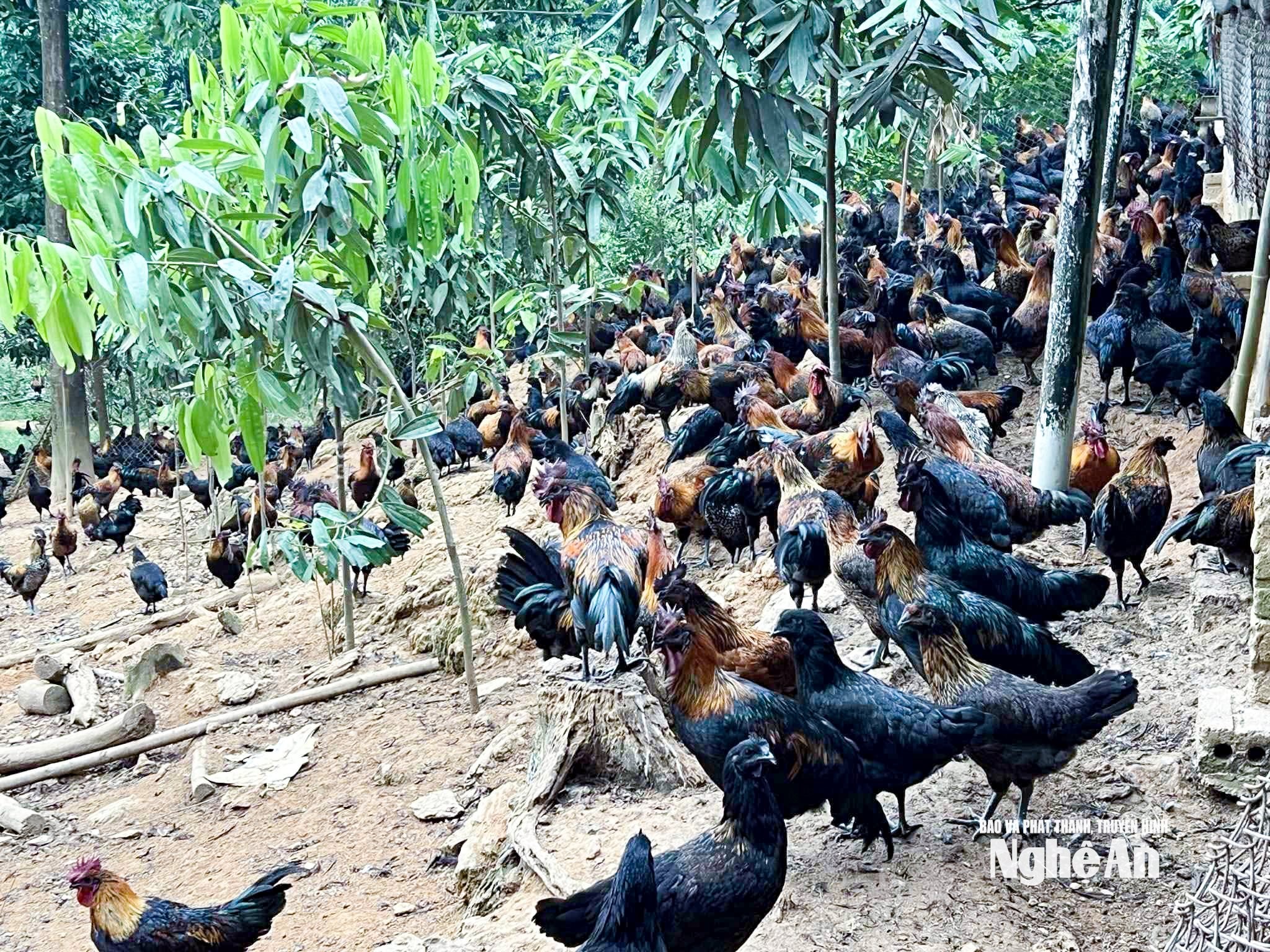
Two years ago, with support of 50 chicks from Sub-project 4, Mr. Ho Ba Long, from Huon Khe village (Huoi Tu commune), started raising black chickens. Thanks to guidance from officials on care and disease prevention, the flock has developed well and now numbers over 300. “Black chickens are raised naturally, fed corn, bran, and forest herbs, so their meat is firm and sells for a high price, from 180,000 to 220,000 VND/kg. Thanks to this model, my family no longer worries about poverty,” Mr. Long shared, his eyes shining with joy.
Following that success, the black chicken farming model was implemented synchronously in many other localities. In Na Loi, the Provincial Farmers' Association coordinated the implementation of commercial black chicken farming according to biosafety standards for three households in Na Khuong and Na Loi villages. Each household received chicks, feed, vaccines, biological products, and technical training. Thanks to strict adherence to the process, the survival rate of the flock reached 96%, and the weight at slaughter was 1.6-2 kg/chicken, significantly higher than traditional farming methods. "Previously, people raised chickens based on experience, resulting in high losses. Since receiving training, people have changed their practices, learned to clean the coops, and vaccinate regularly, with clear improvements," said Ms. Vi Hoa, Vice President of the Na Loi Commune Farmers' Association.
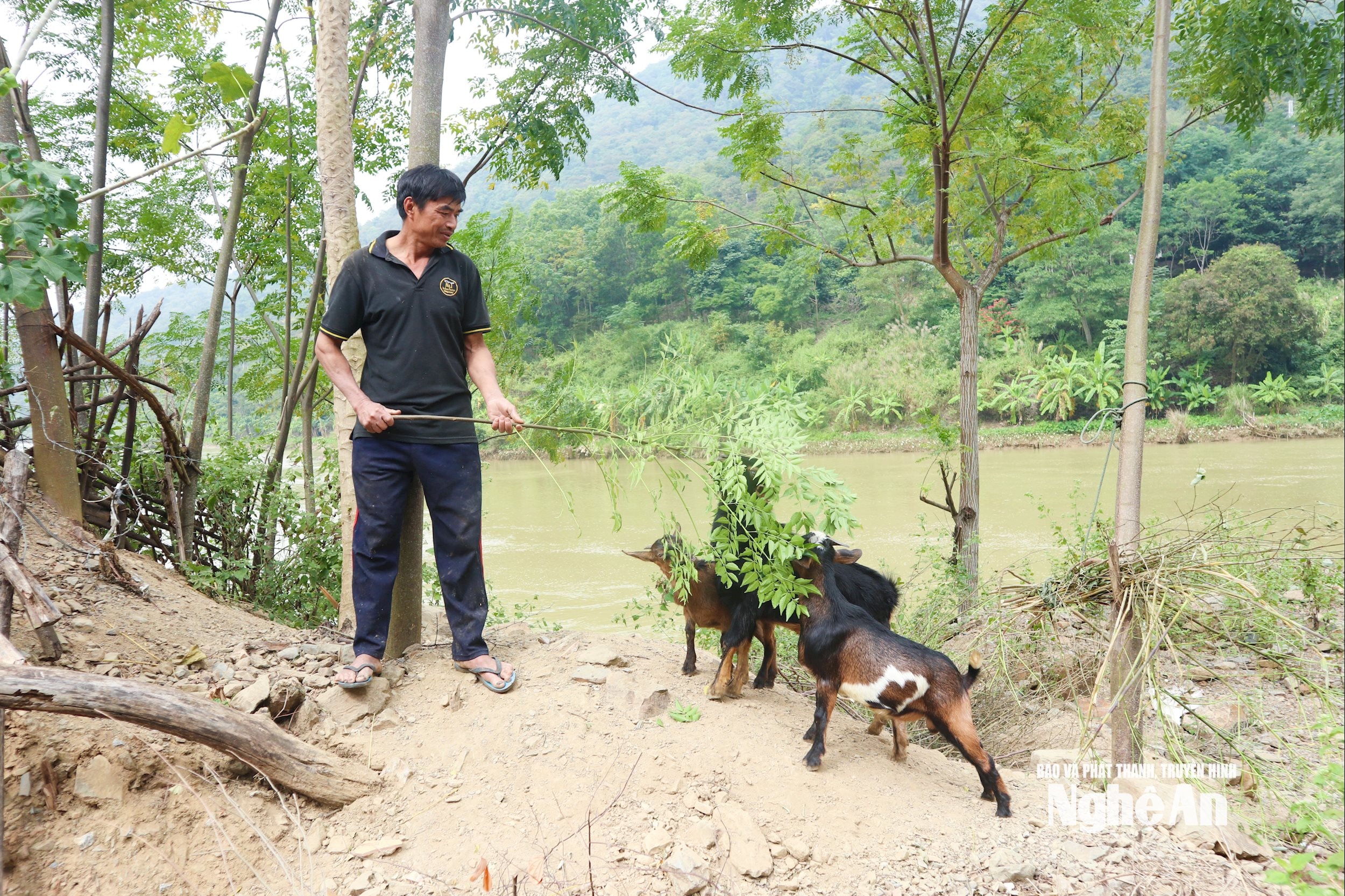
Thanks to that same support, in Nghia Khanh commune, the goat farming model is opening up a new economic development direction for many households. Mr. Ha Chi Thanh and Mrs. Truong Thi Chu's family was one of the first to receive three breeding goats to start their herd. Technical staff regularly visit to guide them on how to care for the goats and prevent diseases, so the herd is growing well and has now reached its second generation. "Raising goats is quite easy; the techniques aren't complicated, and the feed is mainly sourced from the garden or left to graze naturally on the hills, so the costs are low. The goats grow quickly and are healthy, becoming a source of hope for the family to have a stable income and improve our lives," Mrs. Chu said excitedly.
Currently, the goat meat farming movement is developing in Nung Village. To date, dozens more households have received support in the form of breeding goats, and all the goat herds are thriving, providing a stable source of income. Many households that were previously classified as poor have now risen to near-poverty status, gradually taking control of their livelihoods.

In Tam Thai commune, the "leverage of policy" is demonstrated through the model of raising indigenous black pigs. In 2023, 45 households received support in the form of piglets, including Ms. Vi Thi Nhung in Xop Nam village. Starting with 10 piglets, after 5 months she sold her first batch, recovering her capital and restocking her herd. "Now my barn has 16 pigs, both sows and piglets. Black pigs are easy to care for, eat feed and wild vegetables, grow quickly, and have delicious meat, so they are easy to sell," Ms. Nhung happily said. This model not only provides a stable source of income but also helps people utilize agricultural by-products, reducing livestock costs.
Supported livestock farming models are contributing to revitalizing the mountainous region of Nghe An. Although not yet large-scale, they have awakened a proactive spirit, changing the mindset and practices of the people. From traditional farming methods dependent on nature, they now apply technology, proactively prevent diseases, and care for their livestock. These changes are clear evidence of the effectiveness of "policy leverage," opening up a path to sustainable livelihoods for the people in the mountainous areas.
Opening up livelihoods, moving towards sustainable poverty reduction.
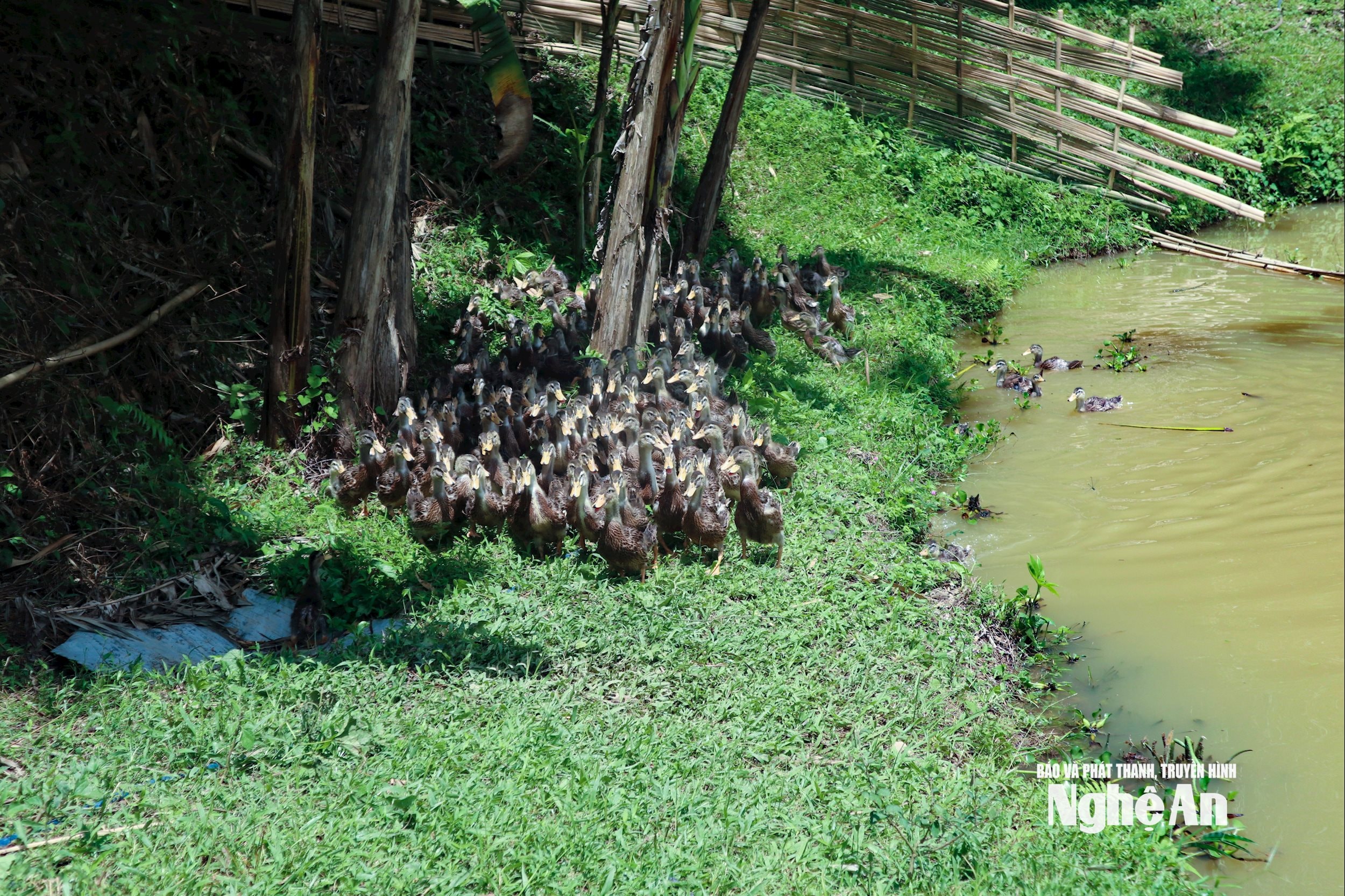
From the initial pilot models, the effectiveness of Sub-project 4 is spreading to many mountainous localities in Nghe An province. People not only gain additional livelihoods but also gradually develop a mindset of producing goods for the market, knowing how to link consumption and create brands for their distinctive local products.
In Que Phong commune, Mr. Quang Van Trung is one of the pioneering households in expanding the scale of raising native chickens. Initially, he only received support for a small flock, but after seeing the effectiveness, he boldly invested in more chicken coops and combined it with raising chickens for egg production to supply chicks. “Currently, I have over 1,500 chickens, including 500 broiler chickens and 1,000 egg-laying chickens. I also plant cinnamon leaves around the garden to both eliminate odors and provide water for the chickens to drink. This model is clean, effective, and brings good income,” Mr. Trung shared.
According to the five-year report on the implementation of National Target Program 1719, Nghe An province has supported 216 production development and livelihood diversification projects, with 9,810 households participating. As a result, the poverty rate among ethnic minority and mountainous households decreased by 15.57% compared to 2021, averaging a reduction of nearly 4% per year. The average per capita income in this region has reached over 38 million VND/year, a figure once considered unattainable for many households in western Nghe An.
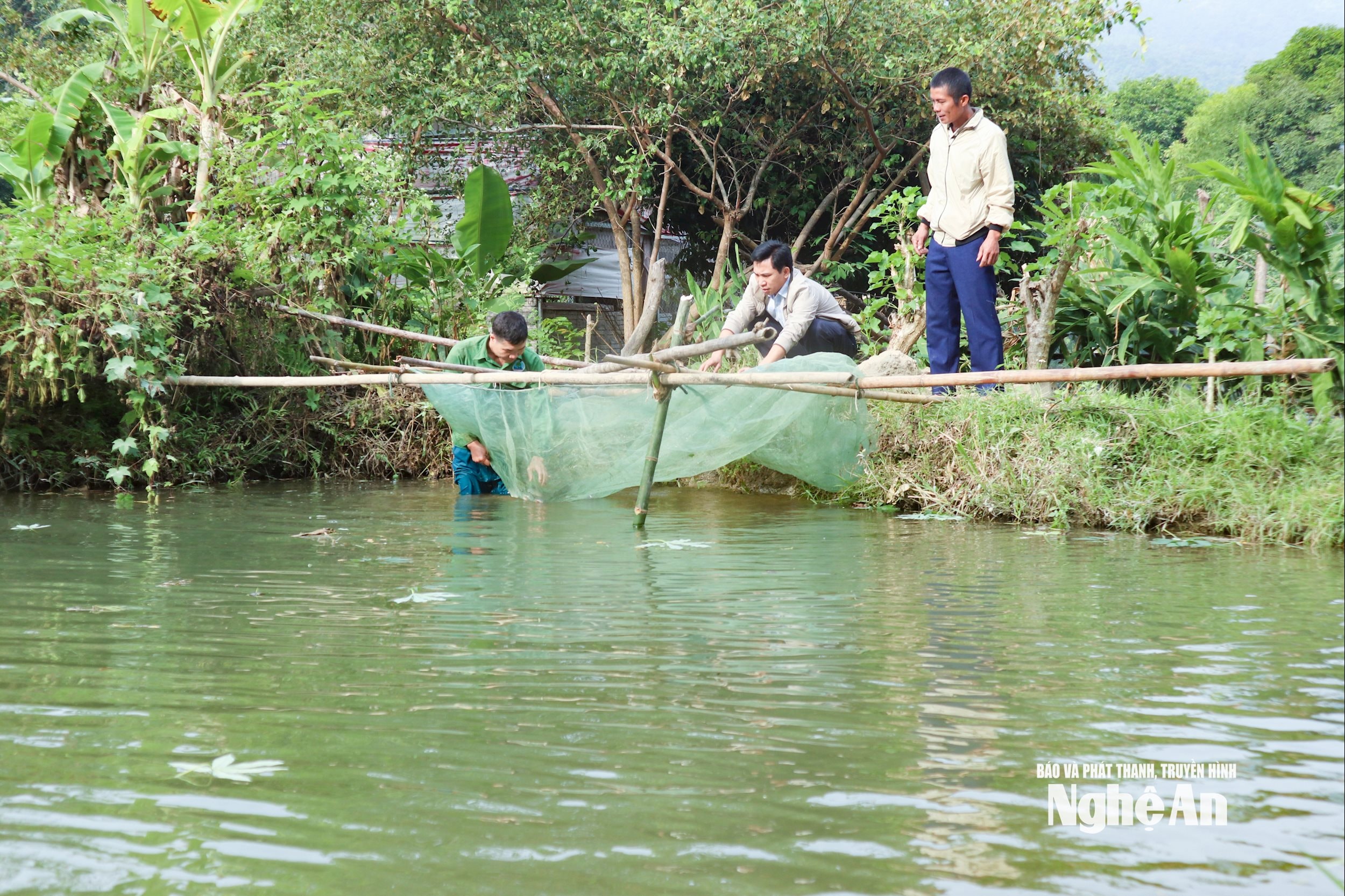
Western Nghe An province has great potential for livestock farming, especially for specialty breeds such as black pigs, hill chickens, and lake fish. However, due to small-scale production, the full potential has not been exploited. Sub-project 4 has helped people access technology, organize production towards a commodity-based approach, form value chains, and aim towards building distinctive OCOP products. This is an important step towards sustainable poverty reduction and economic development in the highland region.
The initial effectiveness of Sub-project 4 is not only reflected in the number of households lifted out of poverty, but also in the confidence and aspirations of the people to improve their lives.


