
The M2 Extreme chip and the end of the Mac Pro: How did Apple abandon its superworkstation ambitions?
Apple once developed the Extreme chip, which was twice as powerful as the Ultra, but had to cancel it due to production costs. The discontinuation of the Mac Pro marks a shift towards the more compact and optimized Mac Studio line for the AI era.
Apple once harbored ambitions to create a historical turning point, solidifying the Mac Pro workstation's top-tier position with a super-powerful processor. However, the latest information suggests that the promising "Extreme" chip project has been quietly abandoned, marking the end of the renowned Mac Pro era and making way for more cost-effective and performance-optimized solutions.
Extreme Architecture: Apple Silicon's ambition to double its power.
To realize its goal of dominating the workstation segment, Apple engineers designed an entirely new line of processors called Extreme. Technically, Extreme is positioned higher than the Ultra line – currently the company's most powerful chips. The breakthrough of Extreme lies in doubling the number of CPU and GPU cores compared to the Ultra chip, promising graphics and computing performance far exceeding the previous limits of Apple Silicon architecture.
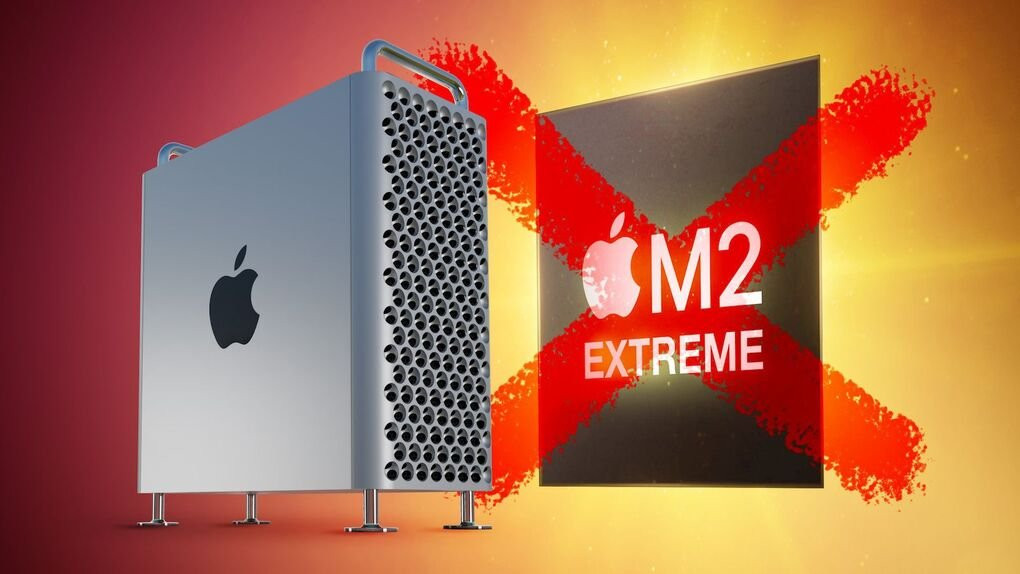
Secret prototypes and a difficult economic problem to solve.
According to Bloomberg analyst Mark Gurman, Apple successfully developed prototypes of the M2 Extreme and M3 Extreme. These chips weren't just blueprints; they were fully assembled and tested in labs, demonstrating significantly superior performance compared to contemporary chips. However, the project was ultimately halted for two main reasons: exorbitant production costs and limited market demand for the Mac Pro line.
Besides the processor, Apple also quietly developed two Mac Pro prototypes with the internal codenames J170 and J190. Notably, the J170 version still integrated an Intel chip despite being in the transition phase to Apple Silicon. This shows the company's effort to cater to professional customers who need to use discrete graphics cards via PCIe slots – a feature that the closed architecture of Apple Silicon at the time could not fully support.
The rise of Mac Studio and the era of AI processing.
Analysts believe Apple's confirmation of discontinuing the Mac Pro is an inevitable move. Since the launch of the M2 Ultra version in 2023, the company has shown little interest in upgrading the line. Instead, all resources have been focused on the Mac Studio – a compact desktop computer that boasts comparable power.
The Mac Studio is now considered the perfect replacement for the Mac Pro in Apple's product lineup. With powerful configuration options like the M3 Ultra or M4 Max, the Mac Studio not only saves space but also supports Thunderbolt 5 connectivity. This technology allows for the aggregation of system-on-a-chip (SoC) resources to create high-performance machine clusters, effectively supporting complex artificial intelligence (AI) tasks.
Looking back at the legacy of the iconic Mac Pro
First launched in August 2006, the Mac Pro was once a symbol of Apple's hardware power. This line of machines has gone through many memorable design milestones, from the cylindrical version in 2013 (often called the "Trash Can Mac Pro") to the 2019 version with its unique perforated front panel. The end of the Mac Pro's journey leaves Apple's desktop computer lineup with three main representatives: iMac, Mac Mini, and Mac Studio, marking a new chapter focused on streamlined design and modern multitasking efficiency.


