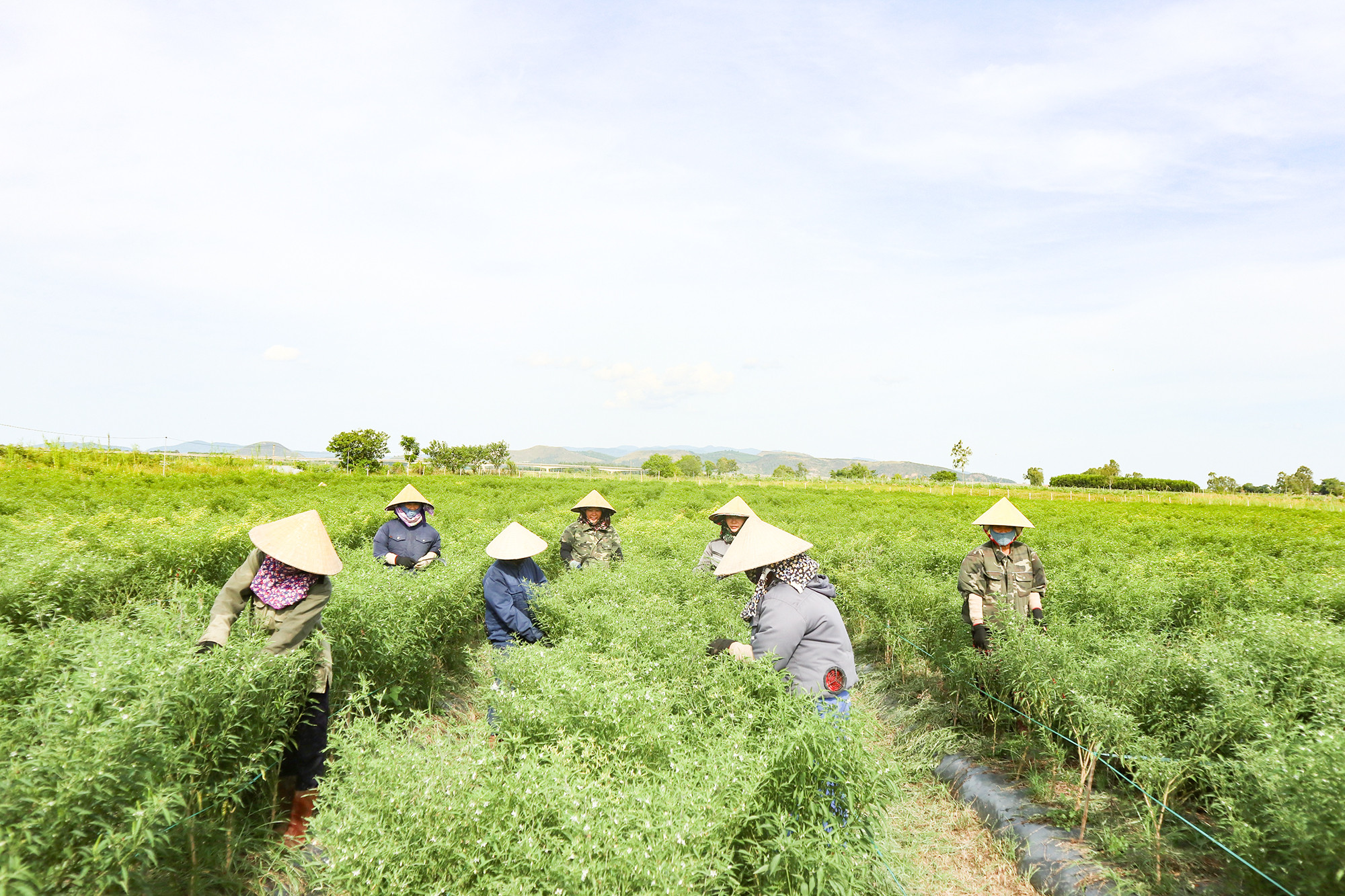
Previously, Ms. Tran Thi Thuy (Quang Thai hamlet, Trung Phuc Cuong commune, Nam Dan district) had 2.5 sao (approximately 2500 square meters) of land leased from the commune for cultivation. The sandy, barren land was suitable for growing corn, peanuts, sesame, etc., but the economic efficiency was low. After the lease ended, she returned the land to the commune and went to work as a garment factory worker in the area. However, as she shared, working as a garment factory worker at an older age, with her hands and feet becoming stiff, resulted in low productivity and limited output, leading to unstable income. Furthermore, the work required her to arrive early and return late, working shifts, which meant neglecting her household duties.
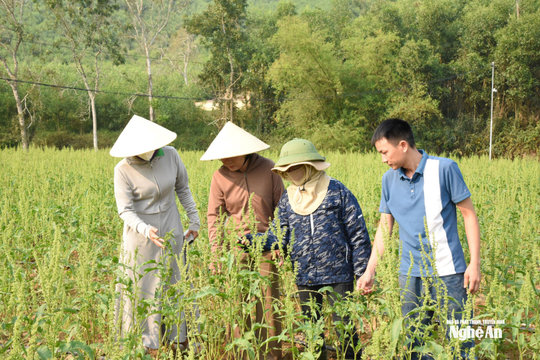
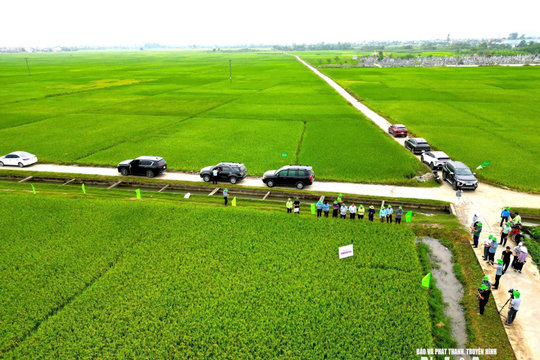
Starting in 2022, when a business leased 5% of the commune's land for clean agricultural production, covering nearly 15 hectares, the company hired workers. Dozens of farmers in Quang Thai hamlet were employed to support the production. Having experience in farming and being hardworking and diligent, the women quickly adapted.
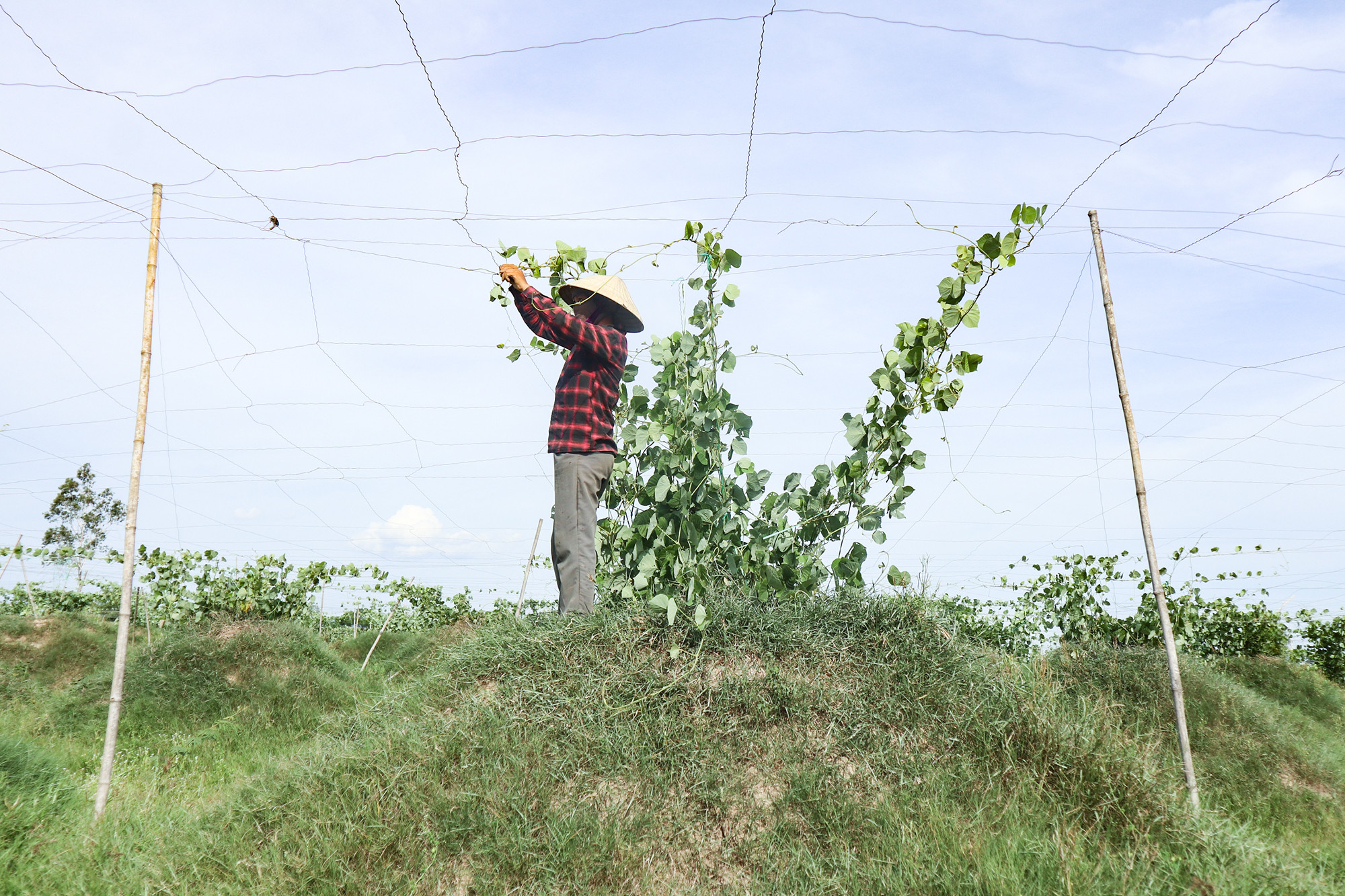
“I still weed, harvest chili peppers, climb cassava vines, prepare the furrows, build trellises… just like I used to do on my own farm. But the difference is, now I'm a worker for them, working 8 hours a day, and getting paid monthly. My income is stable, and I don't have to worry about good or bad harvests. Most importantly, I can still stay connected to the fields and the farming work I've been familiar with for decades, and I can still take care of my family,” Thuy said excitedly.
It's not just Ms. Thuy; dozens of farmers in Quang Thai hamlet have become laborers on their own fields. Working 8 hours a day, they are paid 200,000 - 250,000 VND per day. Working near home and having a stable income, everyone is happy.
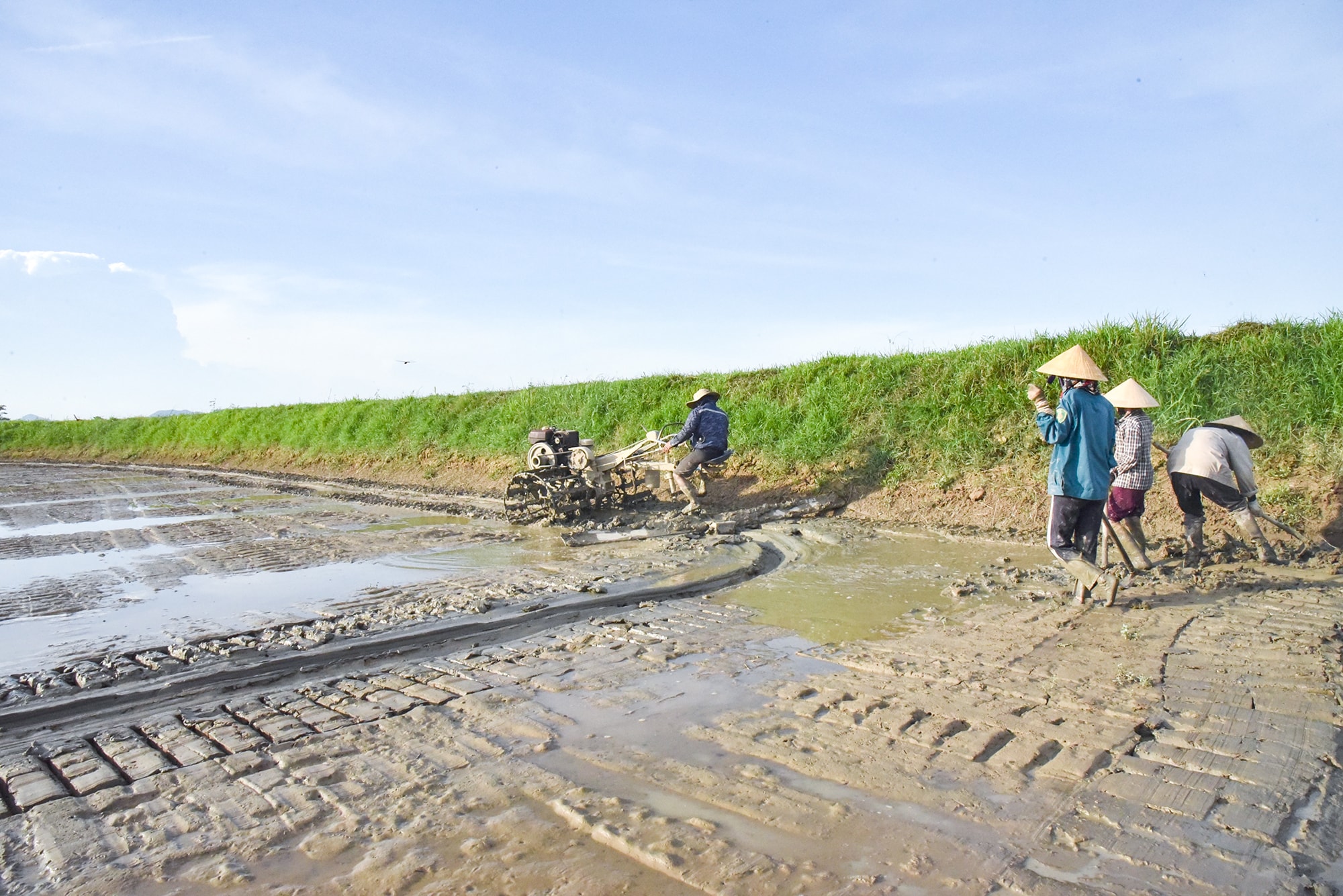
“The work is stable; diligent workers can complete 30 days of work each month, earning 6-7.5 million VND/month, which can be received at the end of the month, weekly, or in advance. Factory workers work long hours and shifts, leaving no time for housework, while farm workers can still find time to raise chickens and pigs, and take care of their rice fields…,” said Ms. Le Thi Thiet from Quang Thai hamlet.
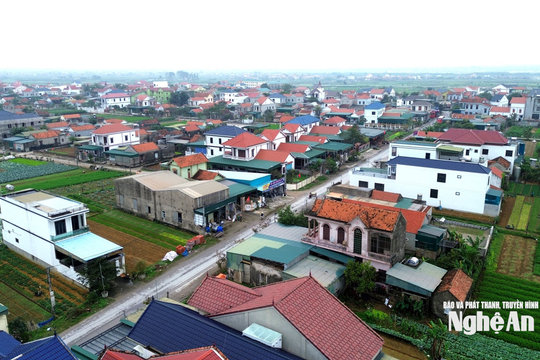
29 hectares of alluvial land in Trung Phuc Cuong commune, Bac Giang province, which previously only produced one crop and was left fallow, have now been leased by local people to a sugar company at a price of 200,000 VND per sao (approximately 1000 square meters) per year.
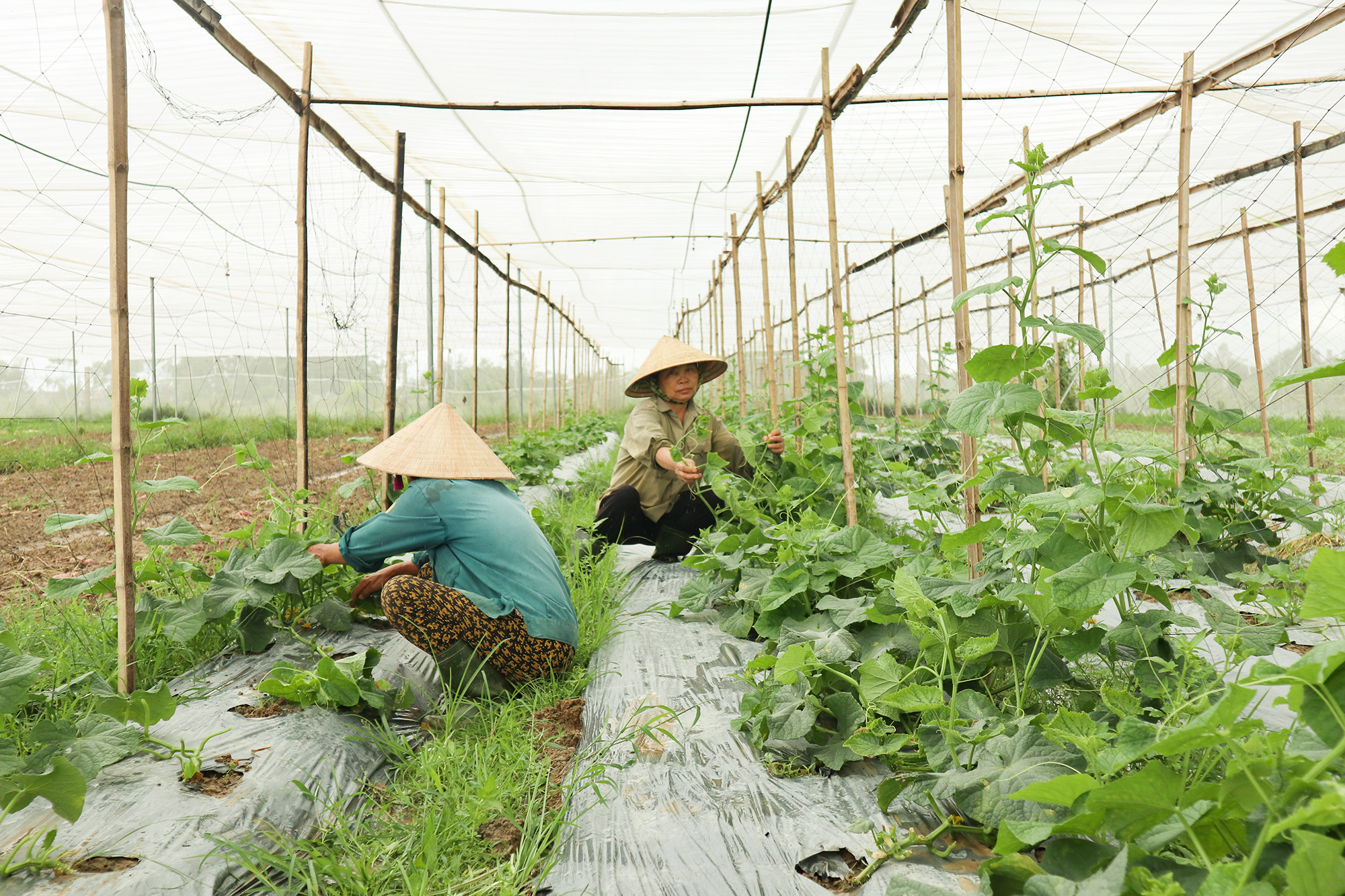
“By leasing land to businesses with clear contracts, farmers don't have to worry about losing their means of production. Besides, when they plant sugarcane on a large scale and need a lot of labor, the villagers become workers for them, from planting and tending to harvesting, so the work is year-round. Most are paid on a daily basis or based on the area they cultivate,” said Mr. Nguyen Van Hoa, Vice Chairman of the People's Committee of Trung Phuc Cuong commune.
Passing through the Da field (in Nghi Hoa ward, Cua Lo town), which was previously abandoned and overgrown with reeds taller than a person's head, it has now become a prosperous farm where workers are diligently at work. Most of them are farmers nearing 60 years old, the owners of these fields.
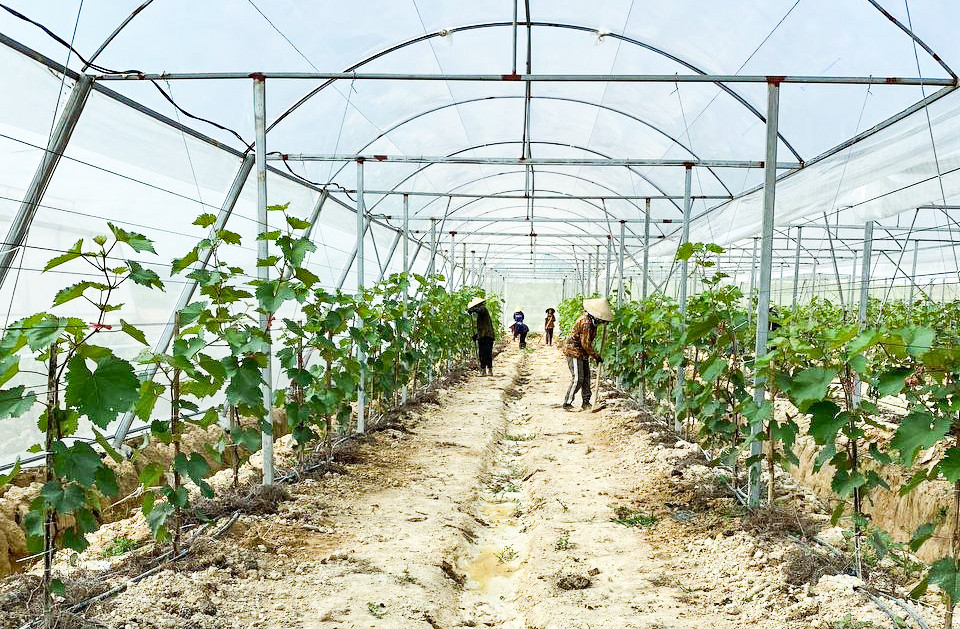
Ms. Nguyen Thi Truong, a farmer from Block 2, Nghi Hoa, happily shared: “My family owns 1.5 sao (approximately 1500 square meters) of land. Previously, we planted various crops like rice, corn, and potatoes on this land, but it wasn't profitable, so we left it fallow for 4-5 years. In 2021, I and other households contributed land to a high-tech agricultural cooperative for a 15-year lease (we received the land lease payment in advance). After leasing the land, I was hired as a worker for them with a salary of 5-7 million VND per month. Not only me, but other farmers in the block were also hired as workers, receiving stable wages, days off, and welfare benefits, so we are very happy.”
Currently, many large-scale agricultural fields have been established in the province. This has attracted business owners and cooperatives to lease the land, organize production in a linked chain, and increase the value of agricultural products.
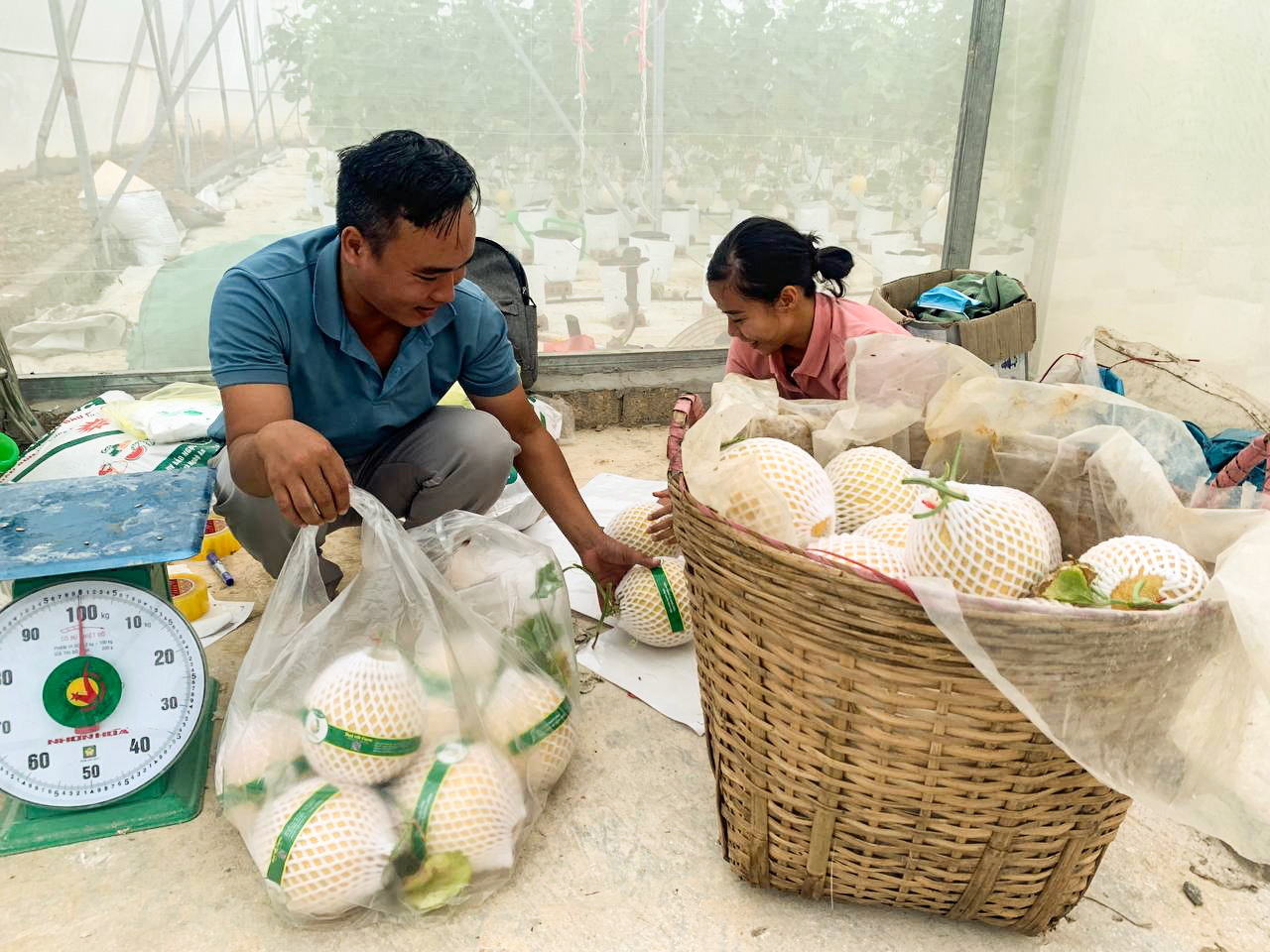
This approach offers a double benefit. On the one hand, it addresses the problem of abandoned agricultural land due to labor shortages and inefficiency; on the other hand, when people lease their land, they have both income and local employment, contributing to improved agricultural productivity. Importantly, people retain their agricultural land, avoid migration, and have a stable income from their own fields.


Governing body: Nghe An Provincial Party Committee
Director: Tran Minh Ngoc
Electronic newspaper operating license number: 153/GP-BTTTT
Issued by the Ministry of Information and Communications on March 24, 2022