
Combating arrogance
(Baonghean.vn) - Arrogance is a human trait. Essentially, it stems from excessive self-confidence and subjectivity, leading to a sense of complacency and the belief that one is better than others in everything.
The line between confidence and arrogance is very thin; they always assume that everything they do and say is right and expect everyone to follow suit. Among our cadres and Party members, there are still those who suffer from arrogance. They do not understand that the strength of the Party lies in its unity and cohesion.
President Ho Chi Minh once clearly stated: “They do not believe in the strength and intelligence of the collective. They live and work without solidarity and cooperation with others. In his work “Do Not Be Arrogant, Be Humble,” he pointed out the immeasurable consequences of this:Arrogance manifests as: When achieving some success or victory in work, one becomes superior and self-important. Then, one becomes lazy in their studies, failing to improve their skills. In their work, they disregard the people and distance themselves from the masses. Within the Party, they fail to implement democratic centralism and adhere to the principle of collective leadership. They ignore Party and government discipline and policies. They disdain the opinions of subordinates and disregard directives from superiors. They refuse to be inspected or criticized. They associate with sycophants and flatterers, while avoiding those who are straightforward and honest. The result of arrogance is: regression, decline, and ultimately dissatisfaction and corruption."
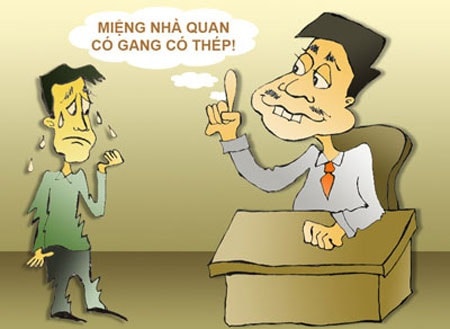 |
| Illustrative image. |
"When they gain a little knowledge and achieve a little success, they become arrogant, conceited, and boastful, considering themselves more talented than others. In positions of responsibility, they believe they have the right to decide everything; in any sector, locality, or unit, they treat it as their own private domain, disregarding the overall interests. They disregard organizational decisions, acting like bureaucrats, preferring to issue orders to their comrades and the people. They disregard organizational decisions, becoming "bureaucrats" who prefer to use commands against their colleagues and the people."
They dress in designer clothes, meticulously groomed, flashy, and always want to stand out from the crowd. They walk with a swagger, gesticulating wildly, "each step a bouncy dance, to show they're martial artists"—like the Cricket! They like to casually extend their hands for others to shake as if bestowing a favor. Some superiors turn their offices into kindergartens, surrounded by "yes, sir," and "a grand entourage." They spend lavishly to appear to have a different "status" and "importance" than others... They like to appear with commands that seem to command the wind and rain...
Uncle Ho once criticized: They don't understand why they have their positions and enjoy privileges. "Therefore, they make mistakes: arrogance, ostentation, indulgence, wastefulness of public resources, selfishness, and a lack of frugality—the sweat and tears of the people." For a long time, we have witnessed "princes"—sons and grandsons of powerful figures, who rise rapidly, seemingly becoming "red seeds," quickly assuming high positions and power, earning everyone's respect. But they are like "prematurely ripened fruits," shaped by the "mysterious" process, and soon reveal their bitterness and fall.
Then there are those who have "faced life and death," even those who have retired, yet still carry within them the blood of a hero, always wanting the world to "know who I am." Frankly, sometimes, looking at them, decent and knowledgeable people feel embarrassed. What people need in an official is substance, virtue, heart, and vision. They need a wise, sharp mind within that gleaming head, capable of thinking and acting, worthy of the people's trust; they need a compassionate heart within that strong chest, capable of being moved by the ways of the world; they need practicality and effectiveness...
The "aura" of their appearance, the imposing and swaggering gait, the "sharp-tongued rhetoric" combined with "saying one thing and doing another" only distances them further from the masses.
"It is absolutely necessary to combat arrogance and always maintain humility. All work must rely entirely on the masses, and the masses' supervision and inspection must be welcomed. Within organizations, democratic centralism and collective leadership must be upheld, and self-criticism and criticism must be expanded, especially criticism from below to above… Humility is a virtue that every revolutionary must constantly cultivate."—That teaching of President Ho Chi Minh, from the time when the government was still young, remains just as valuable today."


