
President Ho Chi Minh presented a poem to a Confucian scholar.
In traditional Vietnamese culture, poetry is not merely a means of expressing emotions but also a unique form of cultural communication. Through poetic exchanges in ancient literary circles, poetry became a bridge connecting kindred spirits and a meeting place for intellectuals. This tradition is clearly demonstrated in the 1948 poetic dialogue between President Ho Chi Minh and two Confucian scholars, Bui Bang Doan and Vo Liem Son.
Even during the arduous period of resistance against the French, the poems exchanged between them still exuded the beauty of scholarly literature and the spirit of national unity. This is not only proof of the strong continuation of the national poetic tradition, but also vividly reflects the spirit and courage of patriotic intellectuals of that time.
Kindred spirits
Born into a Confucian family, where his father, Nguyen Sinh Sac, was a learned Confucian scholar who passed the imperial examinations under the Nguyen dynasty, President Ho Chi Minh was early immersed in the essence of traditional culture. From his youth, he was nurtured with a solid foundation in classical Chinese studies in the rigorous academic environment of his father. Even after traveling the world and absorbing Western civilization, he always retained a sensitive poetic soul and a masterful ability to compose classical Chinese poetry.
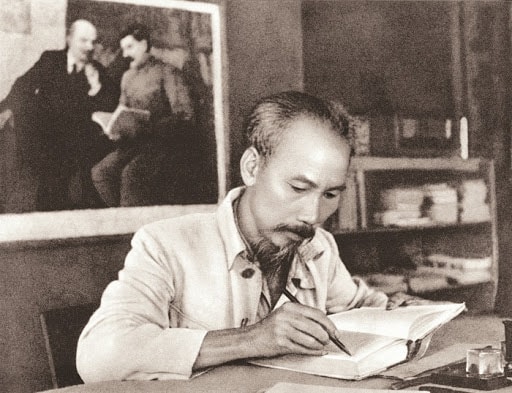
In 1948, amidst the fierce resistance war against the French, in the Viet Bac base area, President Ho Chi Minh presented poems to two famous Confucian scholars:
Mr. Bui Bang Doan (1889-1955) was a prominent intellectual representing the generation of Vietnamese intellectuals during the transition from feudalism to the revolutionary era. Born into a family with a Confucian tradition in Lien Bat commune, Ung Hoa district (now part of Hanoi), he inherited a strong educational foundation from his family, with his grandfather being Doctor Bui Tuan and his father being Governor Bui Tap.
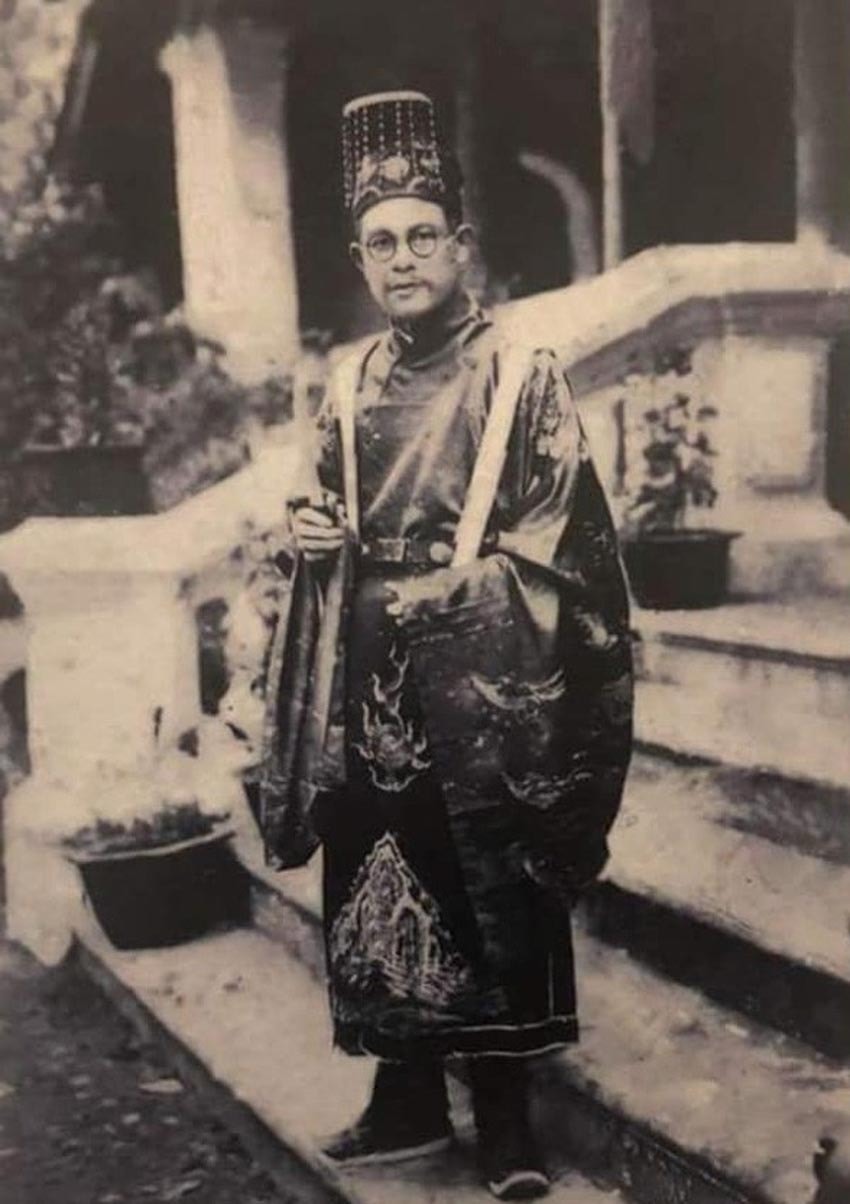
Although orphaned at a young age, under the guidance of his uncle, the scholar Van Dinh, Bui Bang Doan, along with his two brothers, created the phenomenon of "Ha Dong's Three Brothers" when they all passed the 1906 Binh Ngo imperial examination. Among them, Mr. Doan earned a Bachelor's degree and later served in the Nguyen dynasty's administration, holding many important positions such as District Chief in various localities and finally Minister of Justice (1933-1945).
A remarkable aspect of Mr. Bui Bang Doan's life was his timely adaptation to the changing times. After the revolution's success, he accepted President Ho Chi Minh's invitation to join the Presidential Advisory Board in November 1945. In his invitation, President Ho Chi Minh expressed his appreciation for Mr. Doan's "profound scholarship and rich experience." Subsequently, he was elected as a delegate to the first National Assembly and held important positions such as Head of the Government's Special Inspection Committee and Head of the National Assembly Standing Committee.
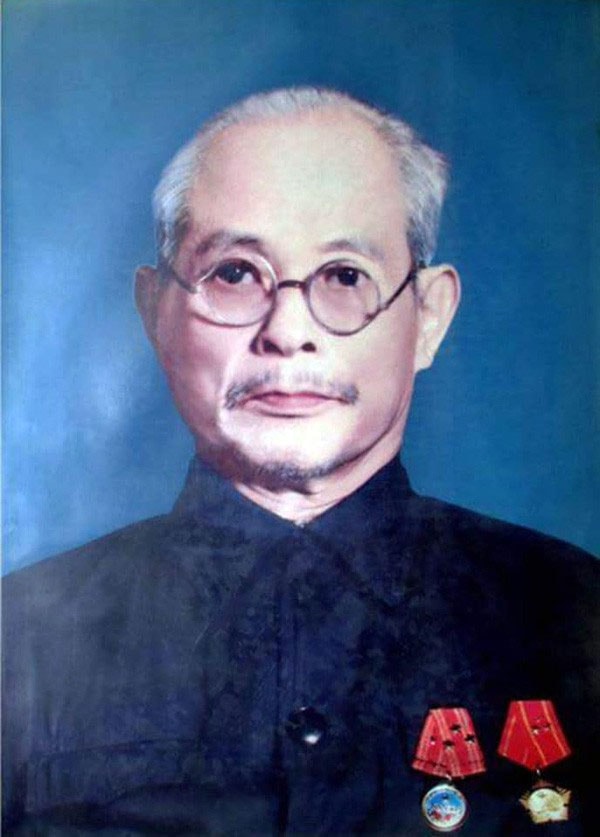
Even during the difficult years of the resistance war, when he was afflicted with hemiplegia at the end of 1948, he continued to contribute to the country as Acting Head of the Standing Committee of the National Assembly in Viet Bac. His life is a vivid testament to patriotism and an exemplary transition from a high-ranking official of the Nguyen dynasty to a leader of the new regime, making a significant contribution to the nation's resistance and national reconstruction.
During a meaningful meeting in 1948, President Ho Chi Minh wrote the poem "To Mr. Bui" in classical Chinese:
贈裴公
看書山鳥棲窗扦,
批札春花照硯池。
捷報頻來勞驛馬,
思公即景贈新詩。
Transcription:
Gift to Bui Cong
Watching the mountain birds sing, the couple sweats profusely.
The decree reads: "Spring blossoms illuminate the inkwell."
The messenger reported that the laborers were arriving on horseback.
The Duke, inspired by the scene, composed a new poem.
Translation:
While I was reading, a forest bird perched on the window sill.
While reviewing official documents, a spring flower cast its reflection in the inkwell.
Always having to return to report victories, even the messenger horse had a hard time.
Remembering you, I was inspired to write this poem as a gift to you.
The poem, though short, is both classically styled and contains profound messages about the times. The first two lines paint a serene, scholarly scene:Forest birds perch by the window while reading, spring flowers cast their reflections in the inkwell while approving documents.These are not only poetic images, but also reflect the dedicated work ethic of an upright official. President Ho Chi Minh skillfully used these images to honor the qualities of Mr. Bui Bang Doan - a patriotic Confucian scholar who adapted to the times but still maintained the noble demeanor of an intellectual.
The last two lines shift from a tranquil setting to the vibrant atmosphere of the resistance war. The image of the "arduous post horse" carrying news of victories not only conveys the heroic spirit of the era but also implicitly praises Mr. Bui's contribution to building the revolutionary government. The concluding line...The Duke, inspired by the scene, composed a new poem."This expresses the respect and closeness that Uncle Ho had for a esteemed comrade."
What is particularly noteworthy is how President Ho Chi Minh skillfully combines two contrasting elements in the poem: on one hand, the tranquil space of the study with forest birds and spring flowers; on the other, the urgent atmosphere of the resistance war with messenger horses carrying news of victories. This contrast does not create a sense of discontinuity; on the contrary, it further highlights the character of a patriotic intellectual, maintaining the noble demeanor of a scholar while actively participating in the resistance and national reconstruction.
In response to this heartfelt gesture, Mr. Bui Bang Doan composed a poem in the same rhyming style:
鐵石一心扶種族,
江山萬里守城池。
知公國事無餘暇,
操筆仍成退虜詩。
Transcription:
With unwavering determination, we will protect our race.
The vast land is defended by the fortress.
Knowing how to manage national affairs leaves no room for error.
He tried to write but ended up writing a lame poem.
Translation:
Unwavering in our devotion to our race,
The nation's destiny is preserved across vast lands.
Knowing that he was always busy with national affairs,
With pen and pen, I wrote poetry to drive away the enemy.
The poem by Bui Bang Doan is not merely a typical "reciprocal" composition, but also an expression of the heartfelt sentiments of a patriotic intellectual, demonstrating a profound resonance with the revolutionary path. The first two lines express a powerful declaration of political stance and patriotic spirit. The image of "iron and stone" not only speaks of unwavering will but also represents indomitable spirit and unwavering devotion to the nation. The phrase "a vast expanse of land and mountains" evokes the boundless space of the country while emphasizing the immense responsibility in protecting every inch of homeland. Through this, Mr. Bui clearly affirms his position: despite his background as a mandarin of the Nguyen dynasty, he placed his complete faith in the revolution.
The last two lines shift to expressing deep admiration and understanding for President Ho Chi Minh. The line "Knowing the burdens of national affairs without remainder" shows that Mr. Bui clearly understood the President's busy and arduous work in leading the country. Especially the concluding line..."He wrote with a pen but ended up writing a lame poem."It not only praises Uncle Ho's literary talent but also emphasizes the role of poetry in the resistance war – even verses became weapons to drive out the enemy. This is very close to Uncle Ho's view on poetry: "poets must also know how to take the lead."
While President Ho Chi Minh's poem paints a picture of peace amidst wartime, Mr. Bui's poem, in response, carries a more heroic and courageous tone. This is evident in the use of powerful imagery such as "iron and stone," "ten thousand miles," and especially the verbs "to defend" and "to retreat"—words that clearly convey a fighting spirit.
The poem also reveals a shift in the thinking of the Confucian intellectual class of that time. From being officials of the feudal court, they recognized the trends of the era, placed their faith in the revolution, and actively participated in the resistance. Mr. Bui Bang Doan is a prime example of this transformation, and his response poem is vivid evidence of his patriotism and his unwavering commitment to the revolution.
Besides Mr. Bui Bang Doan, there was also Mr. Vo Liem Son, who was born into a Confucian family with a tradition of patriotism in Pho Minh village, Can Loc, Ha Tinh. His father was the Confucian scholar Vo Kieu Son, who participated in the Can Vuong movement against the French. In 1905, Mr. Vo Liem Son enrolled in Hue National School, where he had the good fortune to meet his classmate who would later become President Ho Chi Minh (then Nguyen Tat Thanh).
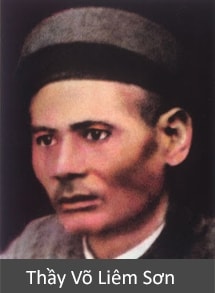
With a solid foundation in classical Chinese studies, he successively passed the Thành chung (1911) and Cử nhân Hán học (1912) examinations. Although appointed as District Chief of Duy Xuyên (Quảng Nam), with the integrity of a patriotic intellectual, he dared to confront the French colonialists and was subsequently dismissed from his position. In his later educational career, he trained many talented individuals for the country such as Trần Phú, Võ Nguyên Giáp, Hà Huy Tập, Phan Đăng Lưu, Nguyễn Chí Diểu, Đào Duy Anh, Nguyễn Khoa Văn (Hải Triều), Tạ Quang Bửu…
When Japan overthrew the French in 1945, he joined the Viet Minh along with his son, Vo Gioi Son. During the resistance against the French, heartbroken by the death of his son at the hands of the enemy, he remained steadfast in his revolutionary path, undertaking many important responsibilities within the resistance apparatus of Military Region IV.
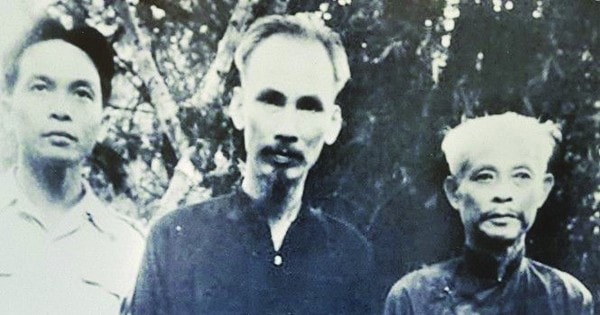
In 1948, during a trip to Viet Bac to attend the National Cultural Conference, he had the opportunity to meet his former student, General Vo Nguyen Giap, and his old schoolmate, now President Ho Chi Minh. It was on this occasion that President Ho Chi Minh composed the Tang Dynasty-style poem "To Vo Cong" in classical Chinese – a work that not only expressed their close friendship but also reflected the spirit of the era and their belief in the victory of the resistance war.
贈武公
千里公尋我,
百感一言中。
事民願盡孝,
事國願盡忠。
公來我欣喜,
公去我思公。
贈公只一句,
抗戰必成功。
Transcription:
Gift of Martial Arts
A thousand miles away, the master is searching for me.
A hundred feelings expressed in one sentence.
The people's devotion and filial piety.
Utmost loyalty to the nation.
The arrival of the hero fills me with joy.
Public works go to public intersections.
Give the reward in just one go:
"The resistance will surely succeed."
Translation:
He traveled a long distance, thousands of miles, to find me.
So much emotion is contained in a single word!
Serving the people, hoping to fulfill the duty of filial piety.
We worship our country, hoping that loyalty will be fulfilled.
When he arrived, I was overjoyed.
When Grandpa came home, I missed him again.
I would like to offer you just this one piece of advice:
"The resistance will surely succeed."
This poem expresses both the deep affection between close friends and reflects patriotism and faith in the victory of the revolution. The first two lines open up the vast space of the reunion: "A thousand miles to find me, a hundred emotions in a single word." The image of "a thousand miles" not only signifies the geographical distance but also encompasses the long period of time since the two were separated – from their days as classmates at Hue National High School to their reunion as revolutionary leaders. "A hundred emotions in a single word" shows that even as time passes, the friendship remains so deep that a single word is enough to evoke a hundred emotions.
The next two lines, "Serving the people with utmost filial piety, serving the nation with utmost loyalty," are a praise of the noble qualities of Mr. Vo Liem Son. President Ho Chi Minh skillfully used the words "filial piety" and "loyalty" in a new way: not loyalty to the monarch as in feudal concepts, but loyalty to the country and filial piety to the people. This also represents a convergence in the thinking of the two men – from the foundation of traditional Confucianism, they progressed towards a revolutionary path for the people and the nation.
The third pair of lines, "When you come, I rejoice; when you leave, I miss you," are deeply moving verses, expressing Uncle Ho's sincere and close affection for his old friend. The joy of reunion and the longing for parting are depicted simply but sincerely, highlighting a strong friendship that transcends time and status.
The last two lines, "A single tribute to the meritorious deed, the resistance will surely succeed," are both personal and significant in their contemporary relevance. This is not simply a tribute to Mr. Vo Liem Son, but also a belief and a strong affirmation of the inevitable victory of the resistance. Placing the phrase "The resistance will surely succeed" at the end of the poem further emphasizes this meaning.
And Mr. Vo Liem Son responded with a spirited poem:
逢君喜公健,
戰事百忙中。
對話惟軍國,
相期在孝忠。
雄才源不勢,
大道本為公。
相見重來日,
抗戰已成功。
Transcription:
Phung Cong Hien Kien,
The war raged fiercely.
Dialogue between the military and the state.
Their true nature lies in filial piety and loyalty.
Hung possesses unparalleled resources.
The Great Way is fundamentally about public service.
We will meet again on the day we meet again.
The resistance movement has been successful.
Translation
(Translated by scholar Dao Duy Anh)
I'm glad to see you and wish you good health.
A hundred worries behind the screen
Conversation for the People and the Nation
Dating at Hieu Trung
The source of the treasure is very rare.
The great path is fundamentally the same for all.
See you again on the day of return.
The resistance was successful.
The poem not only responds to President Ho Chi Minh's sentiments but also expresses the spirit of a patriotic intellectual and a strong belief in the victory of the revolution. The first two lines express joy at meeting an old friend again during a time of national resistance. The phrase "hundreds of things to worry about" shows a deep understanding of the responsibilities of a leader during wartime, while also reflecting the friend's concern and sympathy.
The following couplet complements and contrasts the ideas in Uncle Ho's poem about "filial piety" and "loyalty." If Uncle Ho used these two words to praise Mr. Vo's qualities, then Mr. Vo here affirms that this is a point of similarity, a shared ideal between the two men. "The army and the nation" here no longer carries a feudal meaning but has been elevated to "the people and the country"—expressing progressive, revolutionary thought.
The two middle lines are remarkable verses, expressing both admiration for President Ho's talent and affirming that the revolutionary path is a righteous one. "Heroic talent" refers to President Ho's extraordinary abilities, while "Great Way" is the revolutionary path for national independence. The phrase "originally for the public good" emphasizes the people- and nation-oriented nature of the resistance.
The two concluding lines, "The day we meet again, the resistance will have succeeded," are a confident response to Uncle Ho's message. While Uncle Ho said "The resistance will certainly succeed," Mr. Vo used "has succeeded"—a stronger expression, demonstrating absolute faith in the victory of the revolution. The image of "the day of return" evokes a bright future when the country is completely liberated.
Artistically, the poem strictly adheres to the Tang Dynasty poetic form, with subtle parallelisms: "dialogue" versus "mutual understanding," "ruler and country" versus "filial piety and loyalty," "heroic talent" versus "great way." In particular, the flexible use of allusions and classical Chinese vocabulary contributes to highlighting revolutionary thought within the framework of a classical poem.
The art of winning hearts and minds through President Ho Chi Minh's poetry.
The art of winning hearts and minds through poetry, as practiced by President Ho Chi Minh, is a profound theme, showcasing his talent and strategic vision in applying traditional culture to the revolutionary cause. What makes this art special lies not only in its purely literary aspects but also in its intellectual depth and profound humanistic value.
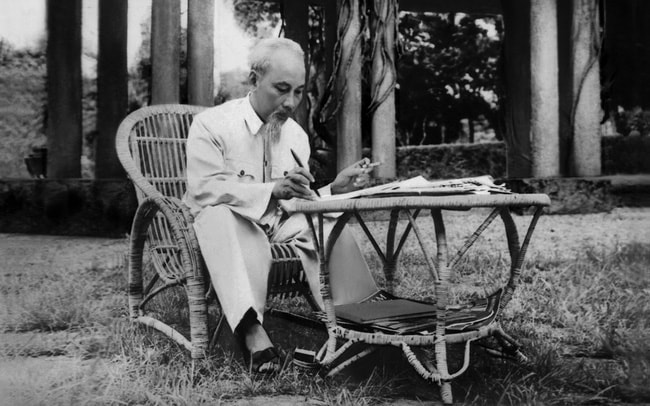
First and foremost, it is necessary to recognize that President Ho Chi Minh used poetry as a means of communication within the unique historical context of the nation. In the early period of the revolution, the country was transitioning from a feudal society to a period of struggle for independence. In this context, the Confucian intellectual class still played a significant role in society, especially in rural areas, where they had a great influence on the thoughts and spiritual lives of the people.
With his profound strategic vision, President Ho Chi Minh recognized that the success of the revolutionary cause required the consensus and support of all social strata, including the Confucian intellectual class. He skillfully used their familiar language, culture, and communication methods—classical poetry—to build a bridge of culture and ideology.
Uncle Ho's art of winning people's hearts was demonstrated through many subtle aspects.
The firstIt is a sign of respect for cultural tradition. In his poems exchanged with esteemed Confucian scholars, Uncle Ho always strictly adhered to the rules of Tang Dynasty poetry regarding meter and rhyme. This demonstrates his respect for traditional culture and the values that Confucian intellectuals upheld.
MondayThis is the art of "using the old to awaken the new"—using the old to awaken the new. Uncle Ho skillfully incorporated revolutionary ideas and new values within the framework of classical poetry. For example, in the poem dedicated to Mr. Vo Liem Son, he reinterpreted the concept of "loyalty and filial piety" in a revolutionary spirit: loyalty to the country, filial piety to the people. This is a clever way of transforming traditional values, not completely negating them but elevating them to a new level, in line with the demands of the times.
TuesdayThis is the art of "learning from the past to understand the present" - looking back at the past to understand the present. In poetic dialogues, Uncle Ho often mentioned old memories and past relationships to evoke feelings and empathy. From there, he guided his interlocutors to thoughts about the present and future of the country. This is a very subtle psychological approach, creating closeness and trust.
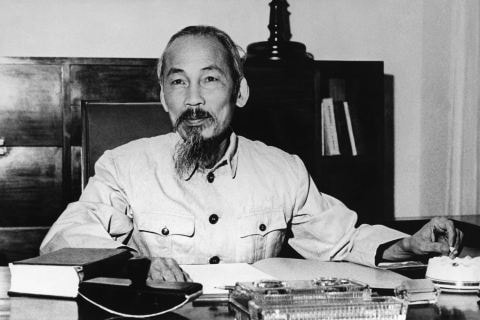
WednesdayIt is the art of "harmony without difference" - reconciling differences. Uncle Ho did not rigidly impose revolutionary ideas but always sought to connect commonalities between traditional and revolutionary thought. In his poetry, values such as patriotism, love for the people, morality, and wisdom are emphasized in a way that is both consistent with Confucian thought and imbued with a revolutionary spirit.
In particular, President Ho Chi Minh's art of winning people's hearts was also demonstrated in his consistent sincerity and simplicity in communication. Even as the leader of the nation, his poetry still expressed genuine affection and closeness to old friends. This created a powerful persuasive force, allowing readers to feel the authenticity and nobility in his thoughts.
The effectiveness of this art of winning hearts and minds is clearly demonstrated through the poems of learned scholars. They not only responded with verses of equal artistic merit but also expressed their agreement and support for the revolutionary path. This is evident in their use of revolutionary imagery and ideas in their own poetry, such as in the poem by Mr. Vo Liem Son with the line "The resistance has succeeded."
Ho Chi Minh's art of winning hearts and minds through poetry also held great significance in building national unity. Through poetic dialogues, he played a crucial role in gaining the support of the Confucian intellectual class for the revolution. Many of them became active participants in the resistance, contributing their intellect and dedication to the cause of national liberation.
The lessons from President Ho Chi Minh's art of winning hearts and minds remain relevant today. These lessons include respecting and promoting traditional cultural values, the art of finding common ground to create consensus, and the crucial role of culture in national construction and development. In the modern context, as the country is undergoing deep international integration, these lessons become even more significant in building national unity and developing the nation.
It can be said that President Ho Chi Minh's art of winning hearts and minds through poetry is a vivid testament to his talent and strategic vision. This is not only an art of literature but also an art of leadership, an art of building and developing revolutionary forces. The poetic exchanges between him and learned scholars are not only beautiful literary works but also valuable lessons on the art of unity and mobilization in the nation's revolutionary cause.
Even today, after more than 75 years, the poetic exchanges between President Ho Chi Minh and the Confucian scholars still retain their profound historical and humanistic value. They are not only beautiful poems in terms of artistry, but also valuable documents reflecting the spirit of national unity and the harmonious blend of tradition and revolution in Ho Chi Minh's thought.


