
The Chairman of the People's Committee of Nghe An province inspected post-storm recovery efforts and surveyed resettlement sites for residents of Na Loi and Keng Du communes.
On the morning of October 8th, Comrade Le Hong Vinh - Deputy Secretary of the Provincial Party Committee and Chairman of the People's Committee of Nghe An province - personally visited Na Loi and Keng Du communes to inspect the situation regarding the damage caused by Typhoon No. 10; at the same time, he surveyed the locations planned for the construction of resettlement areas for people in the affected areas.
Accompanying him were Comrade Pham Hong Quang - Member of the Standing Committee of the Provincial Party Committee, Director of the Department of Construction; along with leaders from the Provincial People's Committee Office, the Department of Agriculture and Environment, etc.
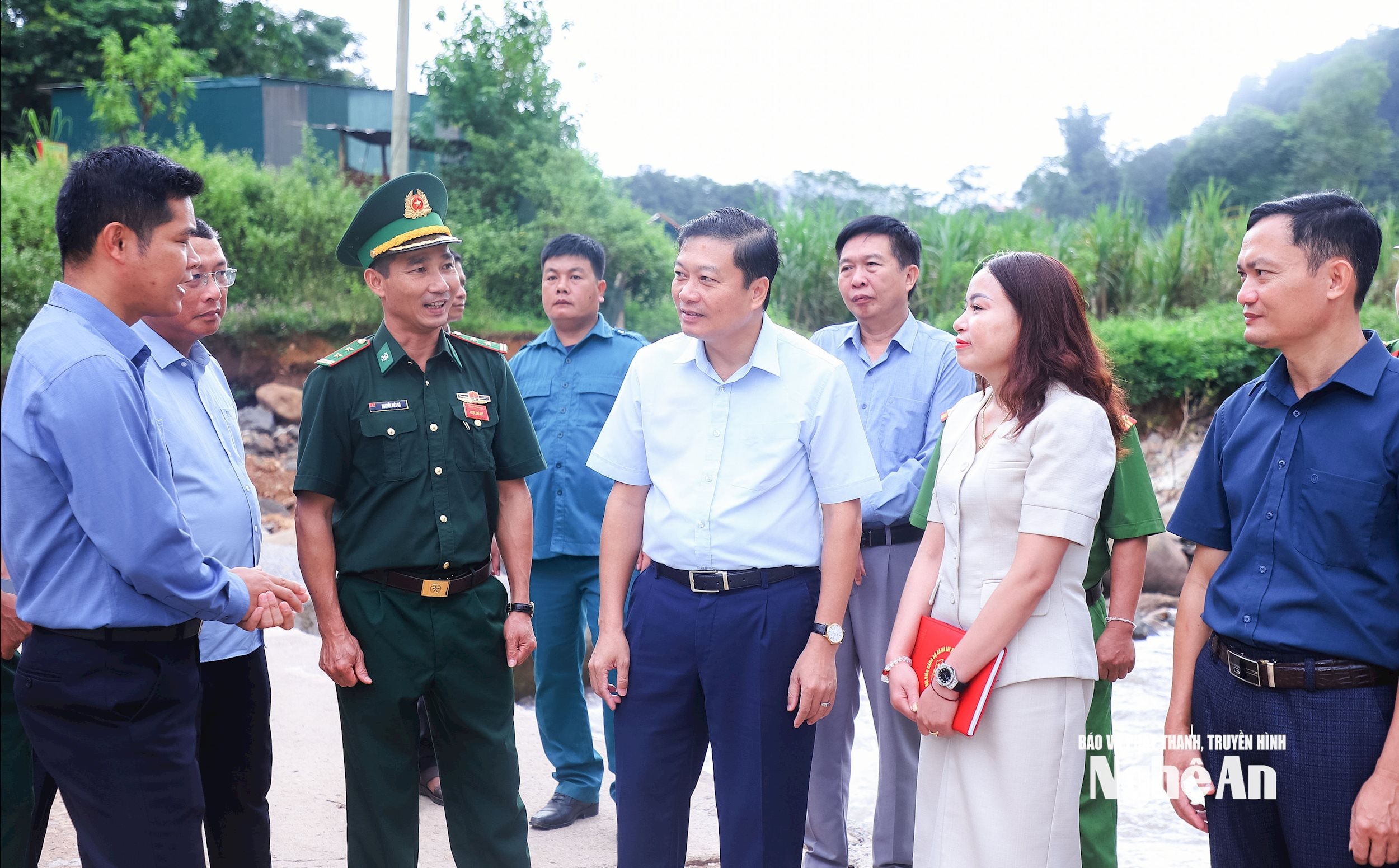
In Na Loi commune, the Chairman of the Provincial People's Committee conducted a field survey at the bridge over the Nam Tam stream, part of the inter-communal road connecting Huoi Tu - Na Loi - Keng Du. This is a vital, single-lane transportation route, playing a particularly important role in socio-economic development and maintaining national defense and security in the border area.
In reality, during the annual rainy season, especially after the recent impact of Typhoon No. 3 (Wipha), the Na Loi bridge is frequently submerged, posing a danger to people and vehicles. Whenever the water rises, the road is cut off, traffic is disrupted, and serious impacts are placed on daily life, production, and the local government's management and administration.
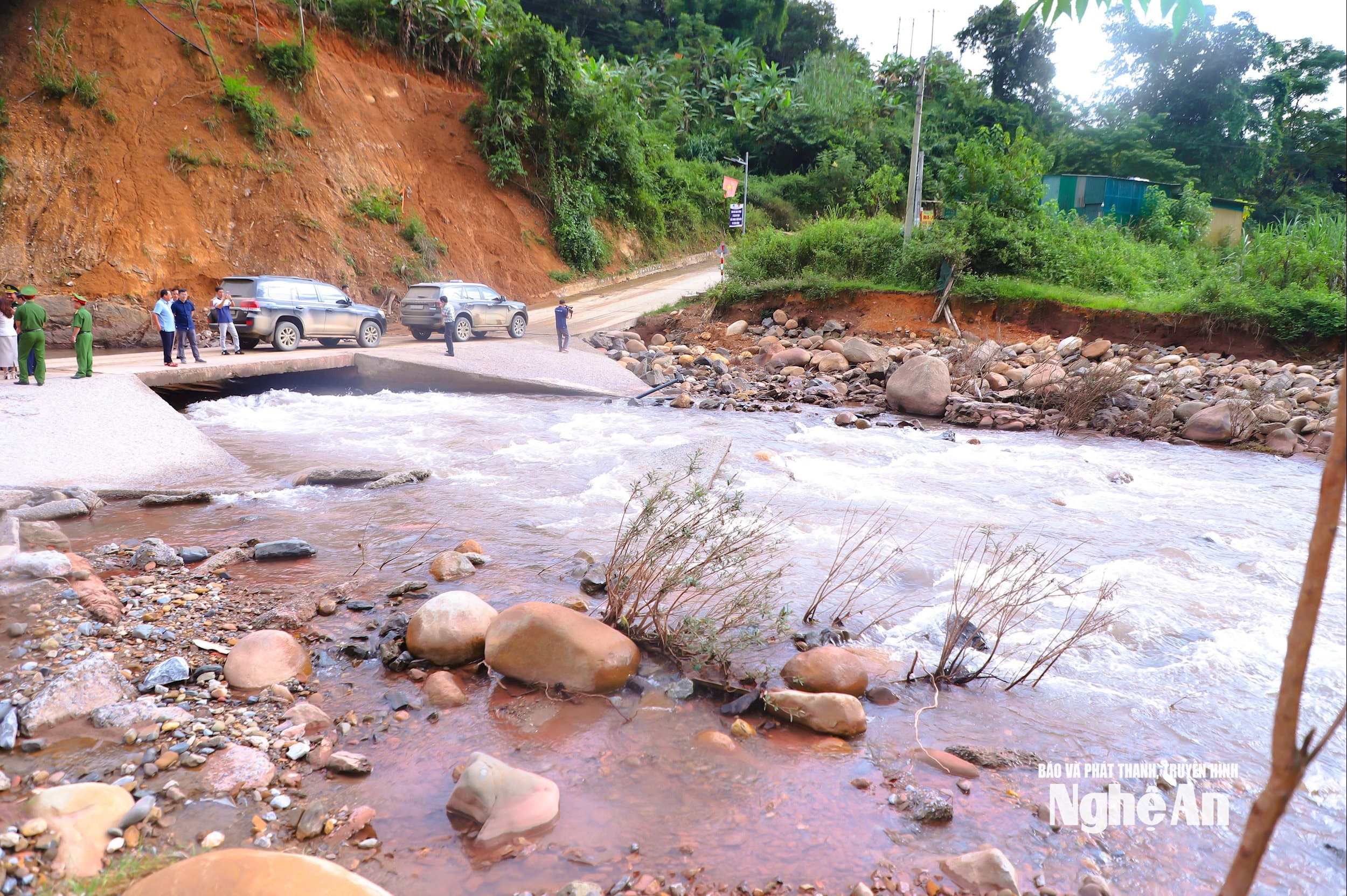
In recent years, due to frequent flash floods and landslides, the existing bridge has seriously deteriorated and is no longer safe. Given this situation, the People's Committee of Na Loi commune has requested the province to invest in the construction of a sturdy concrete bridge across the Nam Tam stream, with an estimated total investment of 20 billion VND.
When completed, the project will serve the transportation and trade needs of more than 9,000 people in the two communes of Na Loi and Keng Du, while also meeting the operational requirements of the political system and armed forces in the area.
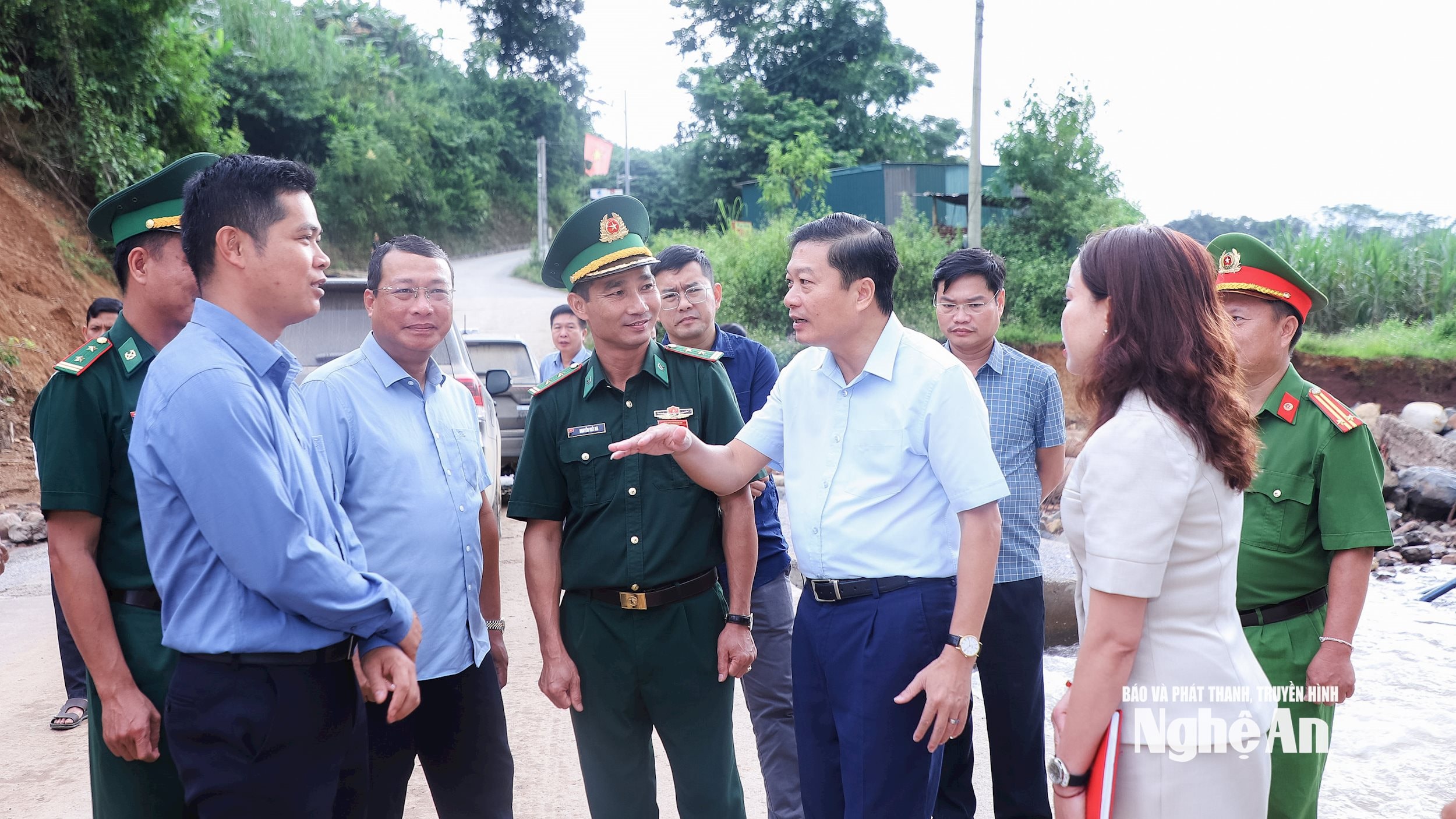
After directly surveying the site and listening to reports from the local authorities, Chairman of the Provincial People's Committee Le Hong Vinh acknowledged the proactive and responsible spirit of Na Loi commune in grasping the situation and proposing solutions to overcome infrastructure bottlenecks hindering development.
The comrade emphasized the importance of ensuring smooth and safe traffic for the people; accordingly, he instructed relevant departments, agencies, and localities to urgently review and propose appropriate and feasible investment plans.

During his working visit, Chairman of the Provincial People's Committee Le Hong Vinh personally visited Keng Du border commune. This is a remote, mountainous commune located more than 300 km from the center of Nghe An province, with a 29.909 km national border with Laos, and manages national border marker number 398.
Keng Du commune has a natural area of 9,824.07 hectares and a population of 5,020 people in 1,002 households, mainly Khơ Mú and Thái ethnic minorities living in 10 villages. The area is large, the terrain is rugged, transportation is difficult, and the poverty rate remains high (67.37%) and the near-poverty rate is 19.2%.
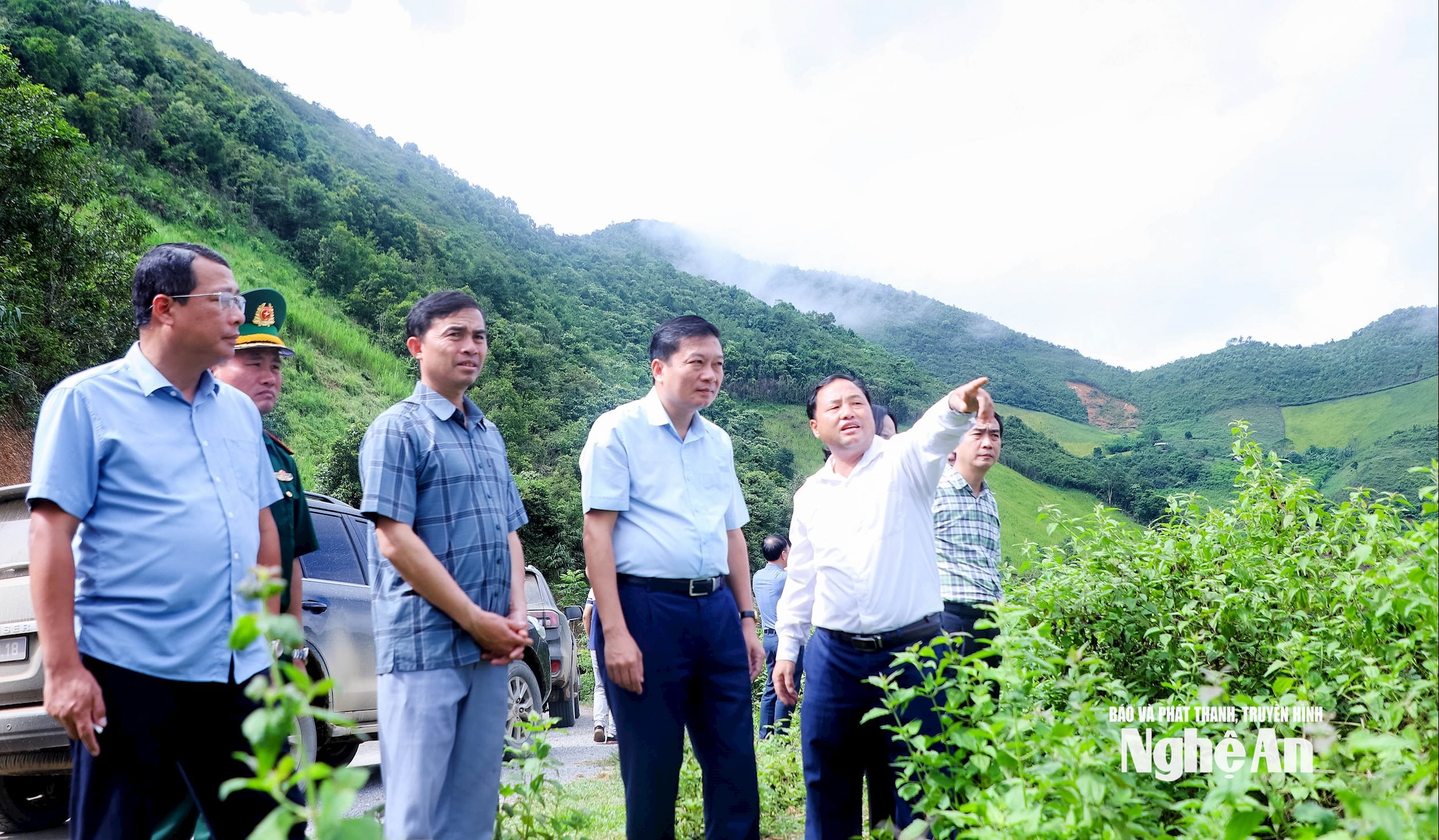
In recent years, Keng Du has been frequently affected by natural disasters, especially flash floods, landslides, and mudslides. Currently, there are three villages located in high-risk areas that need to be planned and settled promptly through concentrated or mixed resettlement.
The Huoi Cang hamlet has 32 households with 174 inhabitants, located between the Huoi Soc and Huoi Phuon streams – an area frequently affected by flash floods and landslides, posing a significant risk of loss of life and property. The People's Committee of the commune has requested the urgent relocation of all households to a safe area through a concentrated resettlement program, with the proposed location being the Huoi Loong area, covering approximately 4.2 hectares (production forest land).

Keng Du village has 39 households with 168 inhabitants, many of whom live along the Nam Non River and are frequently flooded. The commune proposes relocating these households to a higher, safer area through a concentrated resettlement program. The proposed location is at Huoi Du stream (within Keng Du village), covering approximately 2.86 hectares, within a protected forest area. Therefore, the land use plan needs to be reviewed and reclassified according to regulations.
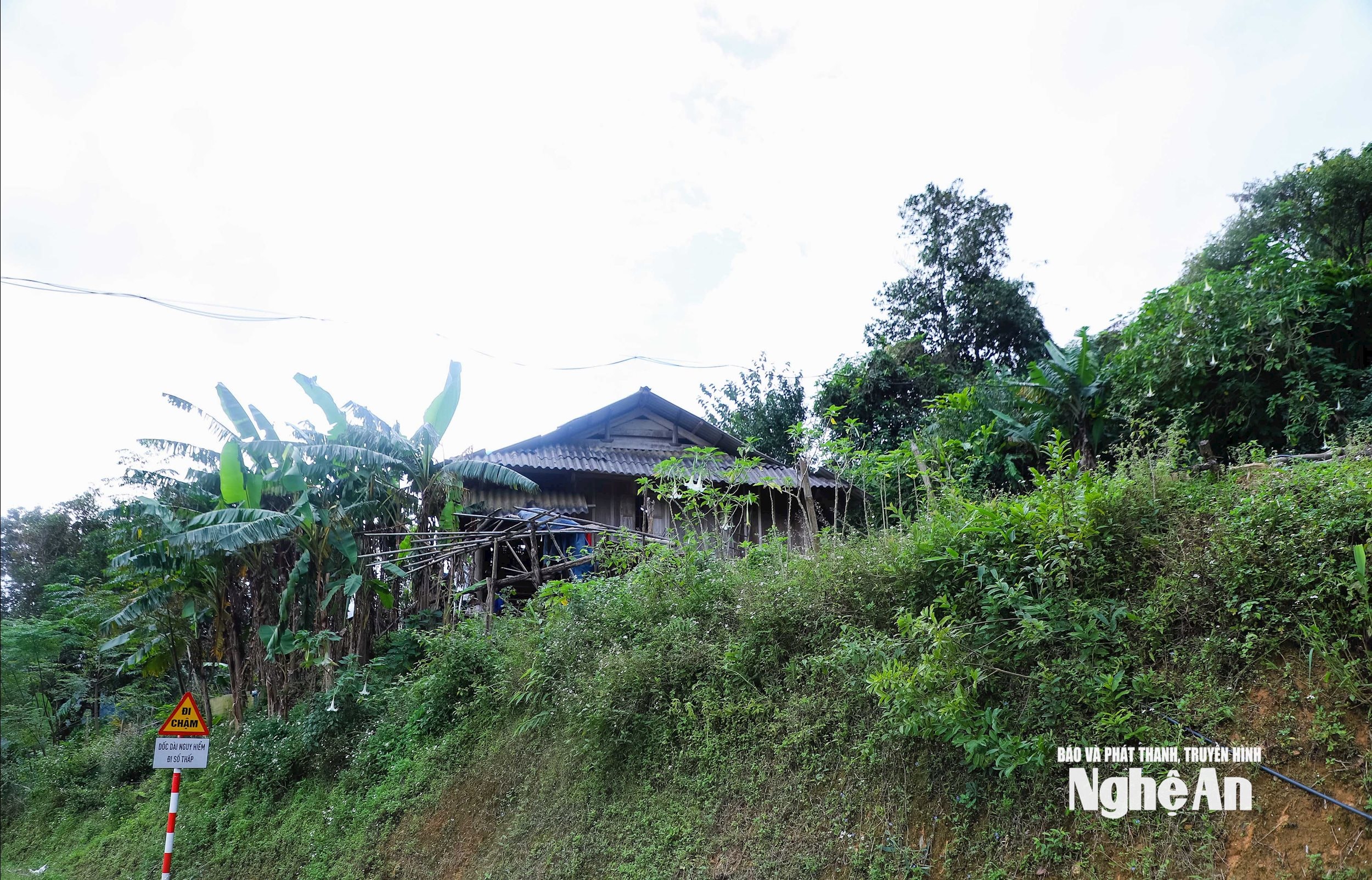
The Huoi Le village has 18 households with 175 inhabitants. Cracks and landslides have appeared at the beginning of the village, posing a high risk of flash floods and landslides that threaten the safety of the people. The People's Committee of the commune proposes relocating the households in an on-site resettlement model, with an estimated area of 1.3 hectares (production forest land), in order to stabilize the lives and production of the people.
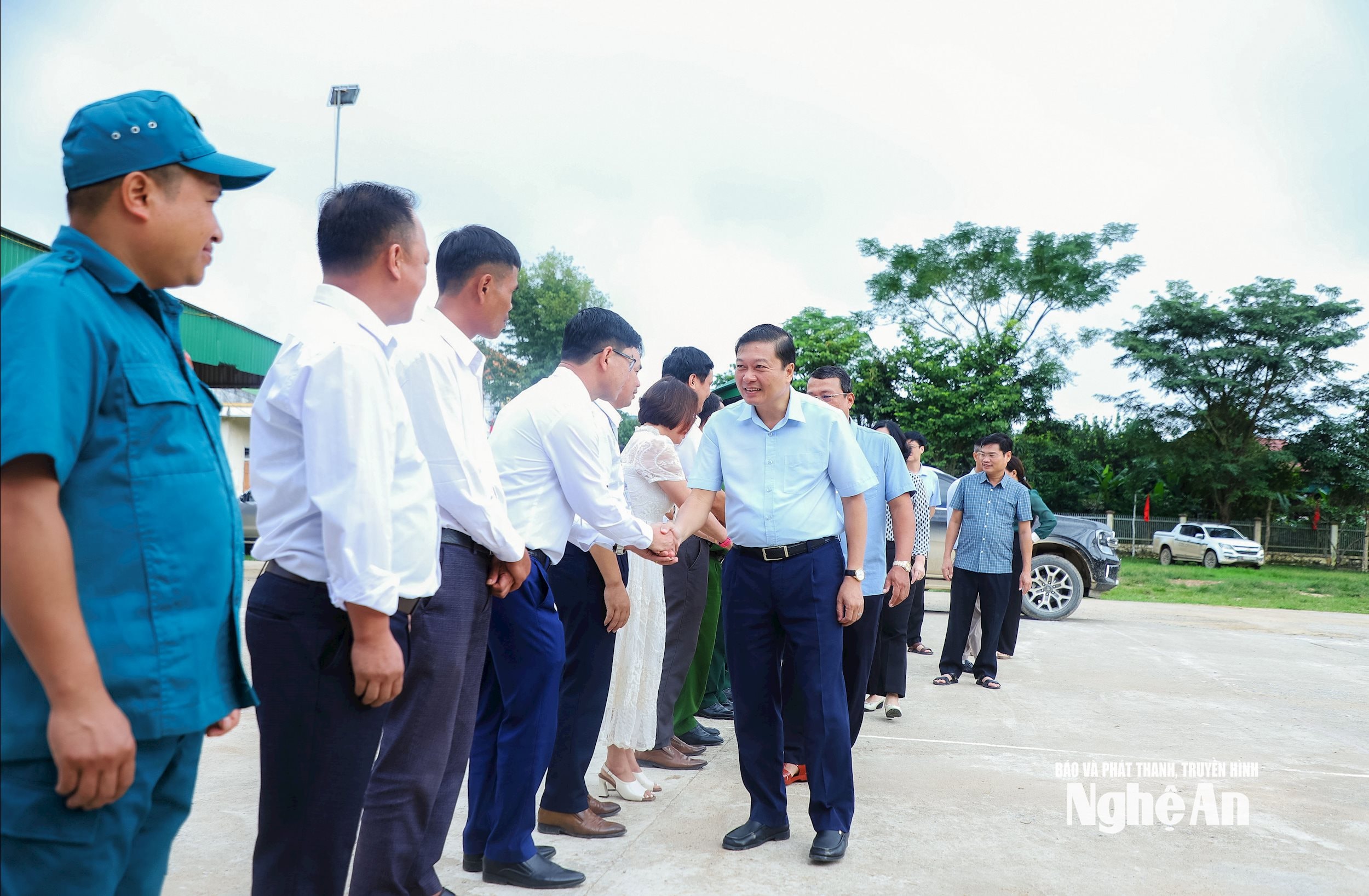
Through direct on-site surveys, Chairman of the Provincial People's Committee Le Hong Vinh, along with leaders of departments, agencies, and local authorities, carefully considered factors such as topography, land availability, infrastructure, and livelihood conditions to select optimal locations for relocating residents away from areas at risk of landslides, flash floods, and mudslides.
Regarding the relocation of residents, the Chairman of the Provincial People's Committee emphasized the need for strict, systematic implementation, ensuring long-term sustainability linked to essential infrastructure; in particular, the relocation of people to new residences must be based on written commitments, ensuring voluntariness and consensus.
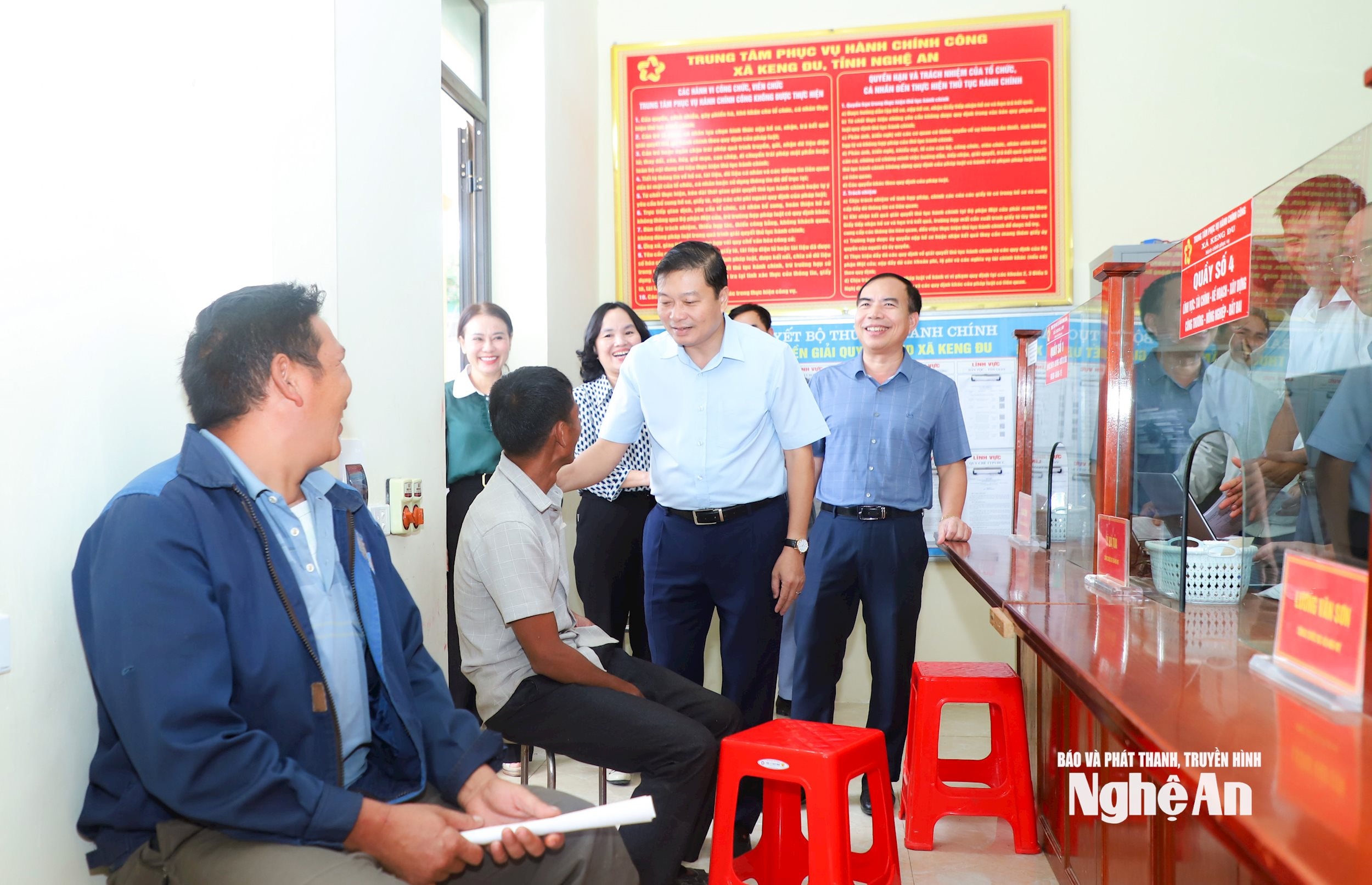
Regarding disaster relief efforts, in addition to the involvement of higher authorities, the Chairman of the Provincial People's Committee also requested the commune to promote the "four on-the-spot" principle, such as proactively planting bamboo and other suitable trees at landslide-prone areas along traffic routes; the commune should mobilize the people to cooperate with military and police forces in the area to adjust and clear overflow channels on roads to prevent erosion and damage to infrastructure.
On this occasion, Chairman of the Provincial People's Committee Le Hong Vinh visited, encouraged, and assessed the operational situation at the Keng Du commune headquarters, especially regarding the activities of the Public Administrative Service Center.
Here, he acknowledged the efforts of the staff despite many difficulties, and also shared with the local authorities the obstacles encountered in implementing administrative reforms in the border region.
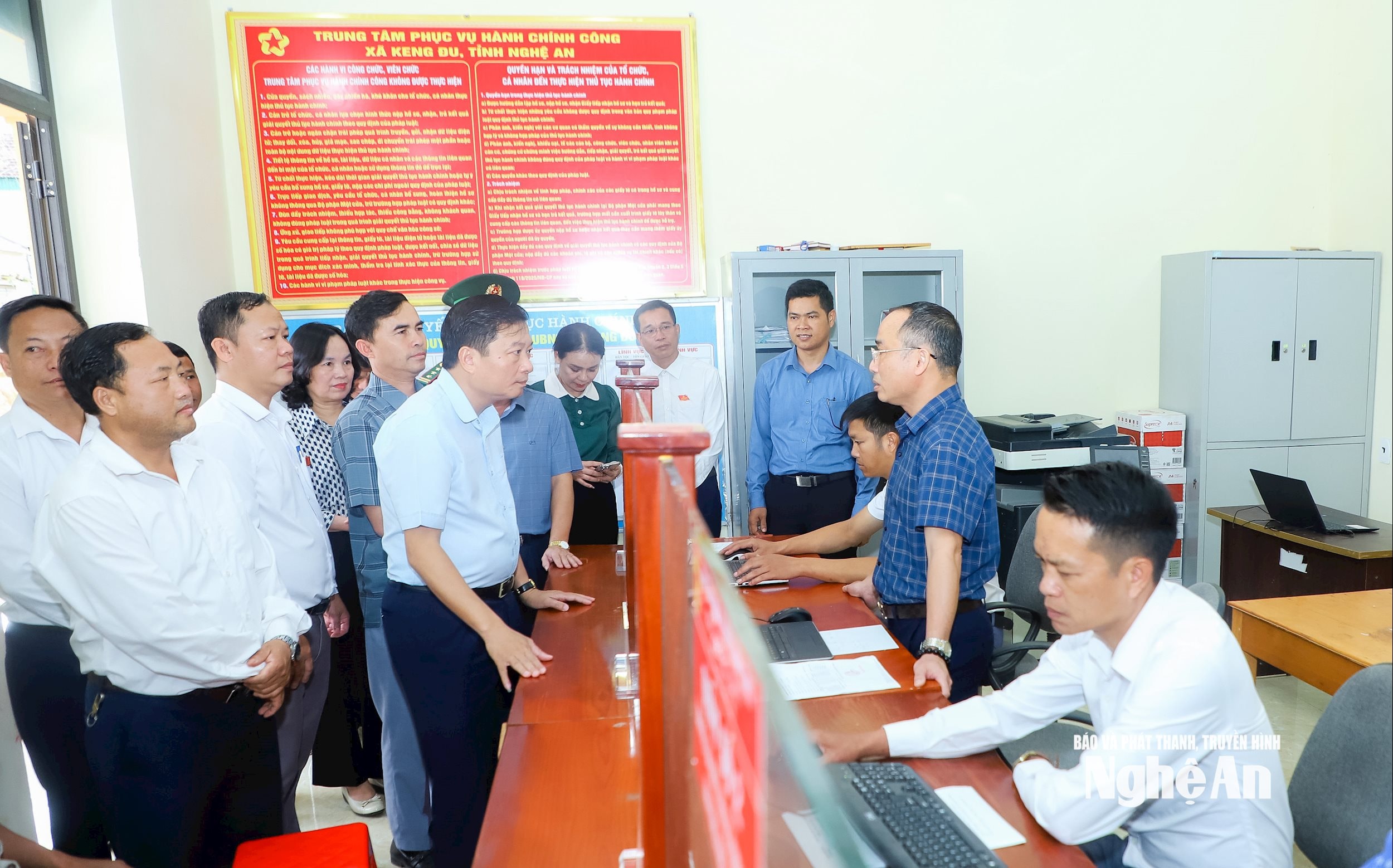
Currently, Keng Du commune is lacking qualified personnel in the field of justice. Suggesting a model for administrative reform in Kim Lien commune where Party officials assist the government in handling administrative procedures for citizens, the Chairman of the Provincial People's Committee proposed that the commune consider assigning capable officials currently working in the Party to support the justice sector. Once the administrative apparatus is operating stably, positions will be rearranged and transferred accordingly. He also requested that the locality gradually improve the professional qualifications of its civil servants.

Regarding the proposal from Keng Du commune to establish specialized departments under the commune's People's Committee, including the Economic Department, the Culture and Social Affairs Department, and the People's Council and People's Committee Office, the Chairman of the Provincial People's Committee stated that specialized departments will be established in communes that were not merged recently.
Given the unique climate and soil conditions, Chairman of the Provincial People's Committee Le Hong Vinh also suggested that the commune develop suitable economic models to effectively exploit its potential, develop the economy, and improve the lives of the people.


