
SEA Games 33 Final: Vietnam vs Philippines and 3 Key Spotlights
Before the SEA Games 33 women's football final, Vietnam and the Philippines faced off against each other, their opponents' physical condition after 120 minutes, the tactical battle between their coaches, and their ability to capitalize on opportunities.
The SEA Games 33 women's football final between Vietnam and the Philippines is not just a story of "champions" facing challengers. It could be decided by three very specific key points: physical fitness after a disrupted schedule, the tactical battle between two coaches with opposing philosophies, and a fateful finishing moment — something that cost Vietnam dearly in their 0-1 defeat in the group stage.
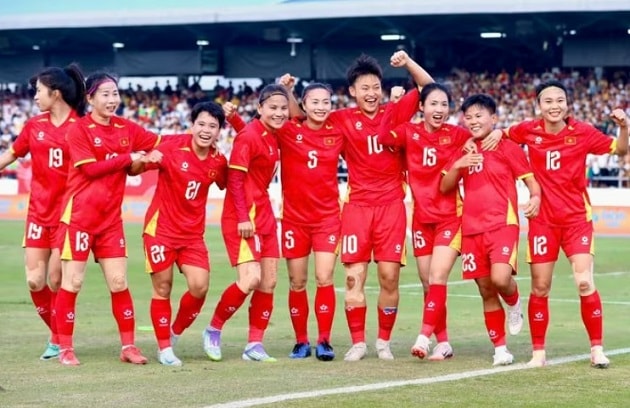
Physical fitness and physique: when "strength" comes at a price over time.
The Philippines is described as having a physical and athletic advantage thanks to its policy of naturalizing mixed-race players. When a team is strong in tackling, aerial balls, and physical contact, the game often escalates to a high tempo in direct confrontations. This kind of rhythm easily unsettles opponents and forces them to play in their own style.
But the final has a crucial variable: accumulated physical fitness. While Vietnam won 5-0 against Indonesia in the semi-finals to conserve their strength, the Philippines had to endure 120 grueling minutes against host nation Thailand. This difference in physical exertion might not be immediately apparent, but it often becomes clear in the second half: slightly slower footwork, inaccurate tackles, or a moment of lapse in concentration while defending.
Conversely, Vietnam could see this as a "window" to draw opponents out of their comfort zone. Skillful and agile players like Thanh Nha or Bich Thuy are expected to exploit the gaps with bursts of speed, changes of direction, and attacks behind the opponent's defense when they are out of breath.
The tactical battle on the coaching bench: reading the game and adjusting the tempo.
On the sidelines, coach Mai Duc Chung entered a final match of historical significance: the opportunity to set a record of 5 consecutive SEA Games gold medals. His biggest advantage lay in his experience and ability to make adjustments during the match — especially since Vietnam had learned a "harsh lesson" from the 0-1 defeat against the Philippines in the group stage.
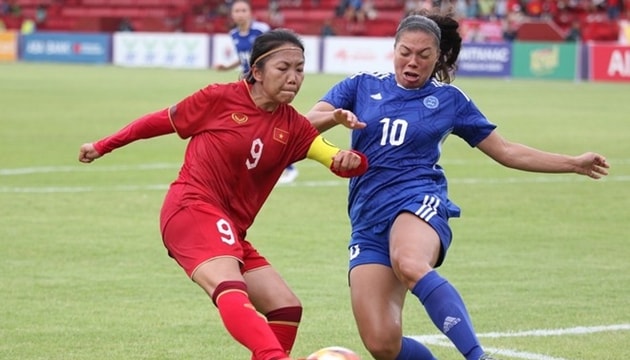
Against an opponent that relies on strength and a direct style of play, the key often lies not in "more or less possession," but in controlling the contested area and the tempo of transitions. Vietnam needs to choose the right moments to accelerate and the right moments to slow down to avoid falling into a back-and-forth attacking game with lots of physical contact — where the Philippines' physical advantage could be amplified.
On the opposite side, coach Mark Torcaso presented the image of a confident and modern Philippines, bold enough to reach the SEA Games final for the first time. Their strength and directness were a clear statement: they were ready to turn the match into a test of endurance, rather than a contest of technique.
The decisive moment: seizing opportunities and keeping a cool head.
The final usually goes to the team that creates more chances, but to the team that makes better use of them. Vietnam is being mentioned with the need to improve their finishing, avoiding a repeat of the clumsiness that cost them dearly in the group stage. In a tight match, just one set piece or a single individual play can change the color of the medal.
Players like Huynh Nhu and Hai Yen are expected to be key to scoring at crucial moments. But the key lies not only in the finisher, but also in the composure of the entire system: taking an extra touch to create a better shooting angle, choosing a safe option when under pressure, and maintaining positional discipline to avoid counter-attacks.
The Philippines, with their aggressive and physical style of play, could push the match to the psychological limit. Vietnam therefore needs a "cool head" to avoid getting drawn into unnecessary challenges, while still being decisive enough in crucial moments.
Three hotspots, one big question.
If the Philippines can no longer maintain their intensity after 120 minutes in the semi-final, Vietnam will have a chance to change the tempo of the game. If coach Mai Duc Chung finds a way to counter the direct style of play that led to their 0-1 defeat in the group stage, Vietnam will create a tactical advantage for themselves. And if the strikers can capitalize on their opportunities in this tense match, the balance will tip towards the more composed team in the decisive moment.
| Hotspots | Vietnam needs to do well. | Risks to avoid |
|---|---|---|
| Fitness in the second half | Accelerate at the right time, exploit the gaps. | Falling into a high-stakes, high-impact attacking game. |
| Coaches' battle of wits | Adjust the pace, learn from the 0-1 defeat. | Allow the opponent to impose their direct style of play. |
| Finishing and psychology | Seize opportunities, take advantage of set-piece situations. | Impulsiveness and loss of composure under pressure. |


