
Obama's final trip and unfinished plans.
(Baonghean) - The visit to Laos, the Land of a Million Elephants, over the past few days has concluded the 11th official trip of current US President Barack Obama to Asia.
The last trip
The stop in Laos during the continent's tour played a crucial role in the African-American president's pivot policy and also marked the first time a US president had made an official visit to Laos.
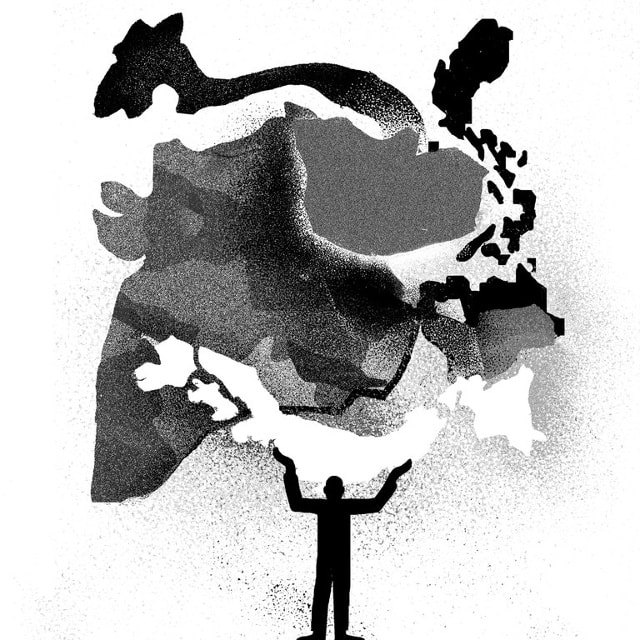 |
| Illustration photo: NYT. |
Between 1964 and 1973, the United States dropped over 2 million tons of bombs on Laos during the Vietnam War. It is estimated that 30% of these bombs remain unexploded and are still scattered throughout the Southeast Asian nation, causing devastating consequences for the lives and livelihoods of the local population.
Therefore, this visit to Laos in particular, and Asia in general, is considered one of Obama's final efforts before leaving office to strengthen ties with countries in the Asian region.
The White House occupant's time in power is drawing to a close, and clearly there are still many important "tasks" left unfinished in his Asia policy, including the Trans-Pacific Partnership (TPP) – a trade agreement involving 12 countries – which remains stalled in Washington. Furthermore, North Korea's increasingly aggressive nuclear weapons program, which Obama and other world leaders are grappling with to prevent, is another pressing concern.
The "pivot" effort
Objectively speaking, President Obama made significant progress in reassuring Asian nations that the United States intends to maintain a stable presence in the region, as it has done for decades, and to counterbalance China's growing power and increasingly aggressive behavior, particularly in the South China Sea.
Besides opening a new chapter in diplomatic relations with Laos, Obama also established relations with Myanmar as the country transitioned toward a new democracy. With Vietnam, the US expanded relations, lifting the arms embargo. With the Philippines and Australia, Obama pushed for negotiations on new agreements for US military bases.
Building on the achievements of the Clinton and Bush administrations, Obama has elevated US-India relations to a new level of cooperation, culminating in a defense agreement signed last month after a decade of negotiations. The US has stepped up military exercises with most of these countries, alongside increased arms sales, including a missile defense system for South Korea.
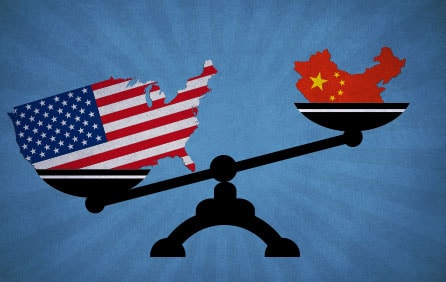 |
| The US wants to become a counterweight to China in the region. Photo: Internet. |
All these results were not achieved easily, but required tremendous efforts on the diplomatic front. However, the common driving force behind these countries drawing closer together and strengthening their relations with the world's number one superpower is China's increasingly powerful military capabilities, alongside its illegal ambition to dominate the South China Sea, demonstrated by its actions of reclaiming reefs and shoals into artificial islands with runways and military structures.
When Obama took office, he harbored hopes of cooperating with China to address global issues. But by 2011, China's increasingly aggressive behavior, coupled with the belief that the US economic future lay in Asia, led the Obama administration to announce plans to increase engagement with other Asian nations.
Amid escalating tensions in the South China Sea, his administration has played a role in reining in and protecting America's commitment to freedom of navigation, through the deployment of ships to this strategic waterway. The U.S. has also urged China to seek a peaceful solution with other nations, including the Philippines and Vietnam; however, Beijing has continued its serious provocative actions.
In some instances where interests converge, China and the United States have made significant joint contributions, such as jointly striving to reach the 2015 Iran nuclear deal and formally committing to ratifying the Paris Agreement on climate change.
Incompleteness is unavoidable.
As President Obama prepared to leave office, few expected him to be able to end the threat from North Korea, a country estimated to possess enough fissile material for 21 nuclear weapons. China, North Korea's primary supplier of food and fuel, had refused to pressure the country – a move that would have significantly altered the situation.
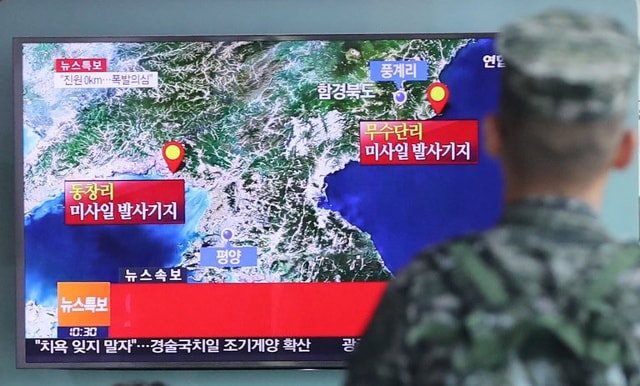 |
| The North Korean nuclear issue was one of the most difficult problems during the Obama administration. Photo: Yonhap. |
From an international economic perspective, both Obama and most Asian leaders believed the TPP agreement was central to the US pivot policy, promoting deeper economic ties with member countries. And despite opposition from presidential candidates and many lawmakers, officials in the Obama administration remained confident in their ability to successfully persuade Congress to ratify the agreement.
Whether or not that happens, many believe that China's aggressive moves in the South China Sea will increasingly dominate the region's future, posing a significant challenge that Obama's successor will have to navigate.
Phu Binh
(According to the NYT)
| RELATED NEWS |
|---|


