
The story of a fallen soldier being recognized 91 years after his sacrifice.
(Baonghean.vn) - Ninety-one years ago, a patriotic son of the Soviet-era land of Thanh Chuong (Nghe An) forever rested in the sacred, inhospitable forests of Buon Ma Thuot Prison - a place established by the French colonialists to exile political prisoners from the Central provinces. Not a single photograph was left behind. Not a single letter to his relatives. This silent sacrifice seemed to have been lost in the dust of time, but no, thanks to the efforts of later generations, nearly a hundred years later, his name was solemnly called out at the ceremony to award him the Certificate of Recognition from the Fatherland. He was Martyr Pham Khanh.
A grandchild's heartfelt gesture
Mr. Pham Ba Tien (residing in Hamlet 2, Thanh Ha Commune, Thanh Chuong District) is the grandson of martyr Pham Khanh. Like many other families in this revolutionary land, Mr. Tien's family silently bears the pain of many men in his family falling for the noble ideals of the Fatherland. He says that he grew up with many memories of his mother, but very few memories of his uncles and father; as for his grandfather, all he knows is through the recollections of relatives and stories of villagers. Even so, he has never lost his pride in his grandfather, his uncles, and his father – loyal and devoted sons of his homeland.
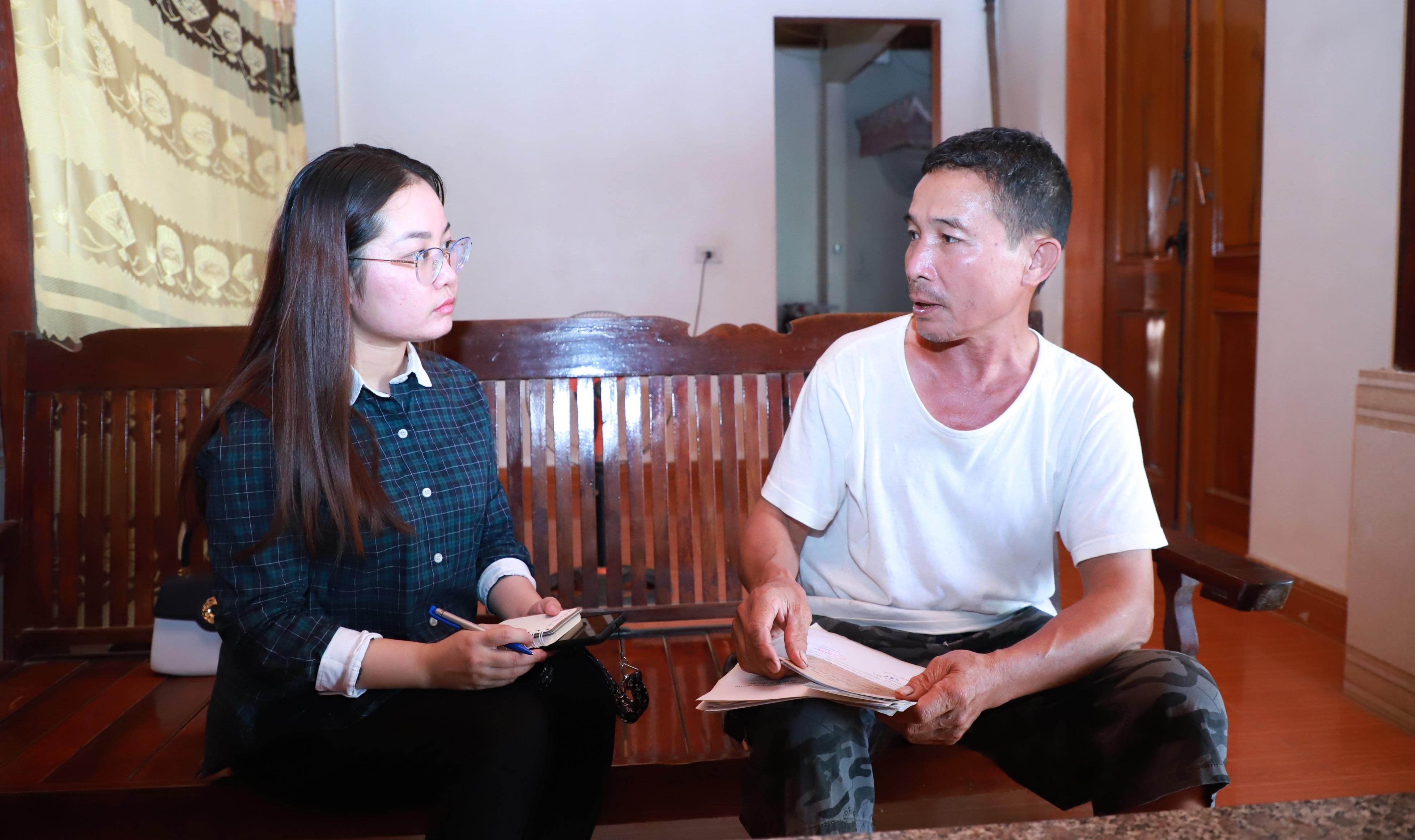 |
Mr. Pham Ba Tien speaks with reporters. Photo: PA |
“My grandfather had five children, three of whom were sons who wholeheartedly followed the revolution. He and his two uncles, Pham Tuan and Pham Tung, were actively involved in the Nghe Tinh Soviet Uprising of 1930-1931 and were captured and imprisoned by the enemy; my father, Pham Ba Mai, also died while on a liaison duty during the resistance war against the US to save the country,” Mr. Tien recalled. Regarding his grandfather, although family and village information consistently states that Mr. Pham Khanh was a Red Self-Defense Force member, actively participating in the Red Peasant Association, and that his house was a frequent location for secret meetings, making significant contributions to the local revolutionary movement; however, due to the passage of time, the difficulty in finding original documents, and the loss of witnesses from that period, the recognition of Mr. Pham Khanh as a martyr faces many challenges.
Many times, standing amidst the ancestral altar, before the portraits and memorial tablets, Mr. Tien wondered: For almost a century, I have known and understood the origins of my ancestors, offering incense and worshiping them, taking pride in my family tradition; but what about 200 years from now and beyond? Will my children, grandchildren, and great-grandchildren still know, if there is nothing to preserve their memory? With this concern in mind, Mr. Pham Ba Tien began the journey of establishing a dossier to recognize his grandfather as a martyr – a journey that he himself never imagined would last so long.
“I’ve been everywhere I could. I ‘knocked on the doors’ of offices and departments from the commune People’s Committee to the district level, then I went to the Department of Labor, War Invalids and Social Affairs… I also visited the Soviet-Nghe Tinh Museum many times to ask the archives department to look up information. I went and came back, and went again, I don’t know how many times, I don’t remember how many sets of documents and papers I wrote and printed; constantly supplementing, updating, redoing, notarizing, holding family council meetings, asking for signatures… I don’t even remember when I started going, but I’ve become so familiar that whenever they see me, the policy officers greet me: ‘Mr. Tien, you’re here again!’” - Mr. Tien recounted his journey.
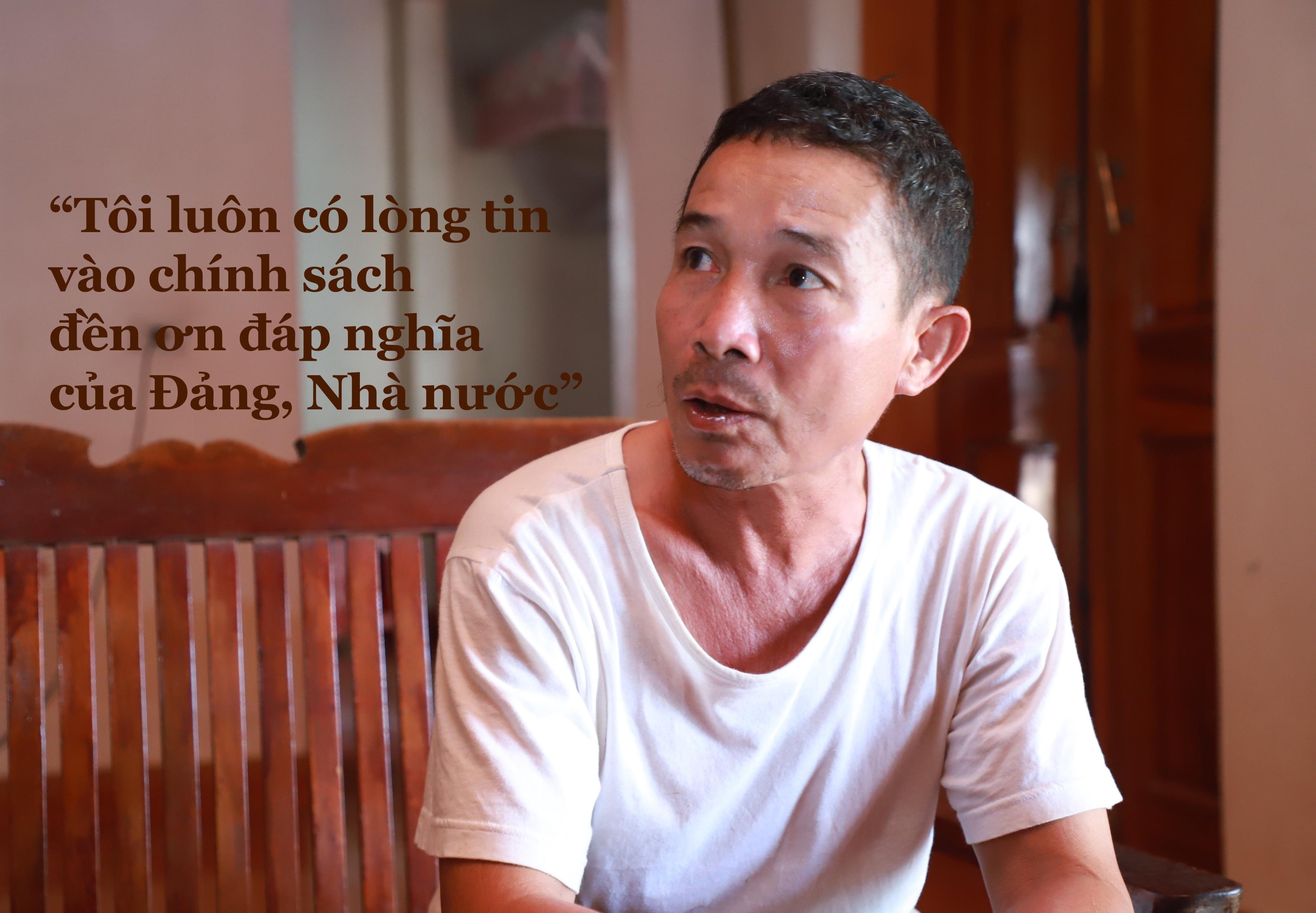 |
Mr. Pham Ba Tien affirmed his belief in the Party and State's policy of showing gratitude and repaying kindness. Photo: PA |
For this dutiful grandson, the journey to have his grandfather recognized as a martyr was not about seeking fame, fortune, or personal gain, but simply about desiring a well-deserved recognition and honor from the Party and the State for his grandfather and family – those who sacrificed their lives and blood for the independence and freedom of the Fatherland; to engrave these shining examples in the family tree, so that future generations will forever cherish the boundless pride of their ancestors, and live by their example in a way that is worthy.
He said that the greatest encouragement after many years of pursuing the recognition of his grandfather as a martyr was the responsibility of the policy-making officials in the places he visited. Before and during his journey, many acquaintances warned him to be careful about "suggestions," that there might be "rotten apples" spoiling the bunch, but he thought that he should continue on the right path, wholeheartedly believing in the Party and State's policy of gratitude and compensation; no one forgets those who have contributed to the Fatherland, but because so much time has passed, the verification process needs to be more meticulous, careful, and thorough... Carrying that belief, although he couldn't avoid moments of fatigue, Mr. Pham Ba Tien never thought of giving up.
Martyrs are honored.
The initial basis that Mr. Pham Ba Tien relied on was the limited information mentioned in the book "History of the Thanh Ha Commune Party Committee." It stated: "According to statistics from the Nghe An Provincial Historical Research Committee, the Nghe Tinh Soviet Museum, and the Thanh Chuong District Party Committee, during the Nghe Tinh Soviet Uprising of 1930-1931, the entire Thanh Ha commune had 60 cadres, party members, and revolutionary masses who were captured, tortured, and imprisoned by the enemy in various prisons… There were families where 3 or 4 fathers and sons participated in revolutionary activities and were all captured, tortured, and imprisoned by the enemy, yet they remained loyal to the Party… The Pham Khanh family, with all three father and sons actively participating in the revolutionary movement from the beginning, were captured and brutally tortured by the enemy, resolutely refused to confess, and were subsequently exiled…"
 |
A policy officer from the Thanh Ha Commune People's Committee discusses the case of martyr Pham Khanh with a reporter. Photo: PA |
Through extensive research and verification in various locations, Mr. Pham Ba Tien's journey became easier when, in early November 2011, the Department of Professional Records of the Ministry of Public Security sent a letter to the People's Committee of Thanh Chuong District requesting information about Mr. Pham Khanh to establish a dossier for recognizing him as a martyr. According to the letter, the Department had information and documents in French about Mr. Pham Khanh, born in 1869 (62 years old in 1931); originally from Son Linh village, Vo Liet commune, Thanh Chuong district, Nghe An province. On September 26, 1931, Mr. Pham Khanh was arrested and imprisoned by the enemy for participating in communist activities with Mr. Hoang Van Toai, Mr. Nguyen Dinh Yem, Mr. Tran Em Than, Mr. Tran Kiem, etc., prisoner number 749. On September 27, 1931, he died in prison. In November 1931, the Southern Court of Nghe An province brought the case of Mr. Pham Khanh and his accomplices to trial. He was sentenced to death by the enemy (Judgment No. 193 dated November 19, 1931, of the Southern Court of Nghe An Province and Decision dated March 26, 1932, of the Resident Commissioner of Central Vietnam).
So, it was clear. All the information the family had gathered and the responses from the relevant agencies and units matched. Mr. Pham Ba Tien said he would never forget the day he received a phone call from the policy officer: "Mr. Tien, your husband's file has been confirmed; there's information that the Prime Minister has signed the decision to award him the Certificate of Recognition for Service to the Fatherland!" "My hands trembled as I held the phone. At that moment, I couldn't think of anything to say in response. It took me a long time to remember to say thank you. I was overjoyed!" - Mr. Tien recalled.
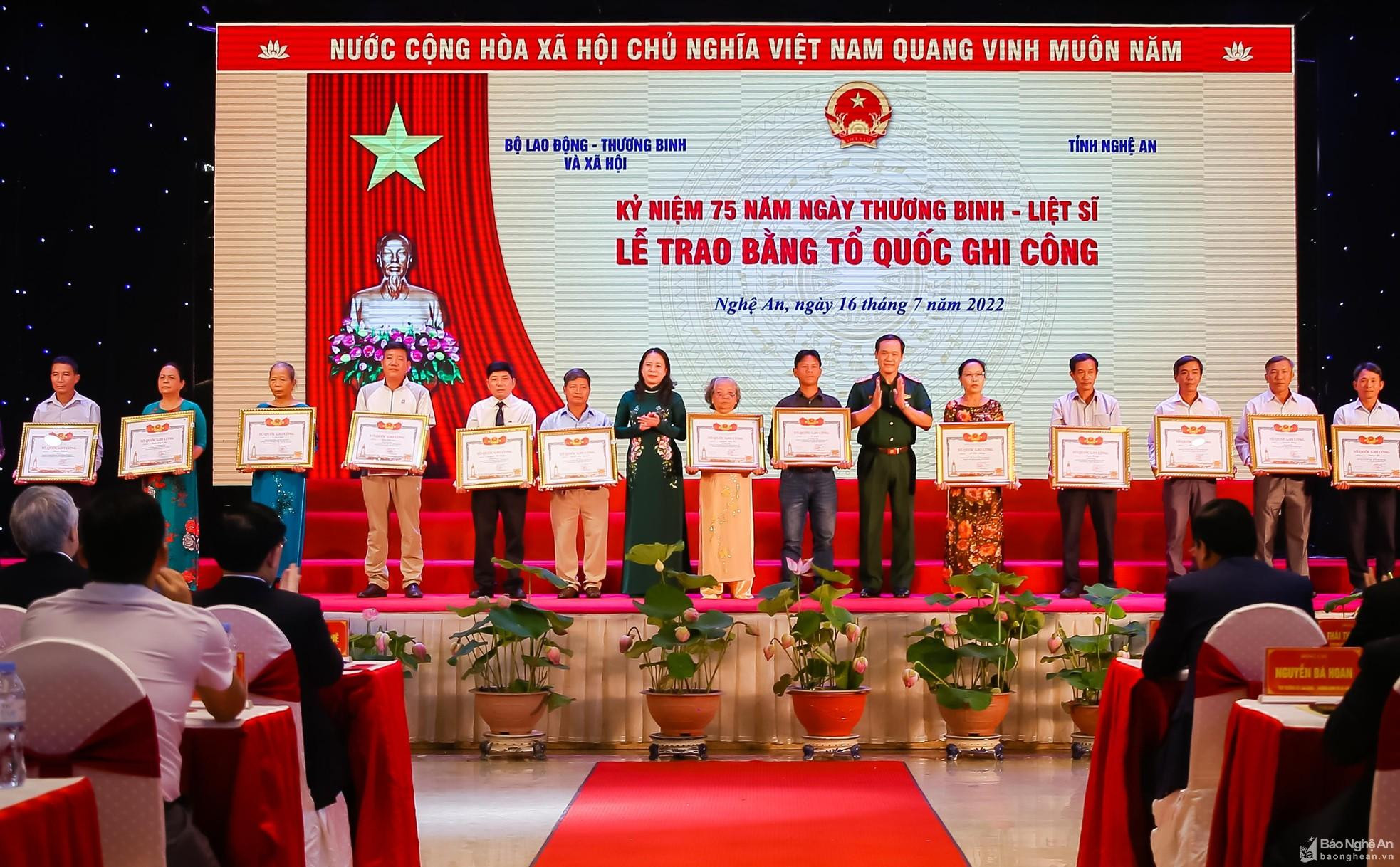 |
Vice President Vo Thi Anh Xuan and Deputy Minister of National Defense Vu Hai San present Certificates of Recognition to the families of fallen soldiers (Mr. Pham Ba Tien is standing on the far left). Photo: Lam Tung. |
In mid-July 2022, Mr. Pham Ba Tien and many other relatives of fallen soldiers were invited to attend the ceremony to award Certificates of Recognition from the Fatherland – a ceremony organized by the Ministry of Labor, War Invalids and Social Affairs in coordination with the People's Committee of Nghe An province. Speaking on behalf of the fallen soldiers' relatives at the program, he emotionally recounted his steadfast journey, expressing gratitude to the Party, the State, and all levels of government for their support in helping his family achieve this day of honoring the fallen soldiers.
The story of martyr Pham Khanh, with his arduous 91-year wait for recognition, was also emphasized by the Minister of Labor, War Invalids and Social Affairs, Dao Ngoc Dung, in his speech at the ceremony, as an affirmation of the determination of those working in the field of gratitude and remembrance: “On the occasion of the 75th anniversary of War Invalids and Martyrs Day this year, the Ministry of Labor, War Invalids and Social Affairs has submitted for recognition 387 martyrs, including some extremely touching cases such as Mr. Pham Khanh, born in 1869, who participated in the Red Self-Defense Force in Nghe An… Today's result is the most practical and meaningful action, expressing the sincere respect and heartfelt tribute of the younger generation, of us – those working in the field of war invalids and martyrs – to the 1.2 million martyrs who fell for the independence and freedom of the Fatherland. This is also an action stemming from the deep feelings and responsibilities of those who are enjoying peace, independence, and freedom today.”


