
The story of the centenarian and the ancient temple in Cho Hen market.
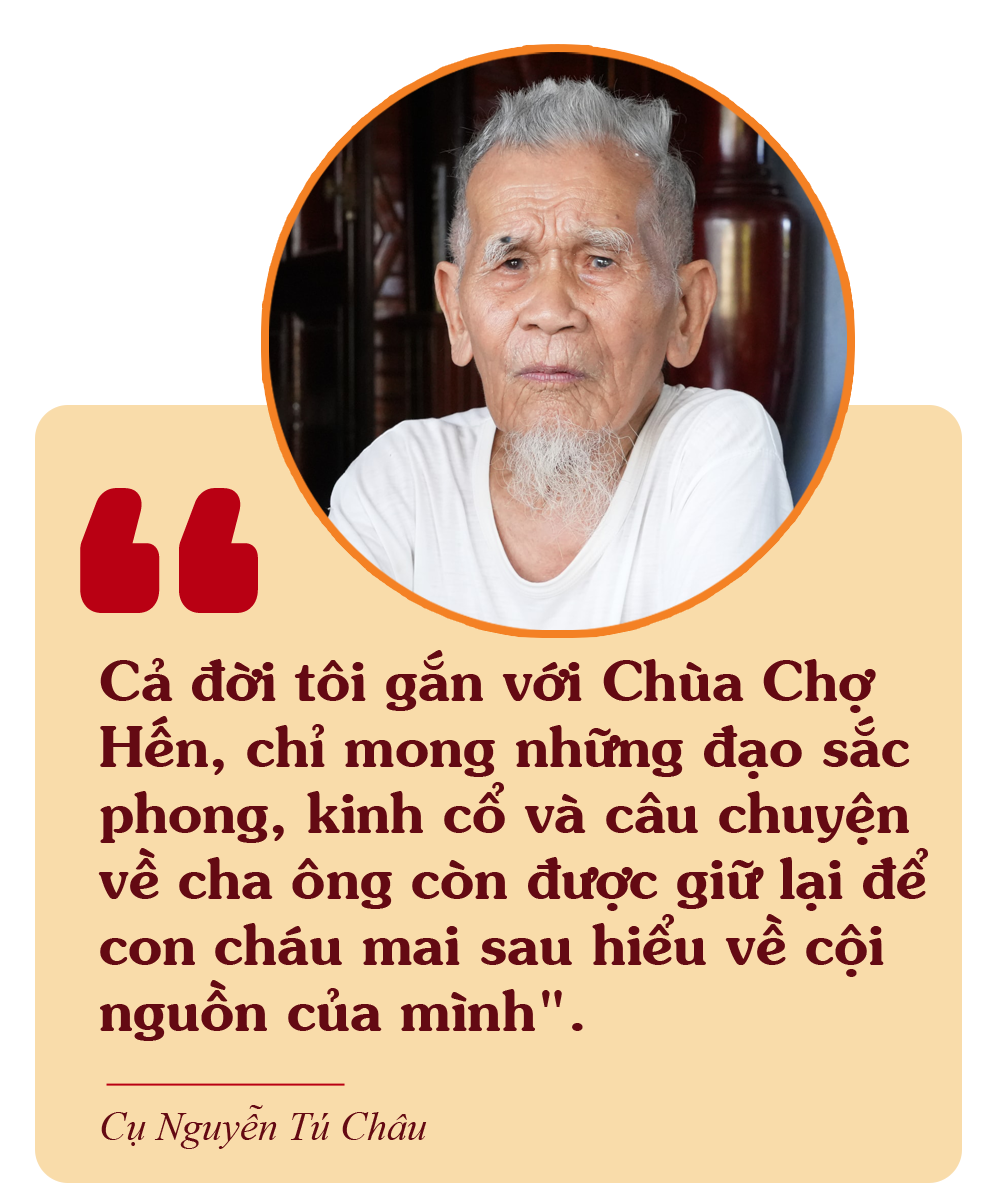
Some memories are preserved in stone tablets, royal decrees, or ancient scriptures. But there are also memories stored in the mind of an individual. For Cho Hen Pagoda, a part of the nearly 500-year-old history of this ancient temple is being preserved by Mr. Nguyen Tu Chau, who is over 103 years old and has dedicated almost his entire life to his hometown temple.
.png)
Thanh Phuc - Hoai Thu/Present:Hong ToaiJune 10, 2026
*****
Some memories are preserved in stone tablets, royal decrees, or ancient scriptures. But there are also memories stored in the mind of an individual. For Cho Hen Pagoda, a part of the nearly 500-year-old history of this ancient temple is being preserved by Mr. Nguyen Tu Chau, who is over 103 years old and has dedicated almost his entire life to his hometown temple.
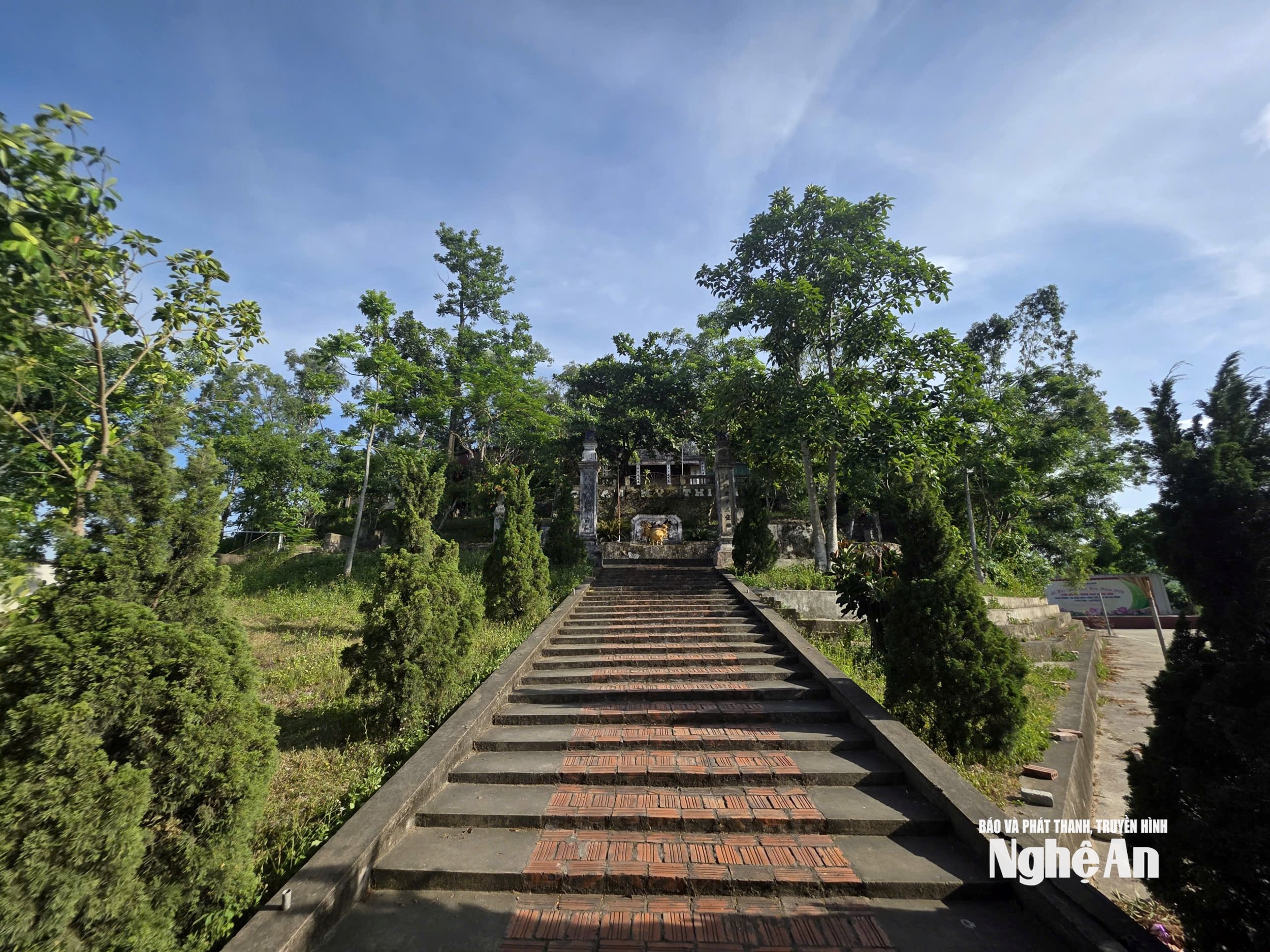
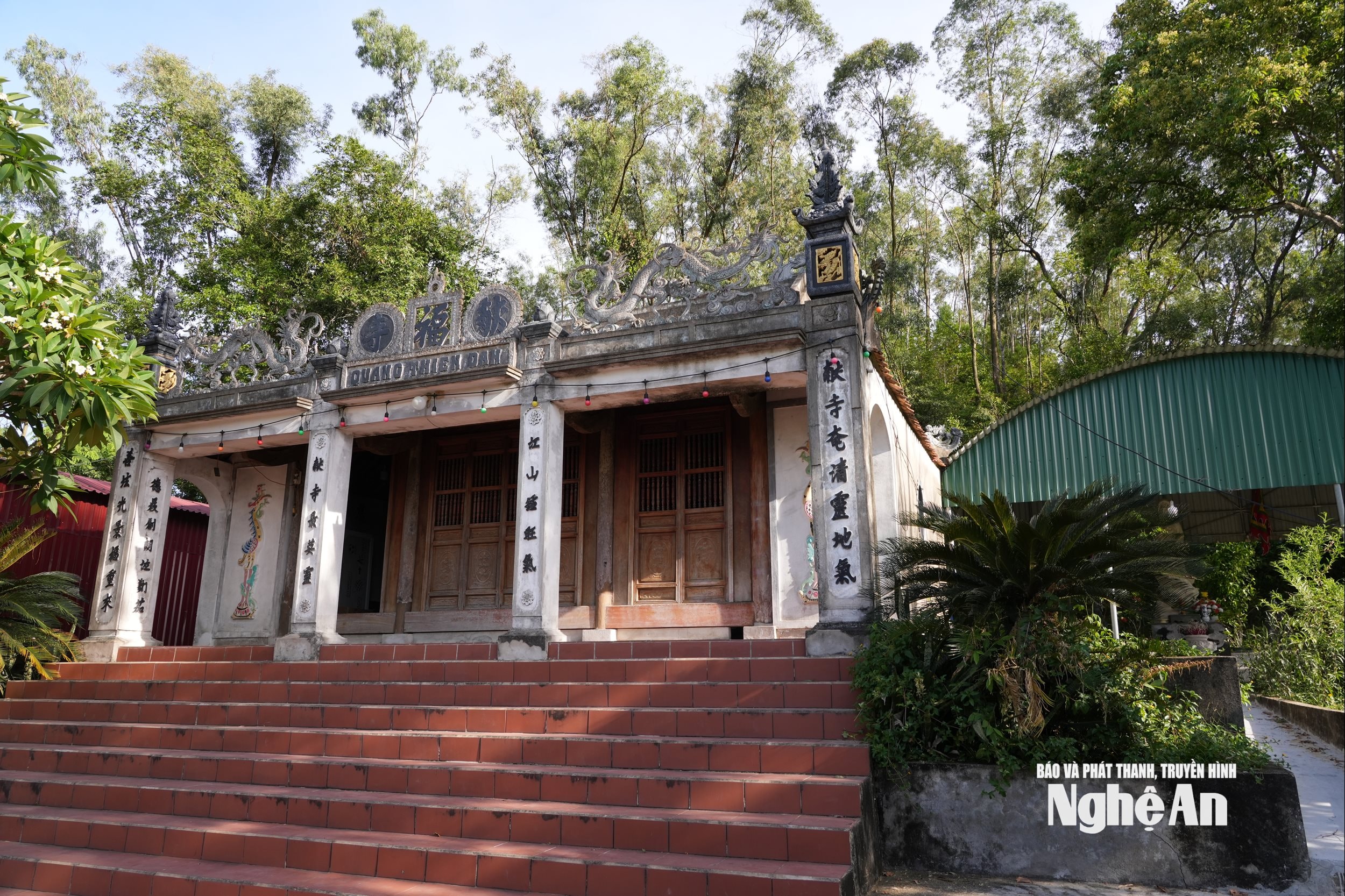
On a June afternoon, following a tree-lined village road in Yen Trung commune, we stopped in front of Cho Hen Pagoda. Perched halfway up a low mountain, the ancient temple stood serenely amidst the green of the rice fields and the villages clustered at its foot. In the hazy atmosphere of incense smoke, Mr. Tran Ngoc Huong, who has looked after the pagoda for many years, warmly welcomed us and slowly led us on a tour around the historical site.
As the story of the nearly 500-year history of Cho Hen Pagoda began to unfold, Mr. Huong unexpectedly stopped in front of the temple's terrace and said, "If you want to understand the pagoda well, you should meet Mr. Nguyen Tu Chau. He is over 100 years old this year, but he remembers everything about the pagoda. He has preserved most of the imperial decrees, ancient scriptures, and old documents." In the caretaker's respectful introduction, we sensed the special place of the man whom the villagers call the "living history book" of Cho Hen Pagoda.
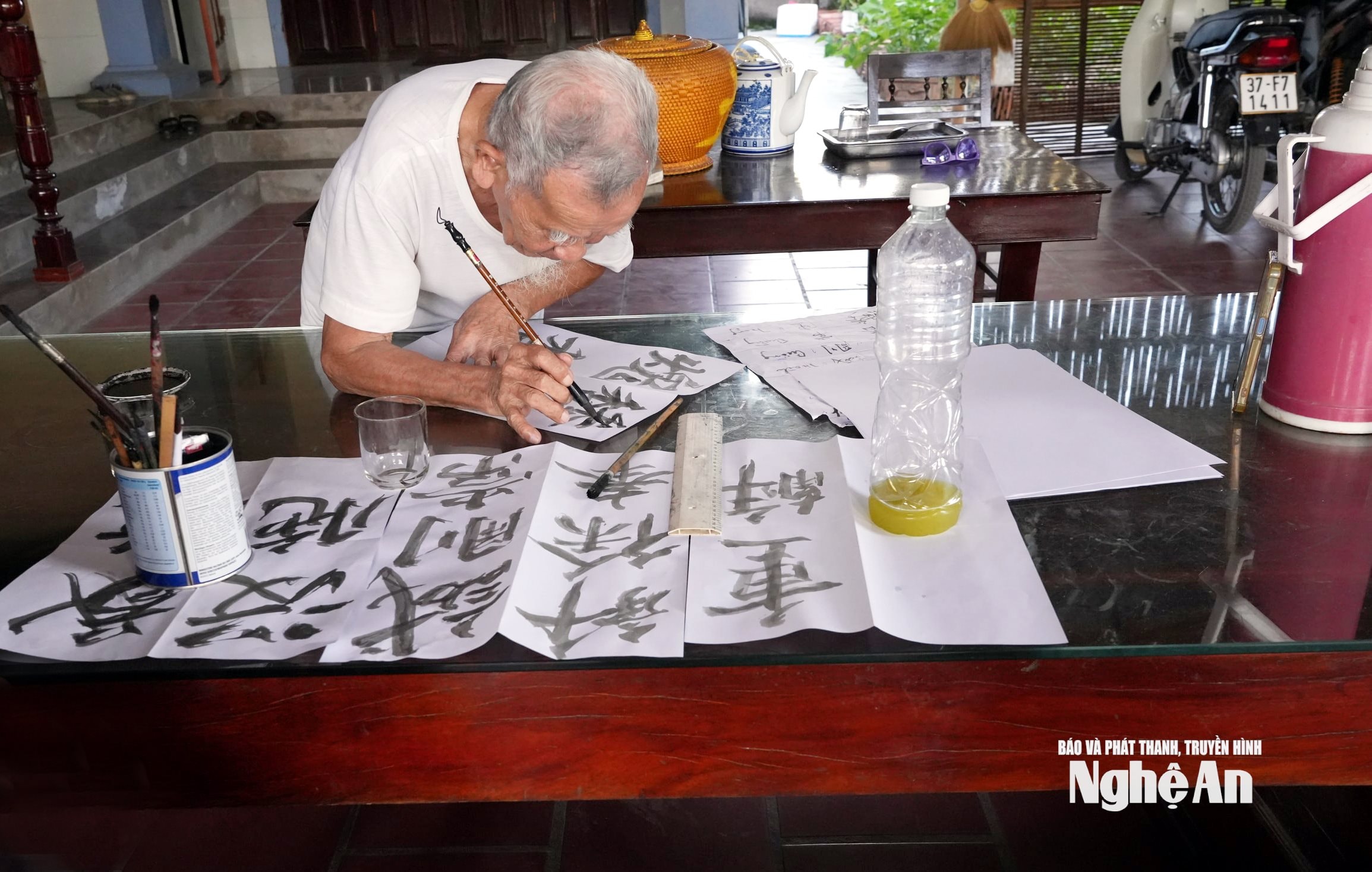
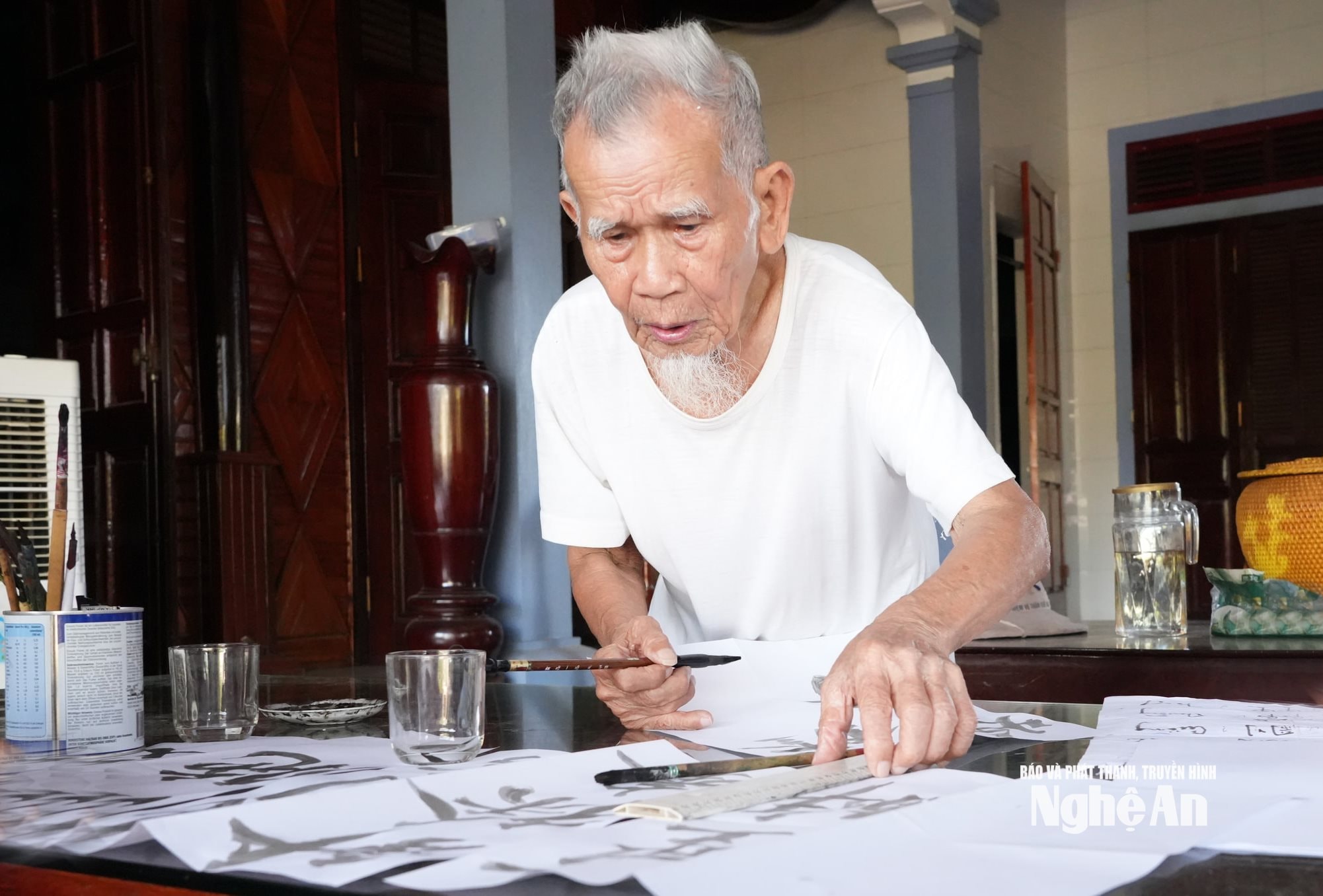
Leaving the ancient temple, we followed Mr. Huong to a small house nestled in a lush green garden not far from the temple. There, 103-year-old Mr. Nguyen Tu Chau was diligently working at an old wooden table, carefully writing Chinese couplets in preparation for a temple ceremony. His figure showed the marks of age, but his brushstrokes were still steady and graceful. Beside him were stacks of documents faded by time, Buddhist scriptures translated from Chinese into Vietnamese, and thick notebooks filled with records of the village history and the temple's history, which he had quietly preserved for decades.
Hearing our interest in learning about Cho Hen Pagoda, Mr. Chau slowly rose and walked to the time-worn wooden cabinet in the corner of the room. From inside the cabinet, he took out two old, red-painted iron tubes. His movements in opening the tubes were slow and careful, as if he were cherishing a treasure. When the rolled-up imperial decrees were revealed under his hands, which had witnessed over a century of life, the story of Cho Hen Pagoda began to unfold in a very different way. Not from dry, formal documents, but from the memories of a man who had dedicated almost his entire life to preserving the history of that ancient temple.
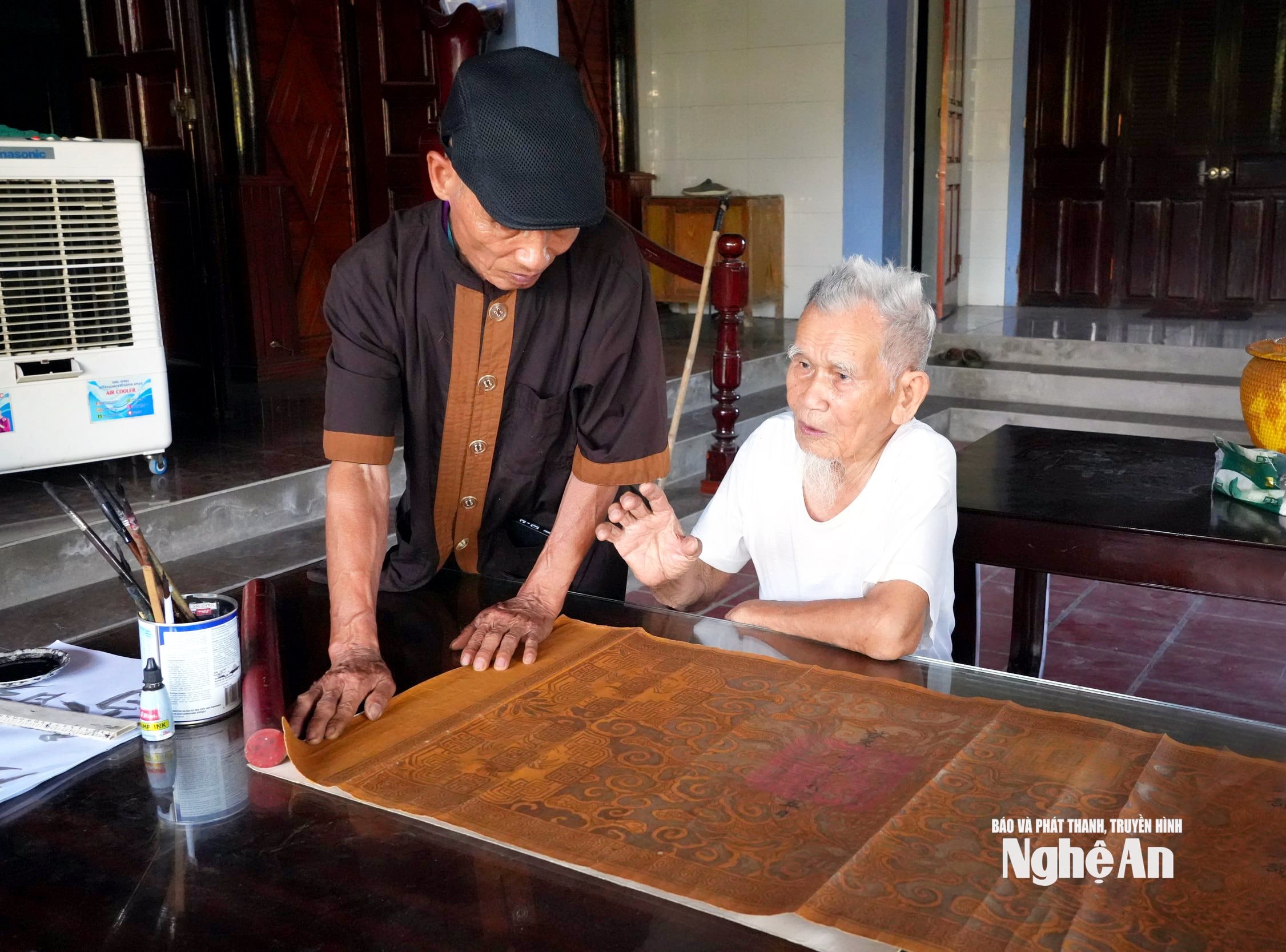
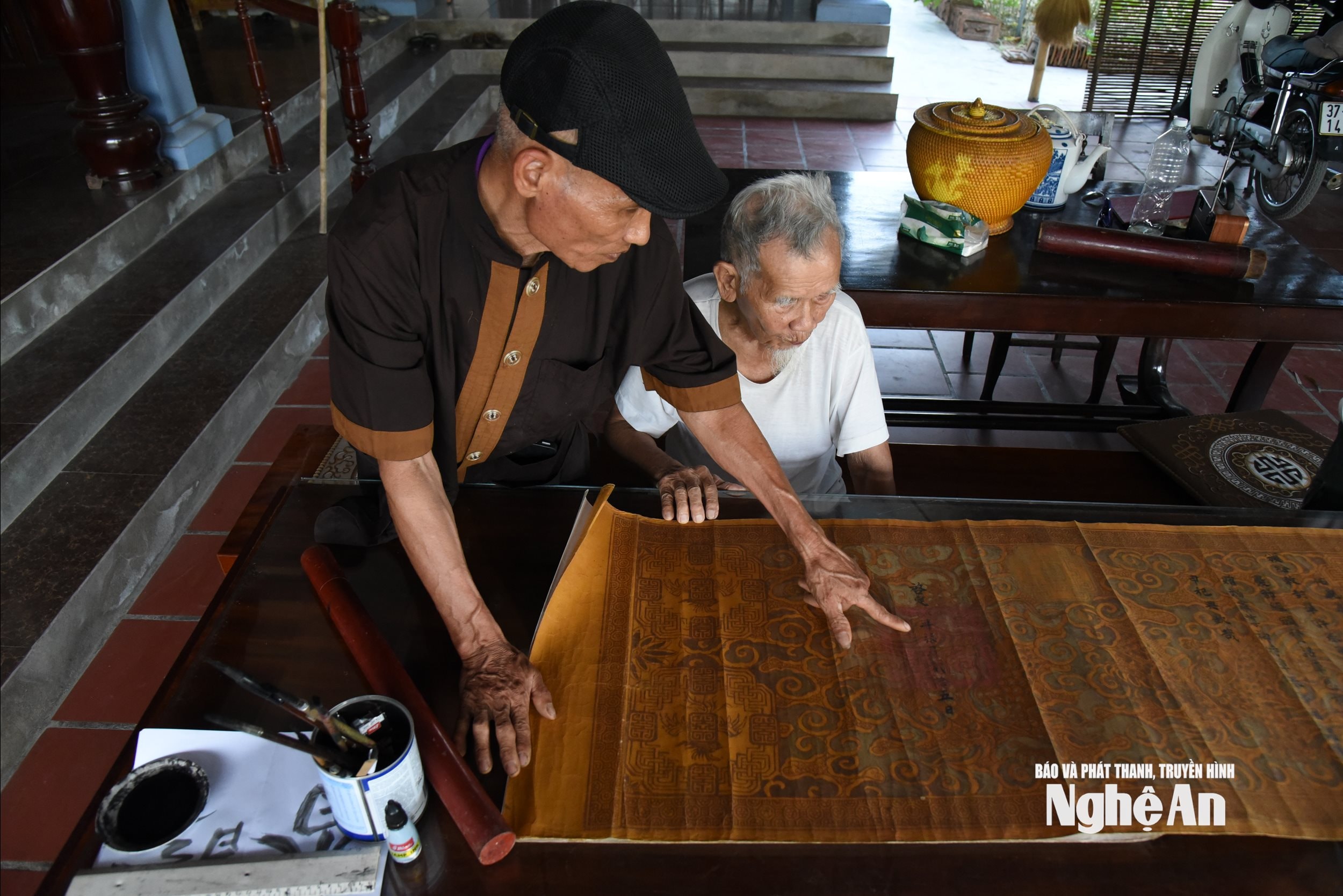
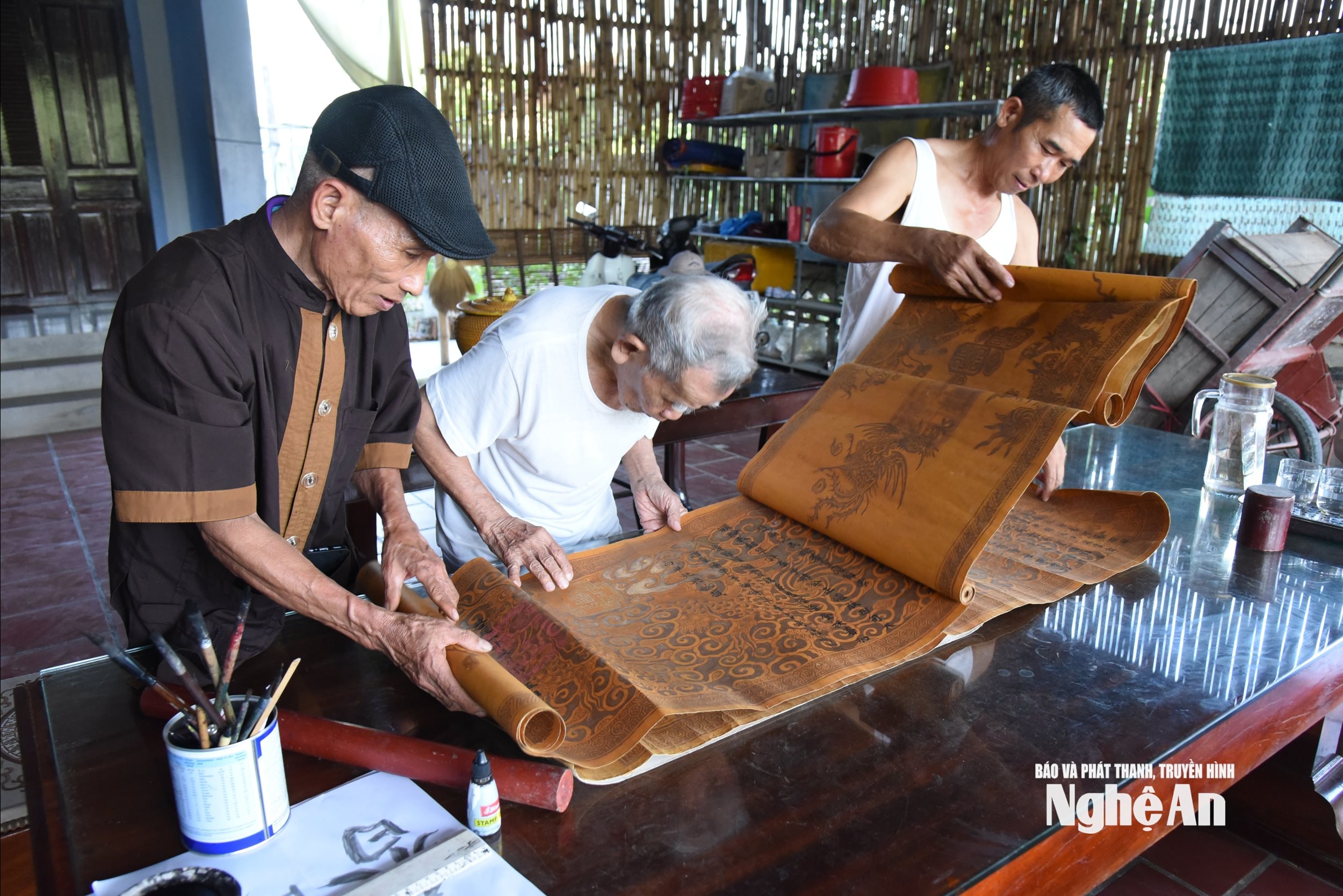
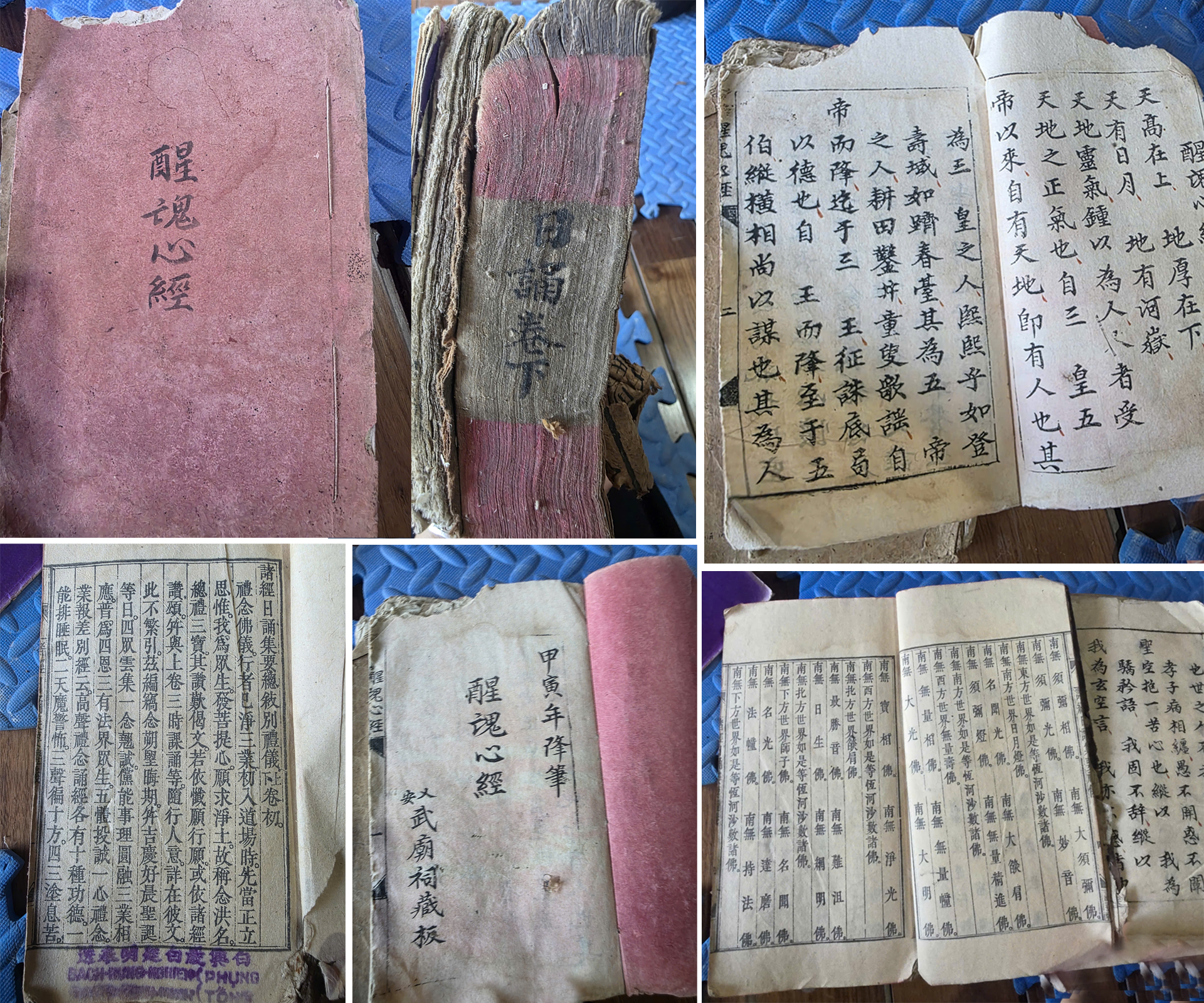
The old man carefully lifted each imperial decree with both hands as if cherishing a treasure. His voice was slow and deliberate: “These are very precious. There were many termites in the temple, so I brought them back to keep safe. Once lost, nothing can ever get them back.” Then, he carefully spread each decree on the table, showing us the time-worn Chinese characters. Beside them was the certificate recognizing Cho Hen Temple as a provincial-level historical and cultural relic in 1999, which he had preserved intact for many years.
Born in 1924, Mr. Nguyen Tu Chau dedicated almost his entire life to this land. As a child, while many of his peers were preoccupied with farming, his parents hired tutors to teach him classical Chinese. Later, he continued his studies in French and Vietnamese at Nghi Loc. Thanks to this, he became one of the few people in the region fluent in Chinese, French, and Vietnamese. This knowledge not only helped him participate in social work but also became the "key" to deciphering the ancient documents of Cho Hen Pagoda.
Recalling his younger years, he still vividly remembers the time he was assigned by the local authorities to participate in the first general election in 1946. Following that were years working in tax and land administration for the commune. His life has been marked by many changes in the country and the transformation of his homeland, but one thing has never changed: his deep connection to the ancient temple near Hến Market.
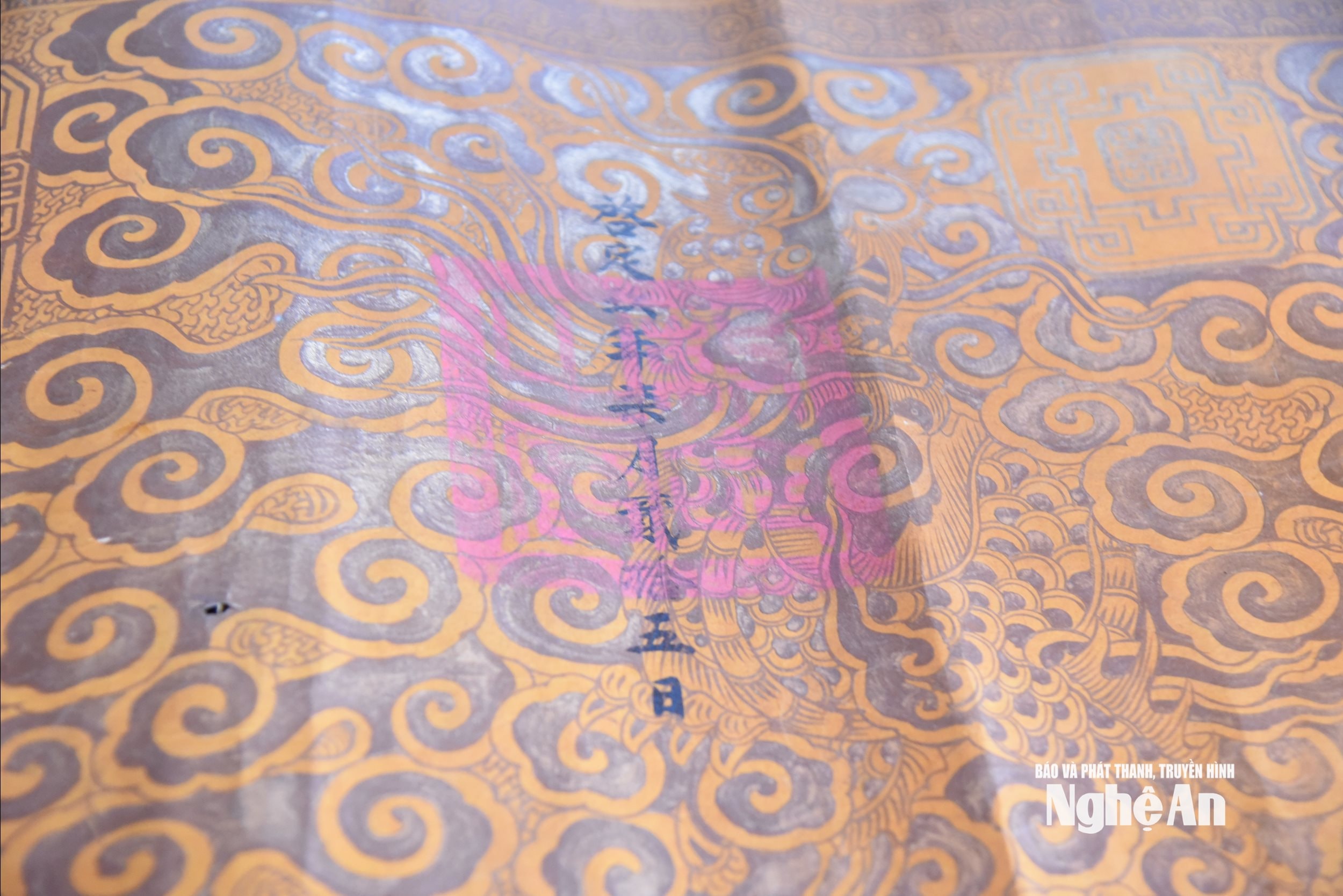
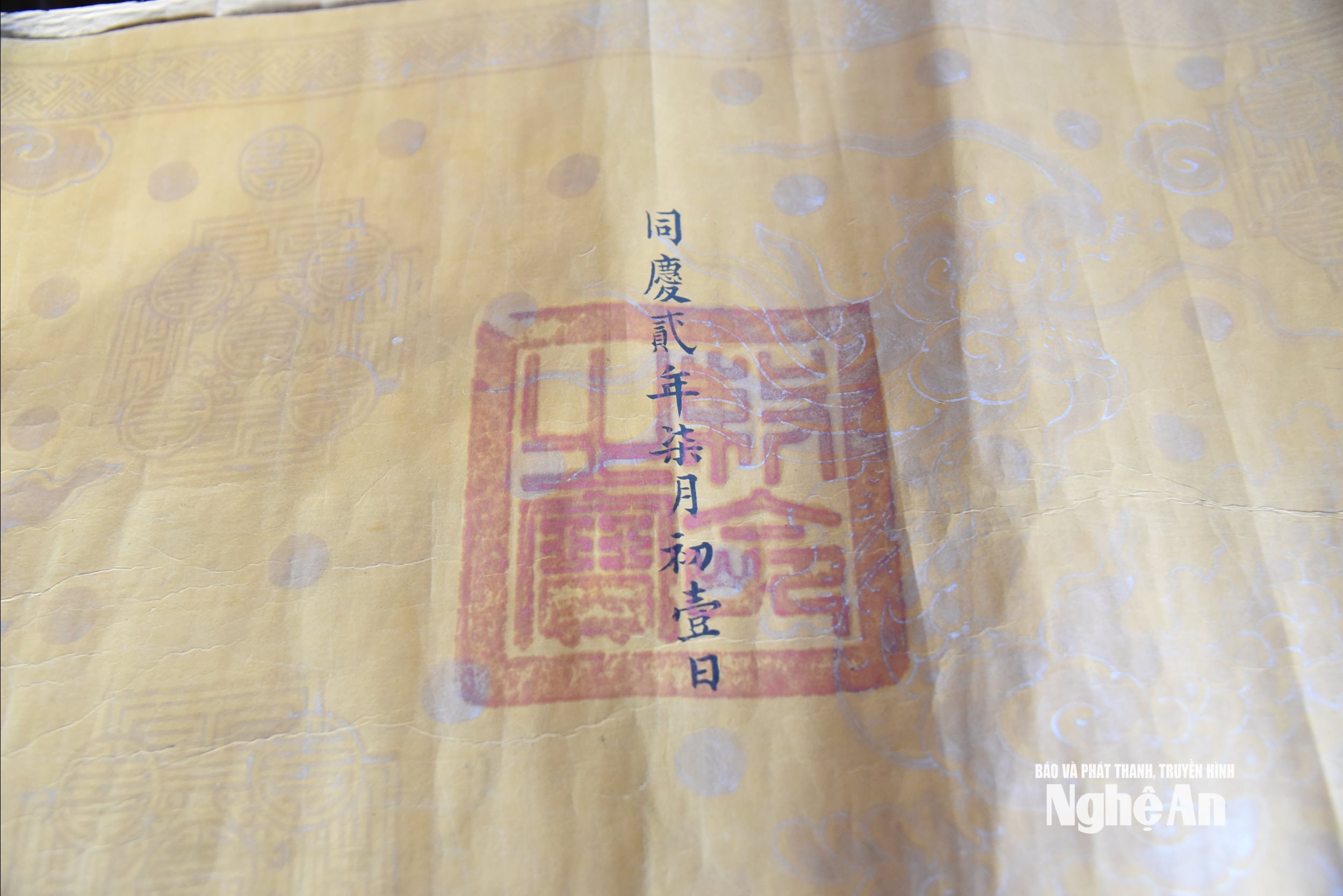
Born and raised at the foot of the mountain where Cho Hen Pagoda is located, and being knowledgeable in Chinese characters and a disciple of the pagoda, Mr. Chau spent many years translating ancient scriptures into Vietnamese. These carefully handwritten scriptures were later typed for long-term preservation. Furthermore, he meticulously recorded the pagoda's history, its renovations, the origins of its statues, imperial decrees, and ancient couplets. For him, it wasn't just about preserving documents, but also about preserving the memory of a region rich in tradition.
Sitting beside his father, Nguyen Tu Tran, a member of the management board of Cho Hen Pagoda, said that despite his advanced age, his father still asks his children and grandchildren to take him to the pagoda on important holidays. He personally cleans the altar, checks the artifacts, and guides the younger generation to learn more about the history of the ancient pagoda. "My father remembers every statue, every couplet, every story of the pagoda very clearly. There are things that we young people would hardly know if we didn't hear him tell them," Tran shared.
Watching Mr. Chau carefully handle each imperial decree, faded with time, we understood that the value of these artifacts lies not only in their age or historical significance. More precious than anything else is the love and dedication of the man who has devoted his entire life to preserving them. If Cho Hen Pagoda is the history book of a region, then Mr. Nguyen Tu Chau is the guardian of those last remaining, intact pages of history.
.png)
From the royal decrees and the meticulous records of Mr. Chau, the story of Cho Hen Pagoda gradually unfolds as a historical narrative spanning nearly half a millennium. According to him, the pagoda was originally called Phuc Son Temple, built around the 15th century on the mountainside of the former Bui Khong area. In the mid-16th century, after General Dinh Bat Tuy and his three sons, Nguyen Dang Thuy, made great contributions in defeating the enemy in the eastern part of Truong Hen, helping the people settle down, reclaim land, establish villages, and open Hien Market, the pagoda was renovated, expanded, and renamed Hien Phuc Temple. Over time, the locals became accustomed to calling it Cho Hen Pagoda because it is located right next to the famous market of the region.
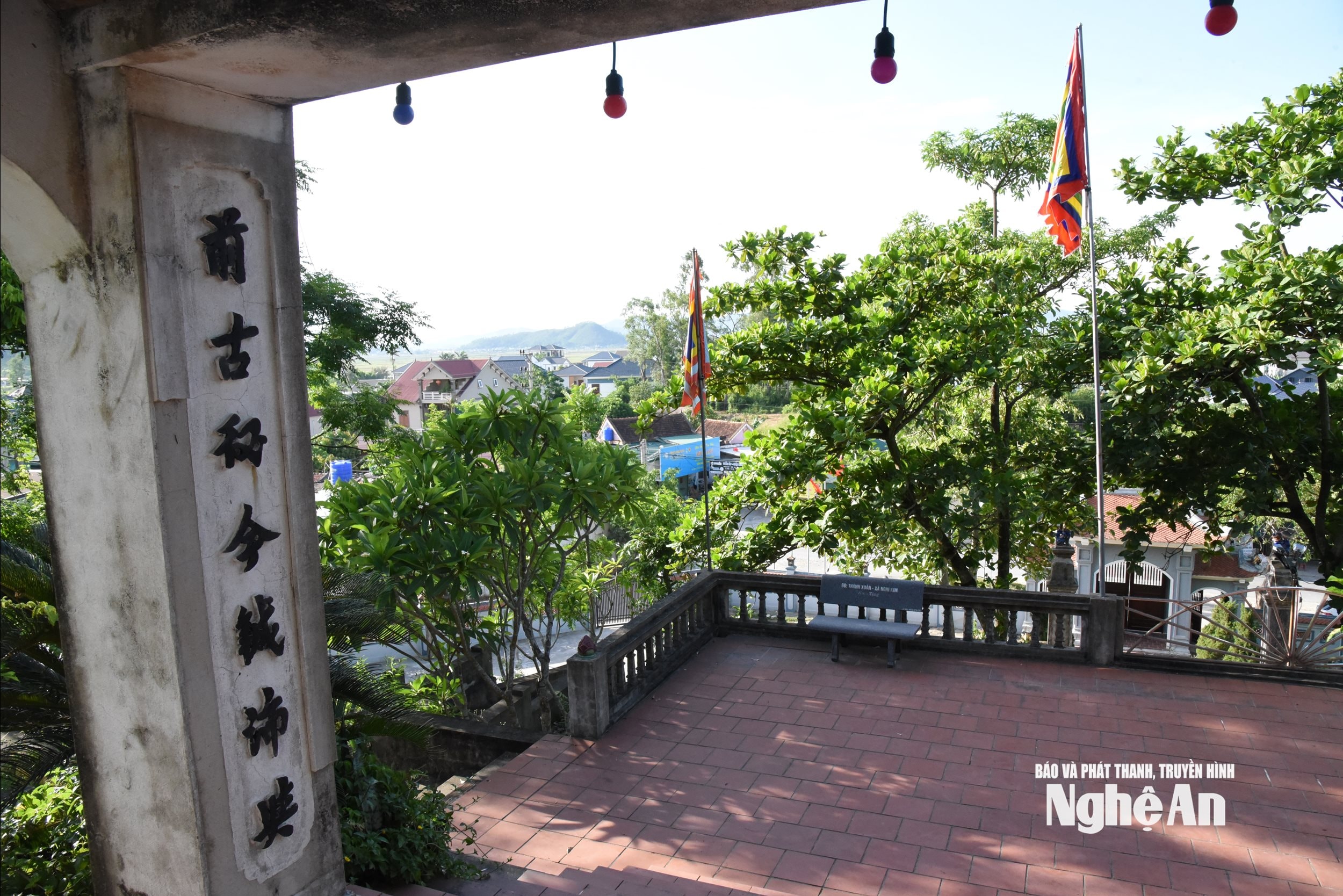
In Mr. Chau's story, Cho Hen Pagoda is not just a place of worship or a center of religious activity for the people. What makes this historical site particularly valuable is its historical significance, linked to the patriotic movements of the nation.
In 1874, this place witnessed the activities of the Tran Tan and Dang Nhu Mai resistance fighters in the Van Than movement against French colonialism. During the Can Vuong period, Ngo Quang's resistance fighters chose the pagoda as a base to defend the Nam Dan - Nghi Loc - Hung Nguyen (old) region. Each historical event of the country seems to have left its mark on the roof of this ancient pagoda.
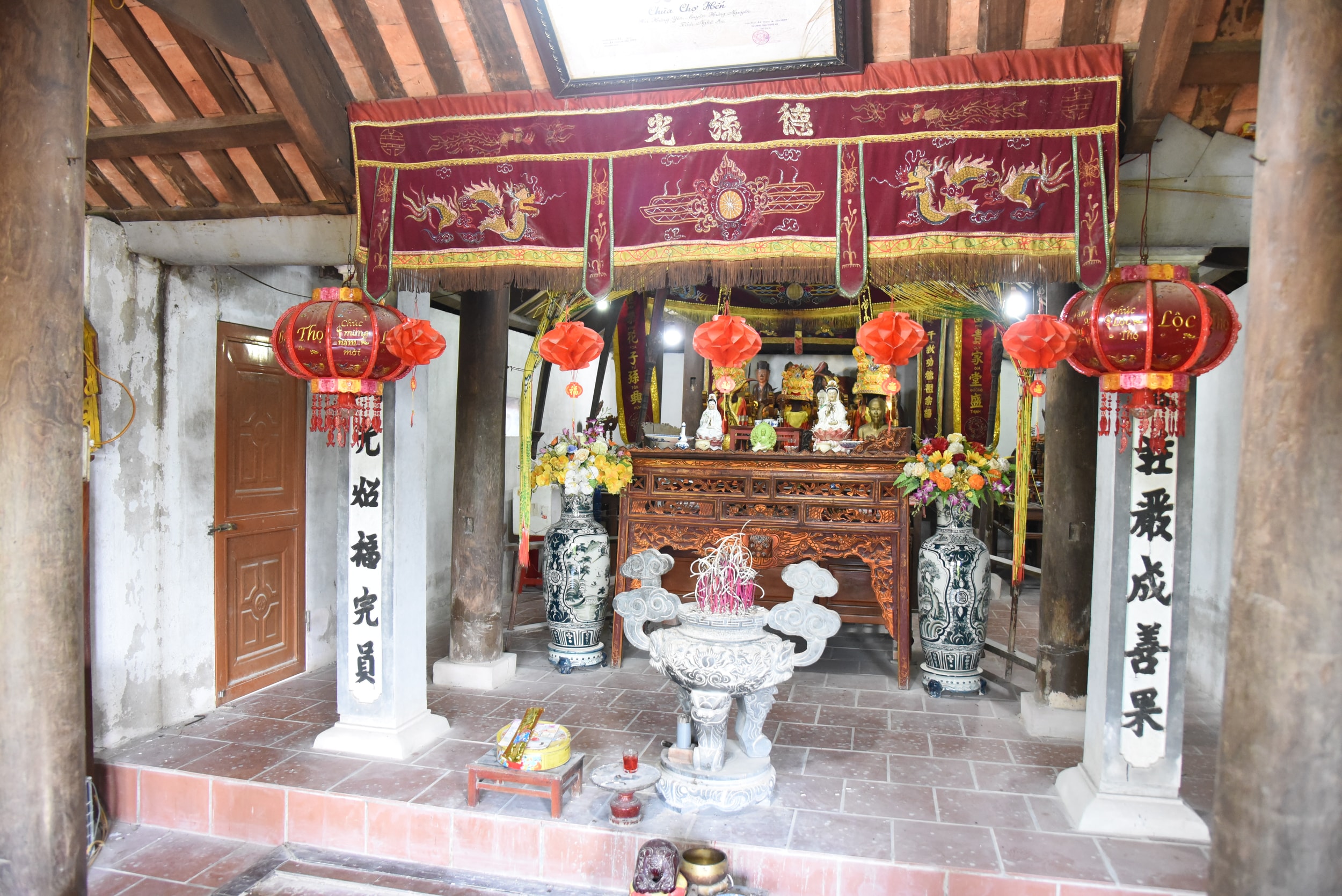
Particularly during the Nghệ Tĩnh Soviet Uprising of 1930-1931, Chợ Hến Pagoda became a place to display the Party flag and a secret meeting place for the Hưng Nguyên District Party Committee before the August Revolution of 1945. From a religious site, the pagoda became a key location for the revolutionary movement. Perhaps that is why, in the minds of the local people, Chợ Hến Pagoda is not only sacred because of the incense smoke but also because of the history of their ancestors' struggles.
Nearly 500 years have passed, yet the ancient temple remains a center of cultural and spiritual life for the community. Every year, the Cho Hen Temple Festival is held with many traditional rituals to commemorate the contributions of ancestors, while also educating the younger generation about patriotism and the principle of "drinking water, remembering the source." These festivals not only attract local people but also become an opportunity for descendants living far from home to return and reconnect with their roots.
.jpg)
.jpg)
.jpg)
.jpg)
What impressed us most was the presence of young people at the temple today. Every Saturday evening, the Hien Phuc Association organizes activities with the participation of a large number of young people from the commune and neighboring areas. They learn Buddhist teachings, participate in volunteer work, protect the environment, develop life skills, and together preserve traditional cultural values. In the ancient setting of this centuries-old temple, the seeds of compassion, community responsibility, and love for their homeland are being sown every day.
According to Mr. Le Cong Thanh, Head of the Culture and Social Affairs Department of Yen Trung commune, Cho Hen Pagoda is not only a typical historical and cultural relic of the locality but also a significant site for educating future generations about traditions. With its historical, cultural, and scenic values, this ancient pagoda is being preserved and promoted by the local authorities to gradually become a spiritual and cultural destination in Nghe An. In this journey, people like Mr. Nguyen Tu Chau play a special role, as he has quietly preserved many documents, memories, and historical values of the relic over the years.
As we parted ways, Mr. Chau carefully rolled up each imperial decree, placed them in a red-painted iron tube that had faded with time, and gently stored them in his familiar wooden cabinet. More than a century has passed, but this 103-year-old man still quietly does his job: preserving the memories of the temple, so that the stories of his ancestors, of a land rich in patriotic traditions, will not be obscured by time.


