
The story of the composer of 'Vinh, City of Dawn'
(Baonghean.vn) - In his small house with a sun-drenched balcony, musician Le Ham welcomed me with a warm smile. He said that he had spent his whole life connected to Vinh City, so being able to live here in his old age, in a small house just a few steps from the bustling streets outside, was enough to make him content.
And we chatted in that feeling of contentment, rambling from "Vinh, City of Dawn" to the collection of songs he composed that had just been honored with a State Award…
The notes rise from the heart.
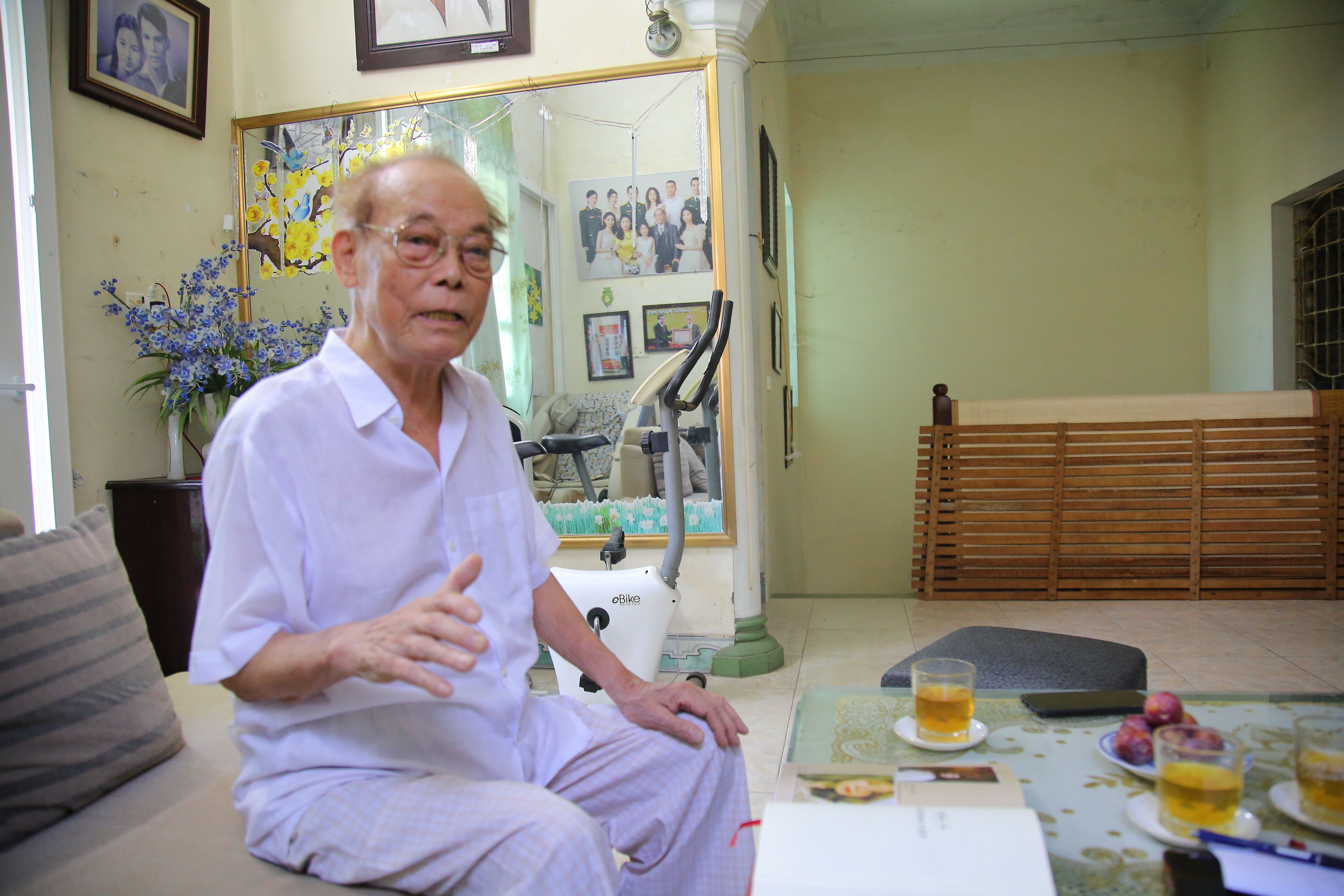
Even though he's approaching 90, when he talks about those old melodies, he still gets excited as if it were the first time he's presented them to the public. These are the melodies from the youthful heart of the boy from Dien Hong village, from the days when he happily followed his mother to the city.
He recounted that he had absorbed musical inspiration from his mother's recitations of verses from the Tale of Kieu, so it could be said that Le Ham's music originated from the lullabies he heard throughout his childhood. His love of music was also nurtured by attending cultural performances on makeshift stages in his neighborhood; young Ham at that time knew how to make himself a small flute from papaya leaf stems to play melodies he had learned from the village's loudspeakers...
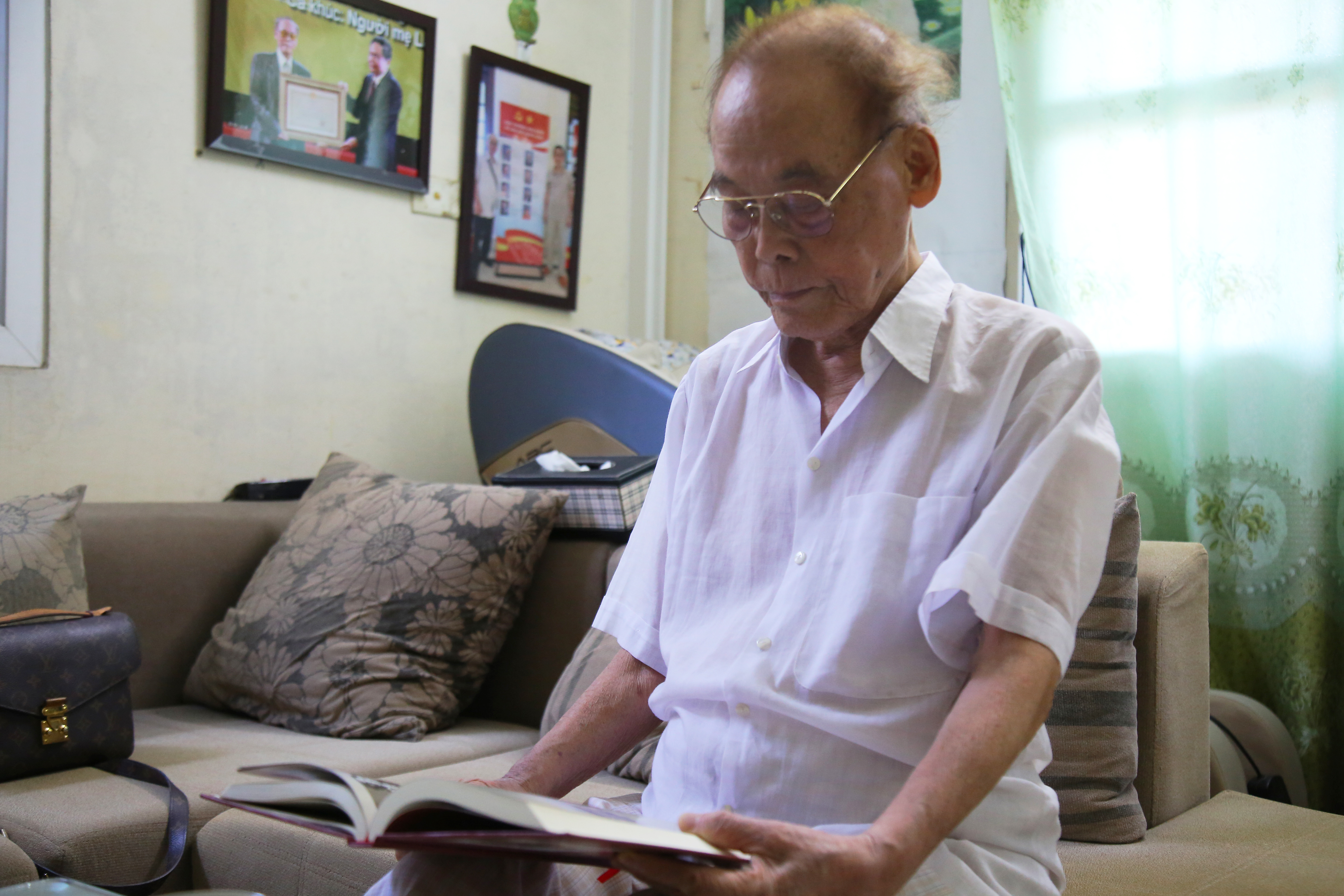
It wasn't until his time as a cadet, from 1948 to 1951, that Le Ham received formal music training. With a remarkable talent for the flute, he was determined to pursue a musical career and became a performing artist in the 320th Division. From 1955 to 1961, he studied at the Vietnam Music School. He recounted that his graduation piece was a six-movement choral work, which was highly praised, but what made him happiest was finding a bright future within that wonderful musical realm.
After graduating, he was assigned to the Vinh Linh front line to serve our soldiers on the north bank of the Ben Hai River. "Between the two sides of the battle lines, the fragile boundary of the sound of peace is sometimes just a single musical note. And no matter who a person is, or which side they are on, they are easily moved by a sound," he said.
In 1964, Le Ham was transferred to teach at the Central School of Music and Fine Arts, but shortly afterward, Ha Tinh province invited him to become the head of the Ha Tinh Performing Arts Troupe. His musical career was intertwined with positions related to the artistic environment. This was also the opportunity and the source of his improvisational compositions, which nonetheless foreshadowed a brilliant musical career that would follow.
Composer Lê Hàm recalled that he returned to Hà Tĩnh during the extremely difficult and brutal years of war, but he was able to dedicate himself wholeheartedly to the battlefields where bombs and bullets roared. It was during those days that he composed songs like "Girls of the La River," "The Soldiers of the Ferry," and "The Glorious Victory of Hà Tĩnh"... Later, in 1964, "Girls of the La River"—one of his songs with a strong folk style, a rare feature in his other works—was broadcast on the Voice of Vietnam radio station. The song not only brought tears to many people's eyes, but even he... wept.
“The entire homeland, the entire nation, turned its gaze towards the battlefield, awaiting the day of complete victory. Everyone wanted to contribute their strength to fight the Americans. The song speaks to the heart, like a painting vividly depicting the love of every Vietnamese person,” composer Le Ham recounted. His song features images of girls secretly clearing roads, representing the courageous and brave women of the Soviet Union: “The courageous Soviet women are no less brave than the men.” “Girls of the La River” later became one of the songs in the collection for which he was honored with the State Prize.
Growing up surrounded by folk songs and melodies, deeply imbued with the national spirit, musician Lê Hàm also made significant contributions to fieldwork and collection efforts to find ancient melodies for the folk songs and melodies of Nghệ Tĩnh. Later, he served as the chief editor of the book "Folk Music of Nghệ An", which was highly regarded by the music community.
In 1970, after compiling 30 folk songs, he had them published as an anthology of Nghe An folk songs by the Ha Tinh Arts Association. These songs became familiar performances by art troupes in both Nghe An and Ha Tinh provinces. Songs like "Boat Rowing Song," or those developed from the folk melodies, were rewritten by Le Ham, and many subsequent generations of folk singers mistakenly believe them to be the original melodies of the folk songs.
When people mention Le Ham, they often think of a carefree and generous musician when writing music, and also the way he brought his works to life. “It’s strange, there are works that take months to conceive and nobody sings them, they don’t become famous at all, even though I think they’re good. But then there are songs that are born from a fleeting moment of emotion, and later, the words and notes surge forth and are loved and warmly received by the public,” said musician Le Ham. These include “The Mother of Lang Sen,” “Vinh, City of Dawn,” “Girls of the La River,” “The Lang Sen Festival”…
"In the old days, when composing, musicians didn't get paid royalties. Even when a song was used, people would gratefully invite me out for a bowl of pho. That was a simple, incredibly happy moment for a musician!" - Le Ham said with a smile.
Life's Rewards
Mentioning "Vinh, the city of dawn," people immediately think of the theme song of Vinh City Radio and Television Station, and the "City Anthem" of Vinh – a vibrant and affectionate young city. Composer Le Ham recounts that he has a deep connection with Vinh; he truly considers this city a part of his homeland. No matter where he goes, for him, returning to Vinh means returning home.
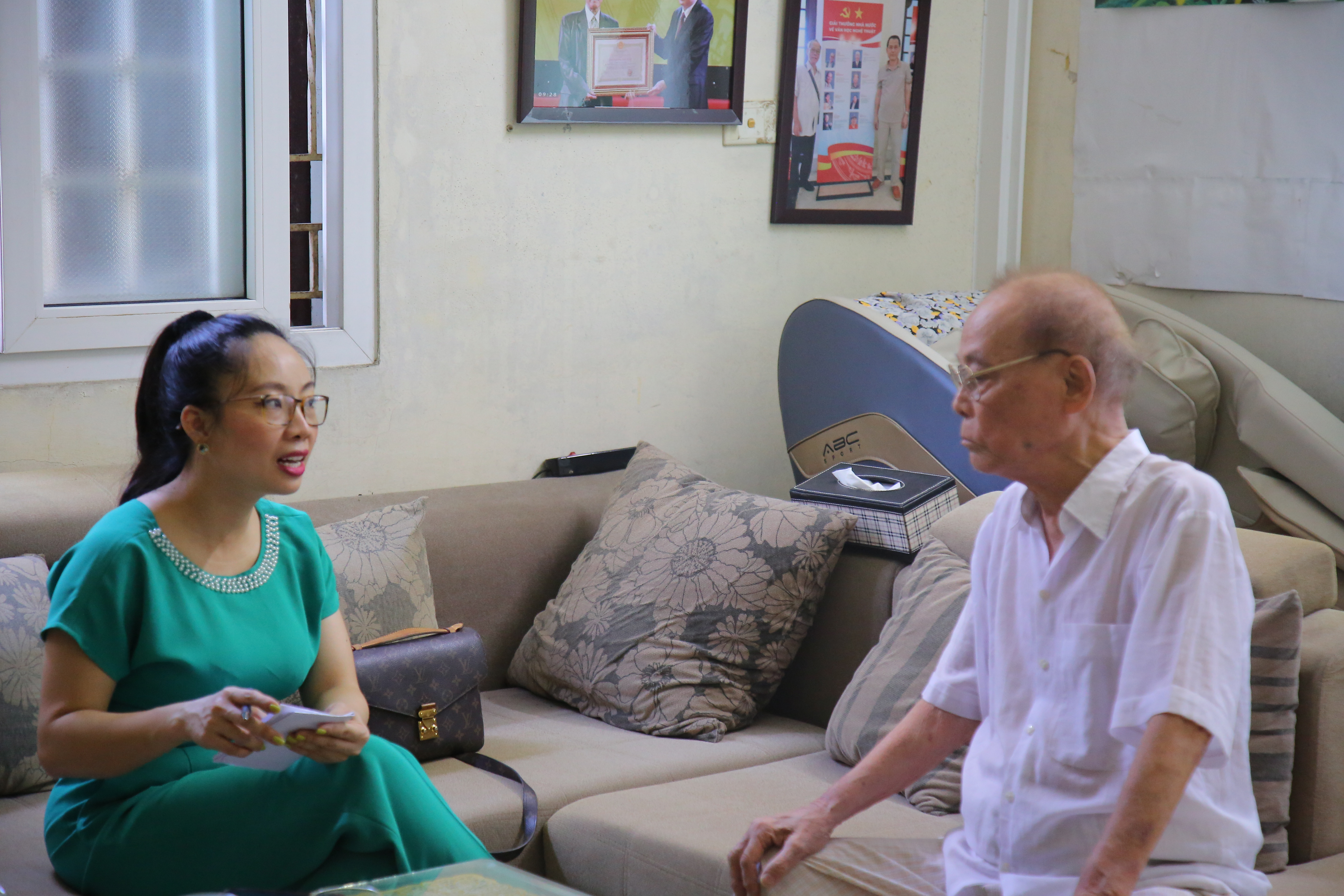
The song contains the following lines:"I'm taking you back to Thanh Vinh, my hometown."- That's an invitation from a lyrical character in the song, but it appears in a poetic image from real life. "It was when I was traveling from Ha Tinh, and a young female volunteer asked for a ride for a short distance. Even though it was only a short trip, we talked a lot. When we reached the turnoff to her house, she even said, 'I'll pick you up and take you back to Vinh City tomorrow!' That was also the inspiration for the songwriter when writing this song."
"Vinh, City of Dawn" has a lyrical, poignant melody, yet it is also vibrant and captivating, reflecting the composer's feelings about Vinh. Even long after the song took on its own, people still seek him out simply to sing along, to satisfy their passion for contemplating the beauty of Vinh, in the very place where this song, imbued with the essence of Vinh, was born.
Another song that composer Le Ham considers his favorite about the beloved President Ho Chi Minh is "The Mother of Lang Sen Village." The song, with its simple, unadorned yet profound and majestic verses, is truly remarkable."The mother silently endured life like that / Her thin shoulders bearing the heavy burden on the slippery road / That mother gave birth to her child in the night sky / Amidst the dark mud, the lotus flower bloomed beautifully."
Le Ham recounted that he wrote these lyrics and melodies with all the emotion from his heart, with boundless love, respect, and admiration for that Vietnamese mother. The song was later performed extensively in festivals and seems to have endured through time; whenever there's a festival, "The Mother of Lang Sen" is present, and whenever there's an important ceremony, the song is sung."Mother of Sen Village, Mother Vietnam, has given her son glory..."It rang out again, full of pride.
The collection of songs honored at the State Award ceremony for Literature and Arts also includes the choral works "Vietnam in My Heart," "The Drum Sound on a Moonlit Night," and "Ha Tinh, My Homeland"... It can be said that each song was carefully crafted by composer Le Ham, word by word, note by note, so that listeners feel both familiar and close, while also feeling proud and trusting. "Throughout my life, I have lived in music, immersed in it, to see how meaningful and worthwhile life is," shared composer Le Ham.
With over 200 songs, including children's songs selected for textbooks and suites for choirs, for him, the songs "Vinh, City of Dawn," "The Mother of Lang Sen," and "Girl of the La River," sung and remembered by generations, are a great source of happiness for a musician. "When a song becomes famous, the musician gets to live with it, to be remembered and have their name mentioned. That's a reward in life, something we still owe to the world," composer Le Ham confided.


