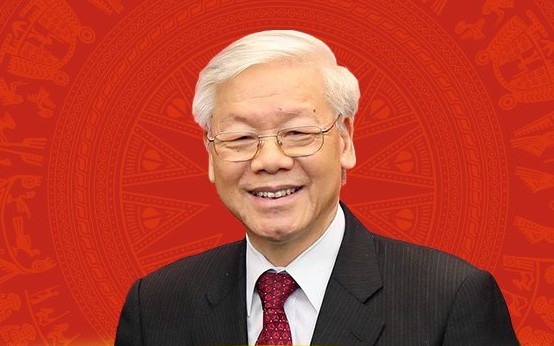
There is a bright star, a blazing red flame that never goes out.
Associate Professor, Doctor, Writer Nguyen The Ky•July 21, 2024 15:05
The images and feelings of our beloved General Secretary; of the kind and decisive President and Chairman of the National Assembly from not so long ago; of the simple, sincere, and approachable Party member Nguyen Phu Trong; and of Mr. Trong - a very admirable and dear former classmate of ours, former students of the Faculty of Literature, Hanoi University during a difficult time (now Hanoi National University) - keep appearing, vividly vivid yet painfully poignant, sorrowfully heartbreaking.
Associate Professor, Doctor, Writer Nguyen The Ky (1)• July 21, 2024
*****
KUpon receiving the deeply saddening news from the Central Committee's Health Protection Board regarding the passing of our beloved General Secretary Nguyen Phu Trong, I sat in silence, filled with sorrow, regret, respect, and profound grief. Images and feelings of our beloved General Secretary; of the kind and decisive President and Chairman of the National Assembly not so long ago; of the simple, sincere, and approachable Party member Nguyen Phu Trong; and of Mr. Trong – a highly admirable and dear former classmate of ours, former students of the Faculty of Literature, Hanoi University during a difficult period (now Hanoi National University) – kept appearing, vividly poignant, heartbreakingly sad. And, suddenly, a few lines from the poem "Remembering" by the poet, writer, and musician Nguyen Dinh Thi, composed exactly 70 years ago, and 10 years after the birth of Comrade Nguyen Phu Trong, came to mind.“The star, longing for someone, shines brightly / Illuminating the path of soldiers amidst the clouds / The flame, longing for someone, glows red in the cold night / Warming the hearts of soldiers beneath the trees… /…The star in the night never goes out / We love each other and fight together all our lives / The fire in the forest blazes brightly / We love each other and are proud to be human.”
Among the top leaders of our Party and State, Comrade Nguyen Phu Trong is the one with a clear purpose in choosing the fields of study he considers necessary for his work. In his article "A Few Thoughts on Publishing the Party's Political Theory Journal," he wrote: "As the 10th grade (equivalent to today's 12th grade) was nearing its end, the school asked students to list their future aspirations and which university they wanted to apply to. Without hesitation, I wrote down my aspiration to study folklore or become a journalist and applied to the Faculty of Literature at Hanoi University."(2)… “I am particularly passionate about reading and studying folk poetry, folk tales, and then Nguyen Du, Tan Da, Nguyen Binh, To Huu…, poets whose souls are deeply imbued with folk elements. It is no coincidence that in my final year of university I chose the topic “Folk Poetry and the Poet To Huu” as the subject of my graduation thesis…” … “With the dedicated help and guidance of Professor Dinh Gia Khanh, I successfully defended my graduation thesis with the highest possible score, the only one in that cohort.”(3).
A touching reunion between General Secretary and President Nguyen Phu Trong and his former homeroom teacher Le Duc Giang during a visit to his old high school, Nguyen Gia Thieu High School. Photo: VNA.
The next step, not by choice but by organizational assignment, was to work at the Communist Magazine as an editor in the Party Building Department. A few years later, he was selected as a postgraduate student at the Department of Economics and Politics, Nguyen Ai Quoc Advanced Party School (now the Ho Chi Minh National Academy of Politics), and then sent to the Soviet Union as an intern and defended his Candidate of Sciences (now Doctorate) thesis in Party Building at the Soviet Academy of Social Sciences. He held positions as Deputy Head, Head, and then Member of the Editorial Board. The Secretariat and subsequently the Politburo assigned him the duties of Deputy Editor-in-Chief (1990-1991) and Editor-in-Chief of the Communist Magazine (1991-1996). From January 1994 to the present, he has been a member of the Central Committee of the Party for the 7th, 8th, 9th, 10th, 11th, 12th, and 13th terms. From December 1997 to the present, he has been a member of the Politburo for the 8th, 9th, 10th, 11th, 12th, and 13th terms, and has been assigned by the Central Committee and the Politburo to successively oversee the following areas: Party ideology, culture, and science and education; Standing Committee of the Politburo; Vice Chairman and then Chairman of the Central Theoretical Council; and Secretary of the Hanoi City Party Committee for the 12th, 13th, and 14th terms. From May 2002 to the present, he has been a Member of the National Assembly for the 11th, 12th, 13th, 14th, and 15th terms, including from June 2006 to July 2011, serving as Secretary of the National Assembly Party Caucus and Chairman of the National Assembly for the 11th and 12th terms. From January 2011 to the present, he has held the important positions of General Secretary of the Party for the 11th, 12th, and 13th terms; Secretary of the Central Military Commission; and Head of the Central Steering Committee on Anti-Corruption. He served as President of Vietnam and Chairman of the National Defense and Security Council from 2016 to 2021 (October 2018 to April 2021). He was awarded the 55-Year Party Membership Badge. On July 18, 2024, he was awarded the Gold Star Order, the highest honor of our country, by the Party and the State.
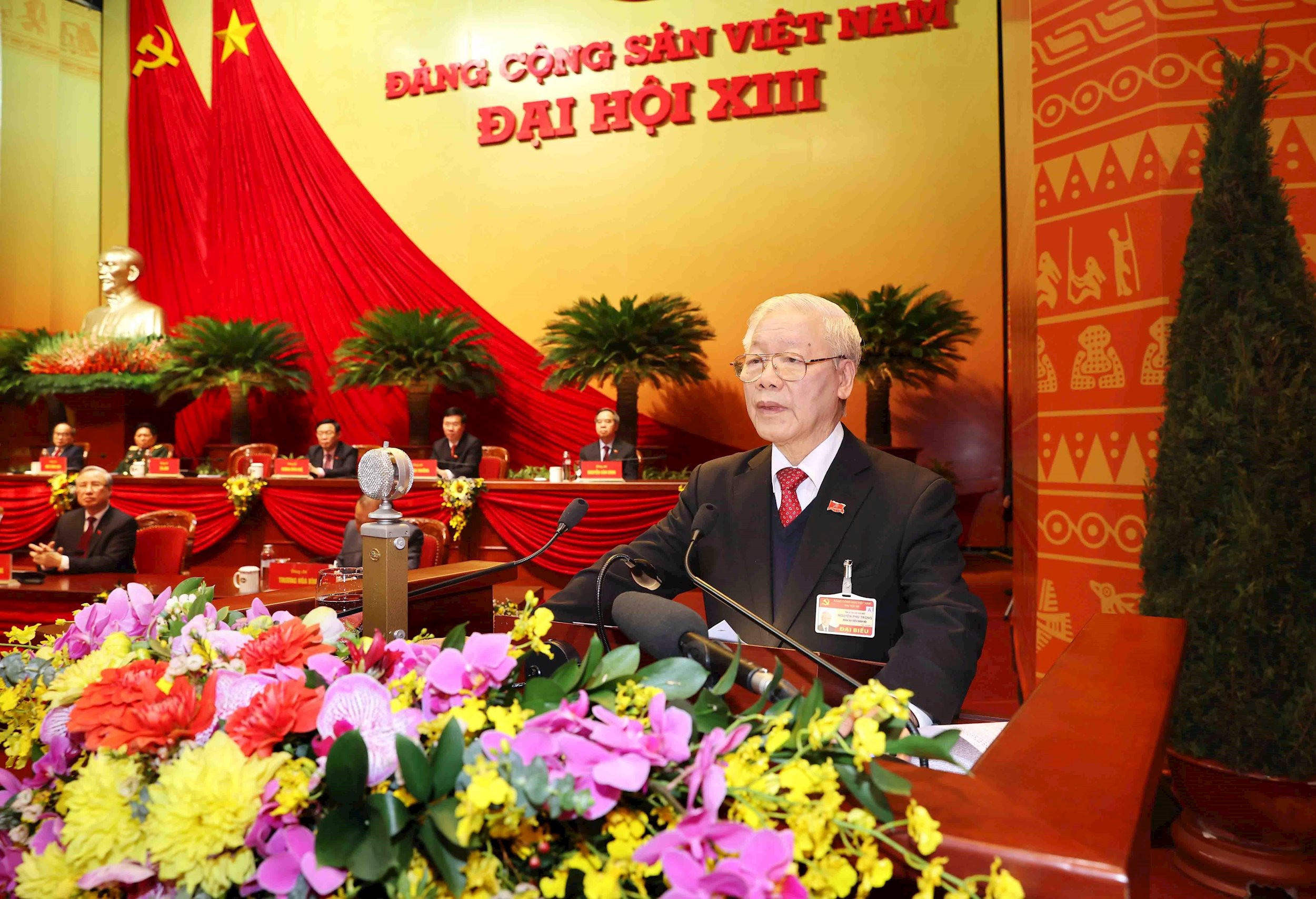
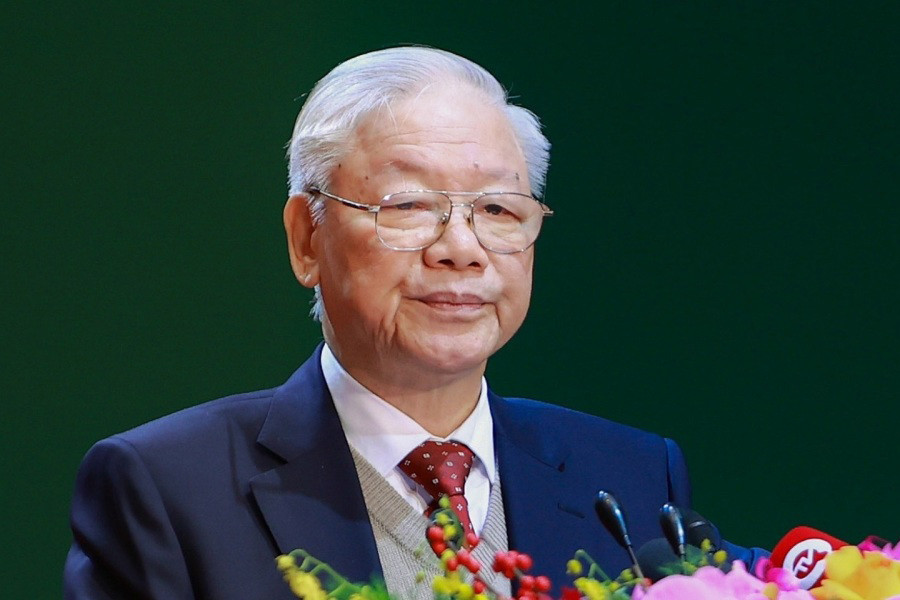
General Secretary and President Nguyen Phu Trong delivers a speech at the 13th National Congress of the Party. Photo: VNA
Comrade Nguyen Phu Trong is a steadfast and creative theorist, an outstanding figure of our Party and State. He often reminds his colleagues to remember the teachings of VI Lenin: "Without revolutionary theory, there can be no revolutionary movement. Only a party with a pioneering theory to guide it can fulfill its role as a vanguard fighter." He emphasizes the need to proactively elevate the Party's theoretical thinking, promote the summarization of practical experience, conduct theoretical research, and provide a timely scientific basis for formulating the Party's guidelines and policies, and the State's laws and regulations.
Theoretical research must be linked to the summation of practical experiences in the development of political, economic, cultural, social, defense, security, and foreign affairs fields; and to the building of the political system, especially the building of the Party, the building of a socialist rule of law state, and socialist democracy, according to a new approach and requirements: the synchronous formation of national development institutions based primarily on science, technology, and innovation, and maximizing the human factor. People are the subjects that create the driving force for rapid and sustainable national development, escaping the risk of backwardness, avoiding the "middle-income trap," and successfully achieving the goal of becoming a developed country, following a socialist orientation, by the middle of the 21st century.
Until recently, despite a noticeable decline in health and declining physical strength, Comrade Nguyen Phu Trong's intellect, dedication, and aspirations remained intact and radiant. He discussed and instructed senior leaders: To serve and contribute to achieving the country's development goals through three important milestones: 2025, 2030, and 2045, what should be the theoretical development goals for Vietnam? Perhaps, by 2025, based on a summary of 40 years of implementing the reform process and 50 years of national reunification, we need to fundamentally perfect the theoretical system regarding our reform policies; and by 2030, based on a summary of 40 years of implementing the Platform for building the country during the transitional period to socialism and a summary of 100 years of the Party's leadership of the Vietnamese revolution, we can supplement and develop the Platform to meet the requirements of the new era. This will supplement, enrich, and further refine the Party's ideological foundation; and by 2045, when our country becomes a developed, high-income nation, we will have a complete, scientific, and modern theoretical system on socialism and Vietnam's path to socialism.
It is necessary to define and agree upon such theoretical development goals in order to be determined to strive, work, and create. Attention should be paid to researching new theoretical issues in the world; new issues arising from practice; the experiences of advanced countries; and the scientific and technological revolution, etc.
Step by step, we are supplementing and perfecting the theory, building a theoretical system for the Vietnamese revolution in the new stage: building and defending the country, opening up and integrating, being a friend and a reliable and responsible partner of other countries, and having an important position in the region and the world.
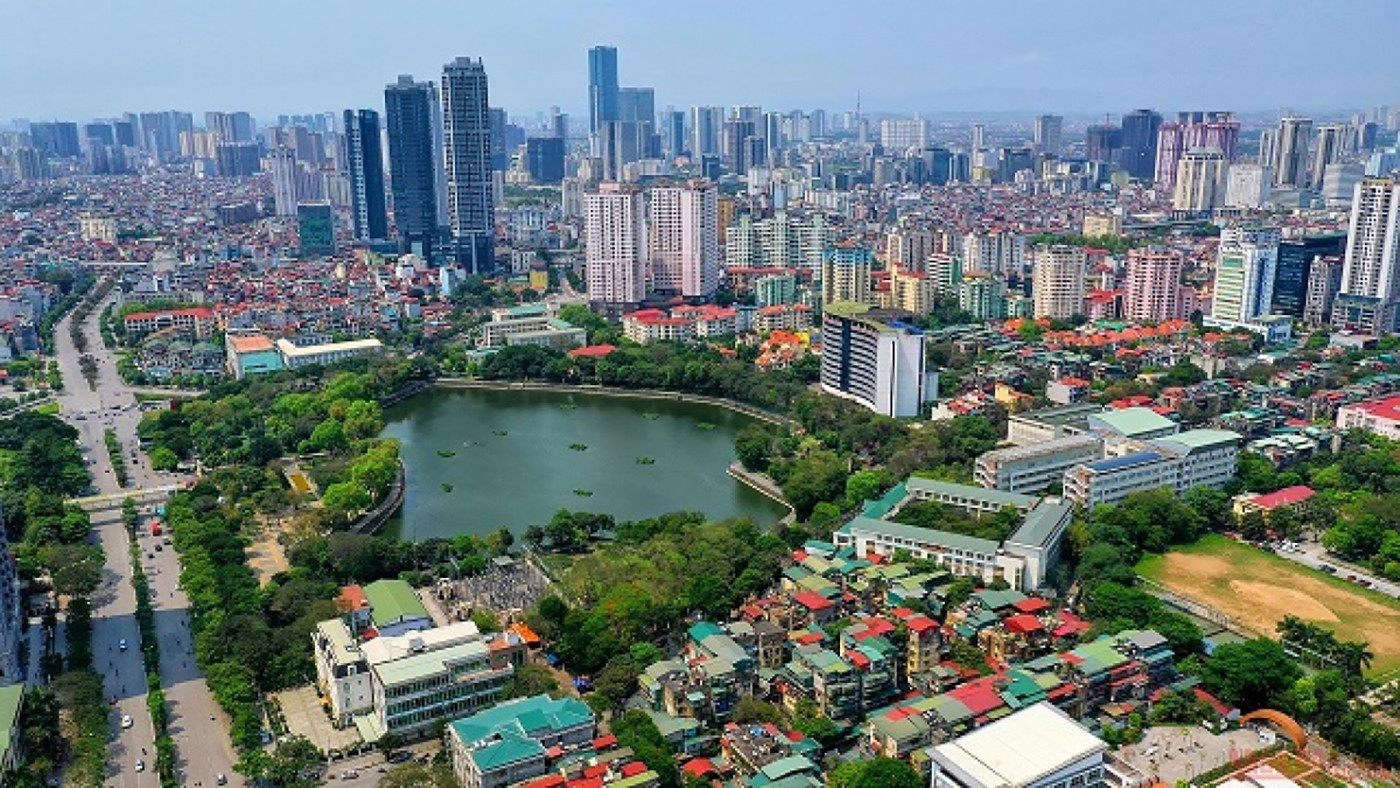
A view of Hanoi, the capital city. Photo: Archival material.
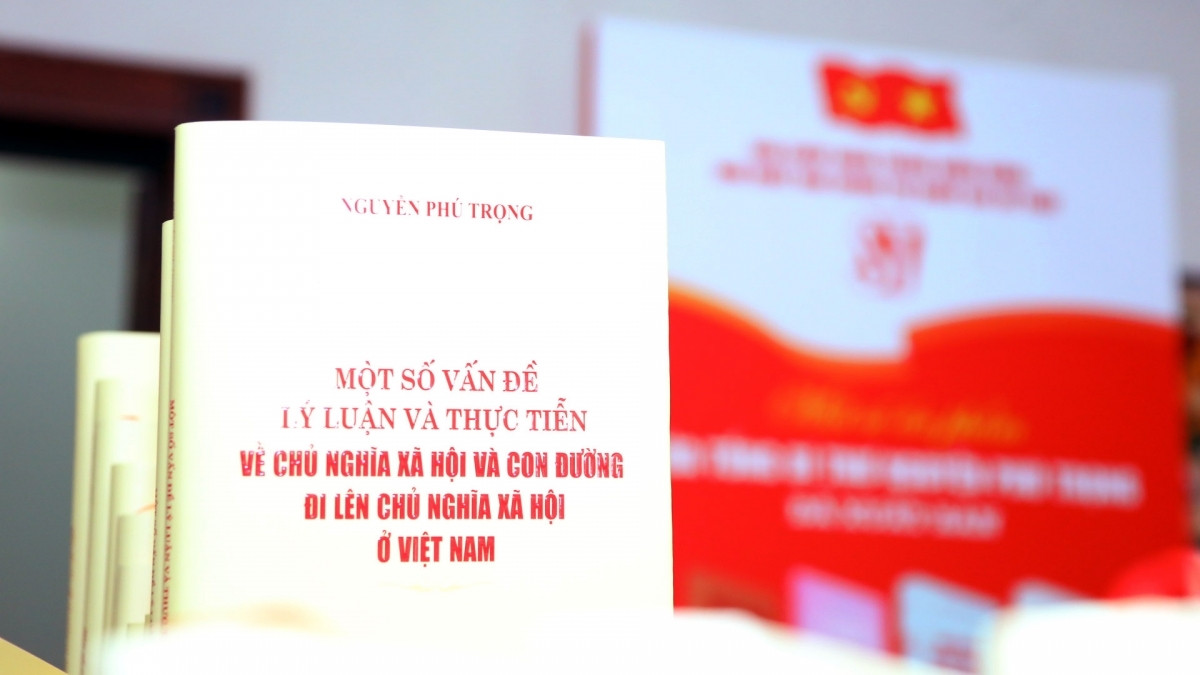
Following the successful conclusion of the 13th National Congress of the Party, commemorating the 131st anniversary of President Ho Chi Minh's birth (May 19, 1890 - May 19, 2021) and other important political and cultural events of the country in 2021, Comrade Nguyen Phu Trong, General Secretary of the Central Committee of the Party, has written an important article: "Some Theoretical and Practical Issues on Socialism and the Path to Socialism in Vietnam". After a general assessment of the global and domestic situation, and addressing issues of culture and humanity, Comrade Nguyen Phu Trong wrote: “We need a society where development is truly for the people, not for profit that exploits and tramples on human dignity. We need economic development coupled with social progress and justice, not an increase in the gap between rich and poor and social inequality. We need a society that is compassionate, united, and mutually supportive, oriented towards progressive and humane values, not one of unfair competition, where the strong devour the weak for the selfish interests of a few individuals and groups. We need sustainable development, in harmony with nature, to ensure a healthy living environment for present and future generations, not one for exploiting and seizing resources, consuming material goods without limits, and destroying the environment.”
"And we need a political system where power truly belongs to the people, is exercised by the people, and serves the interests of the people, not just a wealthy minority. Aren't these noble aspirations the true values of socialism, and also the goal and path that President Ho Chi Minh, our Party, and our people have chosen and are steadfastly and persistently pursuing?"
The book "Some Theoretical and Practical Issues on Socialism and the Path to Socialism in Vietnam" by General Secretary Nguyen Phu Trong.
When discussing the construction and development of an advanced Vietnamese culture imbued with national identity, General Secretary Nguyen Phu Trong emphasized: “We consider culture as the spiritual foundation of society, an intrinsic strength, a driving force for national development and defense; we determine that the synchronous and harmonious development of culture with economic growth and social progress and equity is a fundamental orientation of the process of building socialism in Vietnam. The culture we are building is an advanced culture, imbued with national identity, a culture unified in diversity, based on progressive and humanistic values; Marxism-Leninism and Ho Chi Minh Thought play a leading role in the spiritual life of society, inheriting and promoting the fine traditional values of all ethnic groups in the country, absorbing the achievements and essence of human culture, striving to build a civilized and healthy society for the genuine benefit and dignity of human beings, with a high level of knowledge, morality, physical strength, and lifestyle.” and aesthetics are increasingly sophisticated. We have determined that: People hold a central position in the development strategy; cultural development and human development are both the goals and the driving force of the reform process; the development of education and training and science and technology is a top national priority; environmental protection is one of the vital issues and a criterion for sustainable development; building happy and progressive families as healthy and solid cells of society, and achieving gender equality are criteria for progress and civilization. Socialism is a society oriented towards progressive and humanistic values, based on the common good of the entire society in harmony with the legitimate interests of individuals, fundamentally different from societies that compete to seize private interests among individuals and groups. Therefore, it is necessary and has the conditions to build social consensus instead of social opposition and antagonism.”
The above are the profound thoughts and theories of General Secretary Nguyen Phu Trong on socialism and Vietnam's path to socialism, in which culture is affirmed as the spiritual foundation of society, an intrinsic strength, a driving force for national development and defense; and people hold a central position in all development strategies. In practice, in the daily life of himself and his family, Comrade Nguyen Phu Trong always sets an example of learning, training, practicing, leading the way, and always doing what is right. His elderly teacher, Dang Thi Phuc, still fondly remembers her fourth-grade student, Nguyen Phu Trong: "He only wore one brown outfit, went barefoot, regardless of winter or summer, because his family was poor."
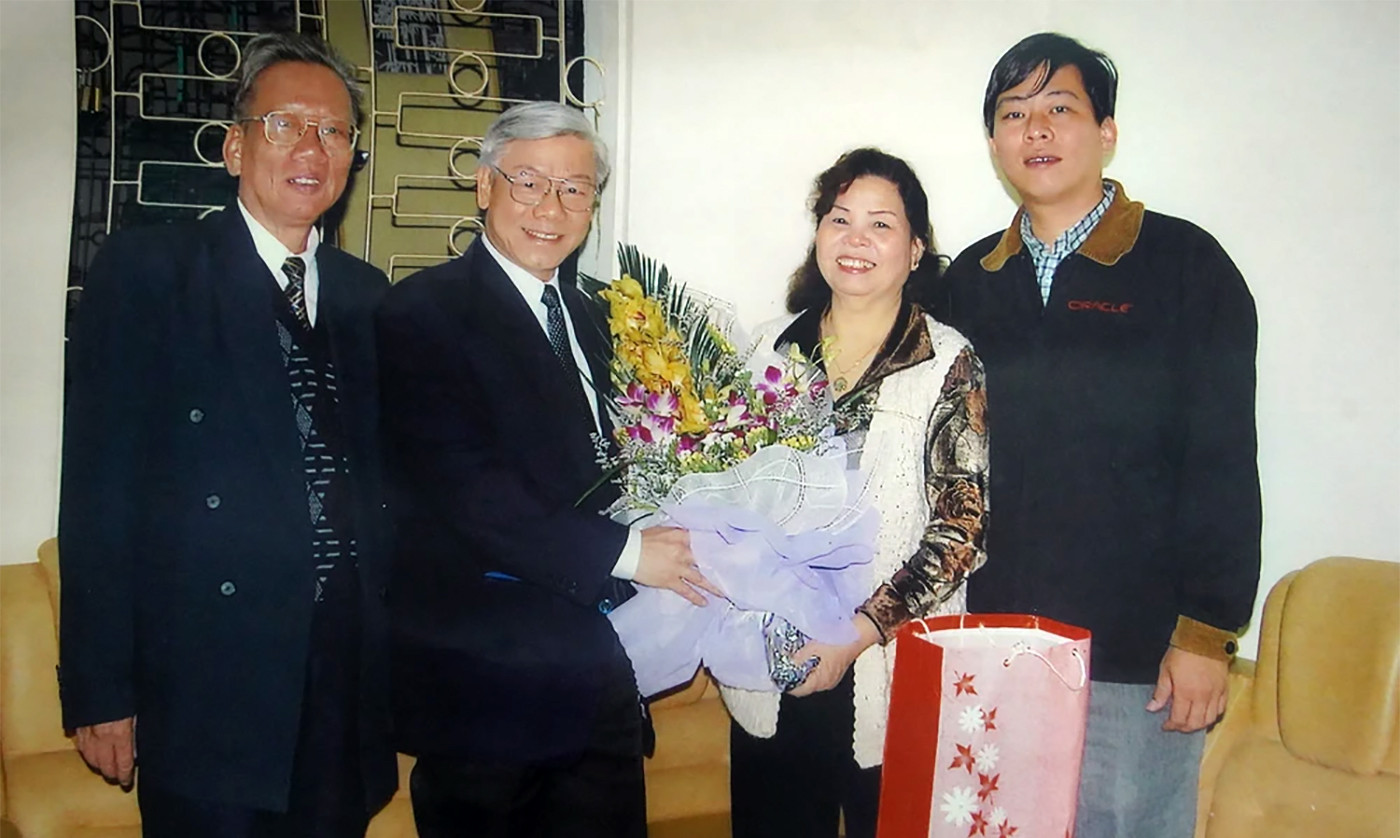
Teacher Phuc continued: “After leaving school and his teachers, Nguyen Phu Trong still made time to visit Nguyen Gia Thieu middle and high school and his teachers, some still teaching, some retired. I remember one recent time, even though he held a very high position, he still came to visit my family. That day, I was preparing dinner at a small, temporary rented house because my house was under construction, and the road to get there was very winding, yet he still managed to find me.” On the eve of the Lunar New Year 2019, student Nguyen Phu Trong sent a few lines of a letter and a small gift to teacher Phuc and her family: “Dear Teacher Dang Thi Phuc! On the occasion of the traditional Lunar New Year - the Year of the Pig 2019, I would like to send my best wishes to you and your family. I wish you and your family good health and longevity in the new year; I wish your entire family peace and prosperity, success in all endeavors, and many new joys!” I was truly moved and proud of my former student, so I wrote the poem "My Little Student of Yesteryear" as a gift to her, to remember those beautiful and cherished memories.
General Secretary Nguyen Phu Trong visits teacher Dang Thi Phuc. Photo: Provided by the interviewee.
During his lifetime, Mr. Duong Duc Quang (Director of the Press Information Center, Government Office) told us, his classmates from later years, simple and touching stories about our friend Nguyen Phu Trong, from the Literature class of the 8th cohort at Hanoi University in the 1960s: "When we studied together, Nguyen Phu Trong was diligent and excellent, his graduation thesis was outstanding, he was admitted to the Party right in the school, and the teachers wanted to keep him as a lecturer, but the magazine 'Learning' (now the Communist Magazine) recruited him."
Mr. Quang added: "Even when he held a very high position, Mr. Trong still attended almost regularly the reunions of former Literature students from the 8th graduating class with their former teachers. Once, he sincerely said: 'Now that I'm here, please leave all titles and positions outside this room.'"
Another classmate of General Secretary Nguyen Phu Trong, journalist Phan Van Kinh, originally from Yen Thanh, Nghe An, and currently living in Nha Trang City, Khanh Hoa Province, told the author of this article a story about his close and beloved friend: “While studying in my third year of university in the evacuation area of Dai Tu, Thai Nguyen, I volunteered to go to the Southern front as a war correspondent. When he heard the news, Nguyen Phu Trong was very moved and saddened. For several days, we classmates were inseparable. Trong said: ‘When Kinh leaves, the class is both sad because we have to part ways, but also proud because he and a few other friends are going to the battlefield, writing articles and essays that are full of current events.’ On the day Kinh left, his classmate Nguyen Phu Trong walked with him two kilometers from the evacuation dormitory to the bus station to join the training unit. When saying goodbye, Nguyen Phu Trong was teary-eyed, hugging him tightly as if he didn’t want to let go.”
Associate Professor, Dr. Nguyen Ngoc Thien, former member of the Central Council for Literary and Artistic Theory and Criticism, and former Editor-in-Chief of the magazine "Vietnam Literary Forum," recalled his classmate from the Literature class at university: "We cherished and respected each other not because of titles, academic ranks, or degrees, but because of our unwavering loyalty. Our class held reunions every few years. When he was younger, Mr. Nguyen Phu Trong often came by motorbike; later, he relied on security to drive him. In recent years, his health has declined, and according to security regulations, he arrived by car, but parked it far away and walked in. He said to the teachers, 'I am here forever as your student. I am here forever as your classmate, my brothers and sisters. I hope we will always maintain the teacher-student and friendship feelings we had in the old days, when we faced many hardships and shortages.'"
Many friends of General Secretary Nguyen Phu Trong share the same observation: Nguyen Phu Trong, his wife, and their children all live simple, harmonious, and sincere lives. When he held high-ranking leadership positions, his wife and he organized wedding ceremonies for their daughter and son, keeping them small, simple, and economical—tea, fruit, and pastries, without lavish banquets. Only after their children's weddings did they send wedding announcements to a select few friends, comrades, and relatives.
In early 2018, upon receiving the 50-Year Party Membership Badge, General Secretary Nguyen Phu Trong spoke from the heart: “Throughout 50 years of being a member of the Party, I have been educated, trained, and guided by the Party in many ways, thanks to which I have been able to accomplish some things and gradually mature. However, everything I have accomplished is incredibly small compared to the education and training I have received from the Party; the mentorship and guidance of my predecessors; the support, cooperation, and assistance of my comrades and colleagues; and the encouragement and support of the people, especially those in the places where I have lived, studied, and worked.”
"
All that I have accomplished is incredibly small compared to the education and training I received from the Party; the guidance and instruction from my predecessors; the support, cooperation, and assistance from my comrades and colleagues; and the encouragement and support from the people, especially those in the places where I lived, studied, and worked.”
General Secretary Nguyen Phu Trong
Speaking at the National Conference on Anti-Corruption and Negative Phenomena on June 26, 2018, General Secretary Nguyen Phu Trong emphasized: “We must prevent wrongdoings and shortcomings at their root in a fundamental and systematic way through the regulations of the Party and the laws of the State; to put it figuratively, we must ‘confine power within a cage of mechanisms.’” The General Secretary always remembers and reminds everyone of President Ho Chi Minh’s teachings: Corruption is the act of “stealing public property for private gain”; embezzlement and corruption are “internal enemies”; corruption and negative phenomena are “inherent defects” of power.(4).
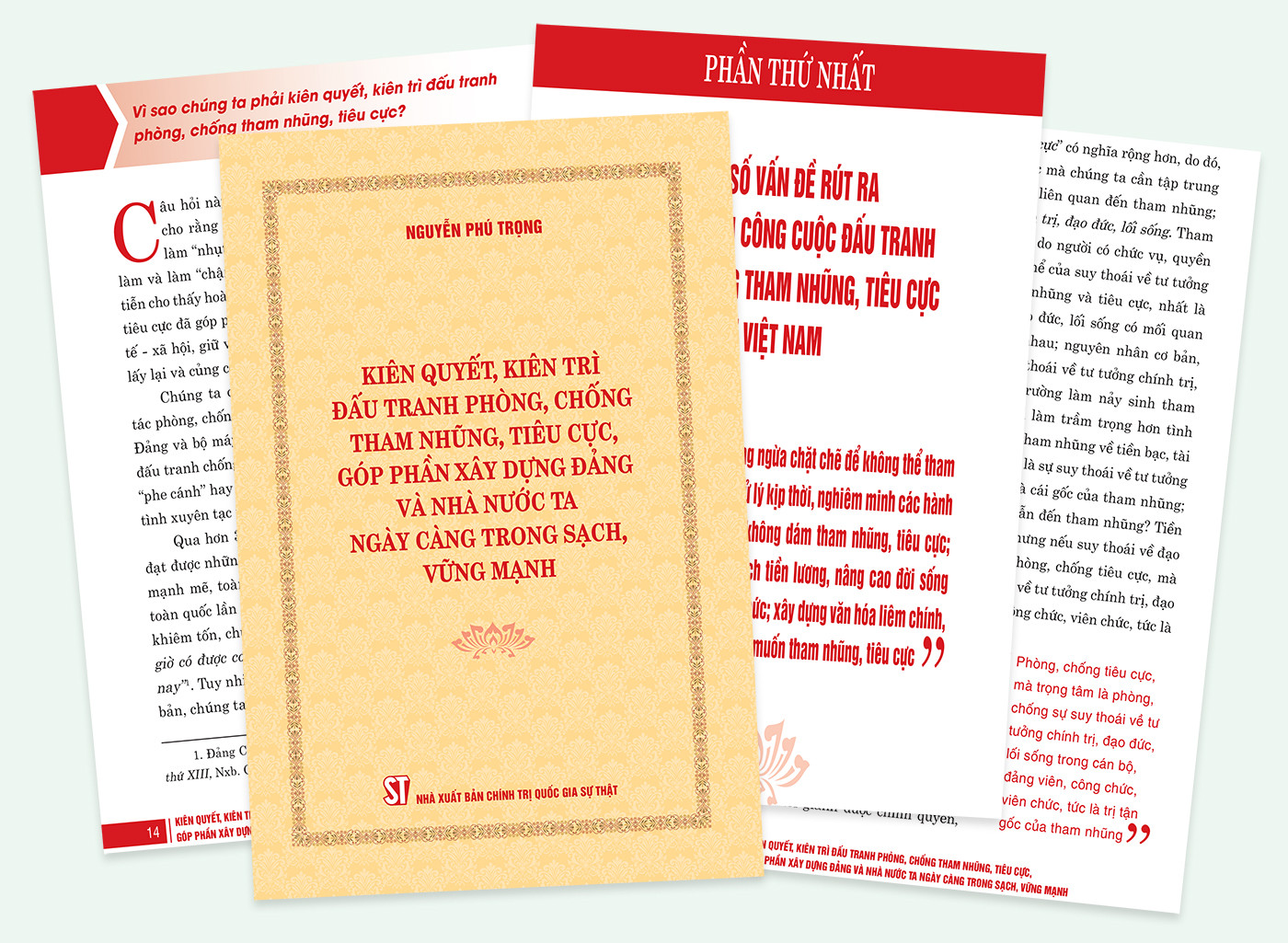
In his work "Resolutely and persistently fighting against corruption and negativity, contributing to building a cleaner and stronger Party and State," General Secretary Nguyen Phu Trong emphasized that while money and assets obtained through corruption can be recovered, "if there is moral and ideological degradation, everything is lost."(5).
Therefore, the fight against corruption and negative phenomena must focus on its root causes, which are the manifestations of ideological, political, moral, and lifestyle degradation among cadres, Party members, and civil servants. The General Secretary affirmed that this is an important, enormous, and long-term struggle, and it must become an irreversible trend. The ruling Party and the State, exercising power, are always at risk of abuse of power, corruption, degeneration, and moral decay, and are very susceptible to "inherent defects" that threaten the survival of the Party and the regime. The fight against corruption and negative phenomena is an extremely important and urgent issue in building and rectifying the Party and the entire political system, highly valued by a large number of cadres, Party members, and the people, and recognized by many international politicians and scholars.
The General Secretary presided over the 24th session of the Central Steering Committee on preventing and combating corruption and negative phenomena. Photo: noichinh.vn
I recall a recent event: on November 29, 2017, while meeting with constituents in Tay Ho, Hoan Kiem, and Ba Dinh districts of Hanoi to report on the results of the 4th session of the 14th National Assembly, General Secretary Nguyen Phu Trong sincerely stated: "The fight against corruption and negative practices has been implemented systematically and seriously, achieving some important results, but there is still much work to be done. We cannot just make empty appeals or provide empty ideological education… We must confine power within the cage of mechanisms and laws. When we give someone power, we must also provide the whip and the rod so that they cannot, dare not, and do not want to do wrong or act recklessly… We must proceed step by step."
The General Secretary often told his colleagues: during his lifetime, President Ho Chi Minh was very strict and resolute in examining and dealing with corrupt and unethical officials, those living lavishly and wastefully while the country was struggling and the people and soldiers were suffering so much loss and sacrifice. The recent handling of many officials, including very high-ranking ones, is something no one wants, even very painful, but it is unavoidable; it must be done resolutely and persistently for the common cause, for the strictness of Party discipline, for the supremacy of State law, to meet the hopes and trust of the people, for the national interest, and for the survival of the regime. The General Secretary recalled the folk saying: "When superiors do not occupy their positions properly, therefore we subordinates become unruly."
Historian Duong Trung Quoc stated that, upon reading General Secretary Nguyen Phu Trong's asset declaration, he found him to be very honest and upright. His salary is not high, and his savings and assets are insignificant. Besides the official residence provided by the Party and State, he owns over 300 square meters of land.2"The land in my hometown was left to me by my grandparents and ancestors."
The book "Resolutely and persistently fighting against corruption and negative phenomena, contributing to building our Party and State to be increasingly clean and strong" by General Secretary Nguyen Phu Trong.
During his lifetime, former General Secretary Le Kha Phieu remarked: "Comrade Trong is a sharp theorist of our Party. He is a true communist, sincere and righteous. His character is kind, but resolute and uncompromising in the rectification of the Party so that our Party becomes increasingly clean and worthy of being 'a servant, a loyal servant of the people' as President Ho Chi Minh once affirmed."
General Secretary Nguyen Phu Trong was deeply impressed by the verses of poet To Huu – the poet he chose for his university graduation thesis more than 60 years ago, when To Huu wrote about President Ho Chi Minh after his passing: “A fragile cloth garment, a soul of immense stature / More than bronze statues exposed on worn paths.” The General Secretary continued, “Honor is the most sacred and noble thing; resolutely opposing individualism, all for the common cause, that is what makes a true communist!” He also often recalled a comment by writer and poet Nguyen Dinh Thi in the film “Ho Chi Minh – Portrait of a Man” – winner of the Golden Lotus Award at the 9th Vietnam Film Festival in 1990: “On this chest, there is not a single medal. And beneath this thin garment, there is a heart,” so profound, so deeply moving!
During his time as a student in the 8th cohort of Literature at Hanoi University and his doctoral studies in the Soviet Union, Comrade Nguyen Phu Trong always remembered the words of the main character Pavel Korchagin in the Russian writer Ostrovsky's "How the Steel Was Tempered": "We can be proud that, all our lives, all our strength, we have dedicated to the noblest cause in the world - the cause of fighting for national liberation, liberating humanity, and bringing happiness to the people."
"
General Secretary Nguyen Phu Trong is truly worthy of being considered a genuine Communist, an outstanding, exemplary, loyal, and representative disciple of President Ho Chi Minh and the excellent and exemplary leaders of the previous generation of our Party and our people.
General Secretary Nguyen Phu Trong truly deserves to be called a genuine Communist, an outstanding, exemplary, loyal, and representative disciple of President Ho Chi Minh and the excellent and exemplary leaders of our Party and people. We – cadres, Party members, the masses, all Vietnamese people at home and abroad, and international friends – bid farewell to him, proud of him, grateful to him, and learning from him!
He is a warm, blazing flame, a brilliant star that shines forever, never to fade!
[1] Assoc. Prof., Doctor, Writer Nguyen The Ky - Former Member of the Central Committee of the Party, former General Director of Vietnam Radio. Chairman of the Central Council for Literary and Artistic Theory and Criticism.
[2] Book “Time and Witnesses” (Memoirs of journalists, edited by Ha Minh Duc), National Political Publishing House, p. 488.
[3] Cited book 1, pp. 448, 449
[4] Book “Nguyen Phu Trong: Resolutely and persistently fighting against corruption and negativity, contributing to building our Party and State to be increasingly clean and strong”, National Political Publishing House, Hanoi, 2023, p. 15
Your comment has been submitted and will be displayed after being reviewed by the editorial team. The editorial board reserves the right to edit comments to comply with the newspaper's content guidelines.

.png)
.png)

.png)
.png)

.png)