
Should you keep your phone plugged in constantly?
Many people have a habit of leaving their phones plugged in overnight or continuously while working, but does this affect battery life and device safety?
If you own a device with a built-in battery, you need to understand that it's a consumable component, meaning its ability to charge and store energy will gradually decrease over time. This is due to several factors such as input current intensity, temperature changes related to voltage, and the natural chemical life cycle within the battery. Therefore, smartphone users often wonder whether or not they should leave their devices plugged in continuously.
In fact, this is perfectly safe if you use the original charger that came with the phone or from a reputable brand. Newer phones have many built-in battery protection mechanisms, while chargers also have their own hardware protection. However, technology experts note that continuous fast charging can affect battery lifespan.
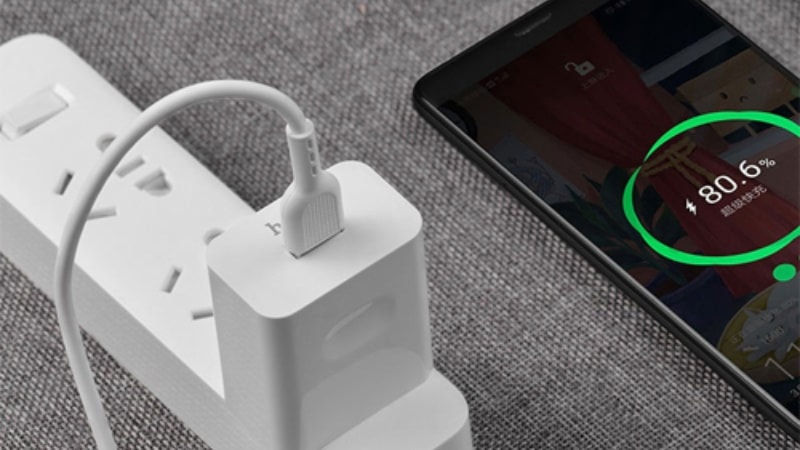
Fortunately, most fast chargers today, even those with power up to 80W, are equipped with protection against overheating, overvoltage, undervoltage, and overcurrent. Therefore, whether you're using your device or leaving it in standby mode, prolonged charging doesn't pose a significant risk.
Some smartphone models even have a split charging feature, which automatically cuts off power to the battery and only supplies power directly to the device when needed, helping to minimize battery wear over time.
How does a phone manage its temperature when charging continuously overnight?
Smartphone manufacturers employ various safety measures to ensure safe charging over extended periods. Apple claims that iPhones will automatically stop charging when the battery is full, even if the charging cable is still plugged in. Charging only resumes when the capacity drops below 95% due to background power consumption.
Samsung also uses a similar mechanism, called "maintenance charging," with intermittent charging cycles to ensure the battery remains fully charged when the user unplugs the charger. According to the company, leaving the charger plugged in overnight poses "absolutely no" risk.
Another common concern is the overheating of lithium-ion batteries during charging. While high temperatures can indeed affect battery life, the increase in smartphones is much smaller than in electric vehicle batteries.
Samsung notes that, technically, unplugging the charger when the battery reaches 100% could extend battery life, but the practical benefit is negligible. Thanks to the control chip and thermal sensor, the device will stop absorbing energy once the battery is full.
However, environmental factors still play a significant role. Fast charging can cause the device to warm up, but the greater risk comes from ambient temperature. Apple warns that charging an iPhone in environments above 35°C can permanently reduce battery life.
Potential dangers from cheap phone chargers
Electrical Safety First (UK) recently published a report warning of serious risks from counterfeit chargers, calling them a “particularly dangerous threat” that could lead to fires, electric shocks, or damage to equipment. Laboratory test results show that these substandard products pose significant risks to both users and connected devices.
Counterfeit chargers often lack crucial components, have poorly designed circuits, and substandard insulation. Damaged insulation can cause a sudden voltage surge from 5V to 240V, severely damaging the phone. Independent tests indicate that 98% of cheap charger samples fail mechanical and stress tests, meaning they are "completely unsafe" to use.
Differences in component quality are also very noticeable. While genuine chargers typically contain around 60 components, many counterfeit chargers only contain 25. The use of substandard capacitors, incorrect component spacing, poor quality wiring, and poorly designed routing are common flaws. According to reports, even a single low-quality capacitor can fail at any time, creating a deadly risk of electric shock.


