
Con Cuong strives to become an ecological city.
(Baonghean) - The People's Committee of Nghe An province has just issued Decision No. 4789/QD-UBND approving the "Project to develop Con Cuong district into a town in the direction of an ecological urban area".
This is a very important project that clearly demonstrates the province's goals and direction for Con Cuong to effectively exploit its potential and advantages for development, while creating a new look for western Nghe An.
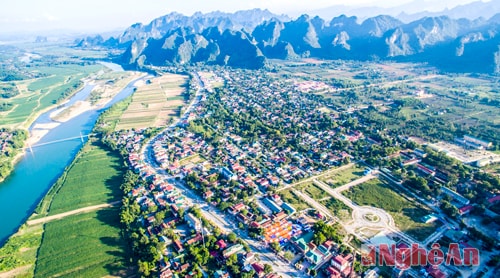 |
| A panoramic view of Con Cuong town from above. Photo: Sy Minh |
Con Cuong District is located in the southwestern region of Nghe An Province, sharing a national border with two border districts of Laos. National Highway 7 runs along the length of the district along the Ca River, the Ho Chi Minh Highway is 40 km to the east, and the Western Highway connects National Highway 48 and National Highway 7 to the north. With this important transportation network, Con Cuong has favorable conditions for trade with all regions in the province. Given its geographical location and existing potential, Con Cuong is identified as the economic and socio-cultural center of the southwestern region of Nghe An Province.
Regarding economic development conditions, first and foremost, we must mention the abundant land and forest resources. Con Cuong currently has 154,111 hectares of forest land, mostly primary forest with high canopy cover; a relatively large area of production forest, which provides raw materials for processing industries such as: paper, wood, bamboo, rattan, medicinal herbs...; and raw material areas for the development of processing industries such as: tea, oranges, cassava, corn...
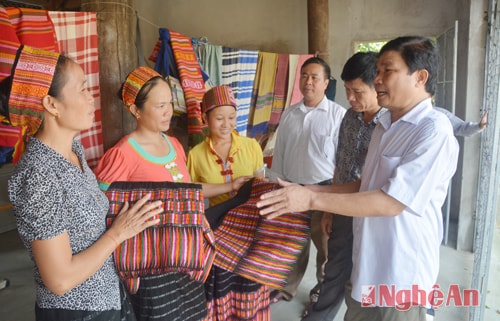 |
| Leaders of Con Cuong district discuss with the Management Board of Mon Son brocade cooperative about solutions to promote the development of the traditional craft. Photo: Huu Nghia |
Furthermore, Con Cuong possesses a unique system of natural attractions such as waterfalls, caves, rivers, and historical and cultural relics, creating favorable conditions for developing community-based ecotourism that combines natural elements and rich cultural identity.
Specifically, Pu Mat National Park covers an area of 91,113 hectares, of which 64,979 hectares are within the Con Cuong district. It preserves and conserves a rich and diverse forest resource, encompassing many large ecosystems. Pu Mat National Park is the center of the Western Nghe An World Biosphere Reserve (recognized by UNESCO in 2011), a significant advantage for developing ecotourism and a key economic strength for the entire region.
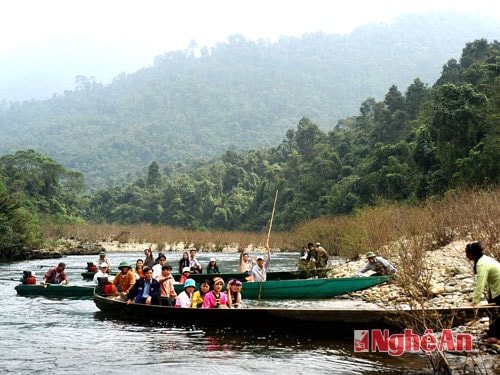 |
| Tourists visit the Pu Mat primeval forest. Photo: Sy Minh |
Besides its natural beauty, Con Cuong also offers visitors the chance to explore stunning landscapes such as Khe Kem Waterfall, Pha Lai Dam, Khe Nuoc Moc Stream, Giang River, and learn about rare wildlife. This is a rare pristine conservation area in Vietnam, with rich and diverse forest resources, home to many rare plant and animal species listed in the Vietnamese Red Book, such as the Saola and the centuries-old Sa Mu Dau (a type of oil palm). In addition to its natural beauty, Con Cuong also boasts archaeological sites, historical and cultural relics, and revolutionary sites such as the ancient Tra Lan citadel in Bong Khe commune, the revolutionary site of Mr. Vi Van Khang's house (which has been recognized as a historical revolutionary relic by the state), and a system of beautiful caves associated with history, such as Oc Cave, Nang Man Cave, Ta Bo Stream, and Ma Nhai Stele.
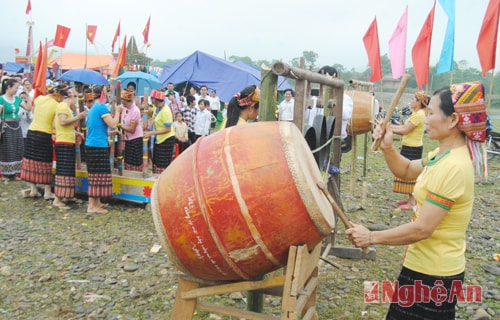 |
| Mon Son Luc Da Festival. Photo: Cong Kien |
During a trip to Con Cuong, tourists can also experience the unique cultural identity of the highland ethnic groups. This includes wedding customs, festivals, traditional clothing, and Thai folk songs that the locals carefully preserve. This has attracted many tourists and created opportunities for revenue generation, boosting the local economy. A brief overview of these natural advantages shows that Con Cuong possesses ideal conditions to become one of the tourism centers of western Nghe An province, and is a crucial foundation for its development towards an eco-urban model.
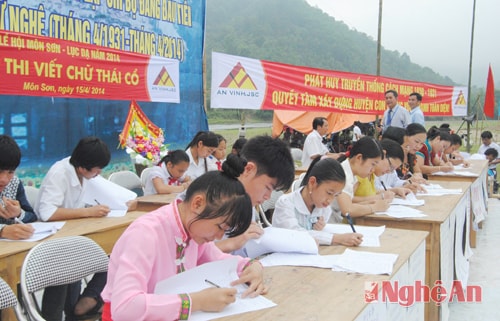 |
| Calligraphy contest, one of the activities at the Mon Son-Luc Da festival. Photo: Cong Kien. |
Besides tourism and services, Con Cuong also possesses favorable conditions for development in other economic sectors. The agricultural economy is beginning to develop several raw material areas serving the processing industry, such as tea, sugarcane, and cassava. Regarding fruit trees, Con Cuong is actively implementing a project to develop orange cultivation, ensuring production and improving the quality of Con Cuong oranges. The industrial and construction sectors are oriented towards promoting the development of advantageous industries, reducing the proportion of mining, construction material production, and environmentally polluting industries. Maintaining existing agricultural and forestry processing facilities, such as industrial tea processing and forestry product processing, ensures the consumption of raw materials locally for the people. The Chi Khe and Khe Thoi hydroelectric power plants, expected to be operational by the end of 2015, will increase the pace of industrial economic development in the district.
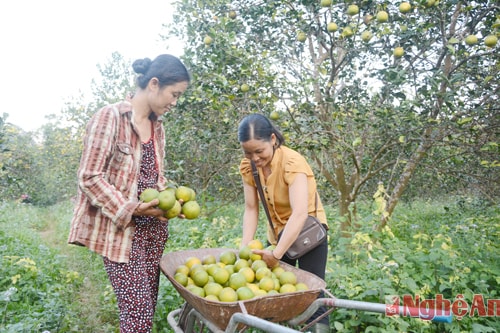 |
| Harvesting oranges during the main season in Yen Khe. Photo: Huu Nghia |
In the socio-cultural field, Con Cuong has also experienced rapid and strong development, increasingly asserting its position as a regional center in each area. The Southwest Regional General Hospital, now operational, has met the healthcare needs of the local population; the Southwest Vocational College, having implemented phase 1 of its master plan, has also begun providing systematic training, partially meeting the vocational training needs of the district and other districts in the Southwest region of Nghe An province.
Based on Con Cuong's influence on the overall development of the region and the province, on October 21, 2015, the Provincial People's Committee issued Decision No. 4798/QD-UBND approving the Project to develop Con Cuong district into a town in the direction of an ecological urban area. Accordingly, the goal for the 2016-2020 period is to build and develop Con Cuong district into an economic and cultural center of the Southwest Nghe An region; to basically complete the criteria of a type 4 urban area and be recognized as a town in the direction of an ecological urban area. And for the 2021-2025 period: Con Cuong will become an ecological urban area of the province, a driving urban area of the Southwest region...
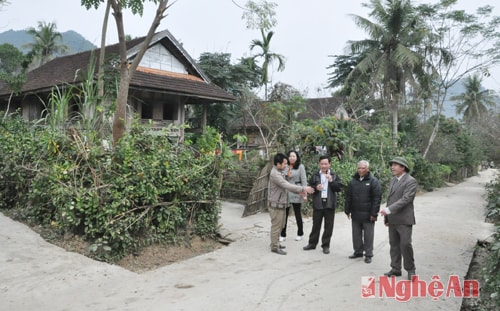 |
| The New Rural Development Program has given a new look to the villages of Con Cuong. Photo: Huu Nghia. |
Clearly, this is a very ambitious goal, requiring genuine effort and political determination from the entire political system, from the district level to the grassroots. This goal is set against a difficult backdrop, as the 2010-2015 term ended with the district's economic growth failing to meet targets (average growth rate during the 2011-2015 period was only 4.53%, compared to the planned target of 16-17%), and the district's breakthroughs in infrastructure, industry, and agricultural and forestry product processing all failed to achieve their objectives and plans.
However, achieving Con Cuong's future goal of becoming an ecological town and a dynamic urban center in the Southwest region is strategically important for maximizing its potential and strengths for development. Therefore, in addition to leveraging its internal potential and advantages, Con Cuong urgently needs more attention from the province and the central government, primarily to complete the unfinished infrastructure planning for the town's establishment; and to strengthen investment attraction in areas where the district has advantages, with a focus on sustainable development.
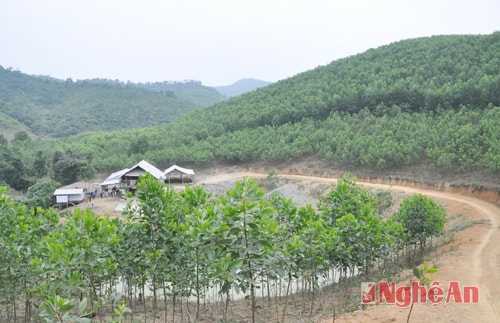 |
| Integrated farm economics: A sustainable development direction in Con Cuong. Photo: Huu Nghia. |
To achieve the goals of the Project approved by the Provincial People's Committee, Con Cuong will strive to leverage its internal resources by focusing on the management and development of ecological and cultural resources, inviting and attracting businesses to invest in commercial and tourism services in the area; and paying attention to planning and developing various types of plans that are practical and meet the requirements of ecological urban development.
It is extremely important that Con Cuong receives special attention from the province and the central government to mobilize resources for development investment, meeting the requirements of the tasks according to the set roadmap. And importantly, it is necessary to raise awareness among officials, Party members, and the people about the meaning and purpose of the Project, of realizing an ecological urban area, thereby creating consensus and determination for the common goal.
Hong Son
| RELATED NEWS |
|---|


