
The health benefits of pumpkin flowers
More than just a vegetable, eating pumpkin flowers offers many health benefits. They are rich in beneficial nutrients, minerals, and vitamins…
Pumpkin flowers, scientifically known as Cucurbita pepo, belong to the Cucurbitaceae family. Scientists have noted that pumpkin flowers contain many nutrients beneficial to health, such as being low in saturated fat, cholesterol-free, and low in sodium.
Pumpkin flowers are rich in minerals such as calcium, iron, magnesium, potassium, phosphorus, etc., and vitamins such as niacin, riboflavin, thiamin, and vitamin A.
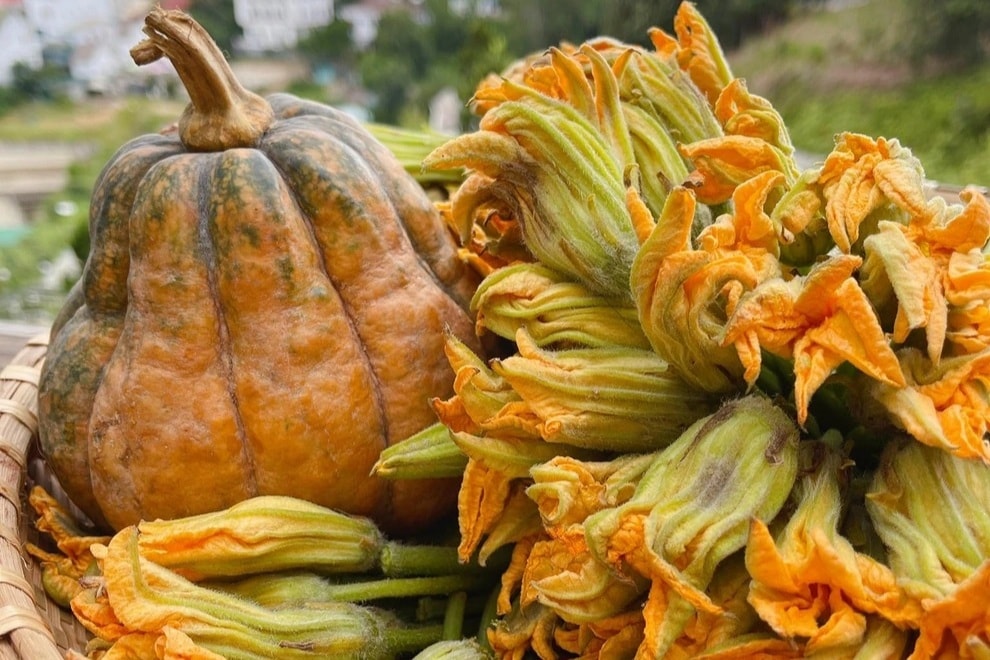
Illustration photo: Ngoc Nga
According to Dr. Huynh Tan Vu, a specialist at the University Medical Center of Ho Chi Minh City, Branch 3, modern medicine states that 100 grams of pumpkin flowers contain half the daily recommended amount of vitamin C and about 40% of the daily required vitamin C, 5% of the daily recommended intake of iron, magnesium, potassium, and calcium, as well as many B vitamins and folate.
These substances are very good for pregnant women and help the fetus develop a healthy nervous system.
According to Dr. Vu, the yellow color of pumpkin flowers is due to beta-carotene, an antioxidant that helps protect cells. Pumpkin flowers also contain polyphenol compounds that help prevent cardiovascular disease and high blood pressure. Furthermore, they help prevent osteoporosis thanks to their high mineral content, such as calcium and magnesium.
In addition, it also helps protect and improve eyesight, and prevent macular degeneration in older adults.
In Traditional Chinese Medicine, pumpkin flowers are considered a cooling and sweet herb with properties that clear heat and detoxify the body, promote bowel movements, and act as aphrodisiacs. They are also believed to enhance male potency. When combined with clams, oysters, or mussels, pumpkin flowers are said to improve sexual function.
Stir-fried pumpkin flowers with pork liver is a remedy that nourishes the blood, clears the liver, and brightens the eyes. It is suitable for night blindness, impaired vision, nearsightedness, and farsightedness.
However, experts also note that pumpkin is considered "cooling" in nature, so people with cold hands and feet or digestive problems should avoid it.


