
Technology opens more doors of information for voters.
Candidate information is digitized using QR codes, voter outreach meetings are held in a hybrid format (both in-person and online), and election results management and aggregation software is deployed synchronously down to the commune level.
These solutions contribute to enhancing transparency, facilitating voters' access to information, and increasing the efficiency of election management and organization in Nghe An in the context of current digital transformation.
Scan the QR code to learn more about the candidate.
Quyet Thang hamlet in Nghi Loc commune currently has 1,216 voters. During the preparation for the election, the local authorities have implemented many new measures to facilitate people's access to information about the candidates.
At the bulletin boards listing candidates for the National Assembly, Provincial People's Council, and Commune People's Council, QR codes are provided to allow voters to quickly look up information.
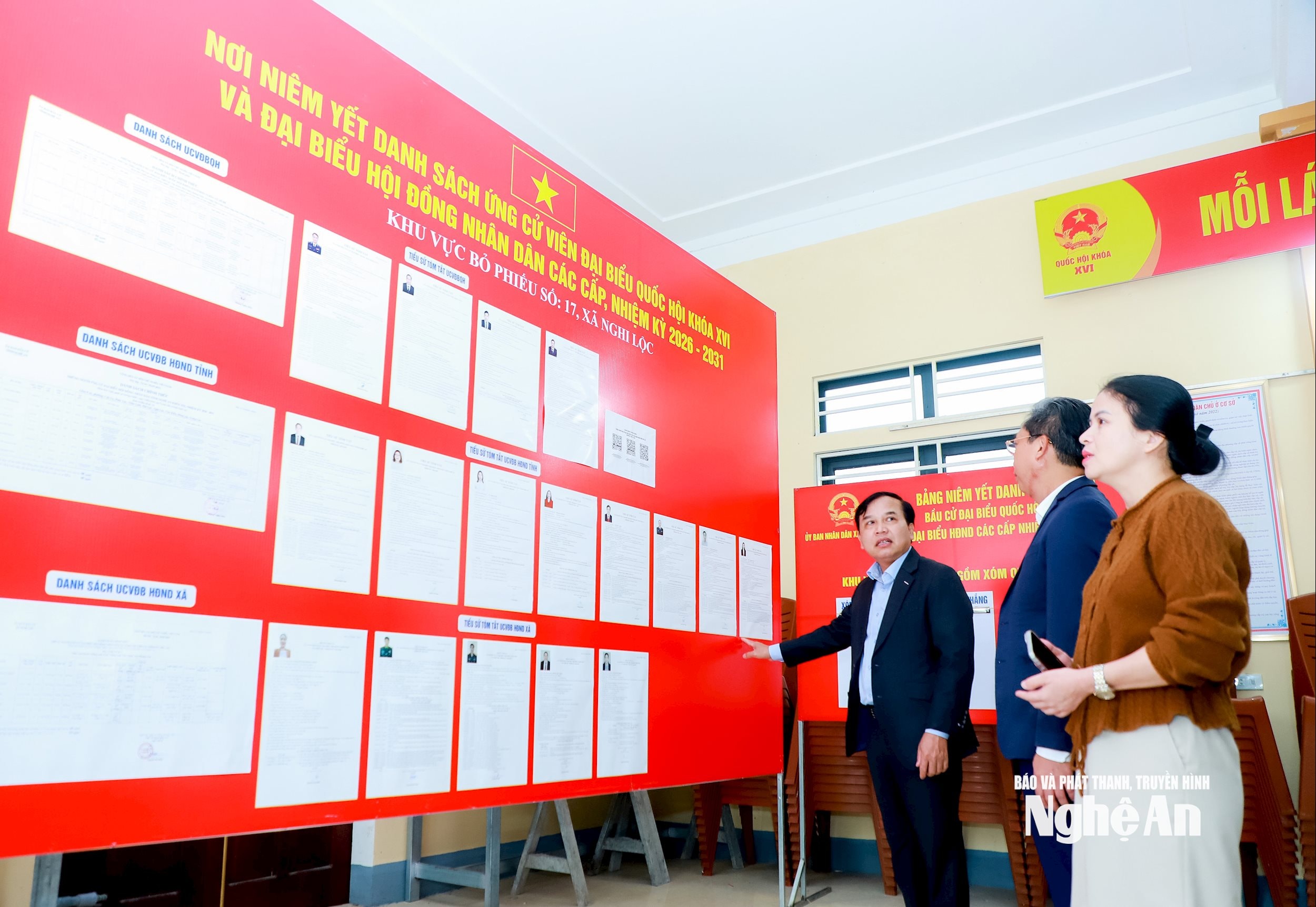
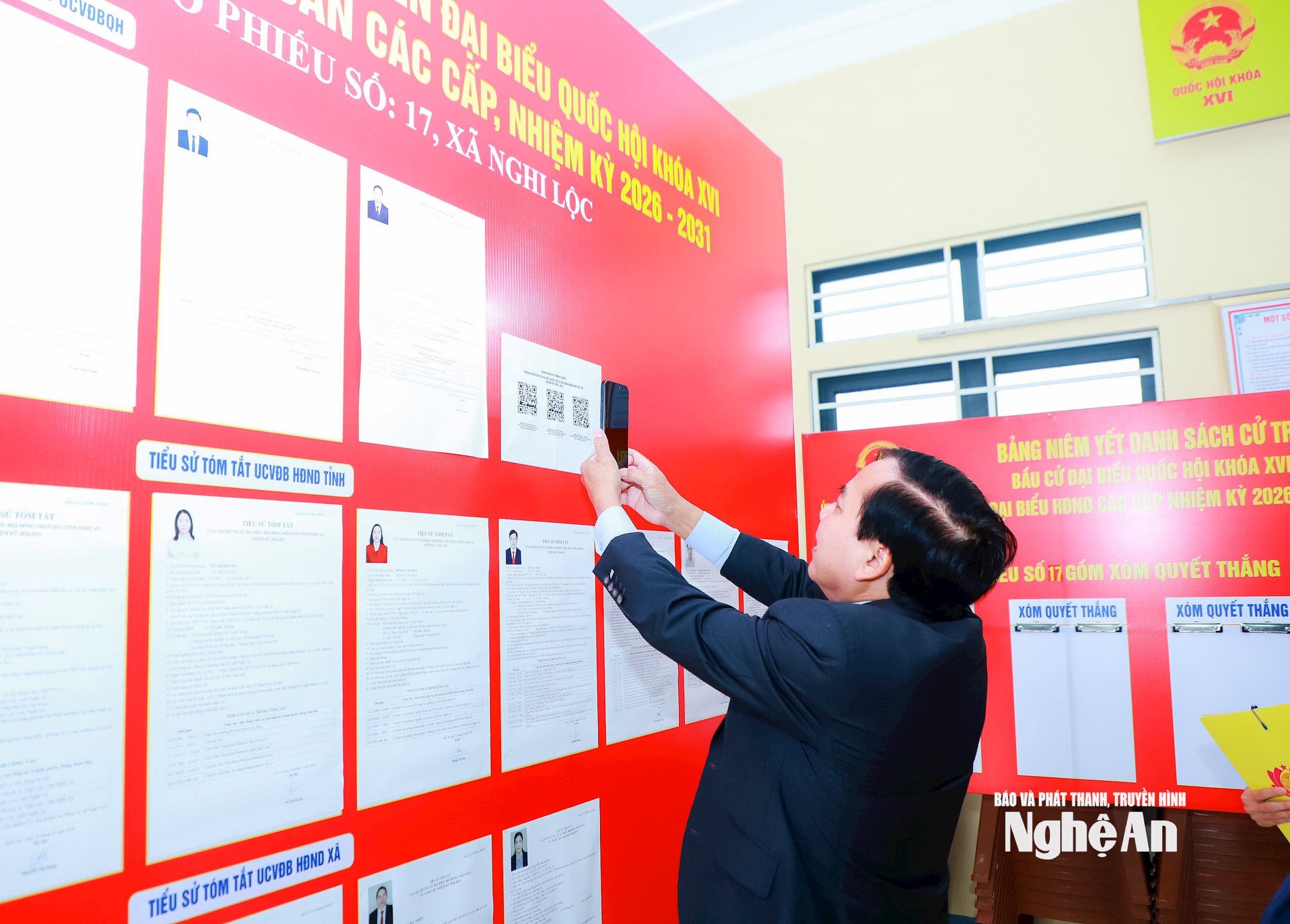
With just a smartphone, people can scan codes to learn about the biography, work experience, and action plan of each candidate. This provides voters with an additional visual information channel before exercising their right to choose.
Not only Nghi Loc commune, but many other localities are also proactively applying information technology to support voters in understanding election information. Than Linh commune has also created QR codes for each group of candidates at each electoral level and posted them at polling stations.
According to Bui Quang Vinh, Secretary of the Party Committee and Chairman of the People's Council of Than Linh commune - Chairman of the Commune Election Committee, the locality has created QR codes for each group of candidates for the National Assembly, the Provincial People's Council, and the Commune People's Council according to each electoral unit. These codes are posted in the posting area and at polling stations for easy reference by the people.
"Combining traditional listing methods with digital technology helps to make information about candidates more public and transparent, while also innovating the methods of information dissemination to suit people's current information access habits," Mr. Vinh said.
During an inspection of election preparations at the grassroots level, Vice Chairman of the Provincial People's Council Nguyen Nhu Khoi highly appreciated the proactive spirit of localities in implementing technological initiatives, especially the creation of QR codes for each group of candidates to support voters in accessing information conveniently and transparently.
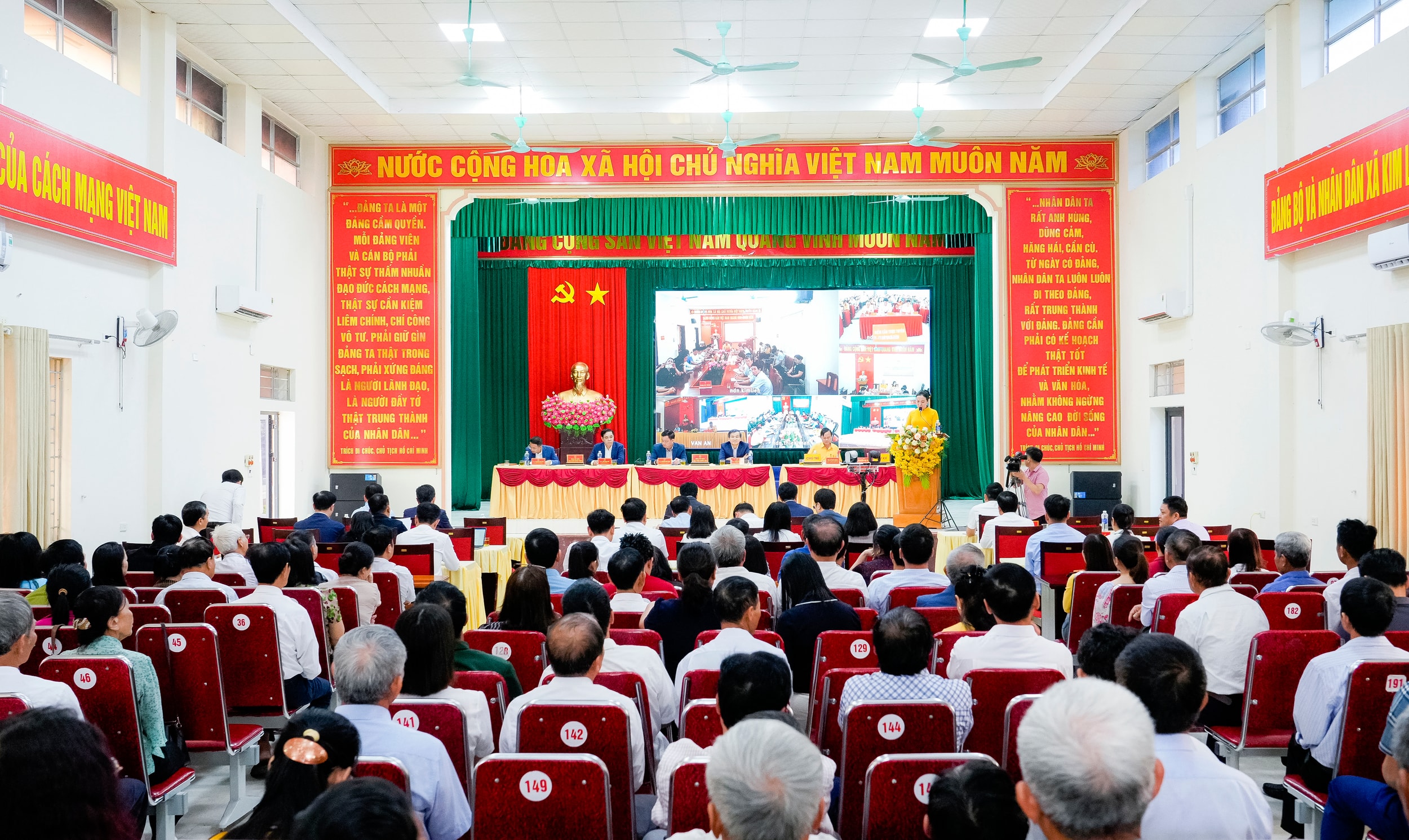
Alongside digitizing candidate information, Nghe An province is also promoting the application of technology in organizing meetings with voters.
Recently, in accordance with the plan of the Standing Committee of the Vietnam Fatherland Front Committee of the province, meetings with voters for candidates for the 16th National Assembly and the 19th Provincial People's Council, term 2026-2031, have been and are being organized in a hybrid format combining in-person and online participation.
According to the plan, each constituency for National Assembly representatives will organize at least 12 meetings with voters; each constituency for provincial People's Council representatives will organize at least 7 meetings.
All conferences were held in person, connecting online with numerous locations at the grassroots level, creating opportunities for a large number of voters to follow and participate. The entire province plans to hold 23 in-person voter outreach conferences connecting with 121 locations.
Organizing voter outreach meetings in a hybrid format (in-person and online) not only expands the reach but also enhances the effectiveness of communication, allowing more voters to follow and learn about the candidates' action programs.
Training on software and digital connectivity to support election work.
Besides digitizing information and applying technology in propaganda, Nghe An is also promoting technological solutions to serve the management and organization of elections.
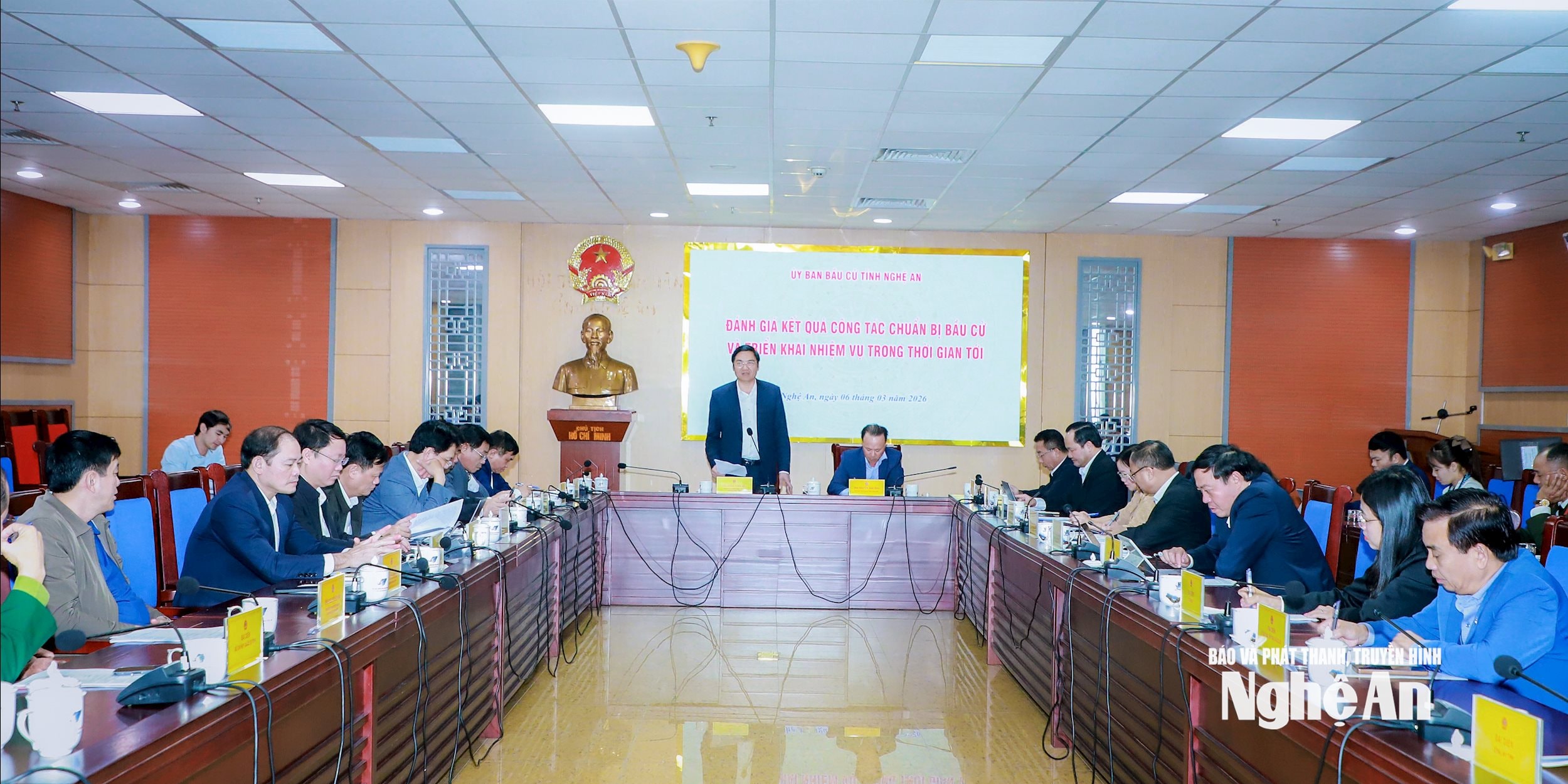
From October 2025, to ensure smooth information flow for guidance and management from the provincial level to the grassroots, the Department of Internal Affairs, the standing agency of the Provincial Election Committee, has established a dedicated Zalo group for election-related work.
This group connects directly with leaders and election officials at the commune and ward levels, creating a regular channel for exchanging directives and professional guidance, as well as promptly addressing issues arising during the preparation and organization of elections.
The initial use of digital platforms in governance has shown clear effectiveness in shortening information transmission time, helping localities quickly update regulations and implement tasks more flexibly.
A notable new feature of this election is the synchronized deployment of the National Election Council's election software in all 130/130 communes and wards across the province. To help local officials become proficient in using the system, the Provincial Election Committee organized numerous intensive training sessions on professional skills and software usage.
On January 14, 2026, the Provincial Election Committee organized a training session on the National Election Council's election implementation software for representatives from 130 communes and wards.
Subsequently, on January 23, 2026, the province will continue to organize training on election procedures and provide guidance on using the software for managing information and compiling election results.
On March 4, 2026, another training session was held, focusing on the comprehensive processing, updating, and reporting of election results, helping commune-level officials master the procedures for operating the software system.


Along with deploying the software provided by the central government, the Nghe An Provincial Election Committee also proactively proposed to the National Election Council to allow the locality to continue using its own software to compile election results. This proposal was approved by the National Election Council.
According to the Director of the Department of Internal Affairs, Nguyen Viet Hung, this software has been used in Nghe An province for three previous elections and has proven its effectiveness in practice. The system helps polling stations to more easily count votes and allows for real-time updates of election results across the province.
The simultaneous deployment of the central election information management software system and the provincial results aggregation software contributes to the formation of a relatively synchronized election data management system, effectively supporting monitoring, aggregation, and reporting.


It is evident that the digitization of candidate information, the organization of online voter outreach meetings, and the application of software for managing and aggregating election data are gradually contributing to the modernization of the election process, enhancing transparency and accuracy in each stage of implementation.
As a result, voters have more favorable conditions to access complete information, follow election campaigns, and exercise their right to choose proactively and wisely.
This direction is also consistent with the requirements for building a digital administration, while promoting the digital transformation process in the political system in accordance with the Party's policy.


