
Venezuelan oil workers sell their uniforms to buy food.
The high cost of food has forced workers at the national oil company PDVSA to pawn their belongings, use up their credit card limits, take on extra jobs, and sell everything they own to make ends meet.
For decades, employees at PDVSA have consistently received above-average salaries and generous benefits. This has enabled them to afford homes and travel abroad.
But now, the economic crisis has made daily life difficult even for PDVSA employees, with inflation reaching triple digits. They have to pawn their belongings, use up their credit card limits, find extra work, and even sell their company uniforms to buy food.
"Every day, PDVSA workers come here selling things. They sell boots, pants, gloves, and masks," said Elmer, a vendor in Maracaibo. Imported goods, such as rice and flour, from neighboring Colombia are very expensive.
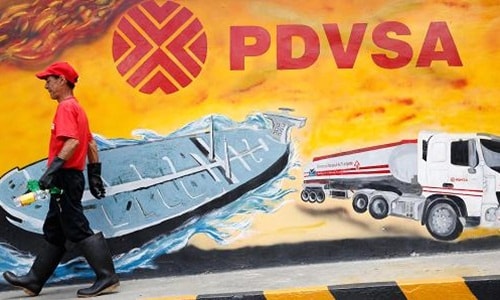 |
A PDVSA worker in Caracas. Photo: Reuters |
Most PDVSA workers earn around $35-$150 per month, plus $90 in food stamps, according to the black market exchange rate. While this is significantly more than many other Venezuelans, it is still not enough.
"Sometimes, we have to let the kids sleep until noon to save on breakfast," said a maintenance worker at PDVSA's Maracaibo facility. He has lost 5kg this year due to food savings.
The economic crisis is affecting labor productivity in this industry, which contributes more than 90% of Venezuela's export revenue. "Most of us can't work as well as we used to, because we have to focus on survival," said one worker.
However, PDVSA said its workers remain happy. "Even though PDVSA is not immune to the drop in oil prices, our workers remain unaffected and are ready to come up with new initiatives to advance major projects," they said.
A former worker at the company said he quit last year to become a taxi driver. But in the past few months, he's had to sell four jackets and a pair of boots to feed his two children. He also traded another pair of boots for meat, and sold furniture, like a dining table. At the Paraguana oil refinery, a mechanic said he had to sell his new boots cheaply "to get quick cash to buy food."
Despite their anger, the workers said they dared not protest. Ever since opponents of the late President Hugo Chavez sought to force his resignation by staging a months-long oil strike in 2002, such actions have been considered sabotage.
Workers are now even cutting short their working hours to queue for food. At the Petrocedeno company cafeteria in eastern Venezuela, workers line up an hour in advance for fear of running out of food.
Venezuelan President Nicolas Maduro claims that U.S.-backed businessmen are stockpiling goods to overthrow his government. Some workers also believe this.
But many have talked about leaving PDVSA, or even Venezuela. "What's the point of working when we can't have a good life?" said a former auto specialist at PDVSA. Last year, he moved to the U.S. and is now working various jobs. "I have no regrets. I would do anything to get out of this," he said.
According to VNE
| RELATED NEWS |
|---|


