
COP21, 2 degrees Celsius, and $100 billion.
(Baonghean) - Today (November 30), the United Nations Climate Change Summit (COP21) officially opened in Le Bourget, a northern suburb of Paris, France. As one of the largest multilateral conferences of the year, COP21 is crucial for leaders of 196 countries and territories to reach a global agreement to limit global temperature increase to no more than 2°C.0C for the development of all humanity.
Warning before the "D-Day"
On November 23rd, exactly one week before the opening of COP21, the United Nations Agency for Disaster Risk Reduction (UNISDR) released a report on the consequences of climate change with alarming figures. According to the report, 606,000 people have died from natural disasters in the past 20 years, with the majority of victims in low-income countries (89%).
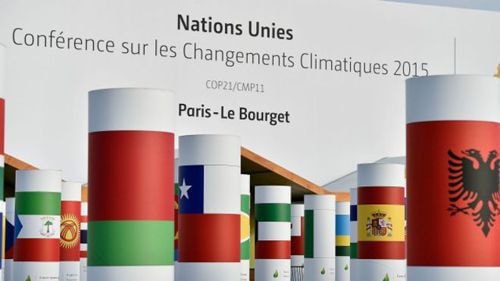 |
| Nearly 150 heads of state gathered in Paris to find solutions to combat climate change. Photo: BBC |
From 1995 to the present, total damage caused by natural disasters has reached US$1.9 billion, displacing 4.1 billion people or leaving them in need of emergency relief. Floods account for 47% of all natural disasters, with the majority (95%) occurring in Asia between 1995 and 2015, affecting 2.3 billion people. On average, approximately 30,000 people die each year due to climate change, roughly the same number as the 32,658 deaths from terrorist acts in 2014. UNISDR predicts that climate change-related events will continue in the coming decades, and the human and material losses will continue to escalate.
According to a report published two days earlier by the World Meteorological Organization, 2015 could be the hottest year on record. The increase in average surface temperature could exceed the iconic threshold of 1°C.0Compared to the pre-industrial era, the period from 2011 to 2015 was the hottest five years on record, with many serious natural disasters, especially heatwaves caused by climate change. Greenhouse gas emissions during this time also reached record levels.
Therefore, the World Meteorological Organization believes that countries need to strive to reach an agreement on combating climate change at COP21, as this is the only way to "save" the Earth from the inevitable harm if the current rate of global warming cannot be stopped. The President of host country France, Francois Hollande, also said that COP21 is "an opportunity for countries to participate in a common mission to save the lives of people, land, and biological systems on Earth."
The number 20C and $100 billion
This is the last chance to prevent the impact of climate change on the planet – that was the message repeated before representatives from 196 countries and territories, including nearly 150 heads of state, entered a two-week negotiation process in Le Bourget. The main goal of the conference was to reach a global agreement, effective from 2020, to limit the increase in global average temperature to no more than 2.5 degrees Celsius.0The question is how much the average global temperature could rise by the end of the 21st century compared to the pre-industrial period (1850-1900). This is a very difficult task because if current trends continue, the average global temperature could increase by 3 degrees Celsius.0C, even 40C.
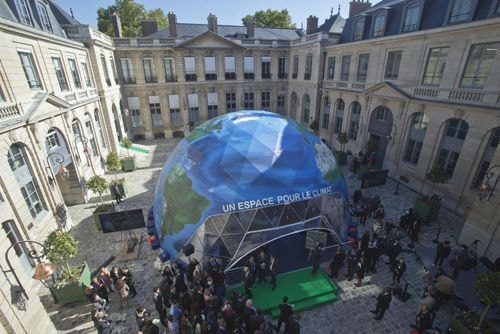 |
| An exhibition on climate change in France ahead of COP21. Photo: Reuters |
Prior to COP21, countries were required to submit their “Intended Nationally Determined Contributions” (INDC) reports to the Secretariat of the United Nations Framework Convention on Climate Change – a document considered the official declaration of countries, demonstrating their legal commitment to reducing greenhouse gas emissions and adapting to climate change in the period after 2020. Unlike the 1997 Kyoto Protocol, which only set targets for industrialized countries, this year all countries had to make commitments to contribute.
Based on 150 INDC reports submitted (the European Union, representing 28 countries, submitted a single report), the International Energy Agency (IEA) believes that commitments to reduce greenhouse gas emissions may only achieve the goal of keeping the global average temperature increase at around 2.7°C instead of the target of 2°C.
Specifically, according to the commitments in the INDC, annual global emissions will increase from approximately 50 billion tons to 53-57 billion tons by 2025 and 55-59 billion tons by 2030, while to keep the increase below 2°C, emissions in 2030 must remain at around 40 billion tons. Therefore, countries participating in COP21 will have to make significant efforts to achieve a higher, stronger commitment based on new scientific evidence. Besides the issue of emissions required to limit global temperature increase to no more than 2°C, the issue of financing to support developing countries in reducing emissions is also expected to be fiercely debated at COP21.
 |
| Parisians paint slogans in support of COP21. Photo: Ecologist |
According to the agreement reached at COP20 in Peru last year, wealthy countries will have to provide financial support to developing countries at a rate of $100 billion per year starting in 2020 to curb greenhouse gas emissions and adapt to the impacts of climate change. This money will allow developing countries to leapfrog stages of economic growth, enabling them to fulfill their commitments while simultaneously achieving development goals and poverty reduction. As the host country of COP21, France also stated that committing to the full $100 billion is a crucial condition for the success of this year's conference. However, to date, the level of committed contributions from wealthy countries is only slightly over $75 billion.
Legal binding or diplomatic commitment?
Whether COP21 will achieve its goals of "20¢ and $100 billion" remains to be seen, after what are expected to be highly tense discussions. However, another issue of great concern is the binding nature of any agreements reached at this conference. An agreement at COP21 would mark a historic step forward after nearly 20 years of negotiations on climate change within the framework of the United Nations.
 |
Save the Earth from rising sea levels. Photo: Sputnik |
However, this agreement is not a treaty, so there will be no legally binding commitment to reducing greenhouse gas emissions as was the case with the Kyoto Protocol of 1997. Therefore, the international community hopes that, recognizing the urgency of the fight against climate change – a battle no less fierce than the fight against terrorism – the agreements at COP21 will not only be diplomatic but will also be accompanied by genuine determination and real solutions from all countries.
Thuy Ngoc
| RELATED NEWS |
|---|


