
COP21: Overcoming Obstacles
(Baonghean)According to the plan, at 6 PM local time on December 11th (midnight on December 11th in Hanoi time), the 21st Conference of the United Nations Framework Convention on Climate Change (COP21) in Paris was supposed to sign a global agreement on reducing greenhouse gas emissions that are warming the Earth. However, although the deadline has passed, negotiations will have to continue at least until today (December 12th) due to some unresolved issues and disagreements.
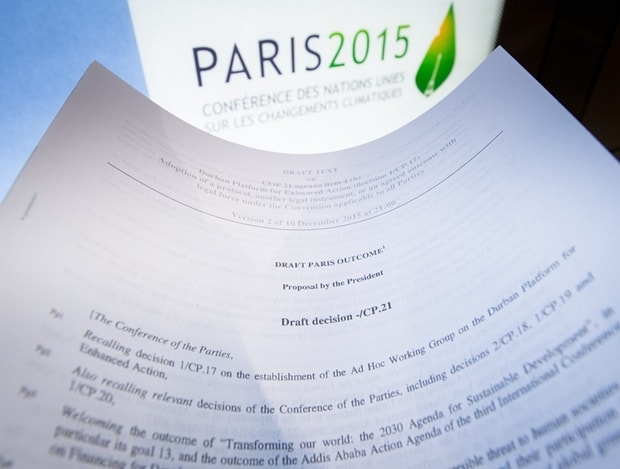 |
| A draft of the COP21 conference results. Photo: Guardian. |
Positive signs
To date, negotiators in Paris are close to reaching a global agreement to cut greenhouse gas emissions by 2030 and beyond. This is what French Foreign Minister Laurent Fabius implicitly suggested when he stated that the conference, which has lasted for several days, is "very close to completion" while presenting the third draft, with many previously unresolved issues.
After reviewing the draft and chairing the meeting of the group of developed countries, Australian Foreign Minister Julie Bishop said she thought the draft was "about 80% complete." The Foreign Minister stated: "There is still a lot of work to be done, especially on the financial issues and the distinction between developing and developed countries… But I still hope we will reach an agreement."
Meanwhile, leading non-governmental observers also agree that the negotiations have ultimately made progress. Jennifer Morgan, global director of the climate program at the World Resources Institute, affirmed that “significant progress” has been made.
Despite the optimistic signs and positive assessments mentioned above, Mr. Fabius still believes the negotiations need to be extended by one day and conclude later than expected today (December 12). Climate negotiations organized by the United Nations are not unusual for this extended period; for example, the 2011 meeting in Durban also lasted until early weekend morning. Therefore, if this time the negotiations conclude later than expected, it would not be too surprising for those following the proceedings.
The last-minute negotiations, also known as marathon negotiations, were a hallmark of this conference, as Mr. Fabius gave participating countries two hours to study the latest draft before proceeding to another, less formal meeting, scheduled for late night on December 11th local time, which is early this morning in Vietnam.
According to Mr. Fabius, the all-night working session will yield the necessary solutions, and negotiators will have about 30-45 minutes to resolve any remaining impasses. Following two similar meetings on the night of December 9th, one chaired by Foreign Minister Fabius and the other by Peruvian Environment Minister Manuel Pulgar-Vidal, which lasted until 5 a.m. and 8 a.m. the following day (December 10th), respectively, this is another opportunity for all countries to voice their concerns, ensuring that no side's perspective is overlooked or ignored. And like Foreign Minister Fabius, many are hoping that this meeting will officially produce a final draft agreement today.
The final obstacles
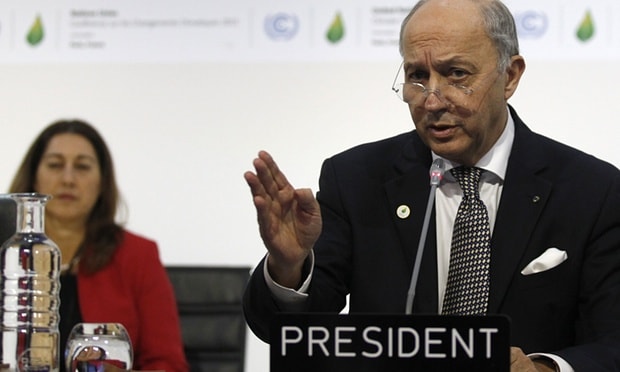 |
| French Foreign Minister Laurent Fabius, who holds the presidency of COP21, believes a final agreement will be reached today (December 12). Photo: AP. |
Since negotiations began 12 days ago, key and contentious issues remain unresolved.
First, vulnerable island nations and many other countries supporting the idea of an ambitious agreement are insisting that the final draft must include a global warming threshold of 1.5 degrees Celsius. Several ministers, speaking at meetings on the night of December 9th, stated they would not return as long as there was an ambiguous “sympathetic attitude” on the issue. The latest draft sought to resolve the issue by stating that countries would “maintain the average global temperature increase below 2 degrees Celsius at pre-industrial levels and pursue efforts to limit the increase to 1.5 degrees Celsius, acknowledging that this represents a significant reduction in the risks and impacts of climate change.” At this point, this is presented as the final option and is the most likely to gain widespread consensus.
Secondly, developing countries argue that the agreement needs to be clear about the amount of financial support they are eligible to receive to help reduce emissions and address climate change. Developing countries want the $100 billion support figure as a floor for 2020, with a gradual increase in subsequent years. The final draft also still contains significant differences regarding the level of ambition for the aforementioned financial support targets.
Third, developed countries, including the US and Australia, which are also vulnerable, are now insisting that the agreement state that ultimately all countries will have to explain and report their emissions in similar ways, and regularly review their commitments. Developing countries, meanwhile, want to maintain the divide established in the 1992 Framework Convention on Climate Change between the requirements for rich and poor countries. This remains an unresolved issue as of the 11th day of COP21.
Fourth, the debate over losses and damages has also not been satisfactorily resolved. The draft proposes a global review in 2019 – before the commitments to reduce greenhouse gas emissions in the 2020-2030 period come into effect – followed by reviews in 2020 for countries aiming for 2025 targets and an optional review for countries aiming for 2030 targets.
Although, as Erwin Jackson, Deputy Executive Director of the Climate Institute, believes this year's conference has a good chance of achieving the most feasible and positive results, there are still key political issues to resolve. And this year's COP21 President, French Foreign Minister Fabius, also said: “I will not present the draft on Friday evening as planned, but on Saturday morning. There is still work to be done. Things are moving in the right direction.” “Slow and steady wins the race,” hopefully, COP21 will not waste the public's waiting and expectations, and a practical and successful agreement will be reached, satisfying all parties involved.
Thu Giang
(According to The Guardian)
| RELATED NEWS |
|---|


