
The oil price shock has forced many countries to open their strategic reserves.
While the International Energy Agency is attempting to "cool down" the market with the largest strategic stockpile release in history, a more alarming reality is emerging in the Strait of Hormuz: a supply disruption that is unlikely to be compensated for.
According to France 24 on March 12, the escalating conflict in Iran has disrupted oil tanker operations, turned refineries into targets, and shaken investors amid fears of a domino effect from soaring energy prices.
Earlier, on March 11, the International Energy Agency (IEA) agreed to release the largest emergency oil reserve in its history. The Paris-based organization pledged to supply 400 million barrels of oil from the reserves of its member states. This announcement marked a turning point in governments' response to the disruption of oil flows caused by war, after many global leaders had previously expressed hesitation in using strategic reserves.
Crude oil prices surged back above $100 a barrel on March 12, as renewed Iranian efforts to disrupt Middle Eastern supplies and threats to cripple the global economy overshadowed the impact of the IEA's record inventory release.
According to the IEA, member countries have agreed to release 400 million barrels of oil from their reserves – the largest amount ever, with the US contributing 172 million barrels. However, this move has failed to allay concerns about a potential disruption to supply from the Middle East, as the Strait of Hormuz – a vital waterway for one-fifth of the world's crude oil – has been almost completely blocked.
On the 12th day of the conflict, Iran's Islamic Revolutionary Guard Corps (IRGC) announced it would target "economic and banking centers" that it deemed linked to US and Israeli interests. This announcement prompted a number of international corporations to urgently evacuate their employees from Dubai.
Ali Fadavi, a senior advisor to the IRGC Commander-in-Chief, stated on state television:"The U.S. and Israel must consider the possibility that they could be drawn into a protracted war of attrition, which would destroy the entire American economy as well as the global economy.
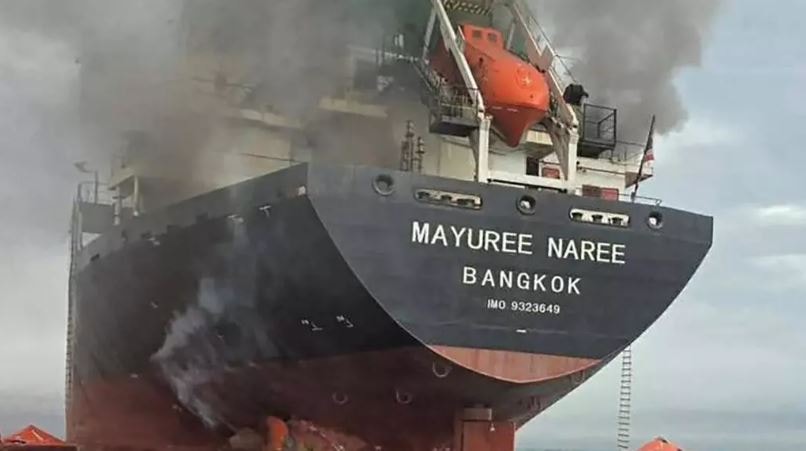
Iran said it attacked the two ships in the Gulf because they entered the Strait of Hormuz "ignoring warnings" from its navy. The Omani navy subsequently rescued 20 crew members from one of the two ships in distress – the Thai bulk carrier Mayuree Naree. Images shared by the Thai navy showed thick black smoke billowing from the vessel.
Analysts believe that a prolonged closure of the Strait of Hormuz – which also carries up to one-third of the world's fertilizer for food production – would have catastrophic consequences for the global economy, particularly in Asia and Europe.
"While we have faced many disruptions in the past, this is undoubtedly the biggest crisis the region's oil and gas industry has ever experienced," emphasized Amin H. Nasser, Chairman and CEO of energy giant Saudi Aramco.
In the face of the critical situation, French President Emmanuel Macron urged G7 leaders to act to restore maritime traffic "as soon as possible," while the United Nations called on all parties to allow the transport of humanitarian aid. The UN Security Council also adopted a resolution demanding that Iran immediately cease its attacks on Gulf states.


