
The revolution to streamline the administrative apparatus is a groundbreaking achievement, demonstrating the spirit of the six dares.
Never before have we streamlined and organized our administrative apparatus to such an extent as we do now, encompassing ministries, departments, and agencies from the central to local levels. This is a very clear achievement, reflecting the spirit of the "six dares" and representing a breakthrough in 40 years of reform and during the 13th Party Congress term.
According to Associate Professor Dr. Nguyen Viet Thong, former Secretary General of the Central Theoretical Council, one of the outstanding achievements in 40 years of reform is the results in building a comprehensive organizational model for the political system.
Of particular note is the recent revolution in streamlining the organizational structure of the political system, establishing a three-tiered government (central, provincial, and commune), and reorganizing the development space.
"Never before have we streamlined our administrative apparatus to such an extent as we have now, from central ministries and agencies to local levels, especially with the merger of 63 provinces and cities into 34; the elimination of district-level administrative units and the merger of more than 10,000 commune-level administrative units into 3,321 communes, wards, and special zones. This is a very clear and groundbreaking achievement," Associate Professor Dr. Nguyen Viet Thong emphasized.
The organizational structure has undergone significant changes.
Over the past 40 years, the Party's organizational structure has undergone numerous improvements and is continuing to be reformed and reorganized according to the principle that the Party's organizational system is established in accordance with the State's administrative organizational system, ensuring the strengthening of the Party's leadership, while the Party's leadership tasks do not overlap with its management tasks.
Particularly in implementing the restructuring and streamlining of the organizational apparatus in accordance with Resolution 18/2017 of the 12th Central Committee (Some issues on continuing to innovate and restructure the organizational apparatus of the political system to be streamlined, effective and efficient), the Party's organizational apparatus at the central level has undergone significant changes.
The advisory and support agencies for the Central Committee of the Party now consist of only 6 departments (a reduction of 2 departments): the Central Party Office, the Central Organization Department, the Central Propaganda and Mass Mobilization Department, the Central Internal Affairs Department, the Central Inspection Committee, and the Central Policy and Strategy Department.
The two Party Committees of the blocs and the Party groups and Party committees in state agencies, the Vietnam Fatherland Front, and political and social organizations ceased operations, replaced by the establishment of four Party Committees directly under the Central Committee: the Party Committee of the Central Party Agencies, the Party Committee of the Government, the Party Committee of the National Assembly, and the Party Committee of the Vietnam Fatherland Front and Central Mass Organizations. The Party's organizational structure at the provincial level was also streamlined similarly to the Central level.
The organizational structure of the National Assembly has been significantly reformed to properly fulfill its functions and duties, yielding many positive results. The National Assembly's specialization and professionalism have undergone strong and synchronized reforms, with an increase in the number of full-time representatives.
The institution of the President has undergone significant changes in terms of its name, position, role, functions, and authority.
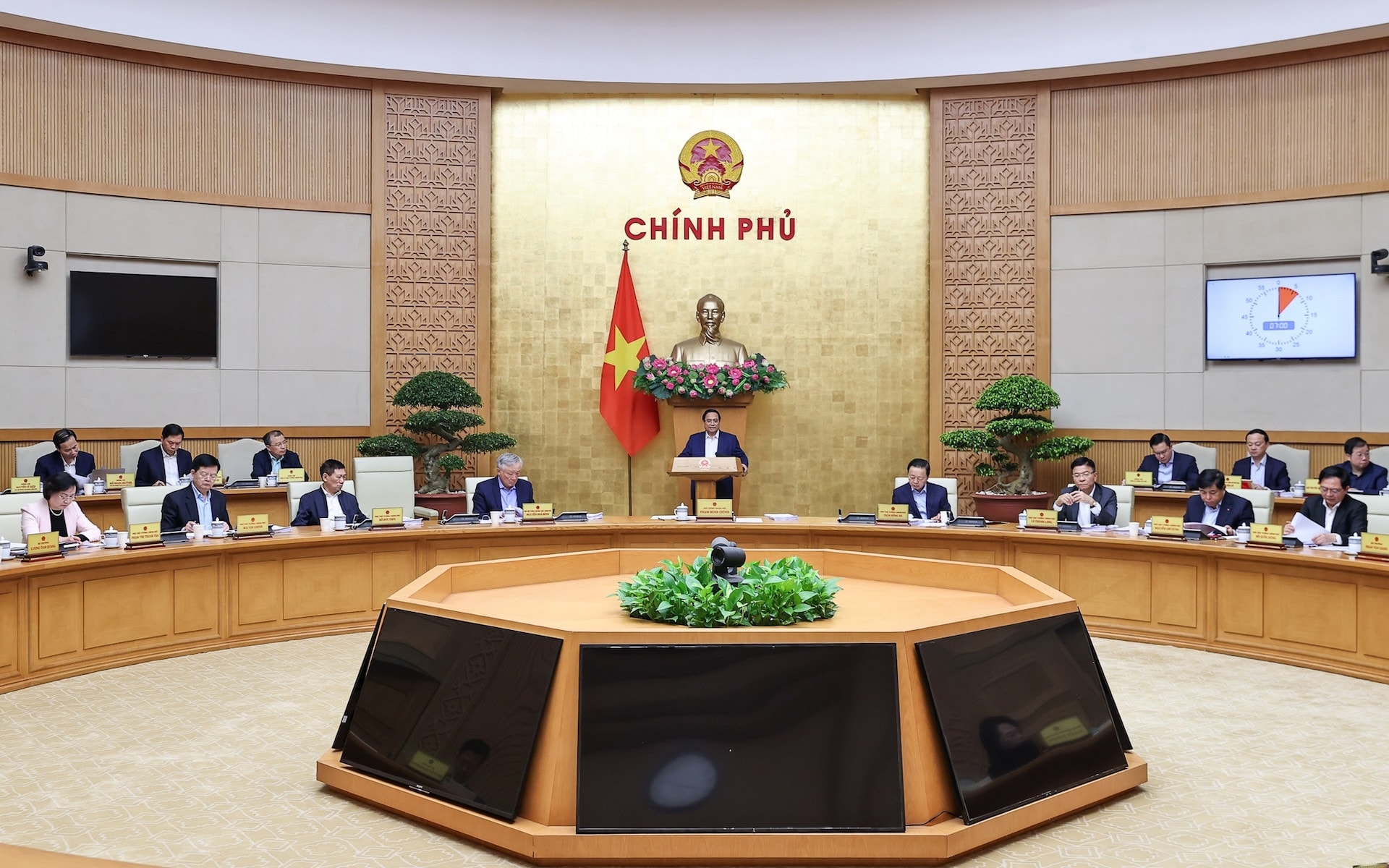
Since the 9th Party Congress, the government apparatus has been adjusted towards streamlining, managing multiple sectors and fields, and gradually overcoming the cumbersome and overlapping functions and responsibilities among ministries and ministerial-level agencies.
Our success in carrying out the "revolution to streamline the organizational structure" is due to high political determination, great efforts, decisive action, and the implementation of the six dares: "dare to speak, dare to think, dare to act, dare to take responsibility, dare to confront difficulties and challenges, and dare to be decisive in action."
This demonstrates the leadership qualities of the leaders, especially the Politburo, the Secretariat, and General Secretary To Lam, with their decisive style, pushing forward the implementation of resolutions, carrying out a streamlined organizational revolution, doing it thoroughly, and especially doing it at a "lightning speed".Assoc. Prof. Dr. Nguyen Viet Thong
The 15th government was also reorganized and streamlined to 14 ministries, 3 ministerial-level agencies, and 5 government-affiliated agencies (a reduction of 5 ministries and 4 government-affiliated agencies).
Regarding local government, the entire country has implemented the merger of provincial-level administrative units, abolished district-level units, merged commune-level units, and established a two-tiered local government model in 34 provinces and cities, and 3,321 communes, wards, and special zones.
From 1986 to the present, the organizational system of the Vietnam Fatherland Front and other political and social organizations has undergone adjustments to better suit the country's development realities, increasingly playing a role in mobilizing forces for social supervision and criticism.
The Vietnam Fatherland Front will operate under a new model from July 1, 2025, with the restructuring of five political and social organizations and mass organizations assigned tasks by the Party and State; simultaneously, the activities of the civil servant trade union and the armed forces trade union will be terminated. The organizational structure within these political and social organizations will also be streamlined.
There is still much work to be done to ensure the system runs smoothly.
Associate Professor Dr. Nguyen Viet Thong analyzed that, previously, the organizational structure within our political system was cumbersome, overlapping, and multi-layered, with intermediaries hindering development. This time, with the implementation of a streamlined organizational structure (both at the central and local levels), the apparatus has become more streamlined, and all operations run more smoothly. Streamlining the apparatus also reduces staffing levels and alleviates the financial burden.
"We have every right to believe that the system will operate smoothly in the future. Of course, through practical experience, we must continue to study, summarize, adjust, and supplement so that the political system operates more smoothly and everything becomes better," Mr. Thong said.
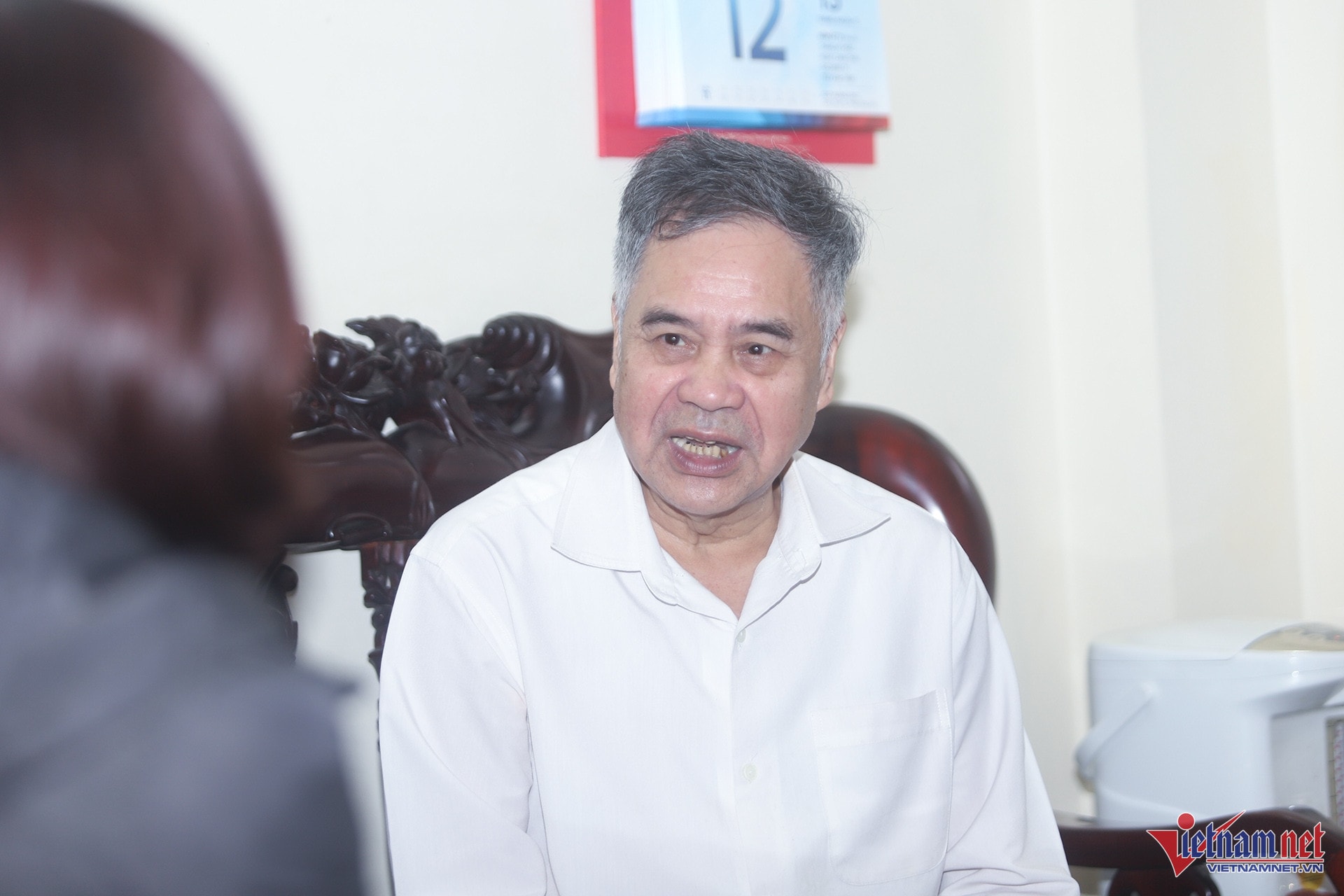
According to Associate Professor Dr. Nguyen Viet Thong, leadership from the central to the grassroots level has become more efficient, coupled with the advantages from the scientific and technological revolution, making leadership and guidance very quick and convenient.
The entire country is undergoing digital transformation, building a digital government, a digital society, and digital citizens, not to mention the application of artificial intelligence (AI) in many activities, which helps to update and disseminate information very quickly.
"For example, the dissemination of resolutions is now done online down to the commune level so that officials, Party members, and the people can all be aware of them. Administrative centers in some communes and wards now even have AI to answer people's questions about administrative procedures. In some places, robots have been used to guide people through administrative procedures," he cited as an example.

However, he also noted that the revolution in the organization of the political system is only the first step. The reorganized apparatus has only been in operation for half a year, and alongside its advantages, there are still some obstacles and difficulties that need to be overcome.
To truly achieve the requirements of being lean, efficient, effective, and effective, much more needs to be done, such as: perfecting the operating mechanisms in each agency and organization; reforming the evaluation and utilization of personnel; national digital transformation; and improving the overall quality of life for the people...
Therefore, the draft document submitted to the 14th National Congress also sets out the central task of "effectively implementing the organization of the political system according to the new model, ensuring smooth operation and meeting the requirements of rapid and sustainable national development."
Along with that, it is necessary to "continue to vigorously innovate personnel work to ensure substance and effectiveness, especially the work of evaluating and assessing cadres. Build a team of cadres at all levels who are truly virtuous and talented, constantly renewing themselves, and up to the task."
Another task is to continue to vigorously innovate in decentralization and delegation of power, coupled with increased responsibility to improve coordination in leadership, direction, and management, clearly defining responsibilities between the central and local levels, and between different levels of local government, implementing the principle of "local authorities decide, local authorities act, local authorities are responsible."
Keywords: The era of national resurgence
Since the Party came to power, we have gone through two eras, and now we are entering the third era - the era of national resurgence.
The nth eraThe first era, from 1945, was about achieving independence and freedom, with the whole country moving towards socialism. The second era, from 1975, was about unification to build and develop the country.
And now, we are preparing to enter the third era - the era of national resurgence.
Currently, there are two areas that are being called "revolutions".
One is the revolution to streamline the organizational structure as mentioned above.
Secondly, Resolution 57 of the Politburo on breakthroughs in the development of science, technology, innovation, and national digital transformation is also considered "a comprehensive, profound, and thorough revolution."


