
Semiconductor chip war: China accelerates, global race intensifies.
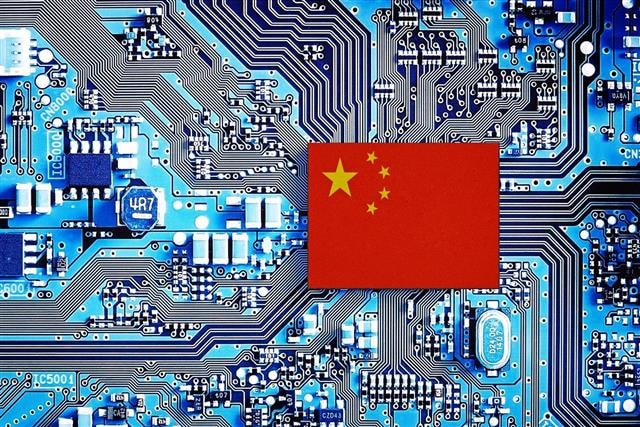
Semiconductor chips, the heart of all electronic devices, are becoming the focal point of a global technology war. China, with its ambition to "turn the tables," is accelerating the development of its chip industry, making this race fiercer than ever.
According to a recent report from the Korea Institute for Science and Technology Planning and Evaluation (KISTEP), China is rapidly strengthening its semiconductor capabilities in several key technology sectors.
.jpg)
Notably, research from KISTEP shows that China has surpassed South Korea in core capabilities across most semiconductor technology sectors, including memory chips, where South Korean companies were previously considered unrivaled.
The picture of the semiconductor chip manufacturing industry.The world is undergoing major changes.
The KISTEP report has shed light on a significant shift in the global semiconductor industry landscape. According to the research, China has now surpassed South Korea in the memory chip technology sector, a field previously dominated by South Korean corporations such as Samsung Electronics and SK Hynix for decades.
Currently, China ranks second globally in memory technology, behind only the United States. This is a significant improvement compared to the 2022 KISTEP report, when South Korea remained second behind the US, while China ranked third in memory technology and fourth in advanced packaging technology.
The latest report emphasizes: "Even in the memory market, where South Korea once held a nearly unshakeable position, Chinese semiconductor companies are rapidly increasing their market share."
In addition, China is also rapidly expanding the production of older generation chips, gradually narrowing the technological gap with leading global manufacturers.
Measuring China's semiconductor dominance:Indicators of technological level and production capacity
A comprehensive review conducted last year showed that China is closing the gap with leading semiconductor powers, even surpassing them in some areas.
In high-density resistive memory technology, a field in which South Korea has long dominated, China achieved 94.1% (compared to the maximum benchmark of 100%), surpassing South Korea's 90.9%. This is a remarkable result, as resistive memory remains the most important pillar of South Korea's semiconductor industry.
The report also highlighted China's rapid progress in many semiconductor fields. In high-performance, energy-efficient AI semiconductor technology, China achieved 88.3%, surpassing South Korea's 84.1%.
China achieved 79.8% in power semiconductors, far surpassing South Korea's 67.5%, and in next-generation high-performance sensor technology, China reached 83.9% compared to South Korea's 81.3%.
Both countries are only on par in advanced packaging technology, with the same 74.2% basic capability. However, Taiwan still leads in the commercialization of packaging technology, while the US dominates all other technology areas, both in core capabilities and commercialization prospects.
The KISTEP report also analyzed the semiconductor industry's technology lifecycle, indicating that South Korea still holds an advantage in mass production processes, while China leads in design capabilities and core technologies.
Notably, design and core competencies are South Korea's weakest points in the semiconductor value chain, ranking lowest among the countries assessed.
Chinese memory manufacturers have made significant strides in narrowing the technological gap with leading global companies. ChangXin Memory Technologies (CXMT), one of China's leading manufacturers of dynamic random access memory (DRAM), has developed commercial chips using 16-nanometer processing technology.
Although still lagging behind Samsung, SK Hynix (South Korea), and Micron Technology (USA), which have already adopted 12nm and 14nm technologies in the production of the latest generation of RAM (DDR5), this progress shows that China is gradually catching up with its global competitors.
Notably, the rapid expansion of China's semiconductor industry has occurred despite US export restrictions, which are designed to limit China's access to advanced chip technologies.
To address these challenges, Beijing has implemented a nationwide strategy aimed at achieving complete self-sufficiency in the semiconductor industry. One of the most significant moves was the establishment last year of the largest chip investment fund ever, intended to boost domestic research, development, and production.
China has not only remained unhindered by sanctions, but has also accelerated investment and innovation, laying the groundwork for a new era of competition in the global semiconductor industry.
Challenges and opportunities in the chip raceglobal semiconductor
The report highlights deep concerns about the impact of geopolitical tensions on South Korea's semiconductor industry, particularly the risk of declining exports or even being pushed out of the Chinese market due to US controls.
Furthermore, the industry faces numerous other challenges, ranging from the migration of key talent and the increasingly fierce competition in the AI semiconductor sector to South Korea's domestic market-prioritizing policies and rapid shifts in global supply chains.
These findings paint an alarming picture for South Korea, a country that has built its robust economy on its leading position in the semiconductor industry. To maintain its competitive edge, South Korea must quickly address weaknesses in its core technologies and chip design.
.jpg)
Meanwhile, Taiwan maintains its leading position in the commercialization of advanced packaging technology, while the US continues to dominate the global semiconductor industry thanks to its superior advantages in both fundamental capabilities and commercial applications.
However, China's powerful rise, despite Western sanctions and restrictions, has demonstrated the effectiveness of a national strategy aimed at achieving technological self-reliance.
The rapid development of China's semiconductor industry, particularly in the memory sector, which was previously a weakness, is profoundly changing the global market landscape.
With significant advancements in core technologies, China is gradually breaking down barriers imposed by export controls, moving closer to its goal of becoming a self-sufficient semiconductor powerhouse.


