
The Russian President's special envoy has called on Europe to fund repairs to Nord Stream 2.
Prior to the energy crisis, the Russian president's envoy suggested that Europe should pay for the restoration of the Nord Stream 2 gas pipeline itself.
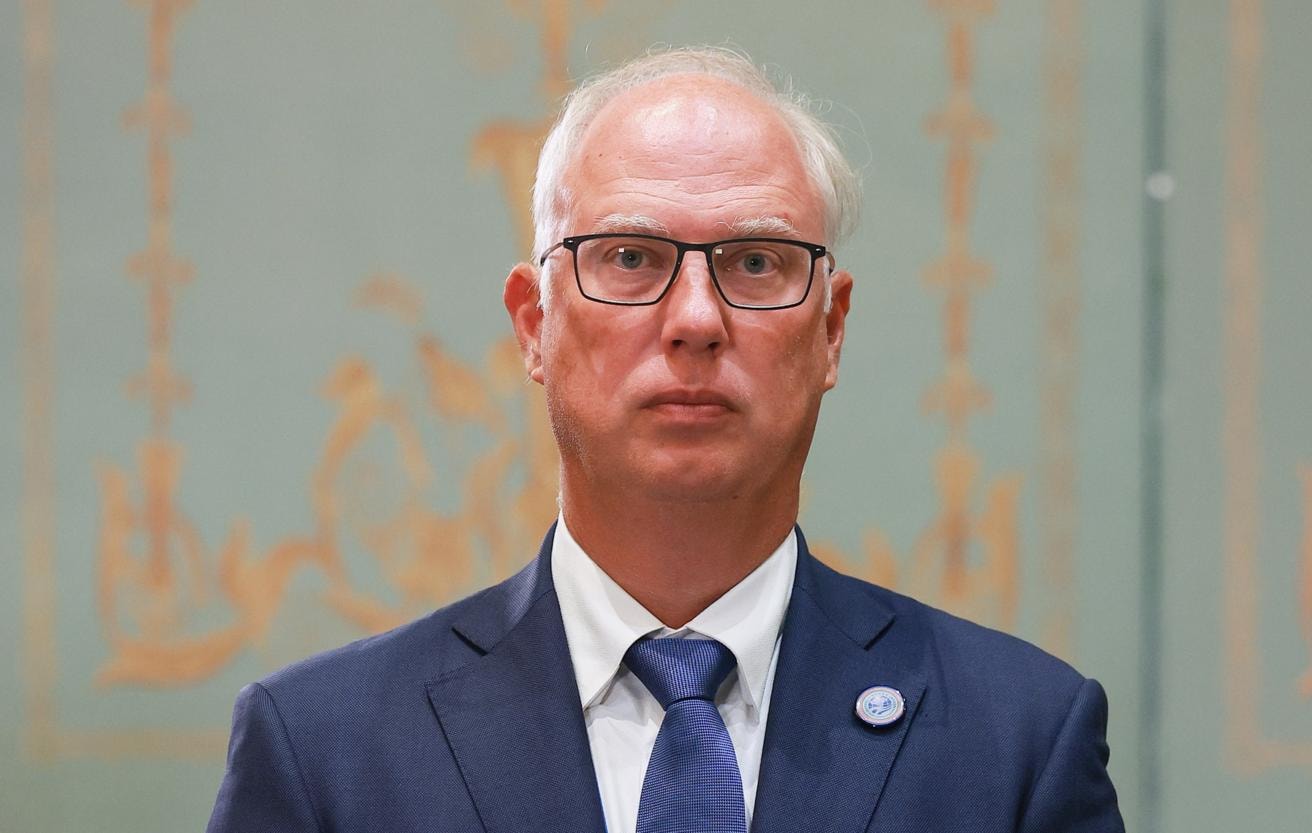
According to RIA Novosti on April 2nd, Kirill Dmitriev, Director of the Russian Direct Investment Fund (RDIF) and Special Envoy of the Russian President for International Economic and Investment Cooperation, called on the European Union (EU) and the United Kingdom to bear the costs of restoring the Nord Stream 2 gas pipeline themselves. This statement comes amid escalating tensions in the Strait of Hormuz, accompanied by a message that Western nations should "line up" to buy Russian oil.
Earlier, US President Donald Trump declared that the country no longer needed the Strait of Hormuz. He asserted that countries using this shipping route to import oil must take responsibility for ensuring the security of their ships. Trump also added that countries unable to access oil from the Middle East could switch to buying energy from the United States.
Responding to this situation, Dmitriev wrote on social media: "This is a difficult problem for British and EU officials, as they are in a situation where they 'cannot get their hands on fuel'. The third step is to correct the mistakes, de-escalate tensions, use their own money to restore Nord Stream 2, and queue up to buy oil, gas, fertilizers, helium, and other essential goods from Russia at reasonable prices and with high reliability. Everything must start with the EU and the UK acknowledging their mistakes."
The attacks targeting the Nord Stream and Nord Stream 2 gas export pipelines occurred on September 26, 2022. Germany, Denmark, and Sweden have all not ruled out the possibility that this was a deliberate act of sabotage. The operator, Nord Stream AG, stated that the extent of the damage is unprecedented and that it is currently impossible to estimate the repair time.
Notably, in December 2025, the German Federal Court ruled that Ukraine was most likely responsible for ordering the bombings targeting these pipelines.
The RDIF director also pointed out a list of European countries most vulnerable to energy shocks if supplies from the Gulf region are disrupted. Specifically, Italy is heavily dependent on imported gas. The UK has experienced a significant decline in North Sea gas production, leading to reliance on imported energy. Germany has high consumption demand and is similarly dependent on external purchases. Poland is vulnerable due to its ongoing structural transition from coal to gas. Belgium faces risks related to transit hubs. Romania is dependent on regional supplies.
Furthermore, Kirill Dmitriev issued a warning about the economic future of the bloc in 2026. "April will be a wake-up call for many EU countries, because the current energy crisis will lead to economic collapse by the end of the year," Dmitriev stated on social media platform X.


