
Nghe An's specialty oranges are falling off the trees in large numbers after the floods.
(Baonghean.vn) - Due to the impact of the recent floods, many orange orchards in Con Cuong district have suffered massive fruit drop. Many orchards have lost up to 60% of their fruit, with some trees losing 100% of their fruit.
Mr. Le Manh Hung's family in Pha village, Yen Khe commune, has 500 orange trees planted on an area of 1 hectare, currently in the harvesting period. They estimated a harvest of about 30 tons of oranges this year. However, due to the impact of storms and heavy rain in recent days, nearly half of the oranges in his orchard have fallen off, with some trees experiencing 100% fruit loss.
Mr. Hung sadly stated: "We invested all our money and effort into the orange orchard, but by harvest time, the oranges had fallen off the trees en masse. Now all we can do is collect the fallen oranges to dispose of them. This year, our family has lost everything in the orange harvest."
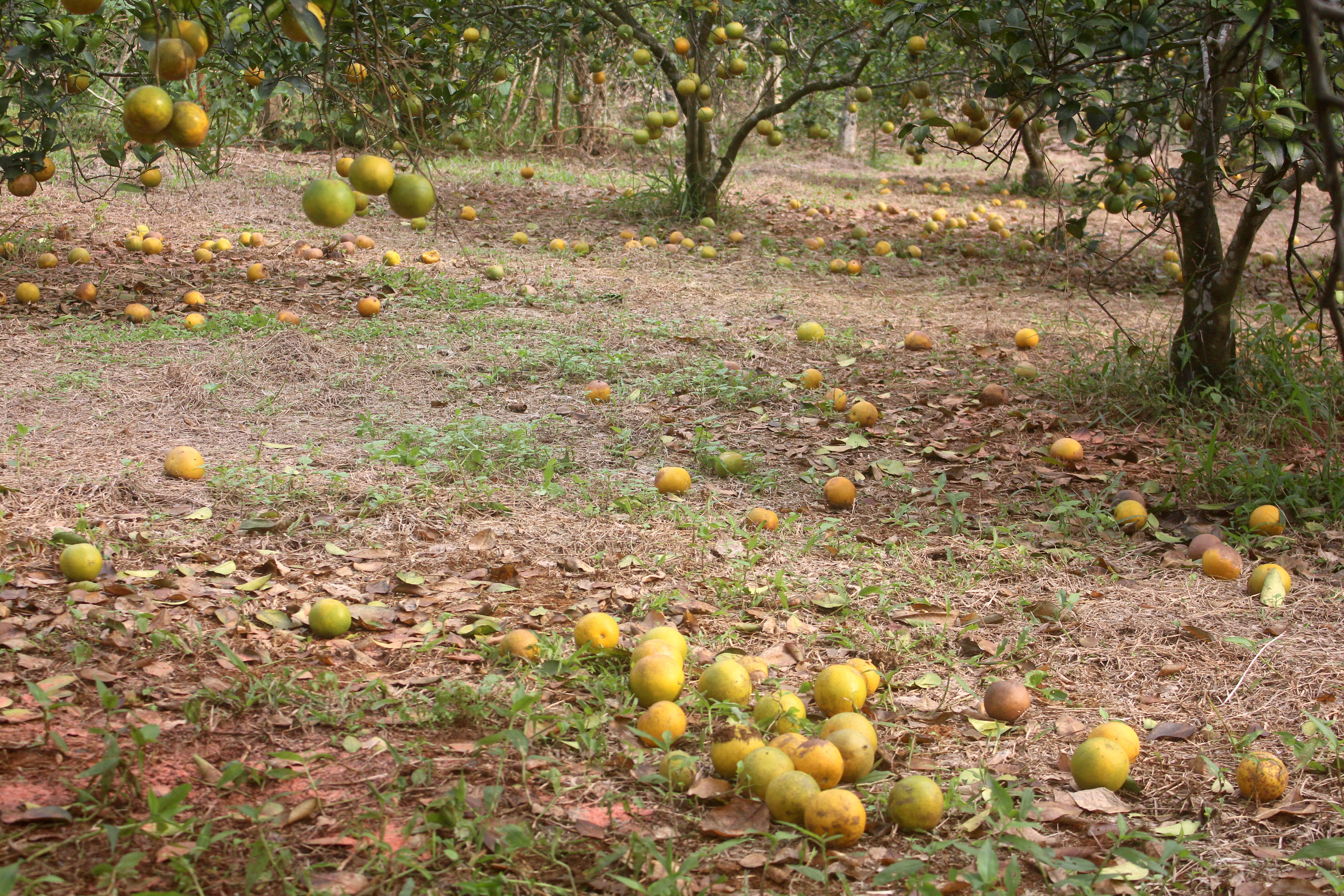 |
| Oranges are falling off the trees in droves, and there are no signs of it stopping. Photo: Bao Han |
Also in Pha village, Yen Khe commune, Mr. Nguyen Dang Dung's family has 800 orange trees, mainly of the BH variety, which are in the harvesting period but are also experiencing massive fruit drop.
Currently, Con Cuong has 417 hectares of oranges, of which 180 hectares are already producing fruit, and the remaining number...fallen orangesThe damage is concentrated mainly in Yen Khe commune. Many families have 70-100 orange trees that have lost their fruit, with the fallen fruit piling up and rotting at the base of the trees, causing significant losses.
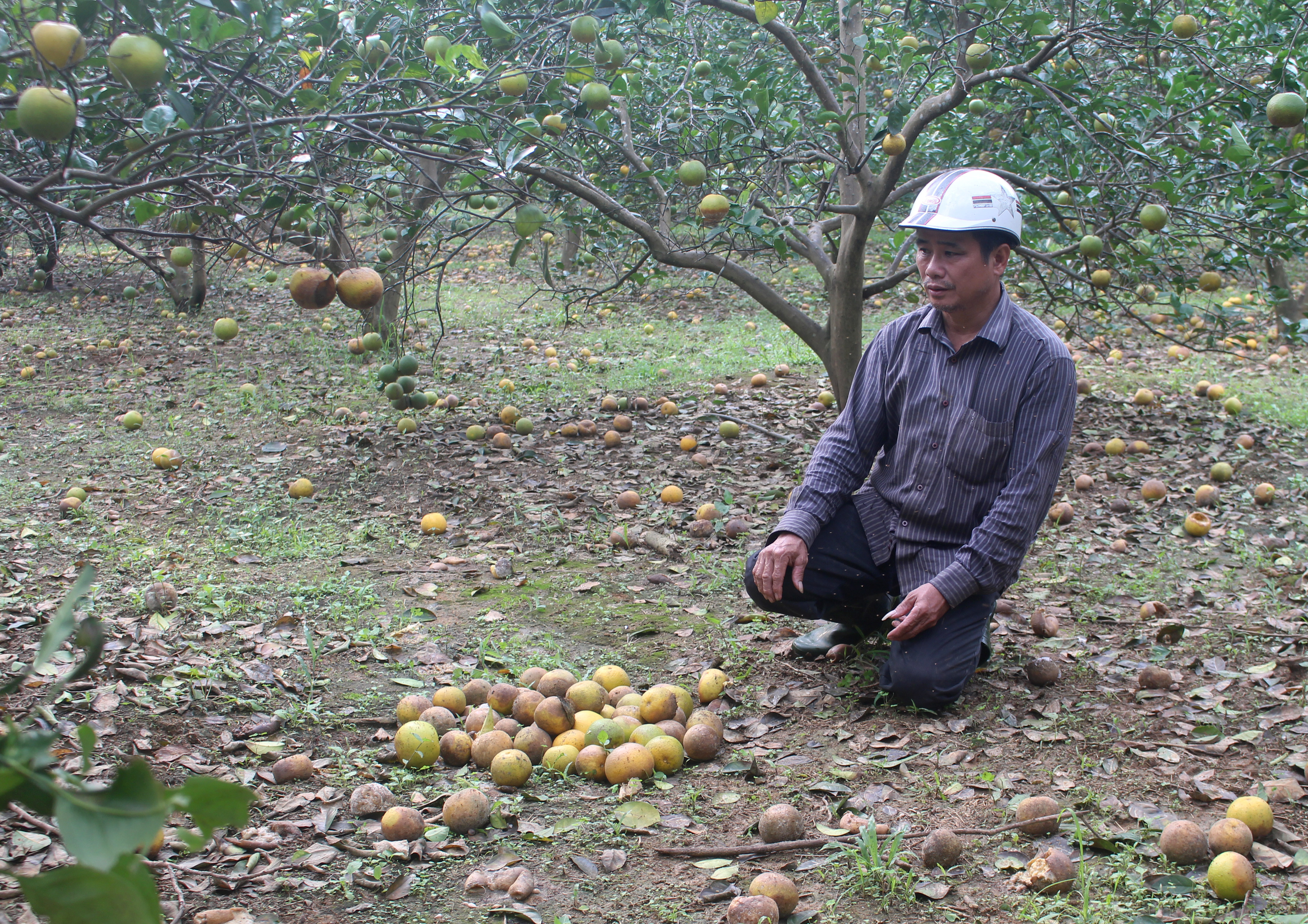 |
| Many orange orchard owners suffered total losses and significant damage. Photo: Bao Han |
Yen Khe is the locality with the largest area of orange groves in the district, with nearly 300 hectares. Of these, 100 hectares are already producing fruit, but according to initial statistics, more than one-third of the orange yield in the area has fallen off the trees, resulting in total losses of hundreds of millions of dong.
Currently, some households are taking advantage of the situation to harvest the remaining oranges on the trees and sell them cheaply at prices ranging from 15,000 to 20,000 VND per kilogram.
The reason oranges fall off is due to the influence of blood circulation.Typhoon No. 9The Con Cuong district has experienced prolonged rainfall for several days. This situation is not unique to Con Cuong; many key orange-growing areas in Nghe An province are also experiencing similar conditions.
According to the survey results of the Nghe An Provincial Department of Crop Production and Plant Protection, as of now, the province has approximately 5,460 hectares of orange orchards, a decrease of 690 hectares compared to 2018, but exceeding the development plan by 314 hectares. Of this, 3,230 hectares are in commercial production, and 2,234 hectares are in the basic development stage.
Previously, plant disease experts from the Institute of Plant Protection (Ministry of Agriculture and Rural Development) inspected orange orchards in Quy Hop, Nghia Dan, and Con Cuong districts. On-site observations revealed that approximately 50% of the trees showed symptoms of yellowing leaves, and rapid tests confirmed the condition as citrus greening, also known as root rot.
Those are just the plants that have already shown symptoms of yellowing leaves. For plants that haven't yet shown symptoms, PCR testing in the laboratory is necessary for more accurate results, and even then, the percentage of diseased plants will likely be much higher.
The results from the recent rapid test kits were conducted to determine whether those orange trees were infected with citrus greening disease in orchards that were 5-7 years old.
If the test is conducted on older orange orchards, the likelihood of the number of trees increasing is higher.infectedThe price of leaf greening will be much higher.
Citrus greening disease, also known as citrus greening, is caused by the gram-negative bacterium Liberobacter asiaticum, which lives in the phloem of the plant.
The disease spreads rapidly through grafts and rootstocks during asexual propagation, and through sap-sucking insects acting as vectors, namely citrus psyllids. There is currently no specific cure for citrus greening disease in oranges, tangerines, and grapefruits.
Citrus trees infected with this disease typically exhibit several symptoms: Yellow spots or yellowing of the leaves, green veins, small and stiff leaves. Short shoots, premature and excessive leaf drop, and dead branches leading to the gradual death of the entire tree. Small, unattractive fruits with deformities and imbalances. Roots gradually rot, reducing their ability to absorb water and nutrients.The fruit will fall.Often, the closer it gets to the harvest season, as is currently happening in the Phu Quy orange growing region.
First:The management of saplings must be tightened, and the current situation of grafting, budding, and the unregulated trading of saplings on the market must be stopped. If this situation continues, it will lead to the destruction of orange trees and severely affect the Vinh orange brand.
Secondly:The Department of Agriculture, in coordination with the Departments of Agriculture and Rural Development in the districts, needs to promptly conduct a comprehensive inspection and review of all orange orchards using both methods: Firstly, if trees show symptoms of yellowing leaves and green veins, a rapid test kit should be used to identify citrus greening disease; secondly, a test kit should be used on orange trees that do not yet show symptoms of yellowing leaves to determine if the disease is present and to take timely action.
Third: WhenOnce citrus trees infected with citrus greening disease are identified, they must be decisively destroyed to prevent further spread. Attempting to restore them out of regret will only be costly, and they may still produce fewer fruits, which will drop prematurely near harvest season, as is currently happening in citrus orchards in various localities.
Fourthly:There must be an agency, organization, or business that cultivates and maintains a mother plant garden in a greenhouse to harvest grafting material for asexual propagation, providing disease-free seedlings for production needs.
The year is:Regularly inspect your orange orchard. If you find citrus psyllids on the branches and leaves, use chemical insecticides such as Confidor, Admire 500 EC, or Bassa 50EC combined with DC Tron Plus… spray periodically during periods when the trees produce new leaves, especially in the spring or at the beginning of the rainy season, as psyllids often choose young shoots and leaves to lay their eggs.
According to many orange orchard owners, with the current weather conditions, the problem of oranges falling off the trees will continue in the coming days, meaning even greater losses will occur.


