
Specialty smoked dishes from the highlands of Nghe An province during Tet season.
Dried beef, smoked pork, sausages, grilled fish with mắc khén spice... these foods, once considered staples of the people in the highlands of Nghe An, have now become sought-after specialties during Tet (Lunar New Year). Amidst a more selective consumer market, these smoked products maintain their popularity thanks to their traditional flavors, handcrafted methods, and the cultural imprint of the mountainous region.
The Lunar New Year is ablaze with fire...
.jpg)
The Tet (Lunar New Year) atmosphere in the mountainous region of Nghe An begins earlier than in the lowlands. As the last cold winds of winter arrive, the hearths in each stilt house are lit more frequently, not only for warmth but also to prepare for a special "season"—the season for making smoked specialties. For many families, this is the most important period of the year, largely determining their income from their traditional sideline occupation.
Dried beef, dried pork, or grilled fish with mắc khén spice are dishes deeply rooted in the daily lives of the ethnic minorities in the highlands of Nghe An province. In the past, before modern preservation methods, people would hang meat in the kitchen rafters, smoking it with forest firewood to use throughout the year, especially to entertain honored guests on important occasions. Over time, this preservation method gradually evolved into a culinary art, creating a unique flavor of the mountains and forests.
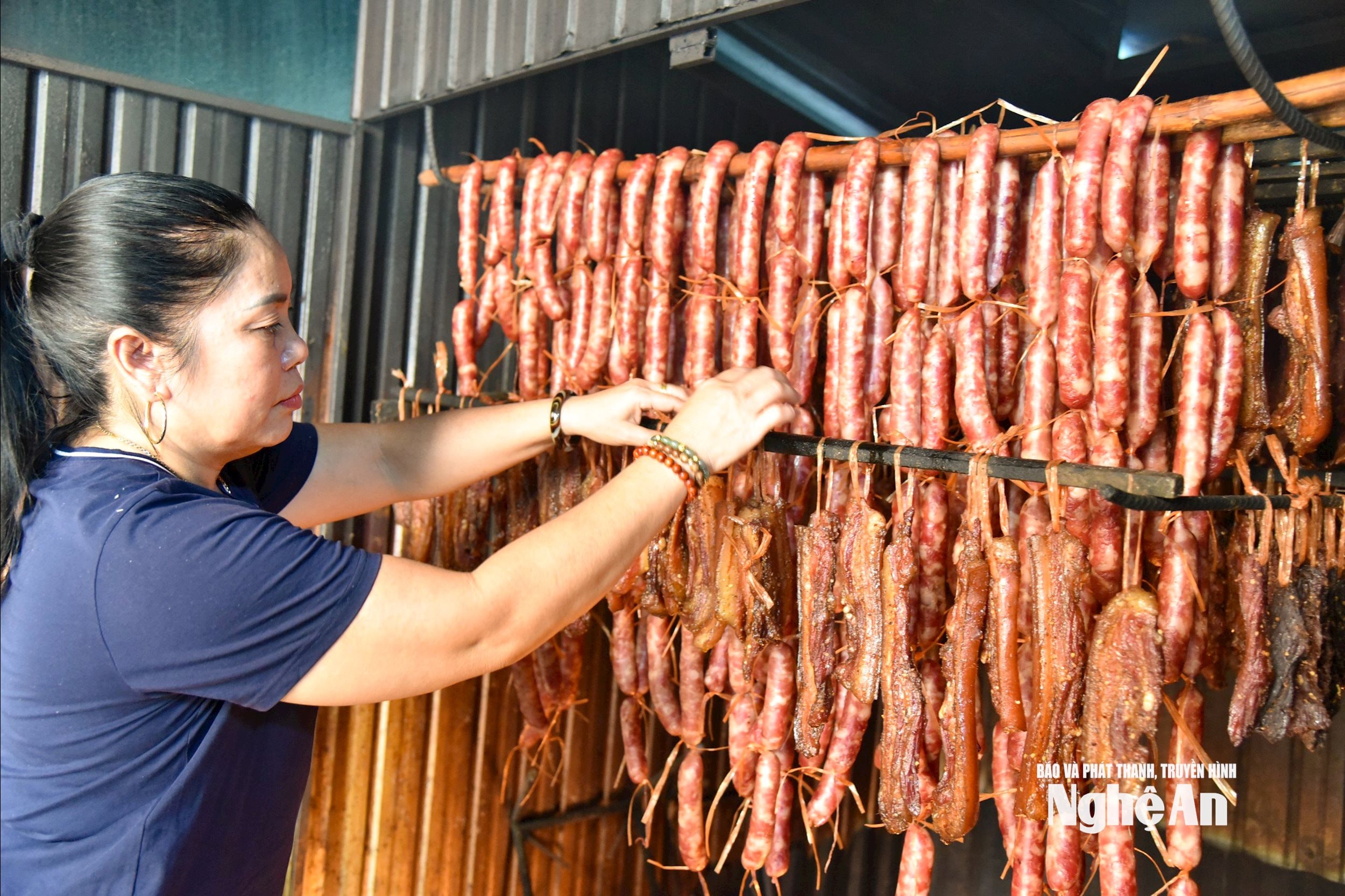
From around the tenth lunar month, many households producing wild vegetables in the communes of Muong Xen, Tuong Duong, Con Cuong, and Que Phong have proactively selected beef, pork, and fish; stockpiled dry firewood and forest spices for the Tet holiday. The kitchens, with their fires burning throughout the night, not only reflect the increased market demand during Tet but also demonstrate the close connection between commodity production and the traditional lifestyle of the highland people.
For this year's Lunar New Year, Ms. Nguyen Thi Loan's family in Muong Xen commune expects to supply the market with approximately 500 kg of dried beef, 500 kg of dried pork, and 300 kg of dried pork belly. According to Ms. Loan, regular customers both within and outside the province began contacting her to place orders for Tet as early as the end of September and beginning of October in the lunar calendar. The peak order period is in the twelfth lunar month, when the number of orders increases rapidly, forcing the family to arrange continuous production to meet delivery deadlines.
"Compared to previous years, purchasing power is slower this year, and orders haven't increased as sharply as in the 2021-2023 period, so total production has also decreased slightly. However, regular customers remain consistent, mainly those buying as Tet gifts or for use in entertaining family guests," Ms. Loan shared.
According to Ms. Loan, because the price of dried beef is currently almost double that of dried pork, many customers tend to switch to buying dried pork and smoked pork belly in larger quantities. However, dried beef remains a key item in the Tet gift segment, being ordered early and subject to strict requirements regarding quality and packaging.
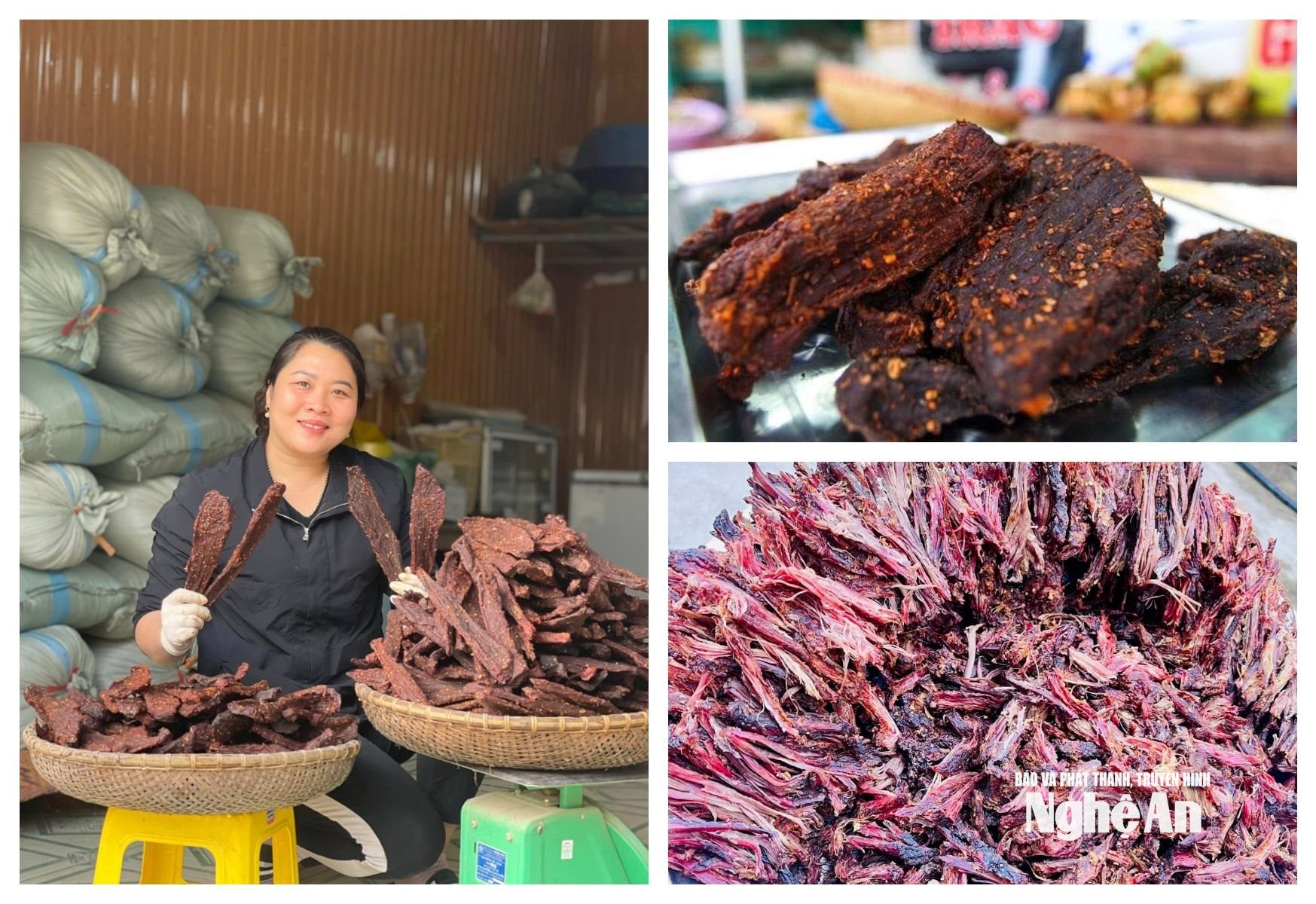
Similarly, for this year's Tet holiday, Thao Hao Beef Cooperative (Tuong Duong) also supplied hundreds of kilograms of beef and sausages to the market, serving customers in the province and many provinces and cities in the North and South. Ms. Nguyen Thi Thao, Director of the Cooperative, said that Tet orders usually start from the 10th lunar month and gradually increase towards the end of the year. "This year, orders haven't exploded like in peak years, but the loyal customer segment remains stable. Many customers accept higher prices in exchange for products made using traditional methods," Ms. Thao said.
To meet delivery deadlines during peak season, the cooperative had to hire additional seasonal workers, while maintaining a moderate production scale to control the quality of each batch. According to Ms. Thao, in the context of fierce market competition, maintaining reputation, preserving the distinctive flavor, and conducting business systematically are the decisive factors that help the smoked mountain specialty stand firm in the Tet market.
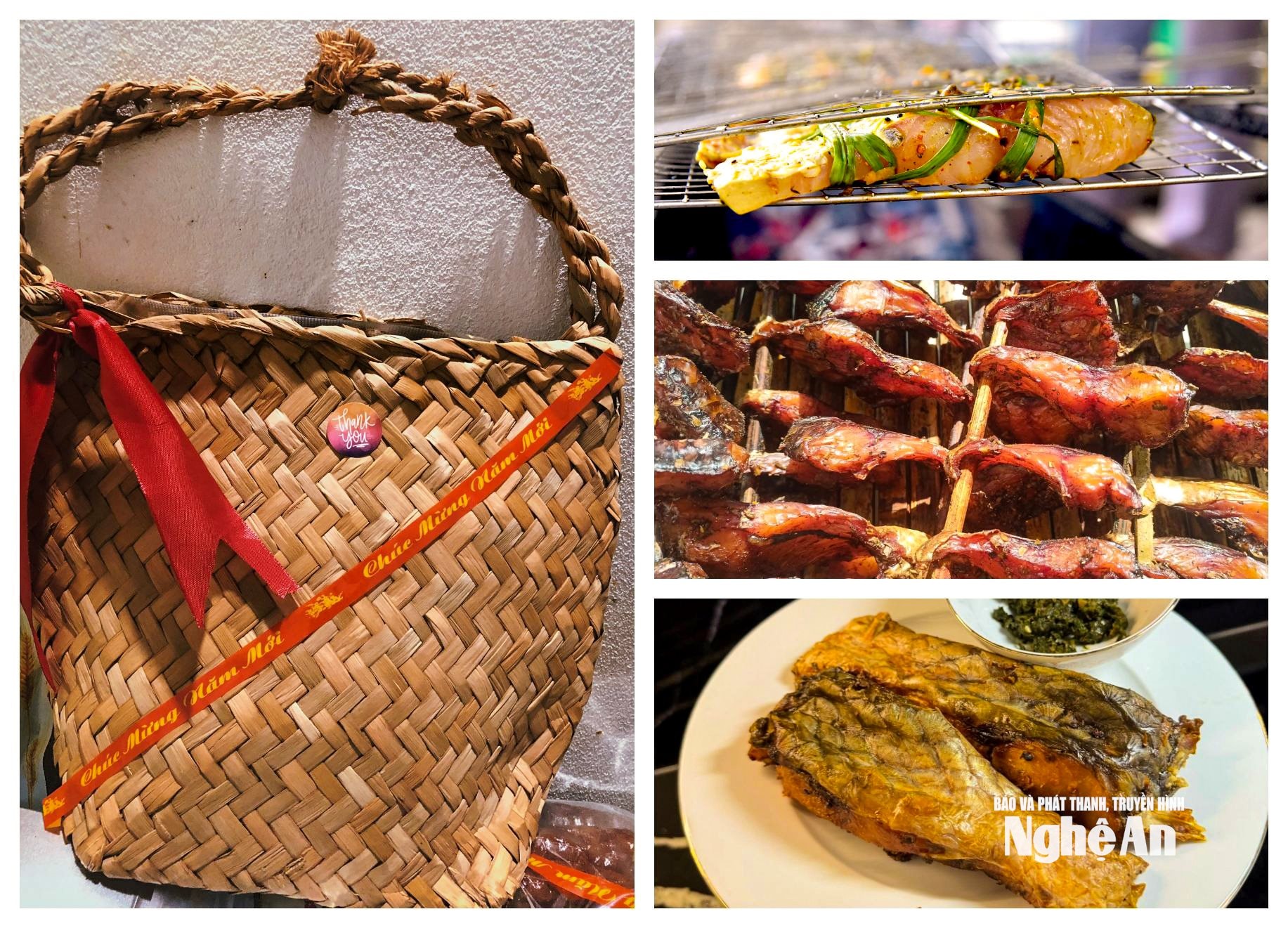
In another segment, grilled fish wrapped in mắc khén spice, made by Ms. Lô Thị Thêu (Sơn Lâm commune), is chosen by consumers as a "change of taste" for the Lunar New Year feast, priced at around 150-160 thousand VND per serving, vacuum-packed for convenient use. According to producers, the Tet market in recent years has become more selective. Consumers carefully consider price and intended use, but still prioritize products that bear the mark of the region, serving the needs of entertaining guests and as gifts. This forces producers to plan more carefully, avoiding mass production and chasing after quantity.
Retain consumers through identity and quality.
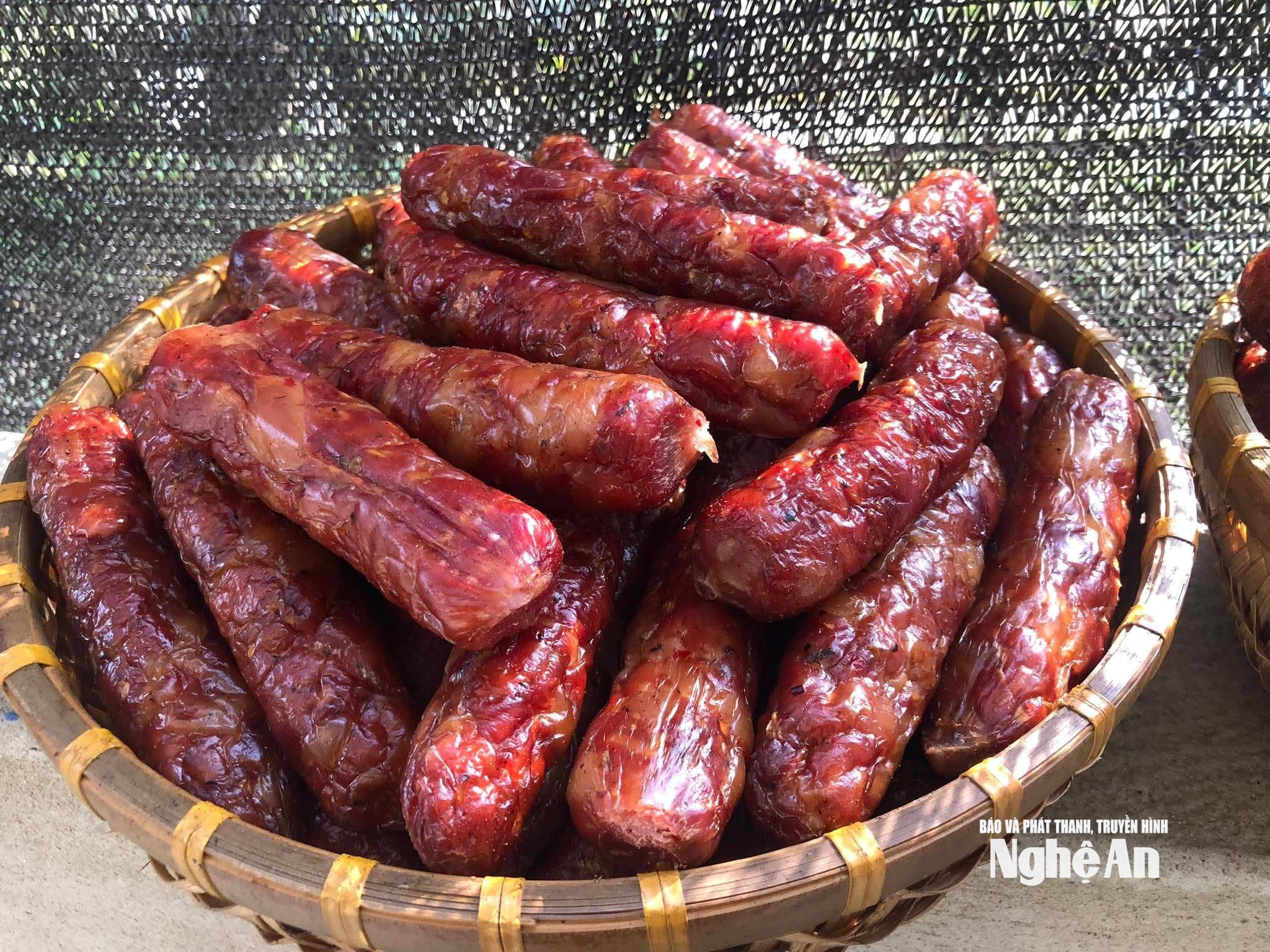
In a market increasingly flooded with smoked beef, sausages, and smoked meats from Northwestern provinces like Dien Bien, Son La, and Lai Chau, the smoked specialties of Nghe An province face increasingly intense competition. Many products have similar packaging and only slightly different prices, creating a significant risk of market "overlap." Therefore, the challenge for local producers is not just to sell their products in the short term, but to maintain consumer trust and long-term preference.
According to seasoned professionals, the difference lies primarily in the local ingredients used in each product line. For dried beef, Ms. Nguyen Thi Loan's family in Muong Xen commune still uses local yellow cattle, raised naturally and not industrially fattened, even though the price is slightly higher. Local cattle have firm meat fibers that retain their pink color, tenderness, and natural sweetness when dried. If industrially raised cattle are used, the meat tends to be mushy, bland, and dries out quickly. Therefore, despite the limited supply of cattle, her family only produces according to available raw materials, never accepting orders beyond their production capacity to maintain consistent quality.
"Some customers place orders a month in advance, requesting that the smoked chicken be prepared according to the correct time, without drying or using industrial charcoal. Even with large orders, we can't rush the process; we have to smoke it in rhythm with the fire to preserve the traditional flavor," Ms. Loan shared.
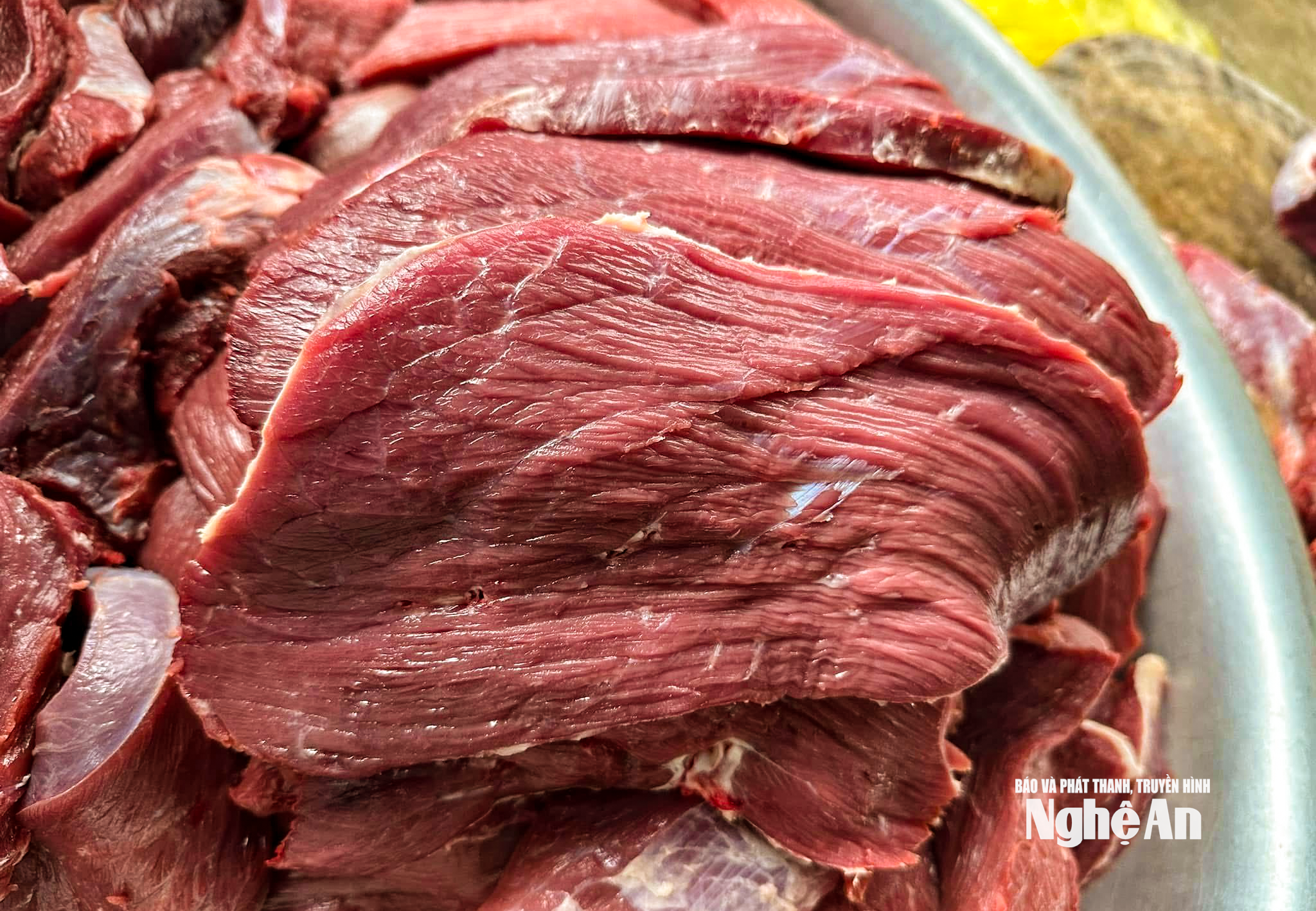
For sausages, the distinguishing factor lies in the traditional processing technique. Ms. Nguyen Thi Thao, Director of Thao Hao Beef Cooperative (Tuong Duong), said that the facility still maintains the traditional method of making sausages by hand, using pre-processed young pig's udders as casings instead of industrial casings. "This process is very time-consuming and more expensive, but in return, the sausage casing is naturally chewy and odorless. When cut open, the fat is clear, fragrant, and rich," Ms. Thao said. According to her, this difference helps ensure that the cooperative's products, despite being 10-15% more expensive than the market price, are still accepted by customers and regularly ordered during Tet (Lunar New Year).
Not only focusing on internal quality, many producers also invest systematically in packaging, enhancing the value of their products when brought to market. For grilled fish, Ms. Lo Thi Theu (Son Lam commune) chooses vacuum packaging while maintaining traditional elements by wrapping it in fresh banana leaves or wild betel leaves, placing it in a handcrafted bamboo basket, and including clear labels and instructions for use. "It's a simple dish, but when sold on the market, especially during Tet (Lunar New Year), presentation is very important. Customers buying it as a gift need something presentable," Ms. Theu said. Thanks to this, even though it's a family-scale production, her grilled fish product still has a stable position in the market.
Along with maintaining quality and investing in presentation, the producers of smoked specialties in the highlands of Nghe An are also gradually expanding their market reach through trade fairs, OCOP (One Commune One Product) booths, and social media platforms. However, according to those in the trade, promotion is only the beginning. "Customers may learn about the product through social media, but whether they return still depends on the taste and reputation," Ms. Loan affirmed.


