
Representative Nguyen Huu Cau: 'The State Audit Office needs to step in and clarify electricity prices so that people can have peace of mind.'
Although the Ministry of Industry and Trade has submitted a report explaining the adjustments to electricity and fuel prices, Representative Nguyen Huu Cau believes that the State Audit Office should clarify the matter.
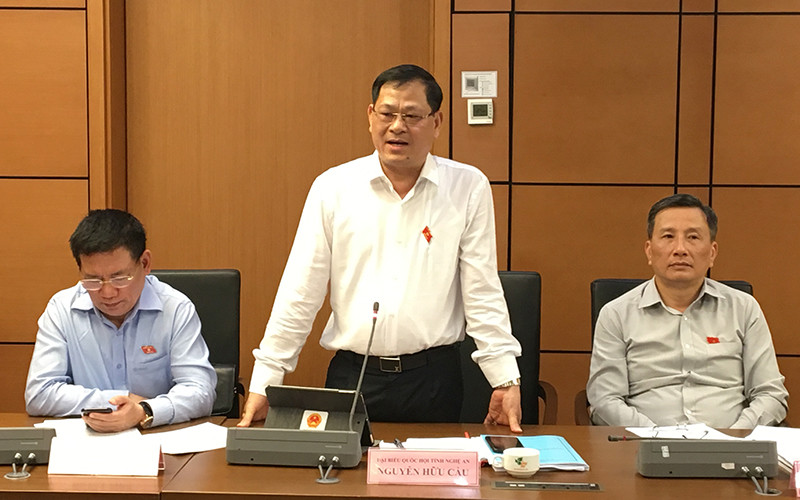
During a group discussion on the results of the government's economic, social, and budget development plan on the morning of May 22nd, delegate Nguyen Huu Cau (from Nghe An province) emphasized that voters are very concerned about the adjustment of electricity and fuel prices, and although the Ministry has provided explanations on the calculation mechanism, further clarification is needed to reassure the public.
"Voters don't know how to calculate prices, but they know that price increases will affect their lives, and compared to other prices, the increase in this item is not in line with voters' views," said representative Nguyen Huu Cau, and suggested that the State Audit Office conduct an audit of electricity and fuel prices to see if they are consistent with the proposals of the relevant agencies.
"If an audit is conducted and answers are provided, then whether prices increase or decrease, the people will see transparency. People say that although price increases affect income and life, the most important thing is trust and transparency in price management. Audits should get involved to reassure voters," Mr. Nguyen Huu Cau suggested.
|
| Delegate Nguyen Huu Cau speaks at the Nghe An delegation meeting on the morning of May 22nd. |
In the Nghe An delegation, also raising concerns on this issue, delegate Le Thu Ha - Standing Member of the National Assembly's Foreign Affairs Committee - stated that, after consulting with many economists, the actual electricity price increase was not 8.36% as announced.
"I agree with delegate Nguyen Huu Cau; perhaps the State Audit Office should be involved in auditing the calculation of electricity input costs as well as the electricity business," Ms. Ha stated.
The Ministry of Industry and Trade has submitted a report to the delegates regarding this issue, but the female delegate from Lao Cai province believes it does not meet the voters' requirements. For example, the Ministry explained that the six-tiered progressive pricing system is based on practices in countries like the US and South Korea. However, according to Ms. Le Thu Ha, these countries have many accompanying policies. In the US, for instance, there are multiple electricity providers and competition, differentiating between commercial and residential electricity prices. Furthermore, low-income households receive significant price reductions to minimize the impact on their daily lives.
Similarly, in South Korea, the government reduced electricity prices to help households cope with the heatwave, considering it a natural disaster and ensuring people's livelihoods. The country also offered discounts for low-income households, welfare facilities, and families with young children.
"We've copied the tiered system, but the accompanying policies for the people haven't been implemented," said delegate Le Thu Ha, while also expressing agreement with the progressive calculation method but emphasizing that the appropriate level of progressive calculation to meet the minimum living expenses of the people needs careful consideration.
Ms. Le Thu Ha suggested that a clear answer is needed regarding the actual nature of the electricity price subsidy policy and whether this issue is related to electricity price increases.Regarding long-term solutions, besides focusing on investing in the development of renewable energy such as solar and wind power, "it's time to consider diversifying the participants in electricity distribution." The reality of the aviation industry shows that people have more choices after private companies entered the market.


