
National Assembly delegates from Nghe An province discuss draft laws.
On the afternoon of August 3rd, continuing the program of the first extraordinary session of the 16th National Assembly, National Assembly deputies from Nghe An and Lam Dong provinces held group discussions on draft laws.
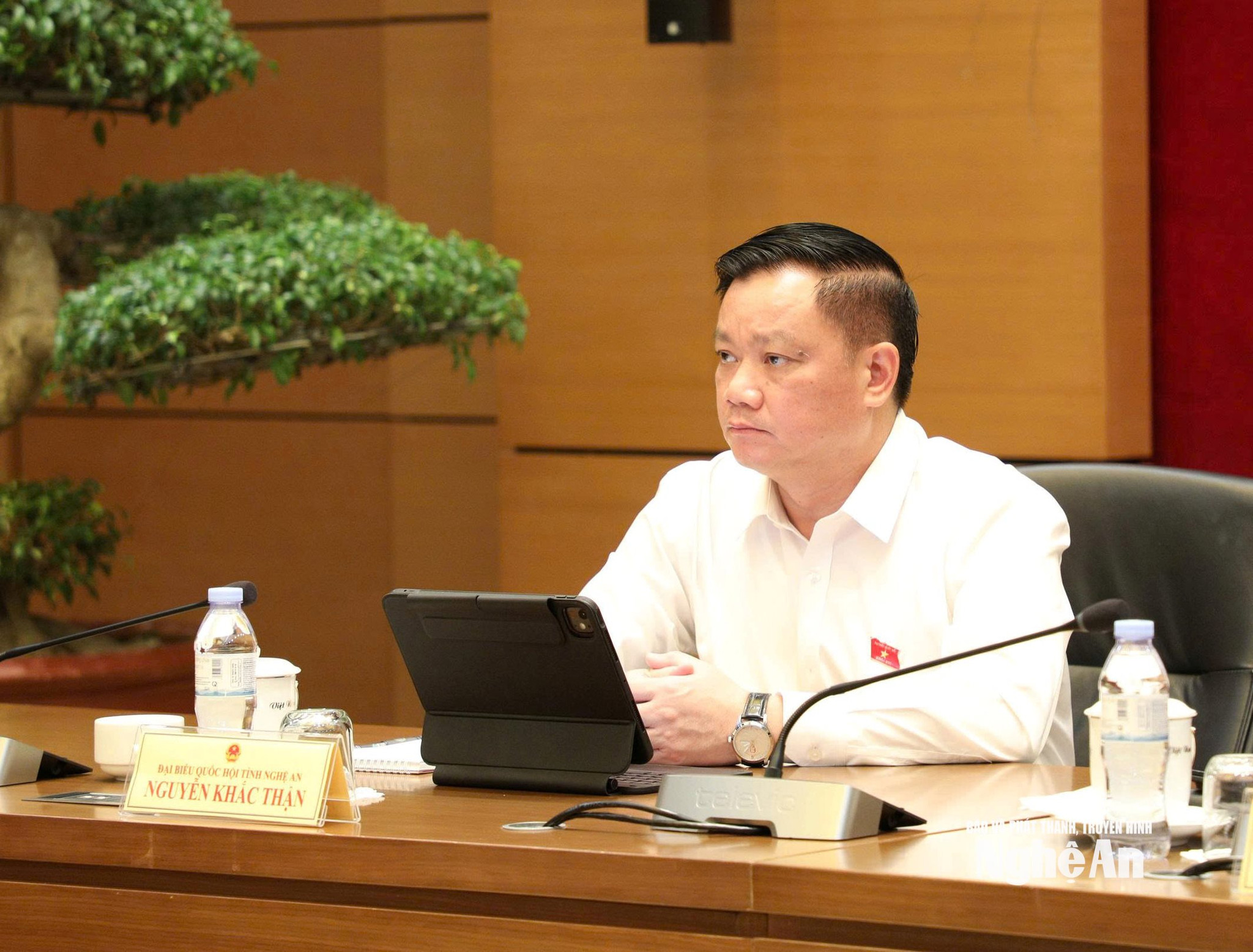
Comrade Y Thanh Ha Nie Kdam - Member of the Central Committee of the Party, Secretary of the Provincial Party Committee, Head of the National Assembly Delegation of Lam Dong province (Group Leader) and Comrade Nguyen Khac Than - Member of the Central Committee of the Party, Secretary of the Provincial Party Committee, Head of the National Assembly Delegation of Nghe An province (Deputy Group Leader) presided over and conducted the discussion session.

Consideration should be given to requiring electronic authentication for all buyers.
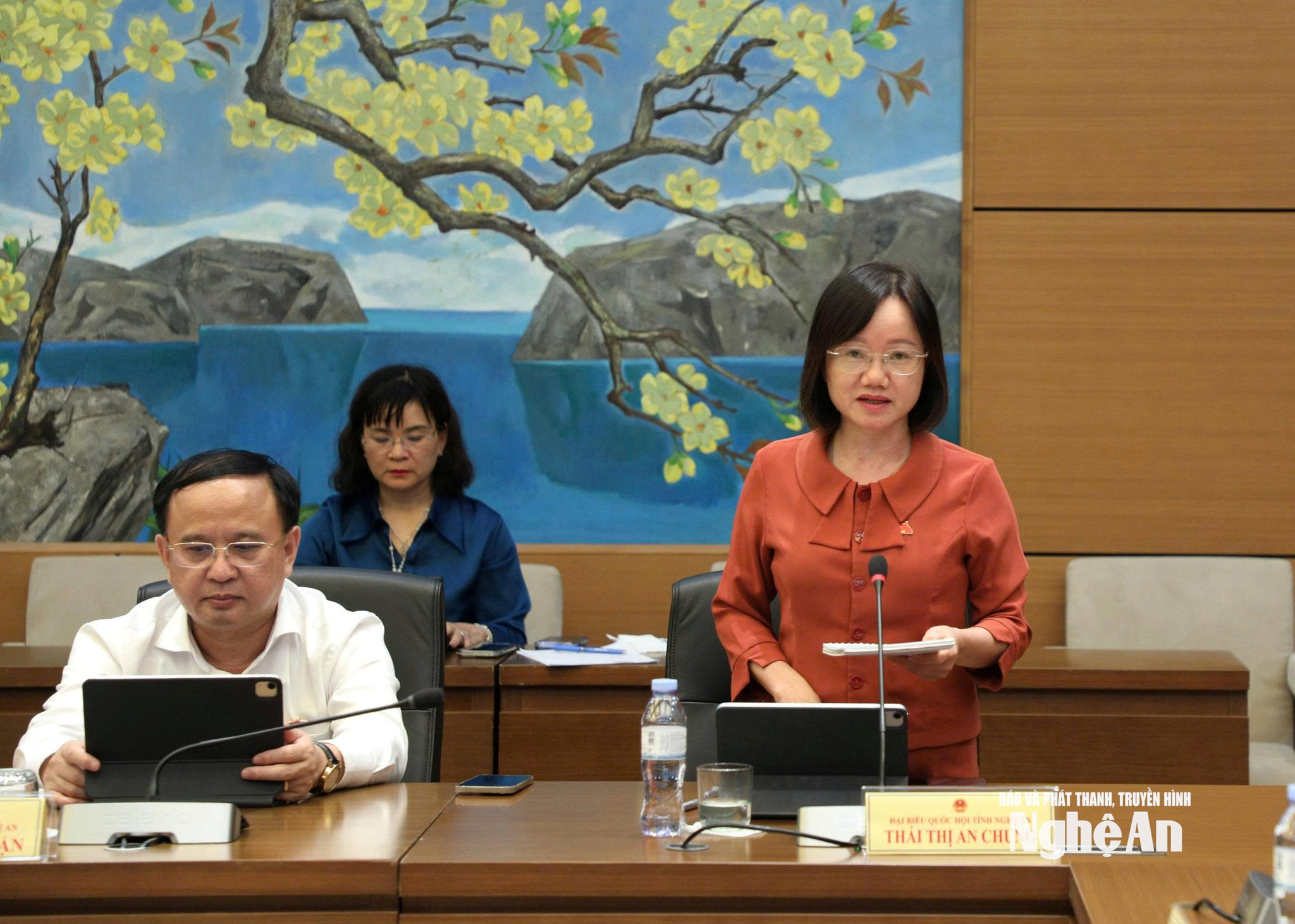
Participating in the discussion on the draft Law amending and supplementing a number of articles of the Customs Law, delegate Thai Thi An Chung - Deputy Head of the Standing Delegation of the National Assembly Deputies of the province - expressed her agreement with the content that buyers and sellers must electronically authenticate for export and import activities.
However, Representative Thai Thi An Chung argued that electronic verification for all buyers needs careful consideration. Currently, the volume of cross-border trade is enormous, while over 90% of e-commerce transactions are low-value, mainly involving common consumer goods with low risk. Requiring electronic verification for all buyers would create significant costs, but the added management value would be minimal.
Furthermore, this regulation will increase the risk of personal data leaks and security costs. This issue will also affect the advantages of e-commerce, such as quick registration, quick purchase, and quick payment. Imposing authentication requirements will make buyers feel inconvenienced and waste time, potentially leading to abandoned shopping carts.
Therefore, Representative Thai Thi An Chung - Deputy Head of the Standing Delegation of the National Assembly of the province - proposed that regulations requiring buyers to verify their identity electronically should only be in cases based on the following criteria: risk management, large transaction value, nature of goods, and requirements of specialized laws.
Such regulations would ensure the principle of risk management in customs operations; reduce compliance costs for citizens and businesses, especially for small-value transactions; and align with international trends, focusing on managing sellers, platforms, and entities responsible for customs declarations, rather than all entities.
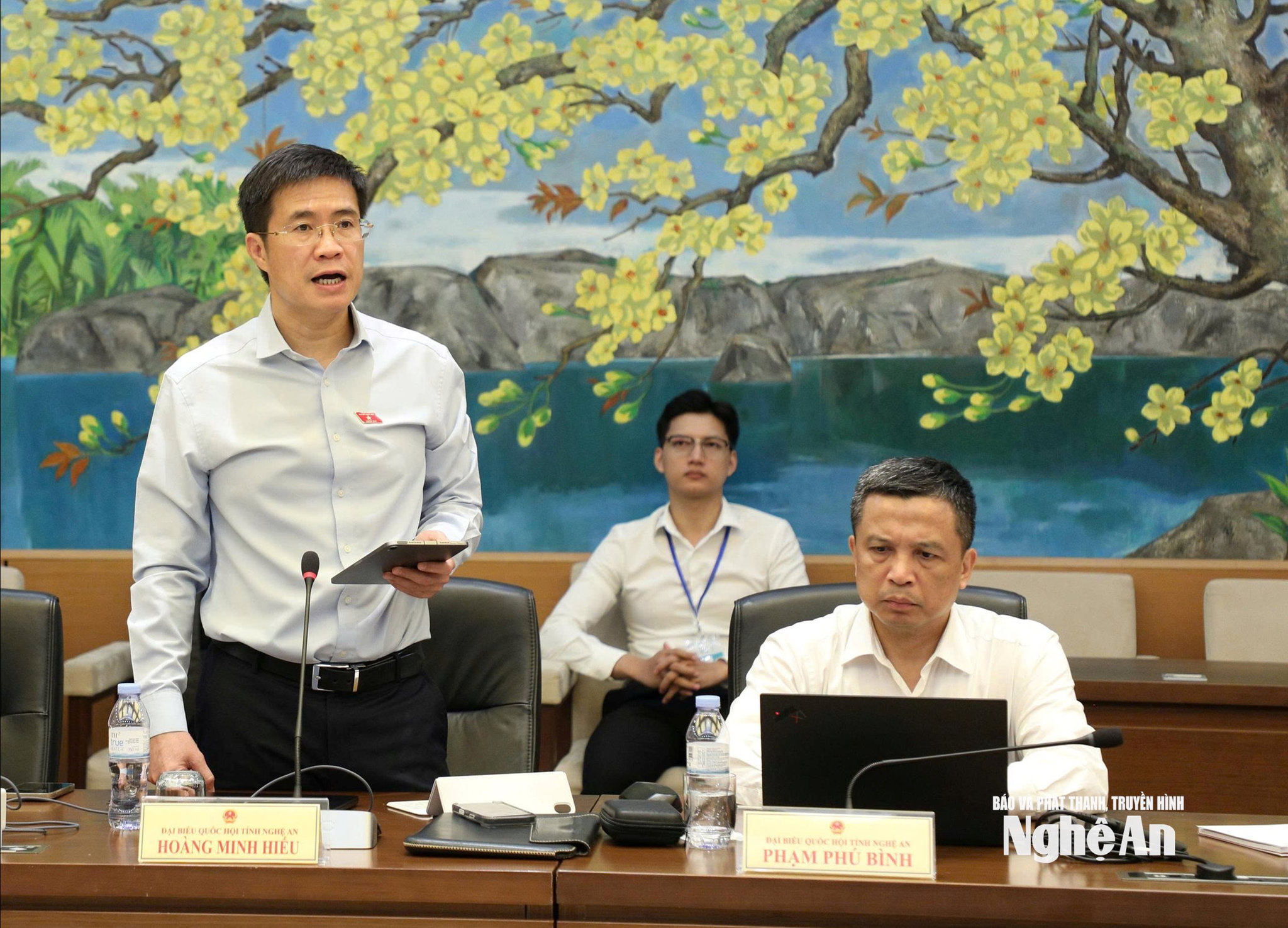
Expressing strong agreement with the verification report, Representative Hoang Minh Hieu - a full-time National Assembly representative of the National Assembly's Committee on Law and Justice - proposed adding regulations related to the movement of goods between export processing enterprises within the same export processing zone. Currently, according to the Customs Law, in cases of goods movement between branches of the same enterprise, or between enterprises within the same export processing zone, the enterprises are still required to complete all customs procedures.
Therefore, according to international practice, this will affect the operation of businesses. Based on this, Representative Hoang Minh Hieu proposed that the drafting committee study adding a regulation exempting goods transferred internally within the same enterprise from customs declaration. For goods transferred between enterprises within the same export processing zone, the declaration procedures could be simplified electronically, facilitating business operations.
Representative Hoang Minh Hieu also suggested clarifying the legislative technical aspects of the concept of "bonded warehouse" in relation to the concept of "separate customs area" in the Law on Foreign Trade Management and the Commercial Law. In addition, he proposed adding several entities such as owners of e-commerce platforms and owners of commodity exchanges to the concept of customs declarants to align with current trends.
Regarding the content of customs inspection and supervision of goods exported and imported through e-commerce platforms, Representative Hoang Minh Hieu argued that the draft law requires buyer verification, but this provision does not clearly define who or which entity will be responsible for verifying the buyer.
If the responsibility is assigned to the e-commerce platform owner, the platform's compliance costs will increase, and a transitional period is needed to modify the system and algorithmic model accordingly. Given this situation, Representative Hoang Minh Hieu suggested that if the drafting agency proposes assigning this responsibility to the e-commerce platform owner, there needs to be clear regulations defining which agency is responsible for verification to facilitate implementation.
Adding regulations on the rights of customs declarants.
According to National Assembly delegate Tran Nhat Minh, Clause 3 of Article 17a clearly stipulates that the Customs agency prioritizes customs procedures, exemptions and reductions in customs inspection and supervision, post-clearance inspections, and other operational activities for export, import, exit, entry, and transit activities of customs declarants who comply well with the law; and strengthens customs inspection and supervision, promptly handling cases of non-compliance.
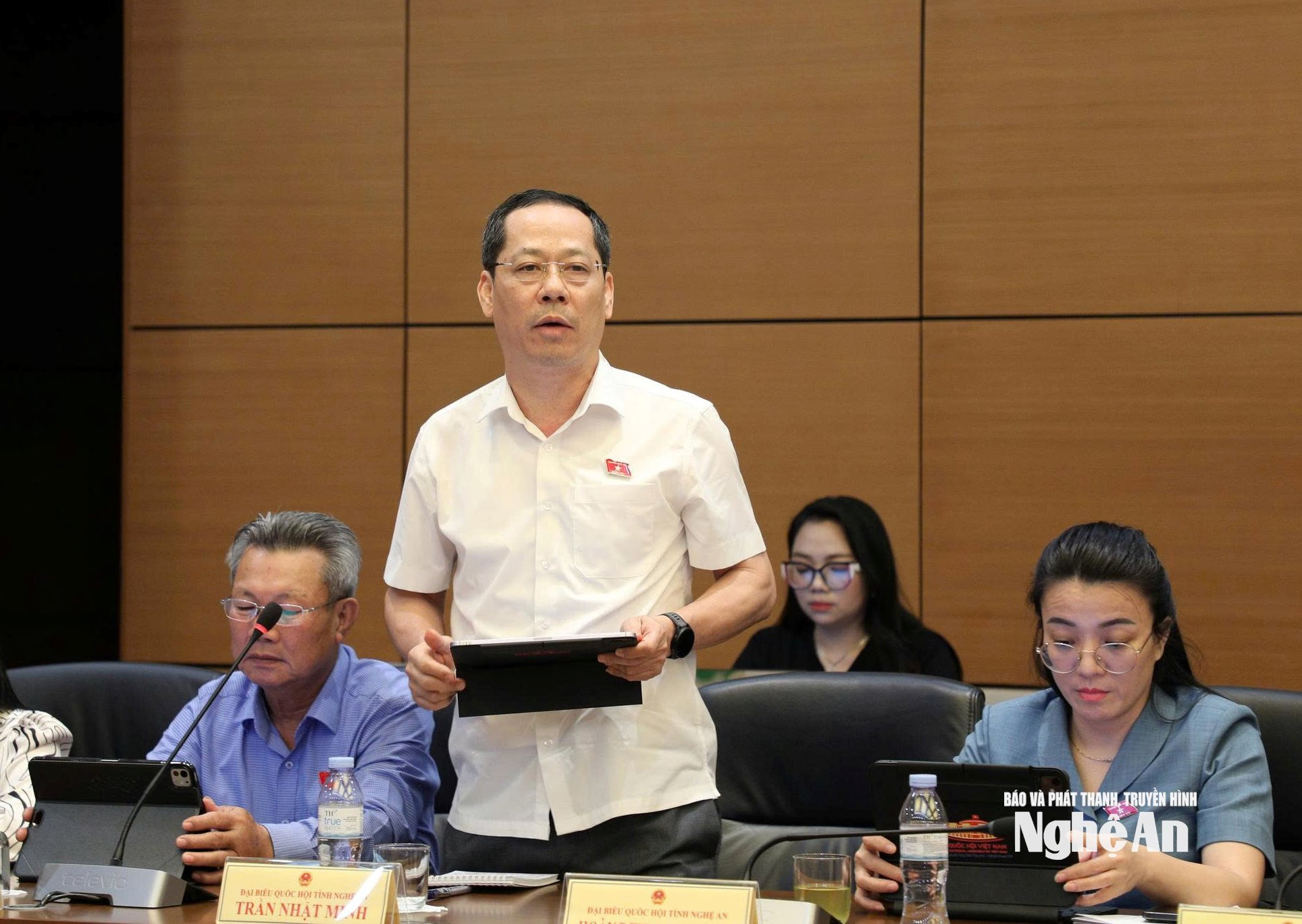
However, the draft law does not yet include provisions granting customs declarants the right to know the results of the customs authority's assessment of their compliance with the law, nor does it provide a mechanism for declarants to explain, appeal, or request a review of the assessment results if they believe the results are inaccurate.
Based on a study of Article 18 of the current Customs Law, Representative Tran Nhat Minh proposed adding a clause to Article 17a stipulating the rights of customs declarants as follows: To be provided with information by the Customs authority regarding the assessment of legal compliance and to have the right to appeal the assessment results if there are grounds to believe that the assessment results are inaccurate.
While agreeing with the amendments and additions in Clause 7, Article 1 of the draft law regarding customs clearance agents, Representative Tran Nhat Minh argued that neither the current law nor the draft law contains provisions on the financial mechanism for the pricing of customs clearance services and related administrative procedures concerning imported, exported, and transit goods, as well as imported, exported, and transit transport vehicles.
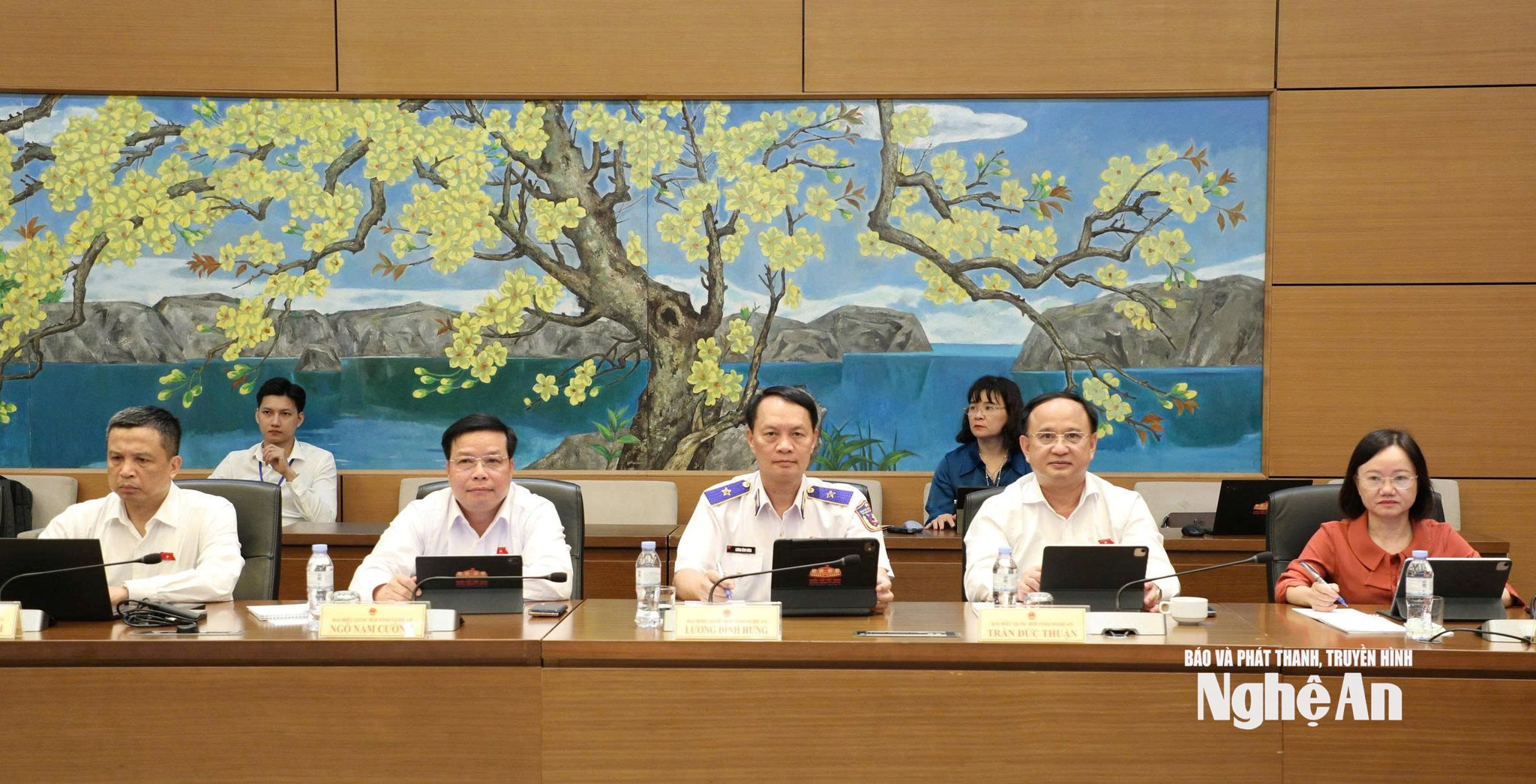
To ensure the legal soundness of the law, Representative Tran Nhat Minh suggested that the drafting committee consider adding a provision stating that the price of customs clearance services and related administrative procedures shall be agreed upon by the cargo owner, the transport vehicle owner, and the customs clearance agent in the customs clearance service contract. This provision would serve as the basis for customs agents to collect service fees when performing their work.
In addition, delegate Tran Nhat Minh also proposed amending the statute of limitations for post-clearance inspection to 5 years from the date of customs declaration registration in Clause 24, Article 1 of the amended and supplemented Clause 4, Article 77 of the current Law to ensure it is both concise and similar to the statute of limitations in the Criminal Code, avoiding difficulties and obstacles in practical application.
Improve the coordination mechanism between the three forces: Customs, Police, and Border Guard.
While agreeing with the verification reports of agencies, ministries, and National Assembly bodies, delegate Ngo Nam Cuong - Deputy Commander of Military Region IV - stated that the draft Law amending and supplementing some articles of the Customs Law still has some contents that need further thorough review to ensure consistency in the legal system and border protection.
According to Representative Cuong, the draft law is stipulating an expansion of the scope of customs operations. In practice, within Military Region 4, there are currently 7 pairs of international border gates being considered for upgrading into strategic border gates within the East-West economic corridor between Laos and Vietnam. In addition, there are 4 main border gates/pairs and more than 10 secondary border gates.
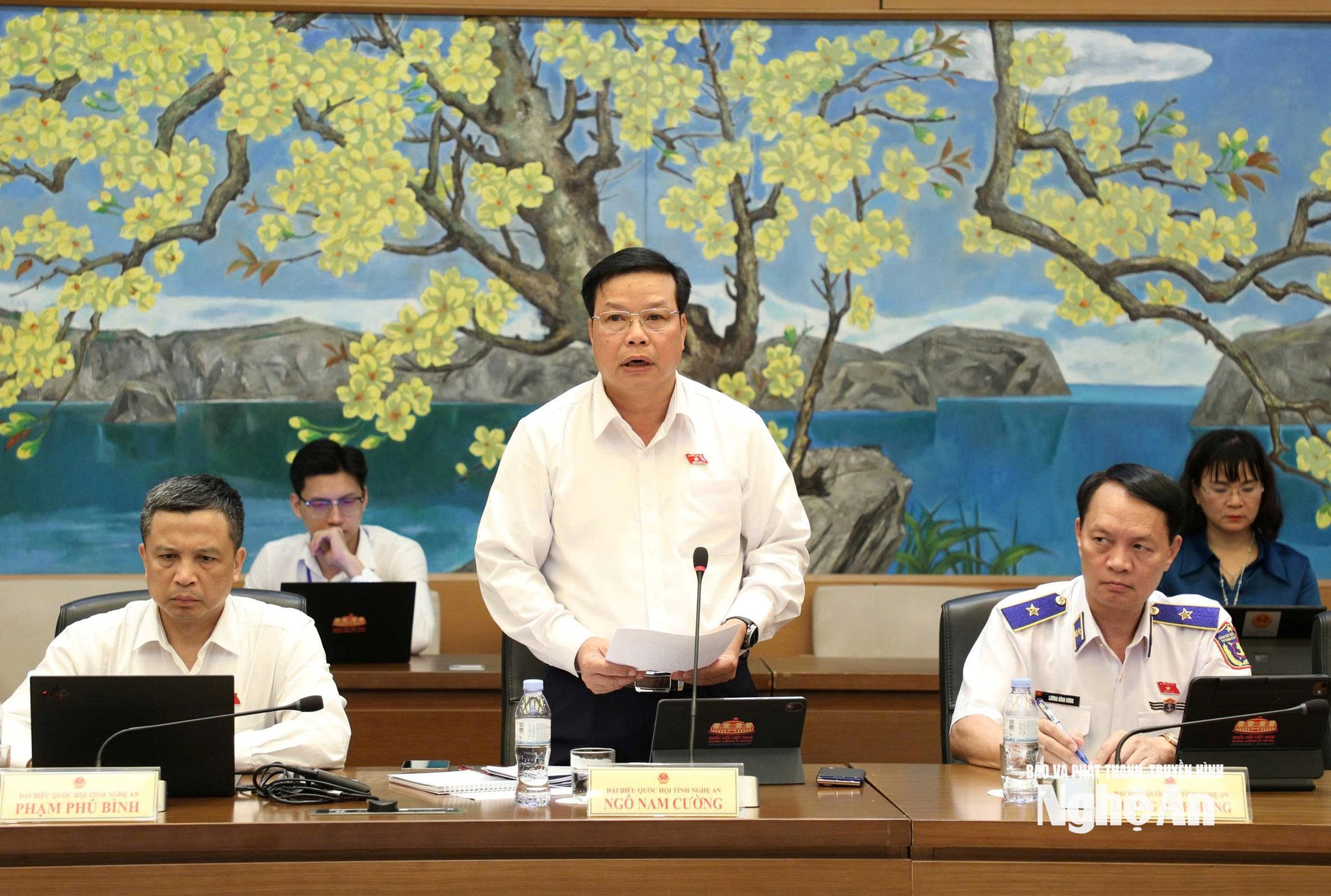
Customs and Border Guard are two forces working in parallel to perform state management functions, but along two separate axes of focus. Border Guard manages people and vehicles entering and exiting the country; Customs manages import and export goods. "Expanding the operational area of Customs without clearly defined boundaries will lead to the risk of overlapping jurisdictions in border areas regulated by the Border Guard Law, as well as agreements and regulations governing border regions between Vietnam and Laos," said delegate Ngo Nam Cuong.
Therefore, Representative Ngo Nam Cuong proposed that the Drafting Committee add a clear reference principle to the draft: The determination of customs operational areas in border regions must comply with and be consistent with the Vietnamese Border Guard Law and international treaties on border management to which Vietnam is a signatory. This core issue needs to be definitively defined in the law itself and should not be left to sub-laws for guidance.
Regarding the provision in the draft law allowing customs declarants the right to choose a unit to re-evaluate technical criteria and the Customs agency the right to choose a unit for supplementary evaluation if there is a dispute over the results, Representative Ngo Nam Cuong argued that the draft lacks a time limit for these evaluation steps. This could easily lead to prolonged customs clearance times, causing congestion of goods and incurring large warehousing costs for businesses.
Therefore, the delegates proposed adding a mandatory deadline for completing the reassessment and supplementary assessment results. At the same time, they suggested clearly defining legal liability if the assessment results are inaccurate and cause damage to businesses and customs declarants.
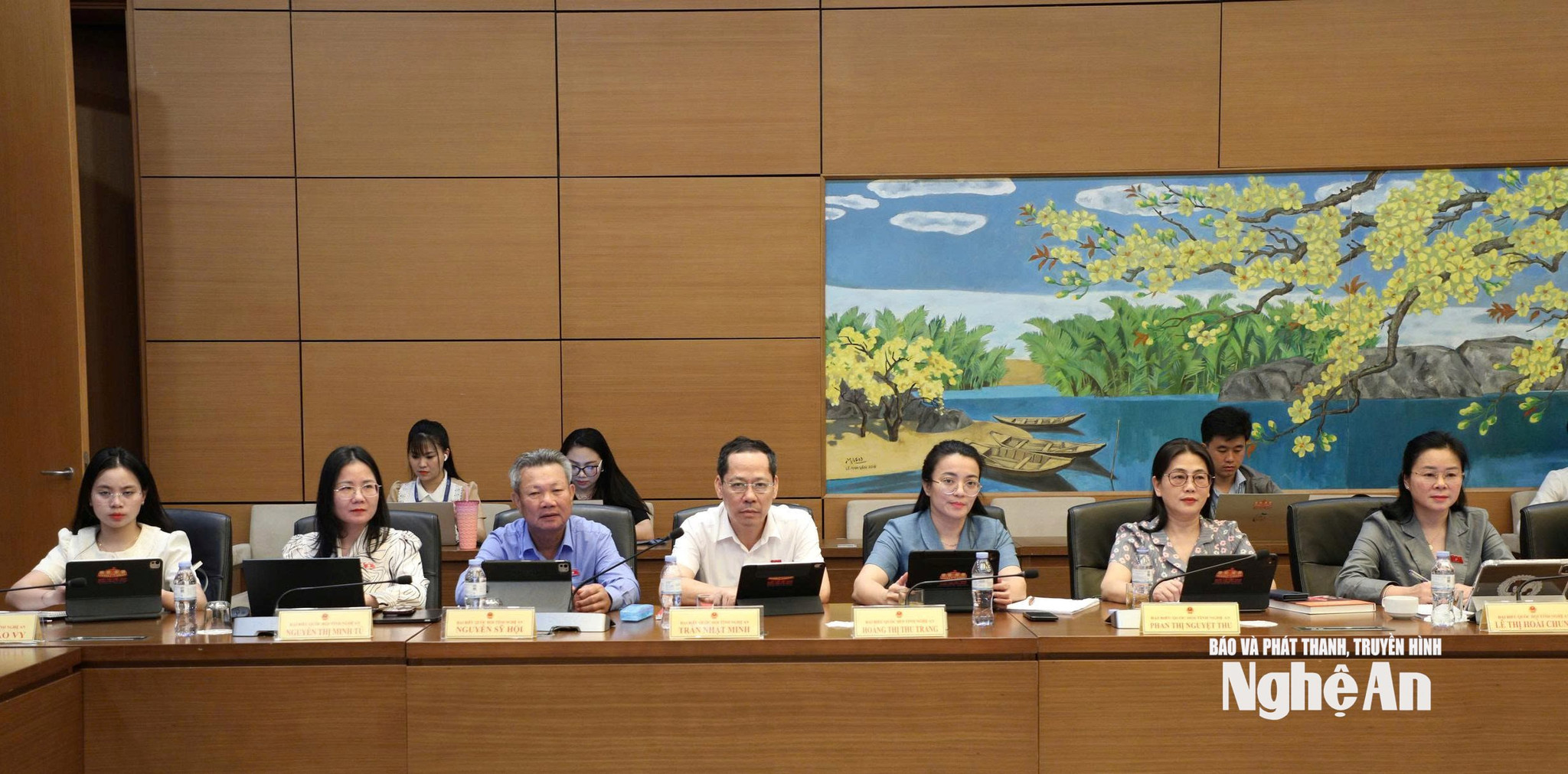
Commenting on the authority to proactively suspend transit goods and the prescribed model for specialized inspections, delegate Ngo Nam Cuong suggested that the drafting committee consider adding a provision: When exercising the authority to suspend transit goods at land border checkpoints, the Customs agency is responsible for notifying and coordinating with the Border Guard force to ensure security and order. At the same time, the application of a single point of contact model should be designed to ensure consistency with provisions in signed international agreements, avoiding conflicts of authority and diplomatic procedures.
In particular, it is necessary to improve the coordination mechanism by involving three forces: Customs, Police, and Border Guard, rather than just Customs and Police as in the draft. Currently, the Border Guard is the standing force, leading border patrol and control work and coordinating closely with border protection forces of neighboring countries.
We must not allow investors to "play both sides."
During the discussion on the draft Resolution of the National Assembly stipulating specific mechanisms and policies to remove difficulties and obstacles in the implementation of projects and works serving the APEC 2027 Summit in Phu Quoc Special Economic Zone, An Giang province, Representative Vu Thi Lan Anh - a full-time member of the National Assembly's Committee on Representative Affairs - paid particular attention to the mechanism for handling obstacles related to the exploitation and recovery of minerals.
.jpg)
Besides the positive impacts on project implementation progress, the government, and businesses, according to Representative Lan Anh, this regulation will create a legal loophole regarding the mechanism for controlling resources and the environmental consequences after mining. Allowing mining without a license inadvertently creates a loophole for investors to withdraw without having to go through the mine closure procedures as stipulated in the Mineral Law.
Therefore, Representative Vu Thi Lan Anh argued that there must be a regulation to ensure strictness, thereby binding the responsibilities of investors, while reducing the risk of fraud regarding the volume of minerals and tax revenue losses for localities as well as the State budget.
Regarding the mechanism for addressing obstacles in construction projects that have not yet completed the necessary procedures, Representative Lan Anh argued that this regulation could lead to risks and abuse of the policy. When the draft grants investors the right to independently prepare and approve construction designs and cost estimates, for BT projects, the higher the project value, the larger the amount of public land the State must provide as compensation. This regulation inadvertently gives investors the power to both play the game and act as the referee. Therefore, stricter regulations are needed, stipulating that project construction approvals should not exceed the estimated value already assessed by the provincial-level construction authority.
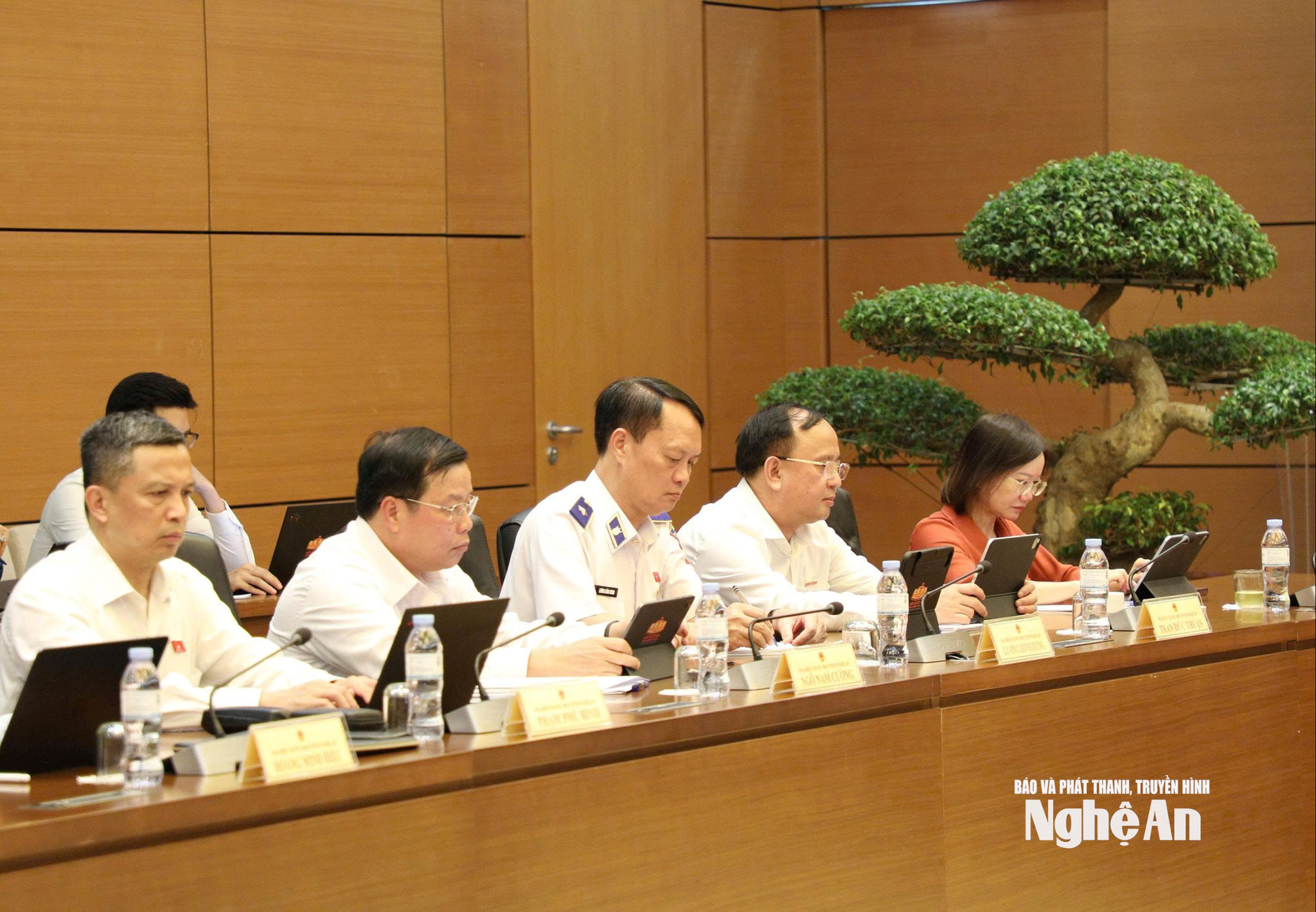
In addition, delegates also proposed researching and clearly defining the responsibilities of each agency in developing post-inspection criteria based on risk levels, as well as publicly disclosing the results of inspections, audits, and handling of violations. They also suggested that periodic reports on implementation results should be submitted to the Government and the National Assembly. Furthermore, a mechanism is needed to monitor the issuance of detailed regulations to ensure that abolished business conditions, licenses, or administrative procedures are not reinstated in any form.
It is necessary to clearly define the responsibilities between ministries, ministerial-level agencies, and local authorities regarding business sectors whose business conditions have been abolished or amended. Furthermore, it is essential to establish principles and alternative management methods to replace the detailed regulations on specific behaviors and content, as well as the responsibilities of the assigned agencies. This will prevent decentralization and delegation of authority from becoming a basis for generating additional licenses, such as confirming conditions or administrative procedures outside the law.
Continue to consider the clean water business as a conditional business sector.
Regarding the draft Law amending and supplementing Article 6 and Appendix IV on the list of conditional investment and business sectors of the Investment Law, Representative Thai Thi An Chung expressed concern about the provision to remove the clean water business sector from the list of conditional business sectors. The Ministry of Construction explained that the Ministry will study and propose measures to control risks from businesses in the management and operation of clean water supply services during the process of finalizing the draft Law on Water Supply and Drainage. However, the draft Law on Water Supply and Drainage has not yet been submitted to the National Assembly, and if it is submitted in the future, there will be a legal gap.
Therefore, Representative Thai Thi An Chung proposed that the clean water business should continue to be considered a conditional business sector for five reasons. Firstly, clean water is an essential product and impacts the health of the entire population. And a mistake in the water treatment process or the operation of the system can cause widespread consequences for people's health.
Secondly, the water supply business is monopolistic, and people have very few opportunities to choose other suppliers. Without minimum requirements for the technical and operational capabilities of businesses, it will be very difficult to protect consumer rights.
Thirdly, water supply systems are essential infrastructure, and businesses must be able to protect water sources, respond to incidents, and maintain water supply in situations such as natural disasters and epidemics. Therefore, this is a matter of water security, not simply normal water supply; it is part of national security.
Fourth, it is not yet possible to transition from pre-inspection to post-inspection at this stage because, in reality, there is currently insufficient capacity to monitor water quality online, and the calibration of testing equipment is still weak.
Fifth, based on the experience of several countries, there are very strict licensing and control mechanisms for the clean water business.


