
National Assembly representative Nguyen Thi Minh Tu: We need to significantly increase spending and investment in research and development.
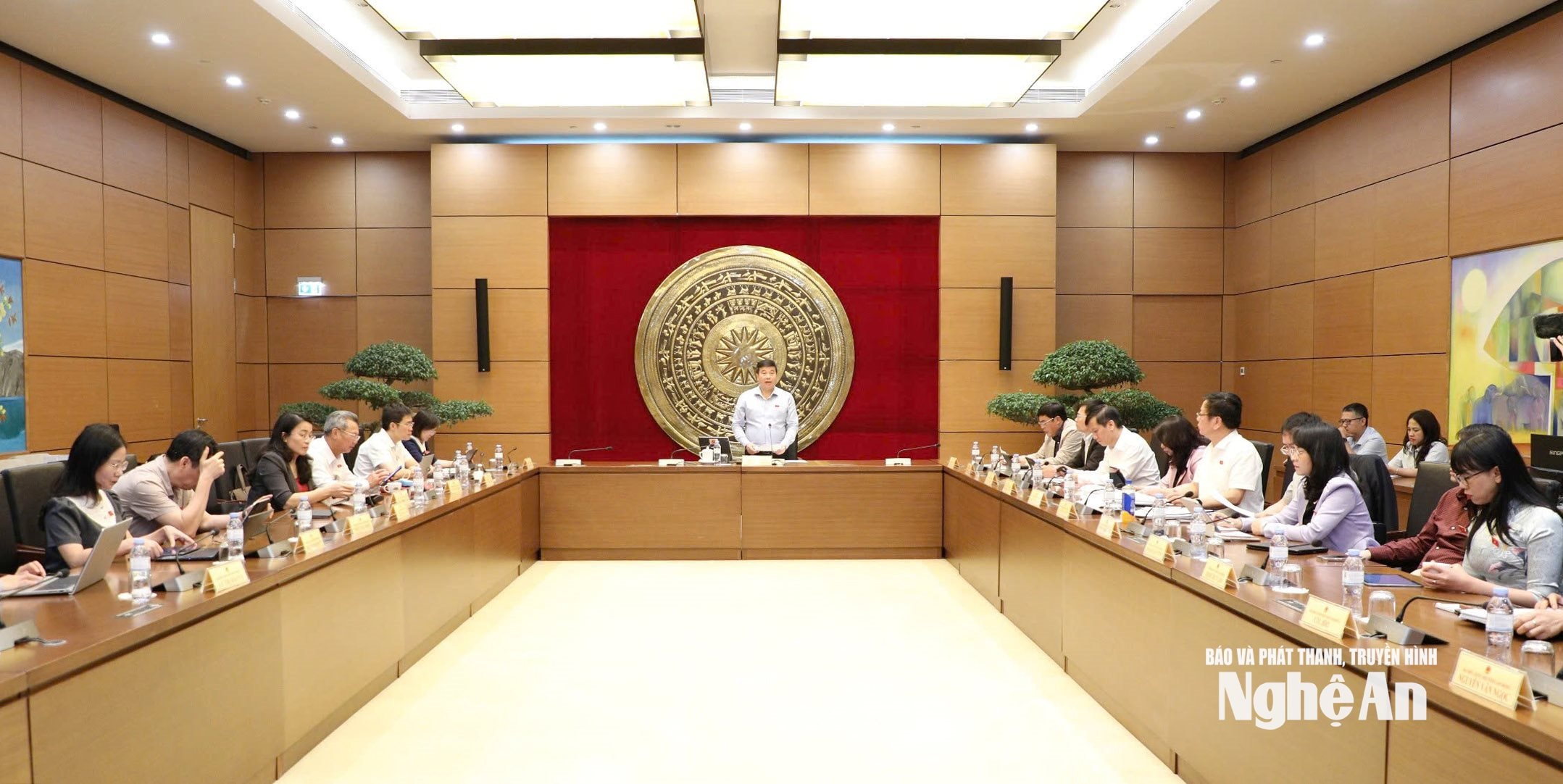
On the afternoon of April 9th, continuing the program of the first session of the 16th National Assembly, National Assembly deputies held group discussions on socio-economic issues.
The discussion in Group 7 included 33 delegates from the two National Assembly delegations of Nghe An and Lam Dong provinces. Comrade Y Thanh Ha Nie Kdam - Member of the Central Committee of the Party, Secretary of the Provincial Party Committee, and Head of the National Assembly Delegation of Lam Dong province - chaired the discussion session.
3 causes and challenges to face
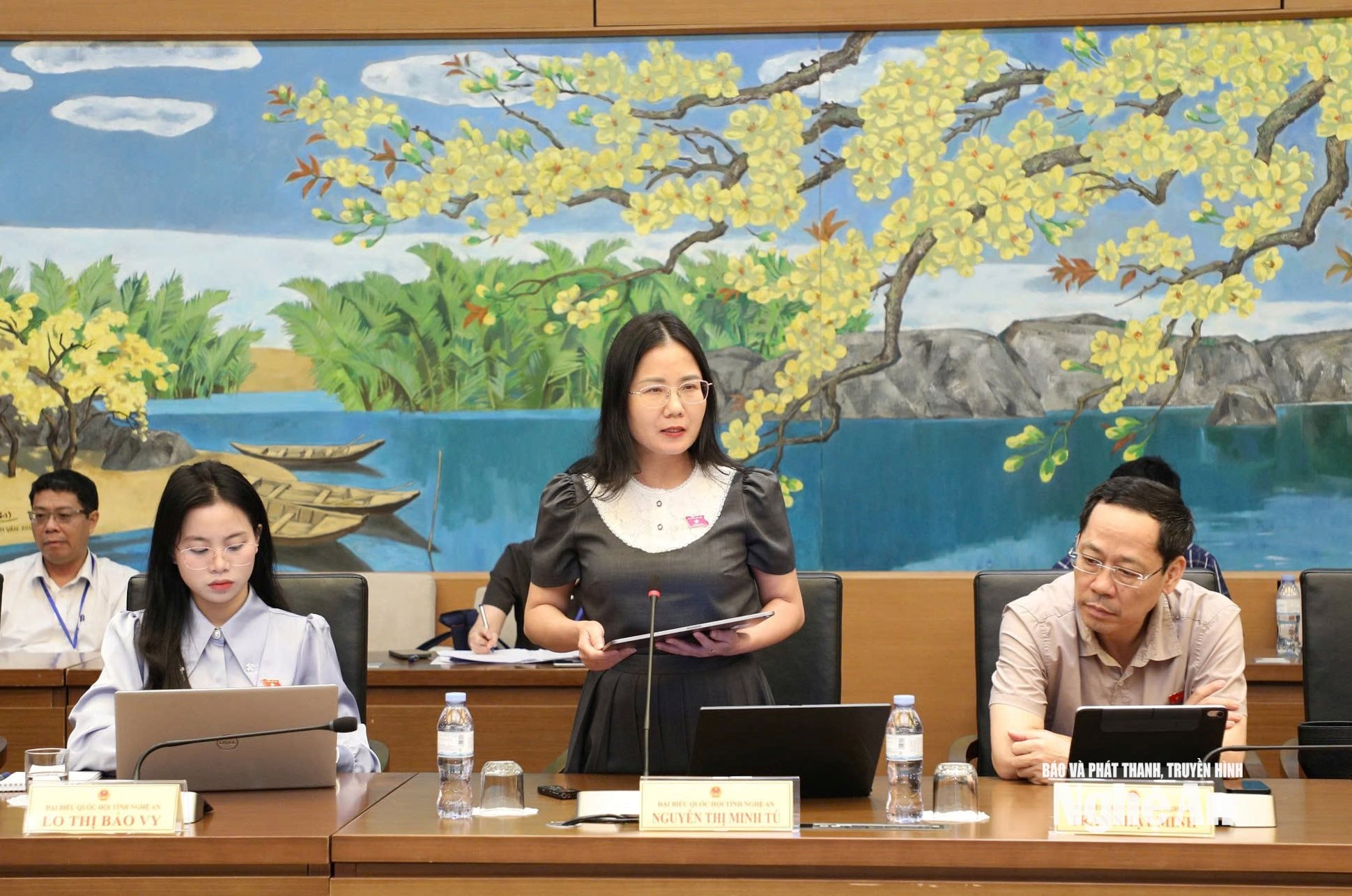
During the discussion on the Socio-Economic Development Plan and State Budget for 2025 and the 5-Year Socio-Economic Development Plan (2026-2030), National Assembly delegate Nguyen Thi Minh Tu from Nghe An province stated that the assessment clearly indicated limitations in the country's development model.
This is a growth model that is not truly based on science, technology, and innovation; economic restructuring is slow and lacks breakthroughs; the internal strength of the economy is weak, and productivity, quality, efficiency, and competitiveness are low.
"Therefore, a closer and clearer analysis of the causes and challenges is needed, in order to propose effective solutions and development tasks for the future," Representative Tú suggested.
Representative Nguyen Thi Minh Tu mentioned three assessments regarding the causes and challenges faced. Although the proportion of total factor productivity (TFP) has gradually increased over time, compared to leading countries such as Japan, South Korea, and China during their respective high growth periods, Vietnam's TFP contribution remains significantly lower.
The growth in Total Factor Productivity (TFP) is primarily driven by institutional breakthroughs and the technical efficiency of businesses, while economies of scale and technological advancements have not contributed significantly to TFP growth. Furthermore, spending on research and development (R&D) remains modest.
"Spending on science and technology is only about 0.53% of GDP, much lower than the average for upper-middle-income countries (over 1.5%). Although the share of businesses in total R&D spending has exceeded 60%, the gap in innovation capacity compared to developed countries remains very large," Representative Tú cited.
Representative Tú argued that the country has limited endogenous capacity, exports rely mainly on FDI, and the domestic value-added ratio is low compared to other countries in the world. The economy continues to operate under a growth model driven by exports.
Focus on institutional reform and transformation of the growth model.
According to delegate Nguyen Thi Minh Tu, the Resolution of the 14th National Congress of the Party established a new development model in which the role of the private sector has changed. The role of the State has shifted from creating to leading. The shift is from extensive growth to quality growth, aiming to improve productivity, quality, efficiency, added value, and competitiveness of the economy, with science, technology, innovation, and digital transformation as the main driving forces.
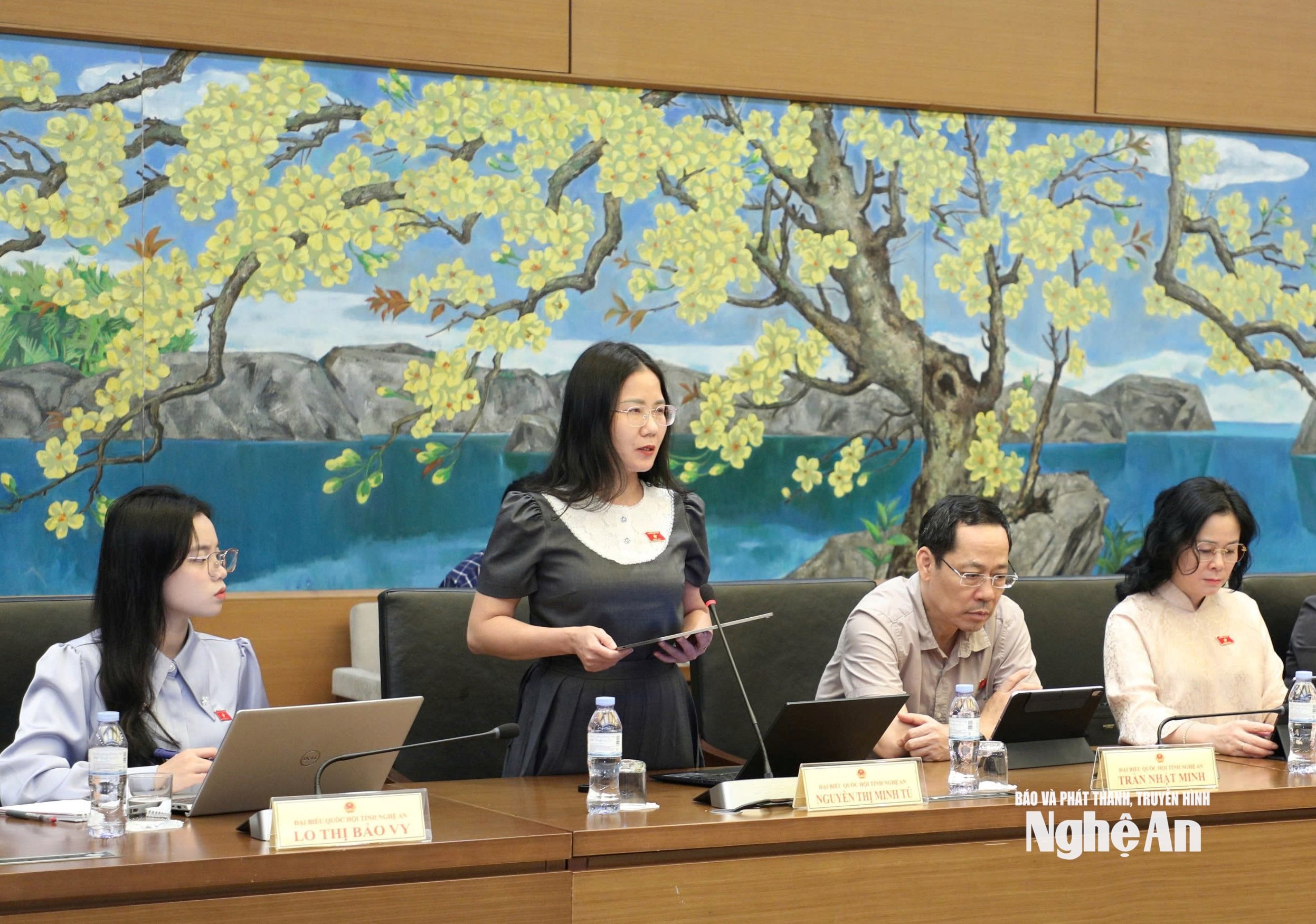
The focus of the new model is to create new, high-quality productive forces and production methods, in which the data economy, digital economy, green economy, and circular economy are identified as strategic pillars. Based on this reality, requirement, and orientation, delegate Nguyen Minh Tu suggested that in institutional reform, research should be conducted on building institutions of a modern economy and new economic models.
In the transformation of the growth model, it is necessary to study the restructuring of industries and sectors, the development of the business sector and new economic models associated with digital transformation and green transformation. Digital transformation is the focus, with the goal of the digital economy reaching 30% of GDP by 2030, more than double the current 14% in 2025.
According to Representative Tú, the report should include a scenario for digital economic growth to provide a basis for focusing resources and solutions on developing the core digital economy and digitizing industries to improve efficiency and create new value. It is necessary to develop national digital infrastructure, digital data systems, and promote digital transformation in both the public and business sectors.
Regarding the structure of the agricultural sector, National Assembly representatives from Nghe An province suggested that further research is needed to develop multi-value agriculture. For mountainous regions, research should be conducted on organizing economic development under the forest canopy and leveraging the multi-purpose value of the forest ecosystem.
Regarding the development of economic zones, research should focus on developing a strong domestic business force with the capacity for competitiveness and innovation. To achieve this, policies are needed to foster the formation of large technology companies in Vietnam.
.jpg)
Representative Nguyen Thi Minh Tu stated that Vietnam is currently attracting a large amount of FDI. However, the linkages between FDI and domestic businesses to increase the localization rate are very low. Therefore, policies are needed to promote industry cluster linkages and linkages between FDI enterprises and domestic businesses to increase the localization rate, disseminate technology, and form a solid domestic value chain.
The target of a 55% contribution of Total Factor Productivity (TFP) to growth is a prerequisite for achieving double-digit growth. Therefore, in the tasks and solutions for developing science, technology, and innovation, it is necessary to significantly increase investment spending on R&D, striving to reach 1.5-2% of GDP by 2030, with the private sector playing a leading role; and science and technology tasks should shift to output-based ordering.
Furthermore, applying a public-private partnership (PPP) mechanism for R&D allows venture capital funds to participate more deeply in the innovation ecosystem. Developing new productive forces: AI, big data, semiconductors, green technology. Building a network of innovation centers and key laboratories to support research in priority areas such as AI, biology, new materials, and clean energy.


