
The Great Victory of Spring 1975: Lessons in building the army and defending the homeland in the new situation.
The lessons of the Great Victory of Spring 1975 remain valuable and need to be continuously studied, inherited, and creatively applied to the practical work of building the Army, strengthening national defense, and protecting the Fatherland in the new situation.
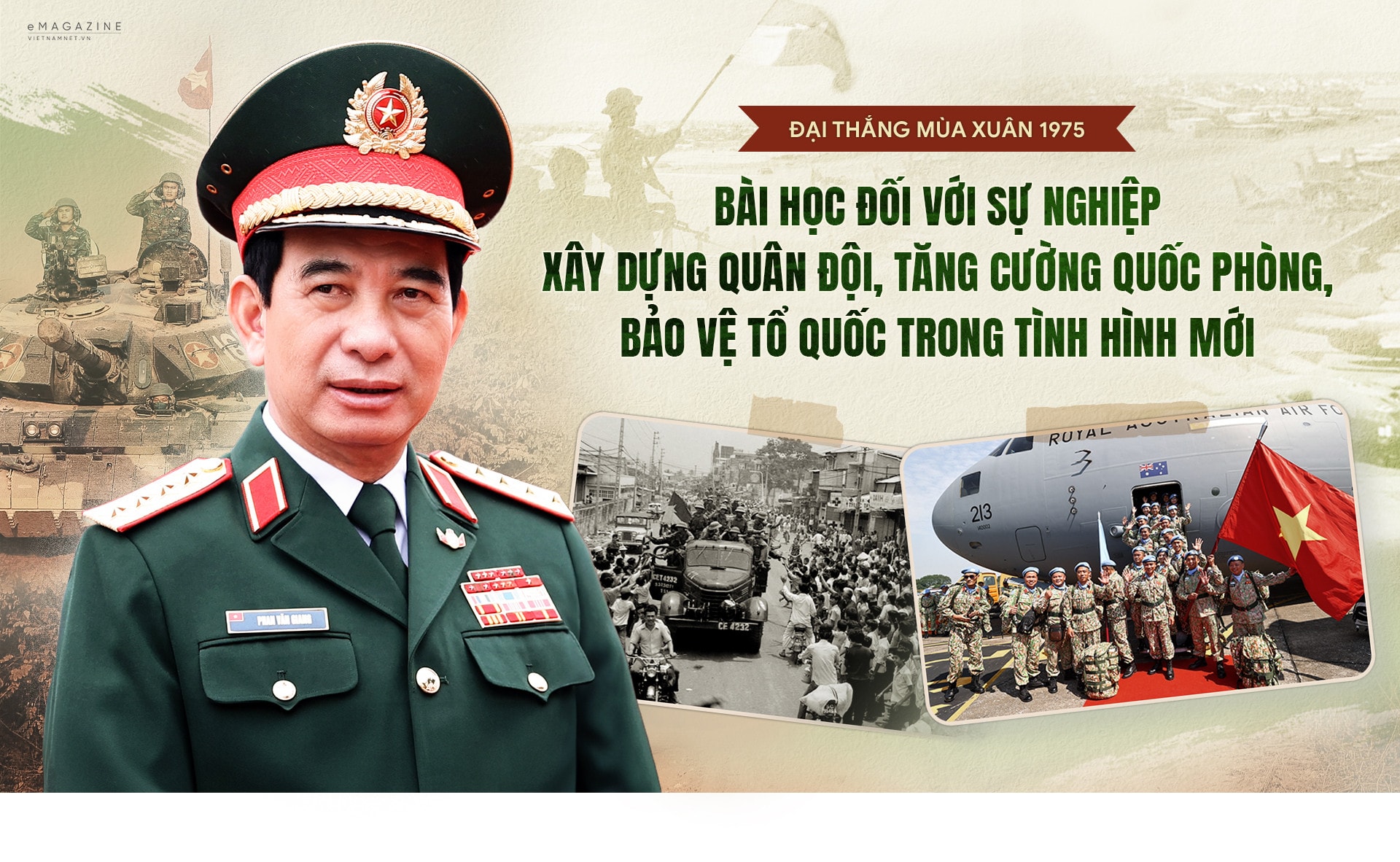
On the occasion of the 50th anniversary of the reunification of the country, we respectfully present an article by General Phan Văn Giang, Minister of National Defense.
In early 1975, seizing a historic opportunity, our Party made the strategic decision to liberate the South and unify the country. Under the wise leadership of the Central Party Committee, in a short time, with indomitable will and strength, our army and people successfully carried out the campaigns to liberate the Central Highlands, Hue, Da Nang, and finally the historic Ho Chi Minh Campaign to liberate Saigon, achieving the Great Victory of Spring 1975, successfully ending the arduous and sacrificial resistance war against the US, gloriously completing the cause of national liberation, and leading the entire country to transition to socialism.
The Great Victory of Spring 1975 is a glorious milestone, one of the most glorious achievements in the history of nation-building and national defense of the Vietnamese people and "goes into world history as a great victory of the 20th century, an event of great international importance and profound contemporary significance"[1]. Building on the achievements and lessons learned from the Great Victory of Spring 1975, for the past 50 years, the entire Party, the entire people, and the entire army have joined forces, united in purpose, steadfastly pursuing the goal of national independence and socialism, promoting the cause of renovation, building and firmly defending the socialist Vietnamese Fatherland, achieving great achievements of historical significance, building our country "more decent, more beautiful" as desired by the great President Ho Chi Minh.
In the current context, the lessons of the Great Victory of Spring 1975 remain invaluable and need to be continuously studied, inherited, and creatively applied to the practical aspects of building the Army, strengthening national defense, and protecting the Fatherland in the new situation.
Following the Paris Agreement (January 27, 1973), based on an assessment of the world, regional, and domestic situation, especially the enemy's new war schemes and actions in the South, the 21st Conference of the Central Committee of the Party, 3rd term, emphasized: Regardless of the circumstances, the path to victory for the revolution is through the use of revolutionary violence; therefore, it is necessary to firmly grasp the offensive strategy and resolutely push forward the struggle to achieve complete victory.
Next, through two meetings (September 30 - October 8, 1974 and December 18, 1974 - January 8, 1975), the Politburo approved the strategic plan to liberate the South in two years (1975-1976). However, the victory of the Route 14 - Phuoc Long Campaign (strategic reconnaissance) reflected the very unlikely possibility of the US intervening again and the inability of the puppet army to counterattack and retake the lost area, creating a solid basis for the Politburo to reaffirm once again its strategic determination to liberate the South and unify the country according to the plan; at the same time, it was anticipated: "If the opportunity comes at the beginning or end of 1975, then immediately liberate the South in 1975"[1].
Implementing the strategic resolve of the Politburo, the Central Military Commission, and the General Staff, the plan was decisively deployed, launching successive offensives to achieve victories in the Central Highlands Campaign and the campaigns to liberate Hue and Da Nang, creating a fundamental shift in the balance of forces and a favorable strategic position for us.
The strategic opportunity appeared early. On March 25, 1975, "the Politburo decided: to resolutely complete the liberation of Saigon and the South before the rainy season (May 1975)"[2]; on March 31, 1975, it decided to adjust the plan and time to open the final strategic decisive battle to liberate Saigon: "It is best to start and end in April this year, without delay"[3].
With the spirit of "one day equaling twenty years," the army and people of the entire country concentrated all their efforts and highest determination to transform the strategic opportunity into immense strength in the Ho Chi Minh Campaign. At 5 PM on April 26, 1975, the Ho Chi Minh Campaign began; at 11:30 AM on April 30, 1975, complete victory was achieved, successfully concluding the resistance war against the US and saving the nation. The victory of the Ho Chi Minh Campaign affirmed the strategic thinking, vision, and astute, correct, and timely guidance of the Central Party Committee, the Politburo, and the Central Military Commission – the decisive factors that led to the Great Victory of Spring 1975.
In the context of a complex and unpredictable global and regional situation, the country faces new opportunities and challenges, and the demands and tasks of national defense are increasingly high. This requires the entire army to thoroughly understand the Party's political, military, and defense guidelines, upholding the principle of absolute and direct Party leadership in all aspects of the Vietnam People's Army and the cause of national defense and protection. Focus on building a strong Party organization within the Army in terms of politics, ideology, ethics, organization, and personnel; setting a leading example in Party building and rectification; continuously improving the leadership capacity and combat strength of Party committees and organizations at all levels; resolutely fighting against the schemes and tactics of hostile forces to "depoliticize" the Army, and against manifestations of "self-evolution" and "self-transformation" within the Army, ensuring that under any conditions or circumstances, the Army remains absolutely loyal to the Fatherland, the Party, the State, and the people.
Currently, the Party and State are resolutely directing the implementation of breakthroughs in building and perfecting institutions, removing bottlenecks and obstacles, and creating momentum for the country's strong development in the new era. This is both an opportunity and a requirement and challenge, demanding increased effectiveness and efficiency in the Party's leadership and the State's management of the cause of building the Army, strengthening national defense, and protecting the Fatherland.
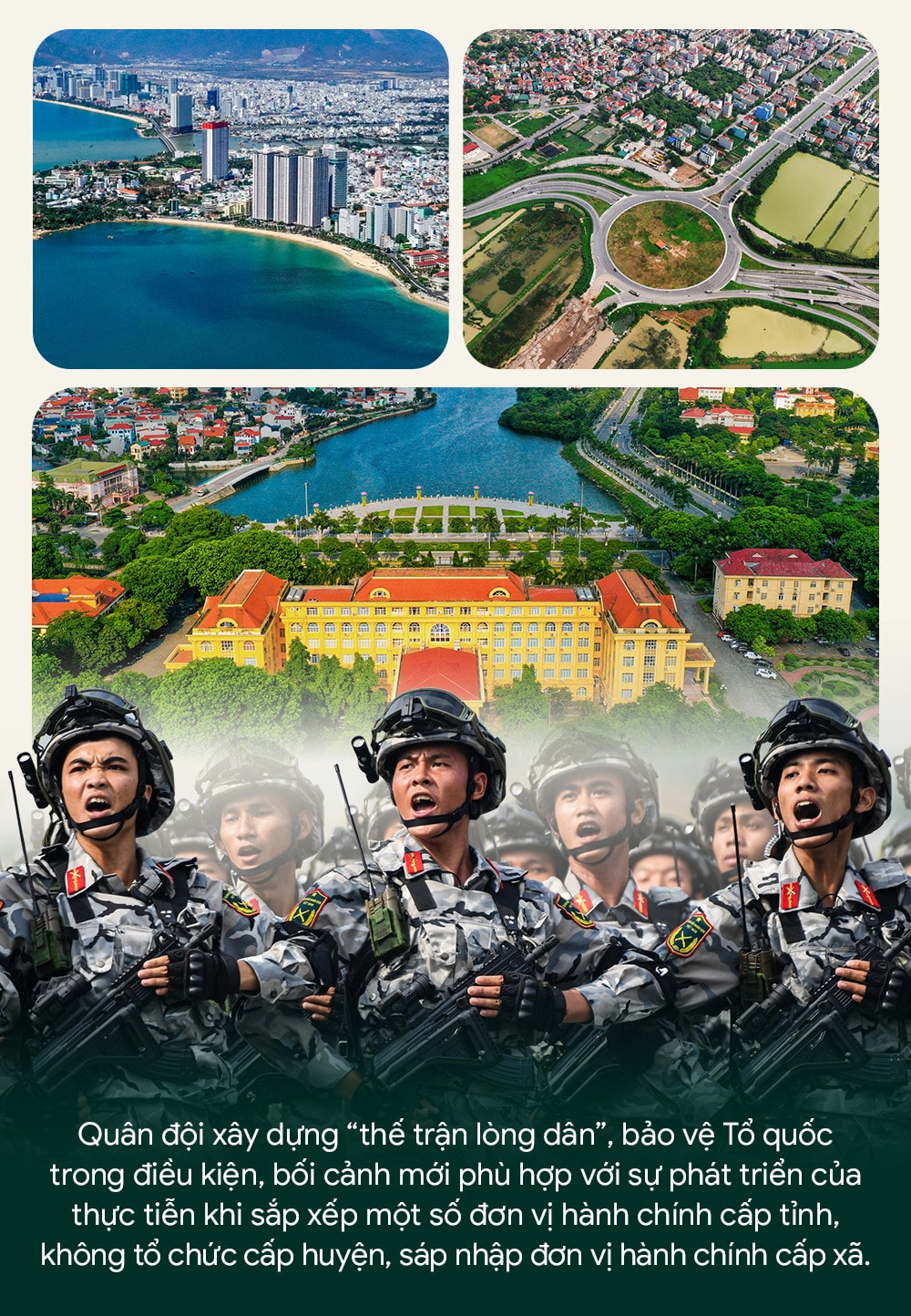
Accordingly, ministries and agencies, especially the Ministry of National Defense, need to intensify research and development of theory, summarize practical experiences, and advise on perfecting mechanisms, institutions, and policies to maintain and strengthen the Party's leadership and the State's centralized and unified management and operation of the People's Army. They must fully and comprehensively institutionalize the Party's viewpoints and guidelines, perfect the legal system on building a national defense system linked to the people's war strategy; build a "people's defense posture," and protect the Fatherland in the new conditions and context, in accordance with the development of practical realities when rearranging some provincial-level administrative units, abolishing district-level units, and merging commune-level administrative units.
To create overwhelming strength, far surpassing the enemy in both force and strategic advantage at the decisive moments that led to the Great Victory of Spring 1975, the entire Party, army, and people united as one, with the resolute will: "All for the front lines, all to defeat the invading American enemy." In the North, patriotic emulation movements such as: "Each person works twice as hard for our beloved South," "Youth ready in three ways," "Women capable in three ways," "Not a single grain of rice is lacking, not a single soldier is lacking"... were intensified, truly becoming a great rear base for the great front lines in the South.
In 1973 and 1974 alone, 250,000 young people from the North enlisted in the army; tens of thousands of civilian laborers were mobilized to work alongside army units to expand transportation routes; 150,000 army officers and soldiers went to the South to fight; tens of thousands of cadres, technical staff, and volunteer youth from the North volunteered to work in liberated areas; and 379,000 tons of supplies were transported to the Southern fronts…
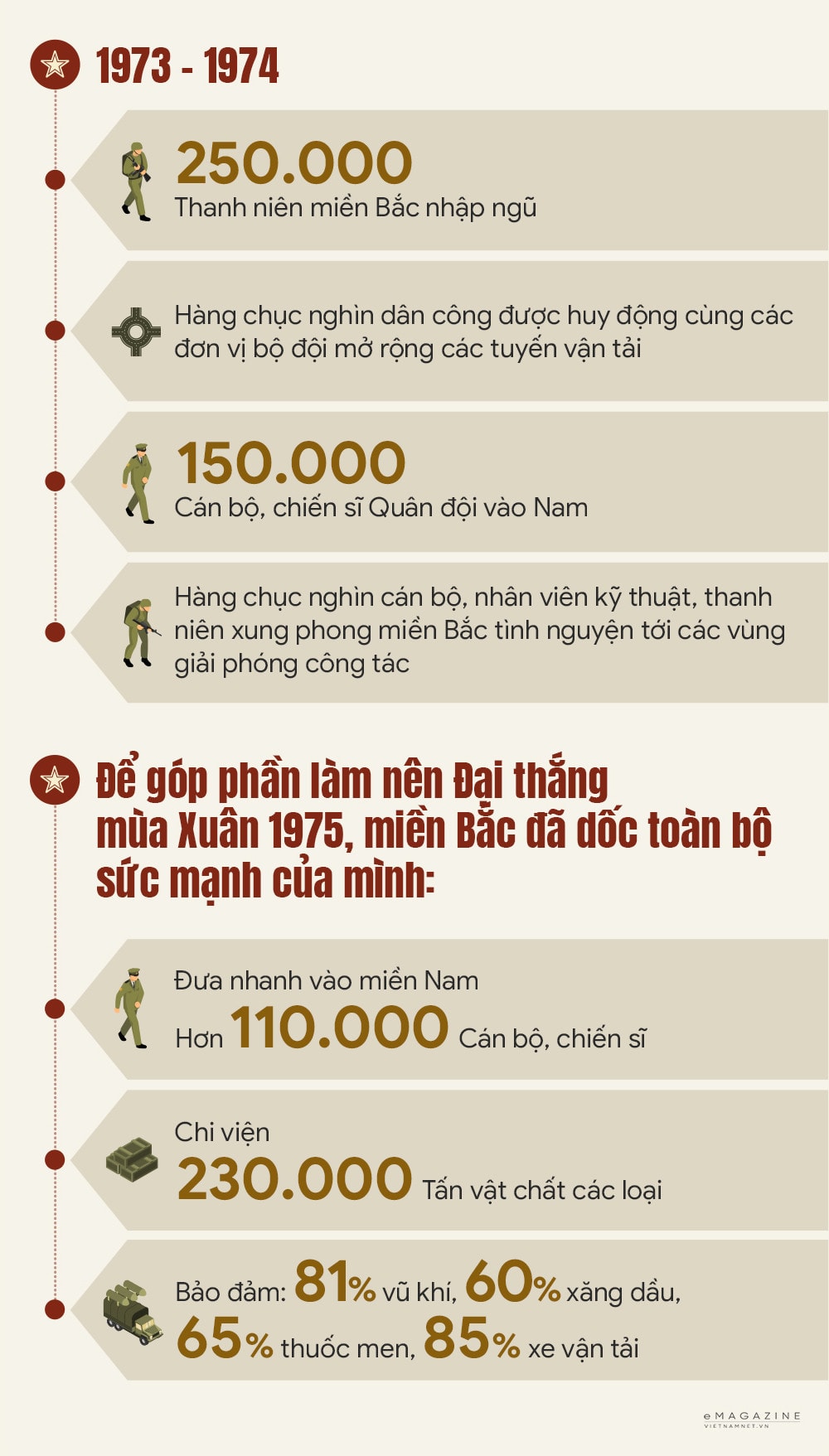
In particular, to contribute to the Great Victory of Spring 1975, the North exerted all its strength by quickly sending more than 110,000 cadres and soldiers to the South; providing 230,000 tons of various materials, ensuring 81% of weapons, 60% of gasoline, 65% of medicine, and 85% of transport vehicles[1].
On the major southern front, the National Liberation Front of South Vietnam intensified the political struggle movement across all three strategic regions. Simultaneously, it mobilized the people to join the armed forces of all three branches; built fighting villages and communes; and organized attacks against the enemy at all times and in all places…
During the Spring Offensive and Uprising of 1975, political offensives, military mobilization, and the building of local political forces received special attention from all levels of the Front, promptly mobilizing the masses to rise up and coordinating closely with the armed forces to launch the offensive and uprising to liberate the South.
Harnessing the strength of national unity is a valuable and enduring lesson that needs to be inherited and developed in the current period to ensure the sustainable success of the cause of building and defending the Fatherland.
To strengthen national unity in the new situation, we need to thoroughly understand and effectively implement the principle that "the people are the foundation," truly trust, respect, and promote the people's right to self-governance, and focus on socio-economic development and improving the people's material and spiritual lives. We must strengthen Party building and rectification, and enhance the effectiveness and efficiency of the political system so that our Party is truly clean, strong, and serves as the core of national unity.
The entire army actively performs its function as a "working army," promoting national defense and security education, information dissemination, and propaganda to ensure the people strictly adhere to the Party's military and defense policies and guidelines, correctly understand partners and adversaries, and deeply internalize the nation's tradition of nation-building and national defense. In particular, it actively participates in disseminating information to clarify the opportunities, challenges, and prospects in the new era of the nation, as well as the guiding principles, orientations, major decisions, and political determination of the Party and General Secretary To Lam, in order to awaken and maximize the spirit of "self-reliance, self-confidence, self-strength, self-improvement, and national pride," fostering trust in the Party's leadership, creating new momentum, a new spirit of enthusiasm, unity, and high social consensus… mobilizing the combined strength of the entire people in building and defending the Fatherland.
Furthermore, the military needs to proactively and actively participate in building the political system at the grassroots level, helping people eradicate hunger and poverty, prevent and mitigate the consequences of natural disasters, and build a solid "people's support" base, especially in strategic and key areas, particularly difficult regions, border areas, islands, remote areas, and key economic zones. At the same time, it must be the leading force, resolutely fighting against the insidious schemes and tactics of hostile forces aiming to undermine national unity and sow discord between the people and the Party, State, and military.
In leading the nation in conducting resistance wars against invading forces, our Party always knew how to choose the right time and grasped the rules of ending wars with strong military blows. Therefore, while focusing on promoting the development of the three branches of the armed forces, the Party always paid attention to building strategic mobile main army corps. The establishment of 4 main army corps, the 232nd Regiment[1] and the practical experience of the Spring 1975 General Offensive and Uprising proved the wisdom and talent of the Party and the General Command.
With the combined strength of large-scale joint military operations, the main mobile corps, working closely with other forces, launched attacks to destroy and disintegrate enemy main divisions and corps, shattering large segments of their strategic defense system, and rapidly penetrating to eliminate key targets in the inner city of Saigon; combined with the uprising of the people, they successfully accomplished the cause of national liberation and reunification of the country.
In response to the demands and tasks of building the Army, strengthening national defense, and protecting the Fatherland in the new situation, the entire army continues to thoroughly understand the Party's military and national defense guidelines. The focus is on building a comprehensively strong People's Army with high overall quality and combat effectiveness, ready to receive and successfully complete all tasks.
To accelerate the completion of a streamlined, strong, and modern military organization, ensuring overall coherence, synchronicity, and rationality among its components and forces, in accordance with the national defense guidelines, the people's war guidelines, the national defense strategy, the Vietnamese military strategy, and the ability to provide weapons and equipment; to focus on concretizing and implementing the criteria for building a modern army; and to build a powerful reserve force and a strong and widespread militia and self-defense force across all regions, areas, and at sea.
Continue to effectively implement Resolution No. 1659 dated December 20, 2022, of the Central Military Commission, adhering closely to the motto "basic, practical, and solid"; prioritize comprehensive, in-depth training in a modern direction. Focus on improving the quality of training in mastering weapons and equipment according to the assigned tasks, especially modern weapons; training closely aligned with operational plans, targets, and battlefields, emphasizing high-intensity training and training in complex weather conditions; training to improve the level of inter-service combat coordination, and the ability to coordinate between main forces and local armed forces in regional defense operations…
The training process must be closely integrated with cultivating political fortitude, building a regular and disciplined force, and enhancing the awareness of law and discipline among officers and soldiers; combining the education and training work of the school with training at the unit; emphasizing the transmission of experience in combat and practical training; ensuring "concentration, unity, synchronization, effectiveness, and no overlap"; taking the task of fighting to protect the Fatherland as the goal to make breakthroughs in innovation and improve the quality of training, exercises, education, and training; linking training with discipline, physical fitness, and regular order, building a strong and comprehensive "exemplary" unit, in order to continuously improve overall quality, combat strength, and victory in all situations.
Furthermore, the entire army needs to thoroughly understand and decisively and effectively implement Resolution No. 57 dated December 22, 2024, of the Politburo and Resolution No. 3488 dated January 29, 2025, of the Central Military Commission on breakthroughs in the development of science, technology, innovation, and digital transformation in the Army; considering this as a prerequisite for building a modern army.
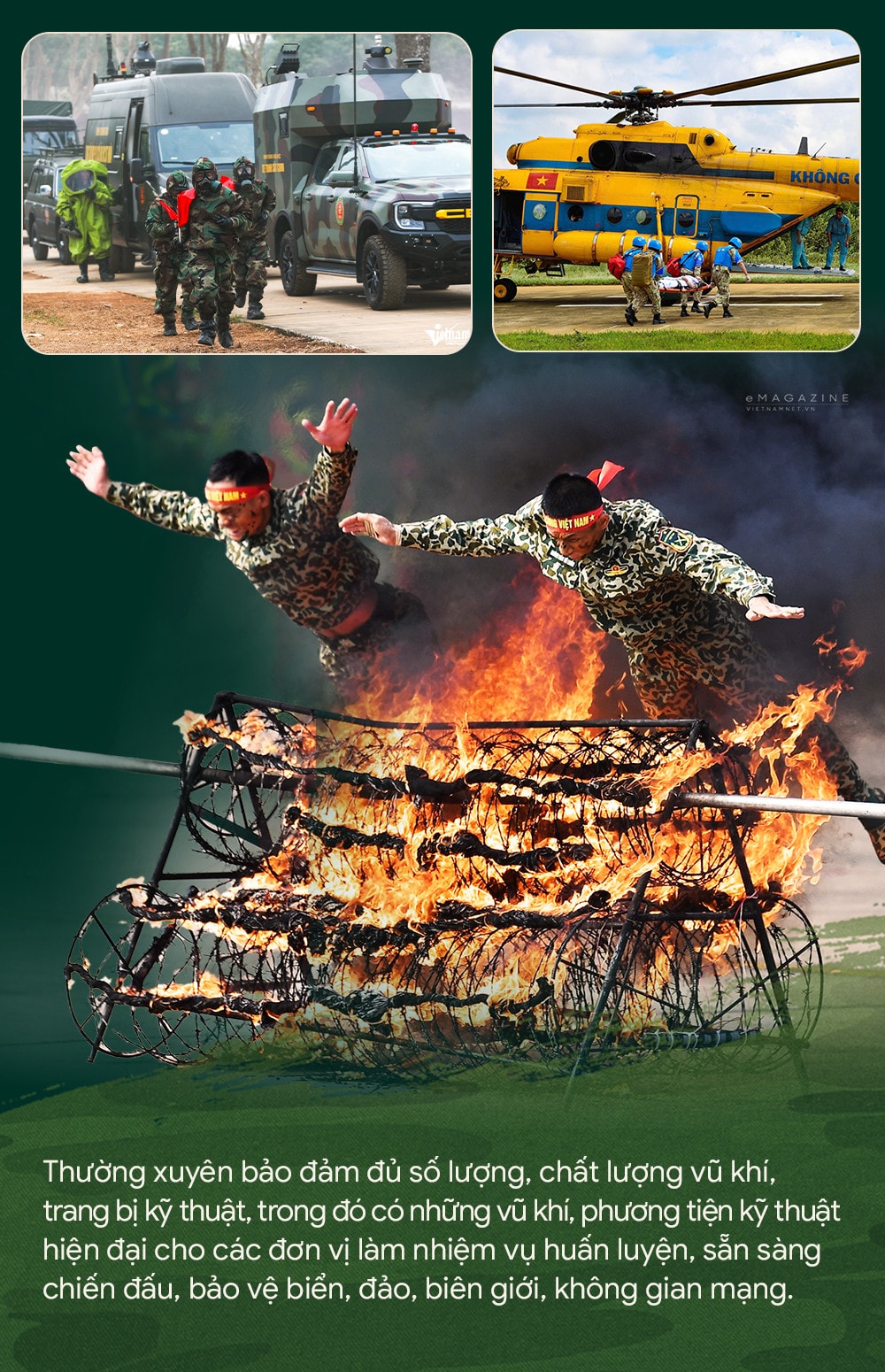
Building a proactive, self-reliant, self-strengthening, dual-use, and modern national defense industry, enhancing the combat strength of the people's armed forces in defending the Fatherland. Regularly ensuring sufficient quantity and quality of weapons and technical equipment, including modern weapons and technical means, for units engaged in training, combat readiness, and the protection of the sea, islands, borders, and cyberspace.
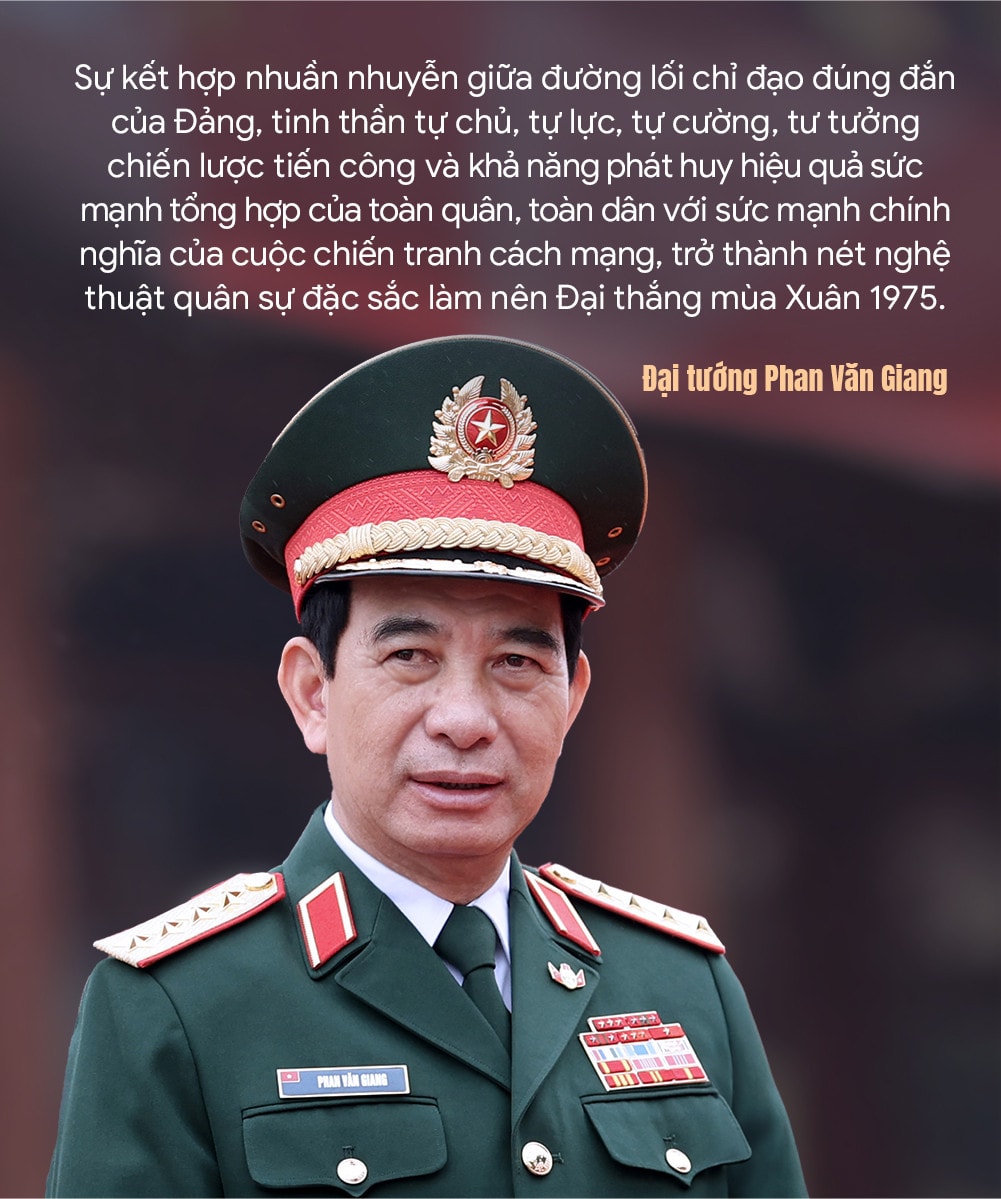
The victory of the resistance war against the US, saving the nation, was the result of inheriting, applying, and creatively developing Vietnamese military science and art in the Ho Chi Minh era. The seamless combination of the Party's correct leadership, the spirit of self-reliance and self-strength, the strategic offensive thinking, and the ability to effectively utilize the combined strength of the entire army and people with the just power of the revolutionary war became a distinctive military art that led to the Great Victory of Spring 1975. This was most clearly demonstrated in the art of combining offensive and uprising, and uprising with offensive; in the art of coordinating combat operations of the three branches of the armed forces, with the large-scale strike using the combined strength of various branches of the military as the central coordinating force.
Based on the practical experience of military conflicts around the world in recent times, the application of achievements of the Fourth Industrial Revolution, especially military science and technology, and the application of artificial intelligence, by warring parties has given rise to many new forms of warfare, methods, and tactics in both traditional and non-traditional fields, threatening global peace, stability, and security. For Vietnam, a war to defend the homeland (if it occurs) will still involve confronting an enemy with significantly stronger economic and military potential. Therefore, the continuous development of the science and art of people's war to defend the homeland in new conditions is absolutely essential.
The entire army continuously enhances revolutionary vigilance, closely monitors the evolving situation, accurately assesses the situation, and promptly handles defense-related situations, preventing passivity and surprise in all circumstances. It proactively advises the Party and State on adjusting the deployment of forces and the stationing of main army units to align with the determination to defend the Fatherland, while simultaneously building a modern army.
Proactively review and adjust strategic zoning and socio-economic development plans in conjunction with the overall plan for national defense deployment, strategic rear areas, military posture planning, and defense zones; enhance the effectiveness of economic-defense zones in line with socio-economic development in strategic directions, key areas, borders, seas, and islands; build a strong national defense posture integrated with a robust people's security posture, ready to transform into a people's war posture.
Continue to promote the core role of the people's armed forces in building defense zones at all levels, and a solid and in-depth military region defense; proactively balance and rationally allocate resources to ensure the building of potential and a defense posture for the region and civil defense, ready for all national defense and security situations even in peacetime, and strengthen the ability to mobilize forces and means to ensure the needs of wartime.
Focus on researching issues related to the application of military science, the achievements of science and technology to develop the theory of national defense, Vietnamese military art, and the art of people's war for national defense in the new situation. Organize a review of military and national defense activities; the results of implementing the Party's policy on building a national defense system and people's war, drawing theoretical and practical conclusions from the implementation of the Party's resolutions, conclusions, and directives on military affairs, national defense, and national defense.
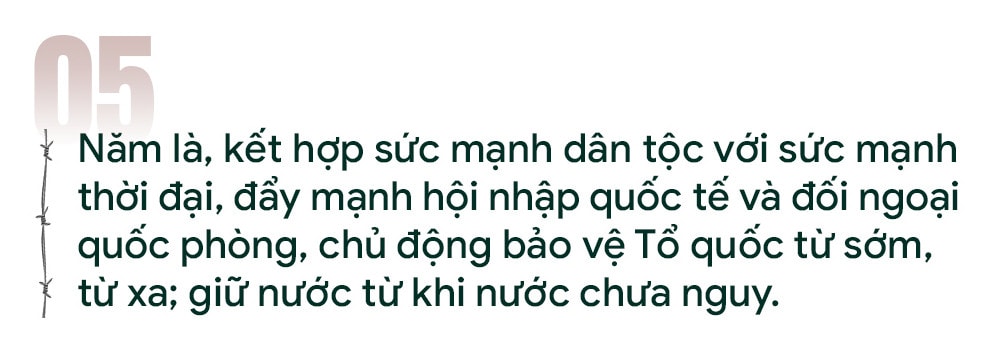
Throughout the resistance war against the US, and especially during the Great Victory of Spring 1975, our Party always emphasized the close combination of national strength with the strength of the times, integrating military, political, and diplomatic struggle to create a combined force to defeat the invading enemy. With the Party's creative and astute diplomatic approach, we secured the sincere and loyal assistance of socialist countries; the solidarity in fighting against the common enemy of the three Indochinese countries; and the sympathy and support of progressive people around the world… enabling us to fight and win.
Currently, international integration and defense diplomacy are among the important pillars of the Party's foreign policy, State diplomacy, and people-to-people diplomacy, aiming to protect the Fatherland early and from afar; to safeguard the country before it is in danger through peaceful means. At the same time, it contributes to consolidating and strengthening national defense capabilities, serving the building of a revolutionary, regular, elite, and modern army.
To achieve that goal, the entire military must remain steadfast in the Party's independent and self-reliant foreign policy, continuing to promote and effectively implement international integration and defense diplomacy in accordance with the spirit of the Party's 13th National Congress Resolution; Resolution No. 59 dated January 24, 2025, of the Politburo on international integration in the new situation; Conclusion No. 53 dated April 28, 2023, of the Politburo; and Resolution No. 2662 dated February 26, 2024, of the Central Military Commission on international integration and defense diplomacy until 2030 and beyond. The implementation process requires a correct and creative understanding and application of perspectives on partners and adversaries in order to continuously strengthen solidarity and expand friendly cooperative relations with international friends.
Emphasis should be placed on promoting deeper and more substantive bilateral and multilateral defense relations and cooperation; prioritizing relations and cooperation with neighboring countries, major powers, strategic partners, ASEAN countries, and traditional friends; effectively managing defense relations and cooperation with partners, ensuring strategic balance, strengthening trust, and intertwining interests; maximizing external resources to consolidate and build a strong national defense potential and a solid people's defense posture, maintaining a peaceful and stable environment for national development.
Applying and implementing creatively and effectively the Party's foreign policy and Ho Chi Minh's diplomatic thought, while upholding strategic principles and being flexible and adaptable in tactics; resolutely and persistently fighting to resolve conflicts, disputes, and disagreements through peaceful means, based on the principles of the United Nations Charter and international law; avoiding conflict, confrontation, or isolation and dependence; steadfastly adhering to the "bamboo diplomacy" of the Vietnamese school and the "four no's" national defense policy; actively and proactively participating in United Nations peacekeeping forces and international humanitarian activities, contributing to affirming the role and responsibility and enhancing the prestige and position of the country and the Army in the international arena.
Looking back after half a century, we can see even more clearly the immense scale, value, and significance of the Great Victory of Spring 1975; we can clearly see the correct and creative leadership of the Party and President Ho Chi Minh, and the great sacrifices of our army and people during more than twenty years of protracted resistance. The lessons learned from the Great Victory of Spring 1975 remain valuable and need to be inherited, developed, and creatively applied in the cause of protecting the socialist Vietnamese Fatherland, creating a peaceful and stable environment for the country to steadily advance into an era of development, prosperity, civilization, and flourishing.
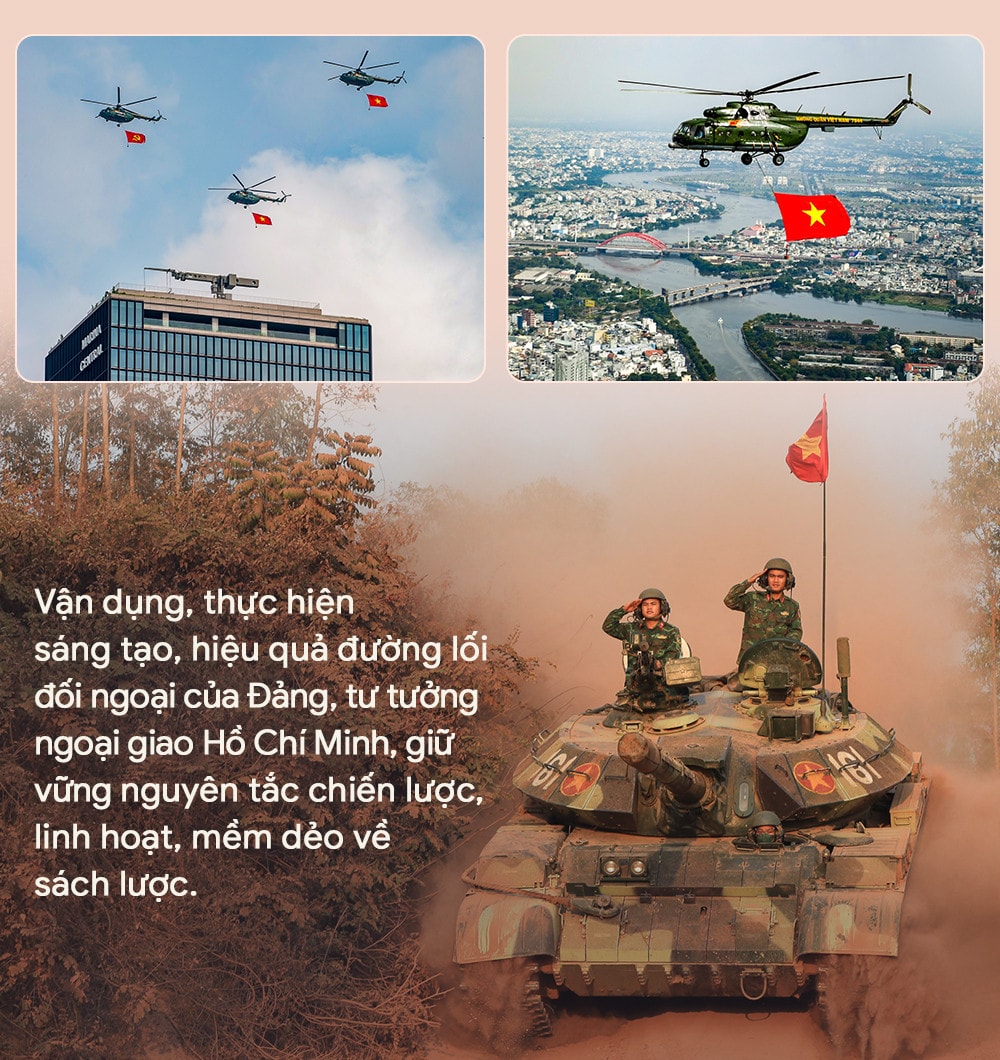
General Phan Van Giang, Minister of National Defense
References:
[1] Communist Party of Vietnam, Complete Party Documents, Volume 37, National Political Publishing House, Hanoi, 2004, p. 471. Communist Party of Vietnam, Complete Party Documents, Volume 37, National Political Publishing House, Hanoi, 2004, p. 471.
[2] Ministry of National Defense - Central Propaganda Department - Ho Chi Minh City Party Committee, The Great Victory of Spring 1975 - The Strength of the Will to Unify the Fatherland and the Aspiration for Peace, National Political Publishing House - ST, H, 2015. p.119.
[3] Ministry of National Defense - Vietnam Military History Institute, History of the resistance war against the US, saving the country 1954 - 1975, volume 8, National Political Publishing House - ST, Hanoi, 2013, p.301.
[4] Communist Party of Vietnam, Complete Party Documents, Volume 36, National Political Publishing House, Hanoi, 2004, p. 96.
[5] Ministry of National Defense - Ho Chi Minh City Party Committee, The Great Victory of Spring 1975 - The Strength of National Unity in the Ho Chi Minh Era, People's Army Publishing House, Hanoi, 2011, pp. 1138 - 1139.
[6] 1st Corps (10/1973), 2nd Corps (5/1974), 4th Corps (7/1974), 232nd Regiment (2/1975) and 3rd Corps (3/1975).


