
Ensuring the safety of Vietnamese workers in the Middle East.
Currently, workers from Nghe An province working in the Middle East are inevitably feeling anxious and insecure as conflicts escalate, security is tightened in many areas, and travel is restricted. Many have reached their return dates but have not yet been able to leave the country as planned. However, it is noteworthy that the majority of workers are still being ensured adequate living and working conditions, as well as safety, in the current sensitive situation.
Find a way to leave the country.
From the very beginning of the conflict in the Middle East, the story of Nguyen Ba Thai (27 years old), a laborer from Thanh Duong commune (formerly Thanh Chuong district, now Bich Hao commune), attracted much attention. On social media, Thai shared a half-joking, half-serious statement:"It's impossible that it would hit me in such a wide area.", when talking about the area where he lives being attacked by Iranian missiles.
That optimistic yet humorous sentiment quickly spread, becoming a special trend during those tense days. Many followed Thai's updates, waiting to see where he was and whether he was safe. Behind that personal story lay a shared concern: How are thousands of Vietnamese workers in the Middle East currently living, and how are they coping with the situation?
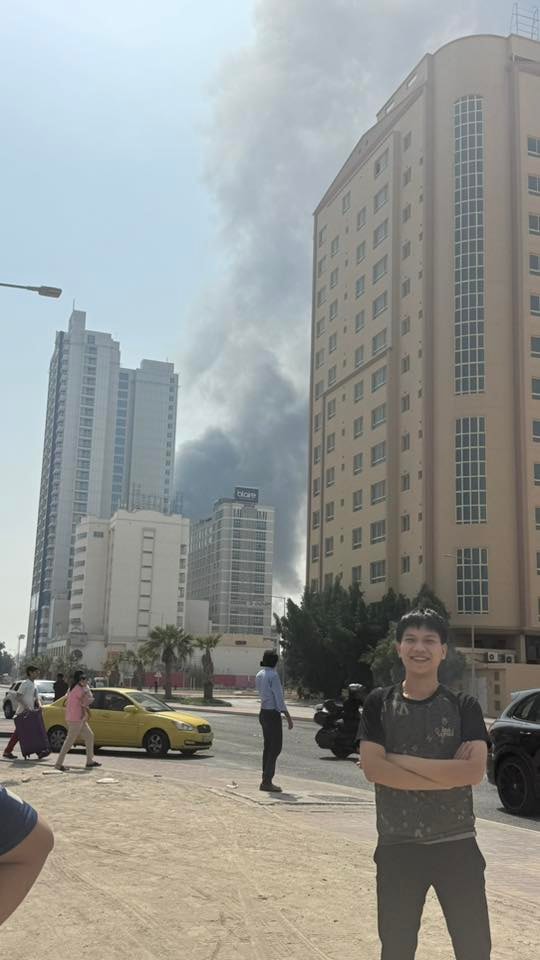
According to Thai, most Vietnamese workers are currently limiting their outings, mainly staying within their workplaces or residences. Travel, shopping for food and essential items must follow announcements and instructions from local authorities or employers. “Sometimes we have to wait for specific announcements before we can go out. Everything is clearly planned to ensure safety,” Thai said. Notably, whether they are freelance workers or factory workers, most are receiving attention from their employers, who ensure minimum living conditions. Security measures are tightened, and work schedules are adjusted flexibly to minimize risks.
Thai said he is a freelance worker who went to Saudi Arabia to work in event organizing services run by Vietnamese people, and also to trade essential goods for the Vietnamese community. His flexible work allows him to travel frequently between countries in the Middle East. However, since the beginning of March, travel has been almost completely "frozen." "Some days we have to wait hour by hour to see if there are any flights. It took me a whole week to fly from Qatar to the Saudi Arabian capital. For over a week now, with the goal of getting away from the conflict zone to find a way back home, there still haven't been any flights to India," Thai recounted.

Three years ago, Thai and his brother went to the Middle East on tourist visas, costing about 200 million VND. After working there for a while, he only managed to pay off his debts and renovate his family's small house. If there hadn't been any conflict, he planned to stay there long-term because the income was relatively stable compared to many other professions.
Thai's story mirrors the plight of hundreds of Vietnamese workers from Nghe An province working in this region – from contract workers in factories and construction sites to freelance service providers. They are scattered across Dubai, cities in Saudi Arabia, and many other Middle Eastern countries. This dispersal makes connecting and supporting each other difficult in emergency situations. However, according to Thai, most Vietnamese workers are still protected. The embassy and representative offices are in regular contact and monitoring the situation. "Those who haven't been able to return are still in safe places with enough food and essential supplies. Everyone encourages each other to try and wait," he shared.
Nevertheless, the greatest desire of many workers right now is to return home, even if some haven't yet saved enough money. Pham Trong (31 years old, also from Nghe An province) is one of them. Having gone to the Middle East in 2023 under a labor contract, Trong worked at an oil refinery on the Persian Gulf coast of Saudi Arabia. He was scheduled to return home on March 23rd. However, all his plans were disrupted when conflict broke out at the end of February.
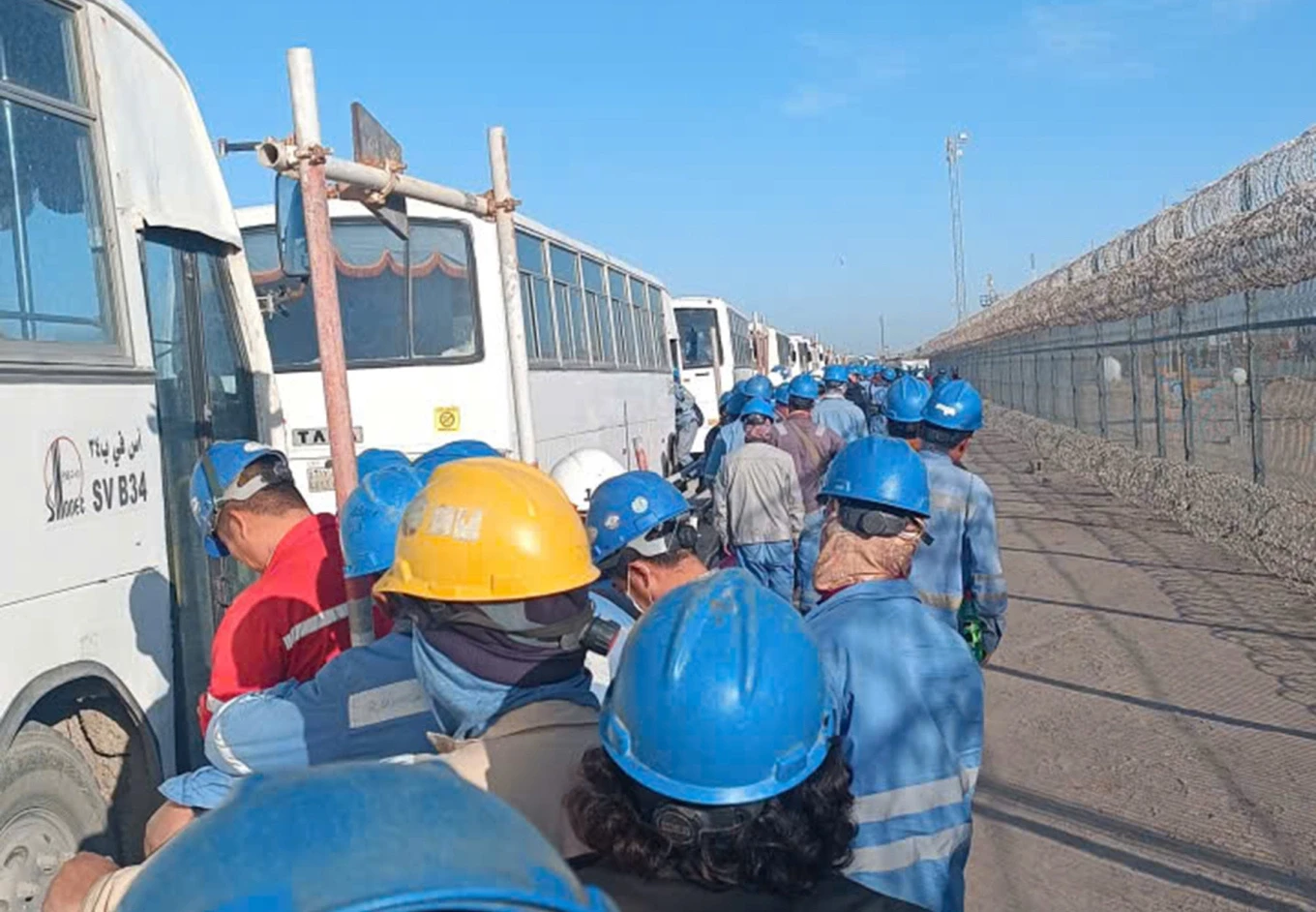
“Before that, I was waiting for the company’s weekend bus to go to the city center to buy gifts for my family. But then everything stopped,” he recounted. In the area where Mr. Trong works, there are nearly 6,000 Vietnamese workers, mainly employed in heavy industrial factories. In the early days of the conflict, some factories temporarily laid off workers to ensure their safety. Later, operations gradually returned to normal, but with stricter discipline. Workers were advised to limit going outside, avoid crowded areas, city centers, or areas near military bases – places at risk of becoming targets. Weekend shopping trips for workers were also suspended. “We just know how to work, comply with regulations, and wait. We hope the conflict doesn’t spread so we can return home on time,” Mr. Trong said.
Saudi Arabia's airspace remains open, but the journey back to Vietnam has become more complicated. Workers must travel to major cities, transiting through India before returning home. If they are unable to return, they may have to extend their contracts for several more months.
Ensuring workplace safety
According to statistics, there are currently about 10,000 Vietnamese workers employed in Middle Eastern countries such as Saudi Arabia, UAE, Qatar, Bahrain, etc. Due to the complex situation, sending new workers to this region has been temporarily suspended from March 1st until the situation stabilizes.
Mr. Dang Van Tuan, Deputy General Director of Long Hung Company (Hanoi), one of the businesses that sends workers to the Middle East, said that the company currently has nearly 300 workers employed in petrochemical projects in Saudi Arabia and the UAE. These are mainly engineers and highly skilled workers, earning approximately 50-60 million VND per month.
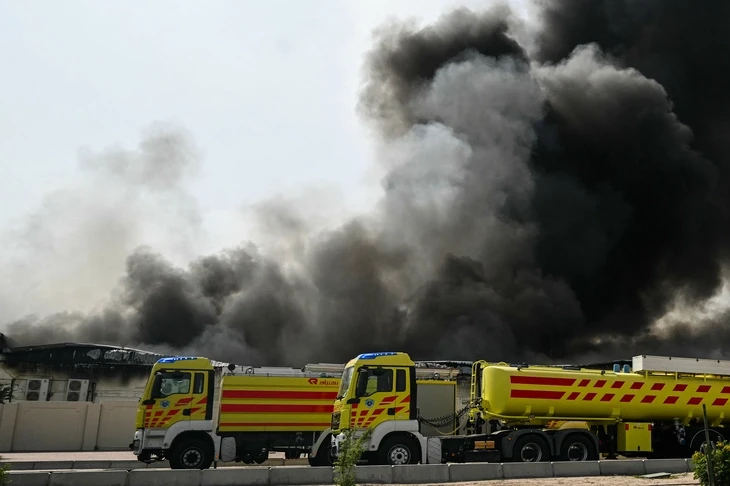
The conflict has forced nearly 200 workers from the company who were awaiting departure to postpone their plans. Although the plane tickets are being paid for by the employer, the workers are still in a passive state, unsure when they will be able to leave.
From a state management perspective, Mr. Tran Phi Hung, Head of the Labor, Employment, and Occupational Safety Department of the Department of Internal Affairs, stated: According to the Department of Overseas Labor Management, there are currently 14 enterprises sending workers to the UAE, 12 to Saudi Arabia, 6 to Qatar, and 2 to Bahrain. These enterprises are required to regularly update the situation, maintain close contact with employers abroad, and coordinate with Vietnamese diplomatic representative agencies to ensure the safety and rights of workers.
From 2021 to the present (up to March 2, 2026), Nghe An province has had 466 workers employed under fixed-term contracts in countries in the Middle East.
Of these, the Kingdom of Saudi Arabia: 274 workers; the United Arab Emirates (UAE): 107 workers; Qatar: 21 workers; and other countries (Oman,
Cyprus, Türkiye, etc.): 64 workers.Workers from Nghe An province who go to work under contract in the Middle East mainly work in the following sectors: construction, mechanics, fishing boat crew, and domestic help.
In the context of instability, the role of representative agencies and businesses becomes particularly important – not only as a bridge for information but also as a source of moral support for migrant workers.
It is evident that, despite facing numerous difficulties due to the conflict, the majority of workers from Nghe An province in particular, and Vietnamese workers in the Middle East in general, are still being ensured safety, maintaining employment and basic living conditions. However, behind this relative stability lies a long wait – waiting for a flight, waiting for the day of return, and above all, waiting for a peaceful place to continue their livelihood or to end their journey abroad.


