
Multi-purpose cruise missiles: modularity, AI, and efficient reuse.
Strike missiles are shifting from suicide weapons to multi-purpose platforms: payload swapping, reconnaissance, electronic warfare, AI, and reuse; challenging the balance between cost and effectiveness.
Cruise missiles are shifting from a low-cost, suicide weapon to a multi-purpose combat platform. Modular design allows for interchangeable payloads, the addition of reconnaissance sensors, electronic warfare modules, and even recovery for reuse. Artificial intelligence (AI) assists in real-time target identification and tactical adjustments. However, these feature upgrades entail increased costs, posing a challenge in balancing effectiveness and cost.
Overview: From "Suicide Squad" to Multitasking Platform
A US company has just introduced a new type of guided missile called "Lubster," employing a modular design that allows it to be used not only for attack, but also for reconnaissance, electronic warfare, or carrying smart ammunition to engage dispersed targets. This trend shows that guided missiles are shifting from a single-use consumable to a flexible combat platform.
Previously, many models were considered suicide drones—launched and never to return—such as Russia's Geran-2 or Ukraine's AQ400 "Sickle." The emergence of modular design is changing the approach, allowing for mission configuration on demand.
Technical analysis: hardware and load modularization
The trend towards modularization is evident in both the warhead and components such as the engine, launch system, and avionics. Some models allow for the interchangeability of various warheads to optimize targeting, such as the Rogue-1 (USA) or the "Comrades" (Poland). This rapid interchangeability enables forces to adapt to changing operational requirements.
Most importantly, payload: in addition to the explosive warhead, the cruise missile can carry reconnaissance sensors, electronic warfare modules, or surveillance equipment. This makes them compact platforms capable of switching roles between attack, reconnaissance, and jamming.
Typical examples by source
| Model/System | Nation | Key features by source |
|---|---|---|
| Geran-2 | Russia | A suicide bomber model, launched with no return. |
| AQ400 “Sickle” | Ukraine | A suicide bomber model, launched with no return. |
| Rogue-1 | America | Multiple types of warheads can be swapped. |
| "Comrades" | Poland | Multiple types of warheads can be swapped. |
| Hero-1250 | Israel | Task switching: reconnaissance, surveillance, jamming. |
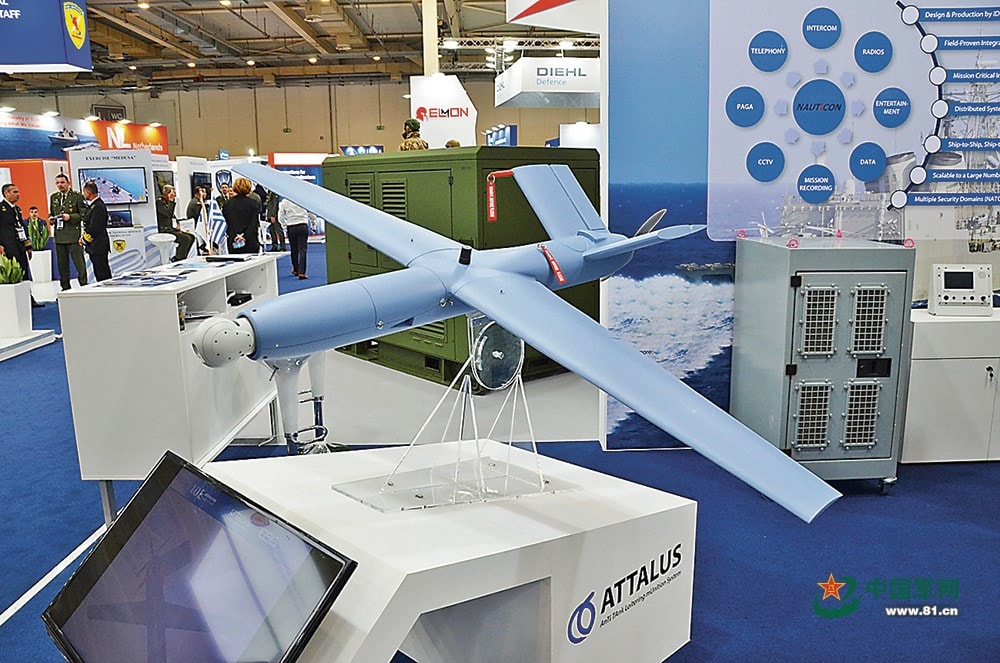
| ATTALUS | Greece | Launched by a catapult, recovered by parachute; the fuse can be remotely deactivated for reuse. |
| Hero-400EC | Israel | Automatically return to the operational area or deploy a parachute to recover if not attacking. |
| "Woodcutter" | America | Modular platform, supporting reconnaissance, electronic warfare, and carrying smart munitions. |
AI and autonomous control
Thanks to autonomous navigation chips and AI algorithms, the new cruise missile models can independently identify targets and adjust tactics in real time. This capability promises to increase combat effectiveness, especially when coordinating reconnaissance and attack missions or dealing with dispersed targets.
Reusability and recovery processes
Reusability has emerged as a new requirement as the ballistic missile becomes a cornerstone. ATTALUS can be launched by a launcher and recovered by parachute; the fuse can be remotely deactivated, and the device can be recharged for continued use. The Hero-400EC has a mechanism for automatically returning to the operational area or deploying a parachute for recovery when not in engagement. These options help limit losses when not attacking a target, while preserving the vehicle for the next mission.
Tactical implications (based on source data)
- Configurable multi-role: the same airframe can switch roles between reconnaissance, surveillance, jamming, and attack, suitable for operations requiring mission flexibility.
- Dispersed target handling: the ability to carry smart ammunition allows for engagement of scattered targets instead of a single point.
- Reduced wasted firepower: mechanisms for remotely recovering or detonating explosives when no suitable target is present help avoid unnecessary losses.
- Increased efficiency thanks to AI: real-time target recognition and tactical adjustments support faster decision-making in the battlefield.
Compared to the traditional suicide model
Unlike the Geran-2 or AQ400 "Sickle," which were designed for single-use, the current trend focuses on platformization and reuse. The Hero-1250 allows switching between reconnaissance, surveillance, and jamming modes; ATTALUS and Hero-400EC demonstrate a recovery approach when not firing. These examples reflect a shift from "consumable" to "reconfigurable" based on mission.
Cost-effectiveness problem
Multitasking, intelligentization, and reuse increase costs, potentially conflicting with the traditional advantages of low cost and high effectiveness of cruise missiles. The central challenge going forward is finding a balance between functionality, lifecycle cost, and field effectiveness. Selecting the appropriate modular configuration for the mission will be key to optimizing the cost/effectiveness ratio.
Conclude
Source data indicates that cruise missiles are evolving into multi-purpose platforms thanks to modularity, AI, and recovery capabilities. This development expands combat effectiveness while also presenting cost trade-offs. A balanced approach, utilizing the correct configuration for each target scenario, will determine the effectiveness of deployment on the battlefield.


