
BYD Seal 5 PHEV Review: C-segment Sedan with External Charging Ports
The BYD Seal 5 PHEV uses the DM-i Super Hybrid system, offering an electric range of 120 km and a total range of 1,200 km; it is 4,780 mm long with a wheelbase of 2,718 mm, promising to add another option to the C-segment sedan market.
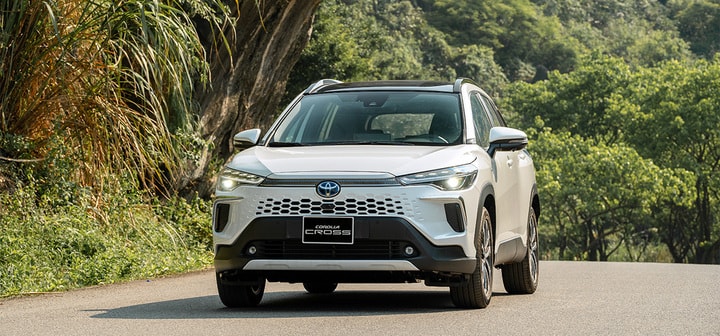
The hybrid vehicle market in Vietnam is accelerating significantly. According to VAMA, in September, its members sold 1,371 hybrid vehicles, a 5% increase compared to the previous month. The Toyota Corolla Cross HEV took the lead with 303 units (an increase of nearly 40% compared to 218 units in August), followed by the Honda CR-V e:HEV RS with 273 units. The next group included the Toyota Innova Cross HEV with 259 units, the Suzuki XL7 Hybrid with 249 units, and the Toyota Yaris Cross HEV with 122 units. Cumulative sales of hybrid vehicles by VAMA members in the first nine months of 2025 reached 9,785 units, a 73% increase year-on-year, demonstrating the growing interest of domestic consumers.
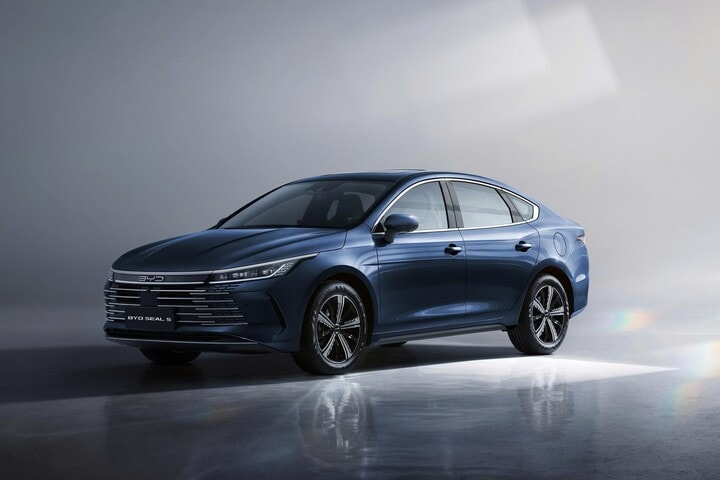
Against this backdrop, the wave of new hybrid models continued to emerge in October, most notably the BYD Seal 5 PHEV. This C-segment sedan uses a DM-i Super Hybrid battery system, capable of operating on pure electric power for 120 km and offering a total combined driving range of up to 1,200 km, according to published information. The Seal 5 is also BYD's second PHEV model in Vietnam, alongside the Sealion 6 SUV.
Body proportions and size cues in the C-segment.
The BYD Seal 5 is positioned as a C-segment sedan but boasts dimensions described as superior within its segment. The car is 4,780 mm long and has a wheelbase of 2,718 mm. These figures suggest a spacious interior for both front and rear seats, as well as ample luggage space, and provide a foundation for better body stability at high speeds, a characteristic of vehicles with a longer wheelbase.
Space and experience: the advantage of a 2,718 mm wheelbase.
According to published information, the 2,718 mm wheelbase allows the Seal 5 to optimize rear legroom and enhance cargo capacity. For families, this provides a basis for expecting a comfortable cabin for daily commutes as well as long trips. Details regarding finishing materials, amenities, and control interface will need to wait for the commercial version to be configured in Vietnam.
DM-i Super Hybrid powertrain: 120 km electric range for city driving, 1,200 km for long-distance journeys.
The Seal 5 utilizes the DM-i Super Hybrid system already present in the BYD Sealion 6. The core of this configuration is its ability to charge externally and operate purely on electric power for up to 120 km, ideal for urban commuting and significantly reducing fuel consumption during the work week. When combining the two power sources, the total driving range reaches approximately 1,200 km, providing peace of mind for intercity journeys without being entirely dependent on charging infrastructure.
From a usage perspective, drivers can utilize electric power for short distances and optimize the hybrid system for high-speed driving or when the battery is low, thus balancing operating costs and convenience. Detailed specifications regarding power, torque, and specific energy consumption have not yet been released; real-world driving experience will require testing once the vehicle is launched on the market.
Safety and driver assistance: configuration details to be announced.
Information regarding the active safety package, advanced driver assistance systems (ADAS), or independent safety ratings for the BYD Seal 5 is not yet mentioned in the available data. The equipment list will depend on the configuration of the commercial version when it launches in Vietnam.
Pricing and positioning: BYD's second PHEV, expanding the C-segment options.
The BYD Seal 5 is positioned in the C-segment sedan category and is the brand's second PHEV model in Vietnam after the Sealion 6. Pricing and available configurations have not yet been announced. Amidst the growing demand for hybrid vehicles, particularly among families, the arrival of the Seal 5 could expand options for users prioritizing low running costs and flexible driving range.
Key technical specifications (as published)
| Category | Value |
|---|---|
| Segment | C-segment sedan |
| Drive system | PHEV (external charging) |
| Hybrid technology | DM-i Super Hybrid |
| Pure electric range | 120 km |
| Combined range of movement | 1,200 km |
| Length | 4,780 mm |
| Wheelbase | 2,718 mm |
| Position within BYD's product range | The second PHEV in Vietnam (along with the Sealion 6) |
Conclusion: clear strengths, remaining unknowns.
The BYD Seal 5 PHEV enters the C-segment sedan market with three key highlights: a pure electric range of 120 km suitable for urban driving, a total range of 1,200 km for long journeys, and a wheelbase of 2,718 mm promising ample space. Conversely, key factors such as power output, active safety features, and pricing have not yet been announced, so its actual competitiveness will only become clear upon launch and detailed performance reviews.
Market context: a growth platform for PHEVs
Hybrid sales are growing steadily, with best-selling models ranging from C-segment SUVs to 7-seater MPVs such as the Toyota Innova Cross HEV and Suzuki XL7 Hybrid. This provides a favorable foundation for PHEV models like the BYD Seal 5 to reach consumers, especially families who prioritize fuel efficiency but still need the flexibility for long journeys.


