
Review of top US and Russian fighter jets for 2025.
The National Interest highlights the prominent models for 2025: the US F-35, F-22, F-15EX, and F/A-18 Super Hornet Block III, and the Russian Su-57, Su-35, MiG-29, and MiG-35, emphasizing stealth capabilities, firepower, and avionics.
The National Interest assesses several US and Russian fighter jets as leading contenders in 2025, based on stealth capabilities, speed, firepower, and avionics. The US contenders include the F-35, F-22, F-15EX, and F/A-18 Super Hornet Block III; the Russian contenders include the Su-36, Su-57, MiG-29, and MiG-35, with the Su-35 particularly noteworthy for its performance.
Overview according to The National Interest
Modern air combat still revolves around jet aircraft with advanced sensor technology, stealth capabilities, and deeply integrated weaponry. The US and Russia, inheriting the technological race from the Cold War era, now possess many exemplary fighter aircraft models.
The American system
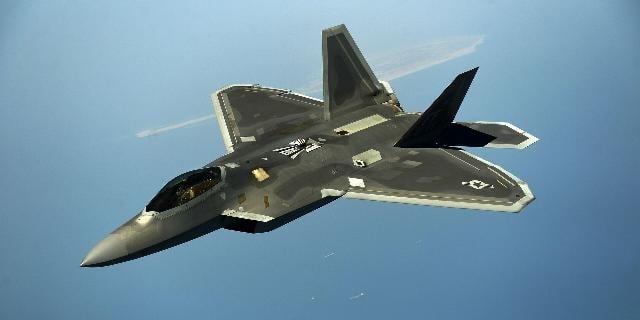
F-22 Raptor
- The 5th generation has been in use for over 20 years.
- Combining super maneuverability, stealth capabilities thanks to a small radar cross-section, and a long flight range.
- Equipped with a 2D thrust vectoring engine with afterburner; not for export.
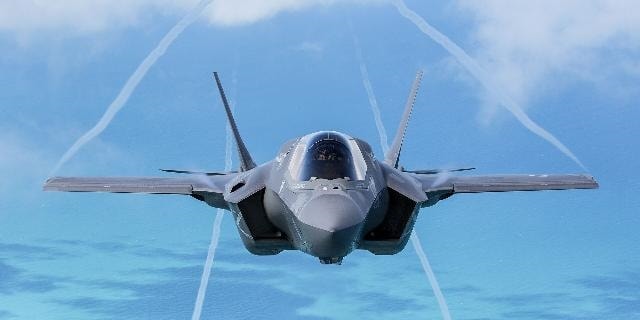
F-35 Lightning II
- The latest 5th generation from the US, the most popular in the world according to the source.
- Combining speed, stealth, and weaponry; performing reconnaissance, surveillance, and electronic warfare functions.
- Over 900 units are in operation in various versions and have been exported.
F-15EX Eagle II
- According to the source, the production cost is approximately $94 million per unit.
- It can carry up to 12 air-to-air missiles; the maximum weapons payload is approximately 13.6 tons.
- Emphasize firepower and payload capacity.
F/A-18 Super Hornet Block III
- The latest naval variant; approximately 20% larger than its predecessor.
- Improved payload capacity, range, and reduced visibility are the cornerstones of the U.S. Navy's air force, according to the source.
- The cockpit features a large, customizable touchscreen display; computing power is 17 times greater than previous versions.
Russian system
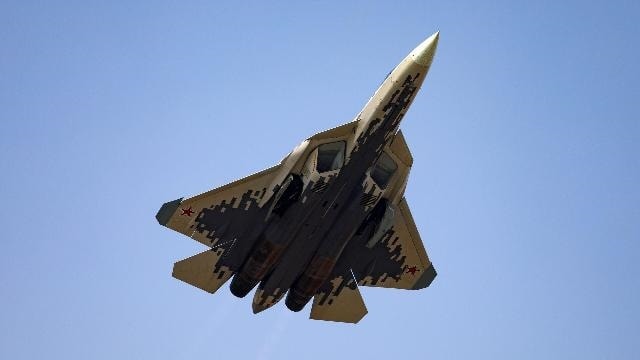
Su-57
- Russia's fifth-generation fighter jet; reaching speeds of approximately Mach 2 according to the source.
- Stealth is achieved through an approach that incorporates complex material structures, coatings, and optimized aerodynamic design.
- According to sources, he may have fought in the conflict in Ukraine.
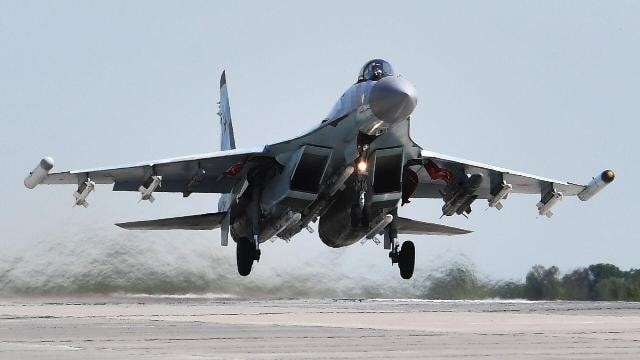
Su-35
- Developed to be a counterweight to the F-14 and F-15; equipped with two AL-41F1S engines.
- Speeds exceeding Mach 2.25 (depending on source); diverse firepower.
- Its performance is close to that of the 5th generation, attracting attention from the international market.
MiG-29
- Versatile, and still in active service with the Russian armed forces.
- The empty weight is approximately 4 tons, according to the source; it is primarily designed for air defense interception.
- Representative weapons: R-27, R-73, R-60.
MiG-35
- Classified by Russia as a 4++ generation aircraft; launched in 2007, developed from the MiG-29.
- Equipped with an active electronically scanned array radar developed by Mikoyan.
- Diverse weapons systems: Kh-31A, Kh-31P, Kh-29TE, KAB-500Kr; international interest has not met expectations, according to the source.
Additionally, the source mentions that Russia possesses Su-36s, which are among its top-tier aircraft.
Compare key parameters (based on data from the source).
| Sample | Generation/Characteristics | Speed/Performance | Firepower/Load | Note |
|---|---|---|---|---|
| F-22 | Generation 5, stealth | long range | No number was given. | 2D vector engine; not for export. |
| F-35 | 5th generation, ISR/EW multitasking | No number was given. | No number was given. | > 900 units are in operation and have been exported. |
| F-15EX | heavy firepower | No number was given. | 12 air-to-air missiles; ~13.6 tons | ~94 million USD/unit |
| F/A-18 Block III | Navy; size +20% | Improved flight range | No number was given. | 17 times more computing power |
| Su-57 | Generation 5, stealth | Mach 2 | No number was given. | A different approach to stealth |
| Su-35 | Multi-role, 2-engine AL-41F1S | Mach 2.25 | Diverse weapons | Attracting market attention. |
| MiG-29 | Air defense interception | No number was given. | R-27, R-73, R-60 | Empty weight is approximately 4 tons (according to source). |
| MiG-35 | Generation 4++ | No number was given. | Kh-31A/P, Kh-29TE, KAB-500Kr | AESA radar developed by Mikoyan |
Operational and deployment implications
- The F-22 and Su-57 represent a priority in stealth and super-maneuverability, suitable for achieving air superiority.
- The F-35 emphasizes mission versatility, ranging from reconnaissance and surveillance to electronic warfare.
- The F-15EX demonstrates a trend toward increasing its firepower, supporting long-range air defense capabilities with a large number of missiles.
- The F/A-18 Super Hornet Block III enhances the combat capabilities of naval aviation thanks to improved range, avionics, and survivability.
- The Su-35 maintains its multi-role capabilities with high speed and a wide range of weaponry; the MiG-29 focuses on interception missions; and the MiG-35 features upgraded sensors and weapons to expand its mission capabilities.
Note the source and conclusion.
This article summarizes The National Interest's assessment, retaining the data and characteristics presented. The list illustrates the differing approaches to stealth, firepower, and avionics between the US and Russia. In the context of modern air combat, these systems are emphasized for their roles in achieving air superiority, multitasking, and naval support. All opinions are based on the source content and are not inferred from the published data.


