
Accurate assessment, appropriate placement, and effective utilization of talent.
Resolution No. 30-NQ/TW establishes a fundamental direction for reforming personnel work: evaluating performance based on output, valuing talent, filtering out unqualified individuals, controlling power, and preparing a successor team. For Nghe An, this requirement is directly linked to the goal of becoming a national-level growth pole by 2030. A strong workforce is the foundation for Nghe An's breakthrough and contribution to the nation's enduring capacity.

Bui Chi Kien
(Central Committee for Strategic Policy)
******
Resolution No. 30-NQ/TW establishes a fundamental direction for reforming personnel work: evaluating performance based on output, valuing talent, filtering out unqualified individuals, controlling power, and preparing a successor team. For Nghe An, this requirement is directly linked to the goal of becoming a national-level growth pole by 2030. A strong workforce is the foundation for Nghe An's breakthrough and contribution to the nation's enduring capacity.
Fundamentally reforming personnel management.
Fundamentally reforming personnel management requires, first and foremost, a substantive reform of the mindset regarding personnel evaluation. Qualifications, seniority, dossiers, and procedures are necessary criteria, but they cannot replace the verification of competence through practical experience. Each position needs clearly defined standards, responsibilities, authority, accountability, required competencies, and key deliverables. Assigning tasks must go hand in hand with delegating authority, ensuring resources, deadlines, and coordination mechanisms; evaluation must simultaneously consider the quality of advice provided, progress, effectiveness, social impact, and individual responsibility.
Resolution No. 30-NQ/TW sets specific targets for 2030: Striving for 100% of leadership and management positions to have clearly defined standards, responsibilities, outputs, and verifiable criteria; 100% of leadership and management cadres to be assigned tasks and periodically evaluated primarily based on qualities, outputs, results, effectiveness, reputation, personal responsibility, and verifiable, digitized data; 100% of strategic-level leadership and management positions and heads of all levels to have a pool of successors prepared in multiple stages, with at least two options.
It's not just about management figures; it's about shifting personnel management from a procedurally-driven evaluation system to one based on results and succession planning.
Accordingly, Nghe An needs to concretize this requirement into a set of evaluation criteria for each job title and field. Strategic planning officials should be evaluated based on the quality of their forecasts, the feasibility of policies, and their ability to resolve bottlenecks; economic management officials should be evaluated based on the progress of procedural matters, the quality of the investment environment, and the efficiency of budget and public investment use; and commune-level officials should be evaluated based on their ability to handle work at the grassroots level, the level of citizen satisfaction, public service discipline, and timely handling of complaints... A single set of indicators should not be applied mechanically to all job titles, nor should short-term achievements be prioritized while neglecting quality, sustainability, and the conditions for performing tasks.

Effective performance evaluation must go hand in hand with mechanisms for utilizing, selecting, and protecting cadres. It is crucial to promptly identify capable individuals who are not assigned to positions that match their strengths; and to provide opportunities for challenges through difficult and novel tasks, as well as practical problems requiring solutions. For cadres with leadership capabilities but limited results, exhibiting fear of making mistakes, avoidance, or shirking responsibility, the causes, extent, and responsibility must be objectively examined; clearly distinguishing between limitations in ability, objective conditions, and errors in the process of innovation for the common good from irresponsible behavior, violations, or self-serving actions. Those who do not meet requirements must be considered for reassignment or replacement according to the appropriate authority and regulations; those who dare to think, act, have initiatives, and create practical value must be encouraged and protected appropriately.
Furthermore, the mechanisms for identifying and utilizing talent must be expanded, avoiding the limitation of personnel resources within a single organization or a closed selection process.
Nghe An needs to proactively identify development challenges requiring talent: processing industry, high-tech agriculture, logistics, marine economy, tourism, data management, education, healthcare, and resource management. Experts, scientists, and experienced individuals from within and outside the public sector can be commissioned to address specific tasks; performance evaluations should be based on output and effectiveness, linked to a transparent reward system. Simultaneously, a roadmap for developing young cadres, female cadres, cadres from ethnic minorities, and capable experts must be established, ensuring equal opportunities, maintaining standards, and preventing a disruption in the succession of talent.
Gaining momentum through modern management.
Reforming personnel management needs to be placed within the overall framework of reforming the governance model: unification of principles, interconnected data, clarity of authority, flexibility in implementation, and consistency in inspection and supervision. In a two-tiered local government system, the provincial level must effectively fulfill its role in strategic planning, resource coordination, mechanism design, and performance monitoring; the commune level needs to be ensured sufficient authority, human resources, data, and conditions to address issues directly with the people and in practice. Decentralization cannot simply be about transferring tasks to lower levels; it must involve the simultaneous transfer of authority, resources, tools, and accountability.

For Nghe An, a modern governance model must directly serve the goal of becoming a national-level growth pole. The province needs to link the evaluation of officials with the progress of institutional reform within its jurisdiction, the quality of procedural handling, the ability to mobilize social resources, the effectiveness of project implementation, and the improvement of people's lives. In mountainous and border areas, evaluation criteria must take into account geographical conditions, access to public services, public relations work, sustainable poverty reduction, and security assurance; avoiding mechanical comparisons between areas with different conditions. Issues beyond the jurisdiction of the commune level need a mechanism for coordination and rapid response at the provincial level, preventing people from having to travel multiple times or being stuck between agencies. The development vision must be closely linked to national defense, security, and the protection of national and ethnic interests. Nghe An has border areas, coastal regions, mountainous forest areas, and important economic connection routes; Therefore, officials need not only the capacity for economic development but also strategic thinking regarding security, foreign affairs, resource management, disaster prevention and control, and the protection of national sovereignty.
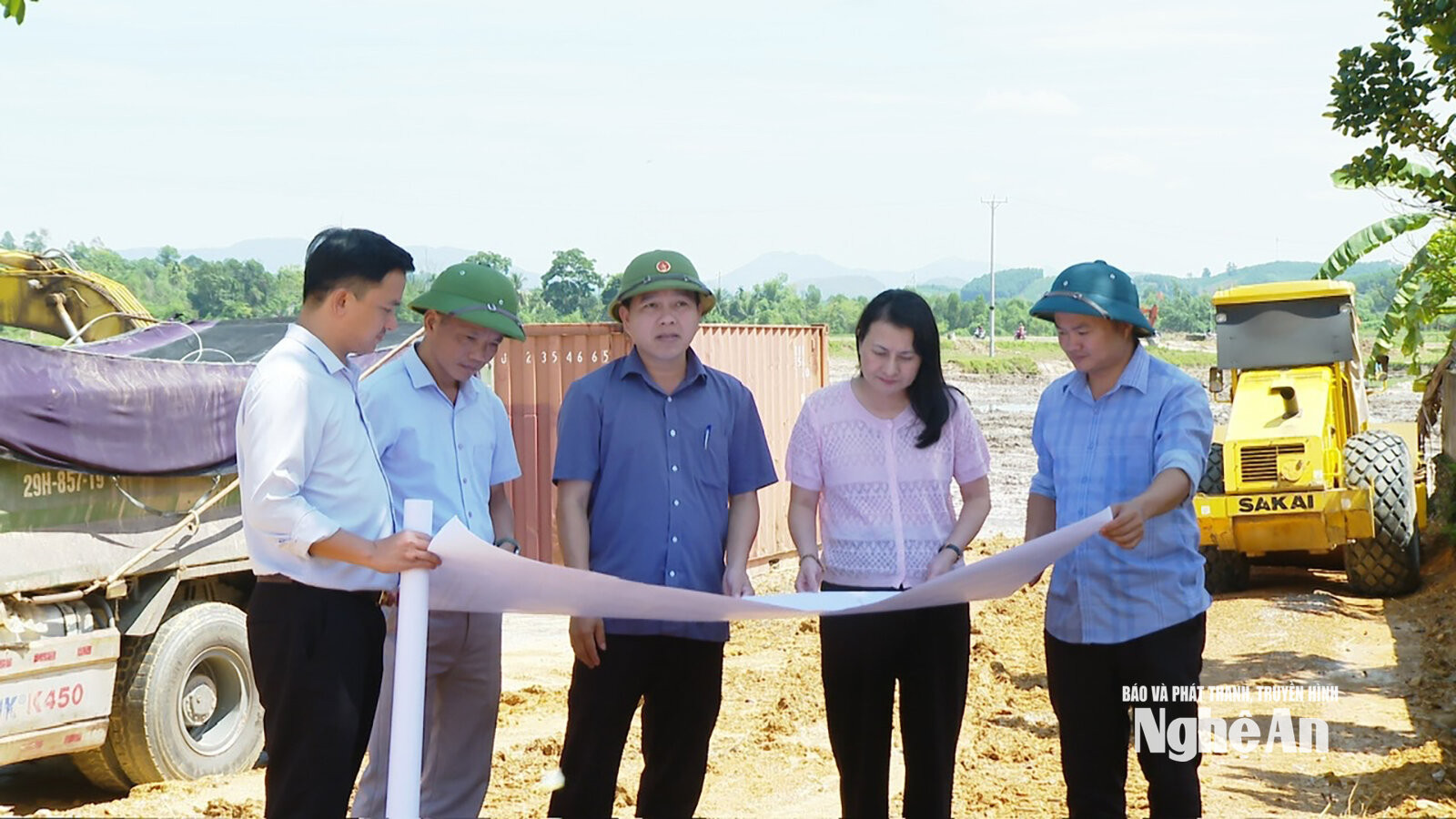
To implement effectively, Nghe An needs to transform major goals into prioritized action programs. Initially, it's necessary to review job positions, job title standards, competency frameworks, and responsibilities at each level; standardize personnel data according to authority; and develop a set of evaluation criteria based on job titles, linked to verifiable outcomes. Next, it's crucial to cultivate a multi-tiered pool of successor personnel for key positions; strengthen rotation, assign practical tasks, and evaluate performance after probation; and develop mechanisms to attract experts and talent tailored to specific development challenges. Annually, internal disclosure of performance results should be ensured, weaknesses identified, accountability addressed, and any inappropriate mechanisms adjusted.
Building a team of qualified, capable, and reputable officials is not solely the responsibility of the organizational sector or a task set only before each Party Congress. It is a continuous process of identifying, nurturing, utilizing, verifying, and screening; it is the responsibility of the entire political system under the leadership of the Party, with the supervision of the people. When each official truly uses work results and the interests of the people as a measure, and each level of government operates transparently, uniformly, and responsibly, Nghe An will have more impetus to transform its traditions and human resource potential into a driving force for development.


