
Review of EarthRoamer LTx and SX 2.0: Heavy-duty off-road camper
EarthRoamer introduces the LTx and SX 2.0, featuring a 24V power system, 24/18 kWh batteries, a 9,000W inverter, and up to 1,800W of solar panels; prices range from $825,000 to $1.09 million.
After 27 years of developing large off-road camper models, EarthRoamer returns with the LTx and SX 2.0: a comprehensive upgrade based on the Ford F-550 and an entirely new model based on the Chevy 6500HD. The focus of the upgrade is the first-ever 24V electrical system in the company's lineup, featuring a high-capacity lithium-ion battery, a 9,000W inverter, and the ability to charge from solar panels up to 1,800W. The goal is clear: increase energy self-sufficiency, optimize the operation of heavy-duty appliances, and shorten charging times.
Beneath the protective paint, 43-inch tires, and off-road suspension lies a larger-capacity alternator, coupled with a new wiring system for faster battery charging. The LTx and SX 2.0 are essentially "mobile homes" capable of navigating challenging terrain while maintaining a high level of comfort.
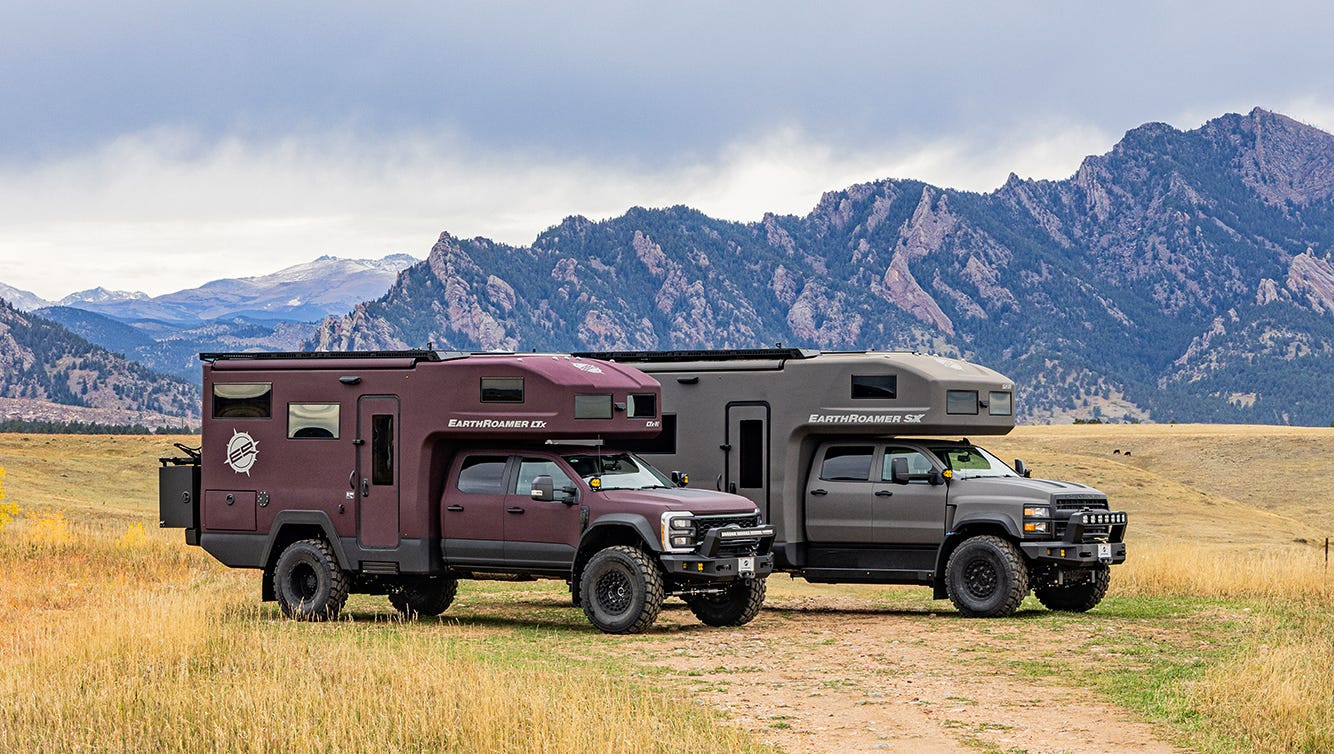
The design language is functional.
The LTx is an updated version of the Ford F-550-based EarthRoamer that debuted at SEMA, and it continues to maintain the characteristic "heavy-duty" style: a high nose, high ground clearance, a unibody cabin, and details optimized for practicality. The LTx's gross vehicle weight (GVWR) reaches 19,500 pounds, demonstrating the ample load-carrying capacity of its commercial chassis platform.
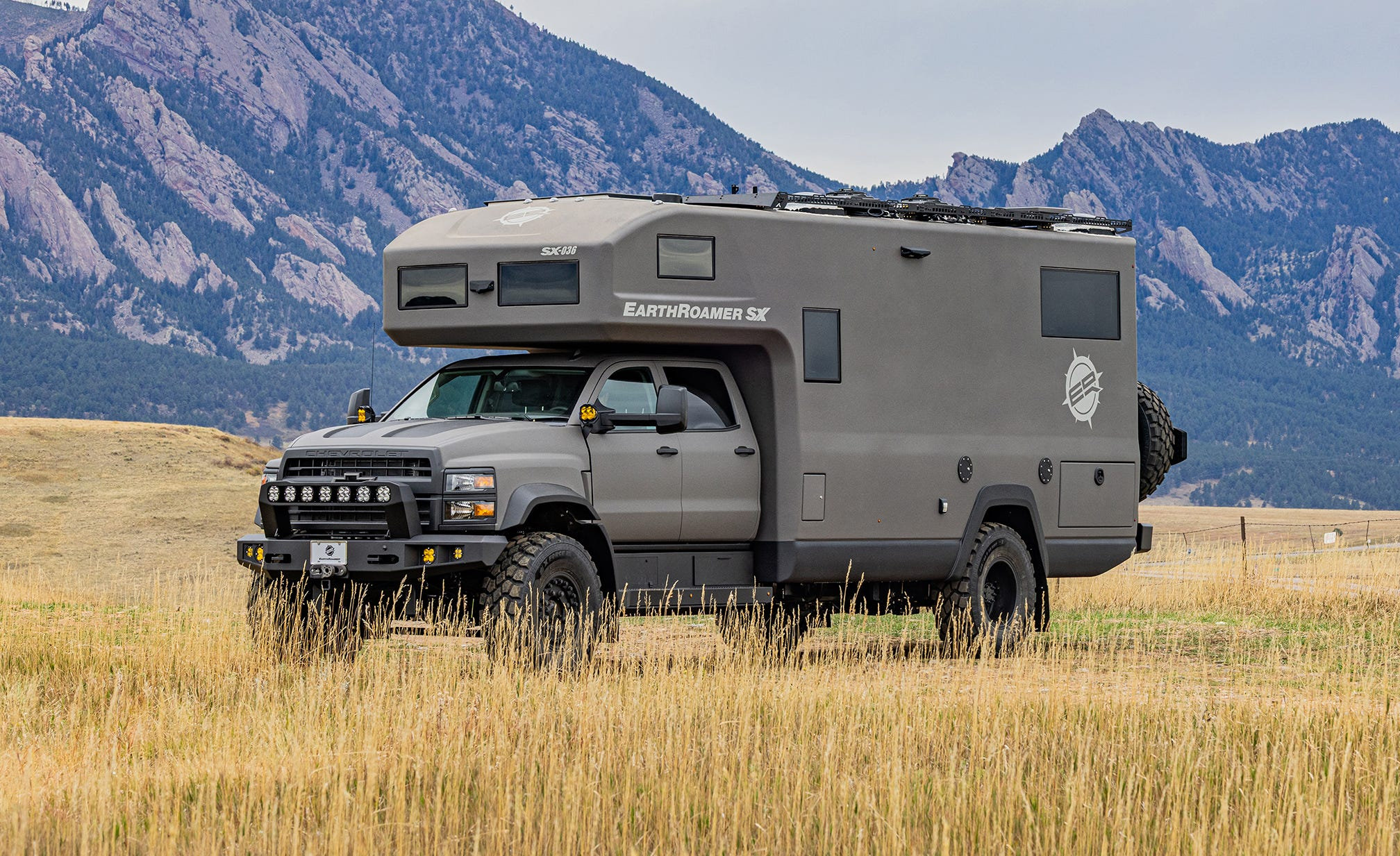
The SX 2.0 takes things a step up in size. The larger carbon fiber camper body boasts an overall length of 34 feet and a width of 8 feet. The robust boxy shape, coupled with 43-inch tires and off-road suspension, continues to be a hallmark of the EarthRoamer. With an interior height of 7 feet 3 inches, the SX 2.0 offers a sense of "standing upright" rarely seen in off-road campers.
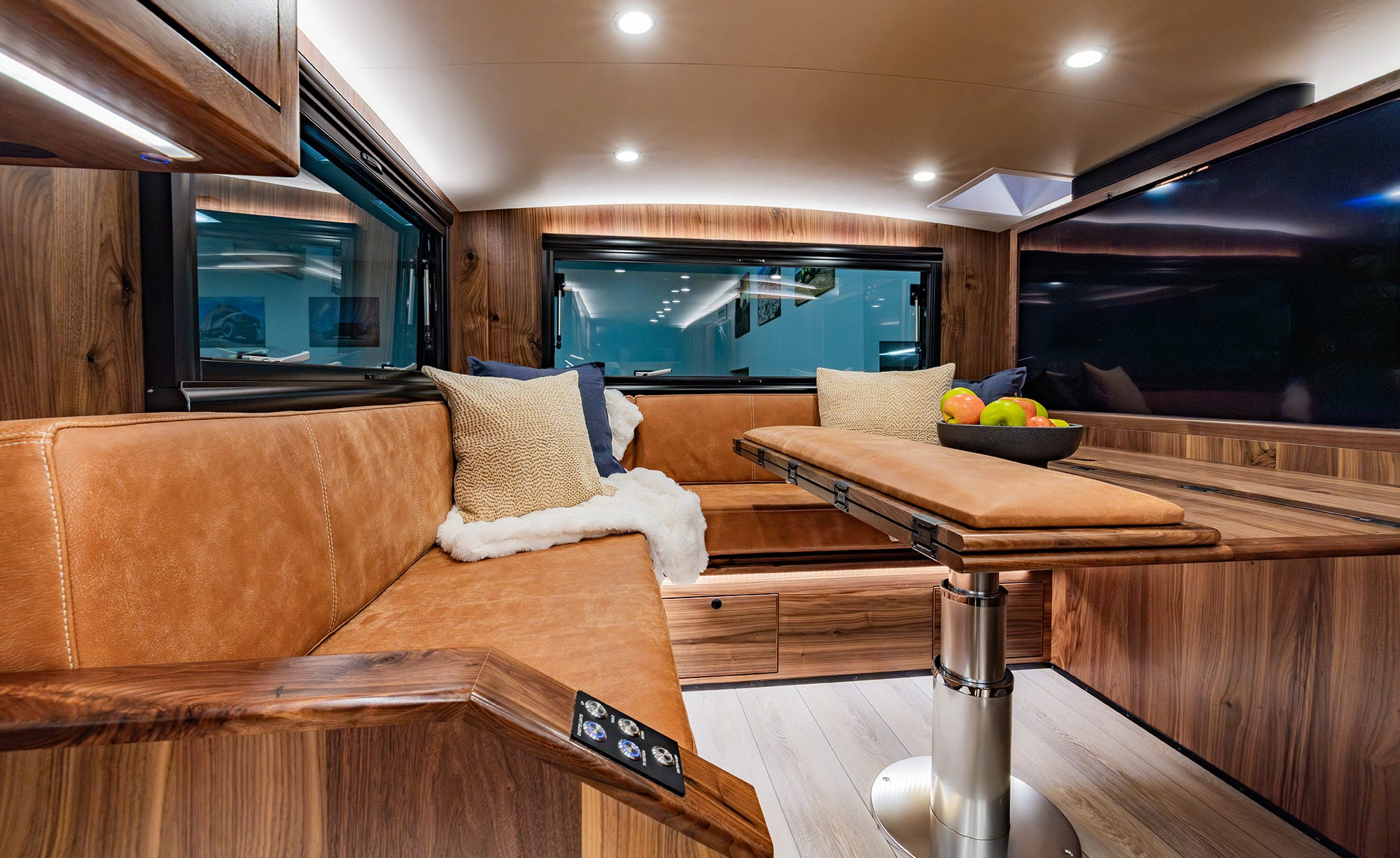
Cabins are like apartments, prioritizing living space and storage.
Both models feature a new L-shaped dining arrangement that converts into a bed. A California king-size bed is positioned in front, along with an upgraded bathroom and an Invisacook hob hidden under the countertop for increased usable space. A larger refrigerator, expanded storage, and an upgraded TV screen bring the living space closer to a mini-apartment standard.
The LTx is advertised as being able to sleep up to four people, while the SX 2.0 – thanks to its larger body shell – prioritizes spaciousness and storage, suitable for longer journeys.
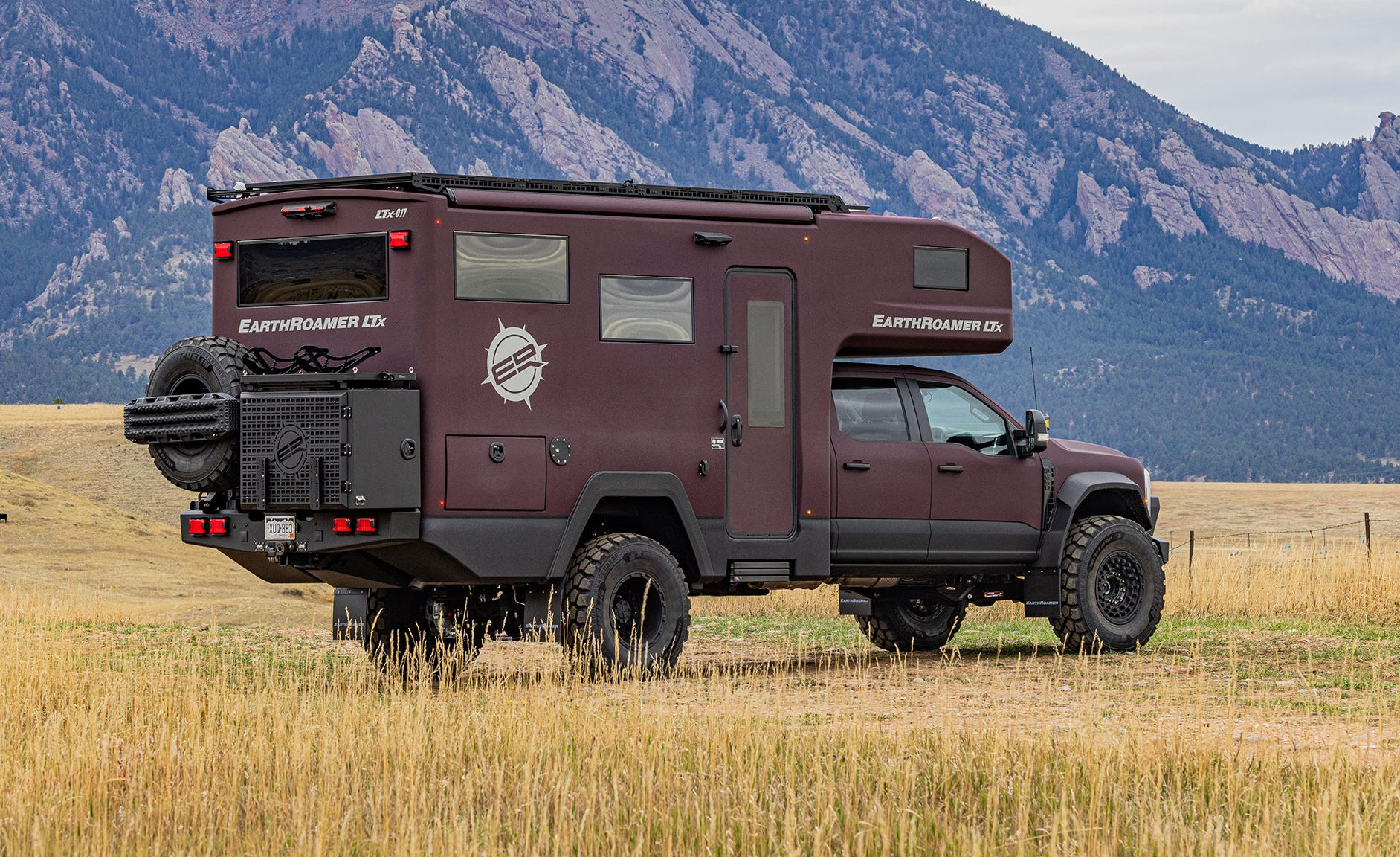
Heavy-duty drive, geared towards high load ranges.
EarthRoamer continues to select robust mechanical components from two American manufacturers. The LTx uses a 6.7-liter Power Stroke V8 turbocharged diesel engine paired with a 10-speed automatic transmission. The SX 2.0 features a 6.6-liter Duramax V8 diesel engine combined with a 6-speed Allison automatic transmission. Both are built on heavy-duty chassis (Ford F-550 and Chevy 6500HD), a choice suited to the demanding load requirements of camper hulls, water, fuel, and equipment.
On the SX 2.0 side, the 100-gallon fuel tank, two 5-gallon black drain tanks, and 7 feet 3 inches of cabin ceiling indicate that the focus of the larger version lies in range and long-distance comfort. At 34 feet long and 8 feet wide, the SX 2.0 demands a commensurate amount of workspace, in exchange for superior equipment carrying capacity.
Independent power technology: 24V, large battery, 9,000W inverter
The most notable technical highlight is the new 24V power system. Compared to the previous configuration, the wiring diagram has been redesigned for faster charging of the lithium-ion battery pack: 24 kWh on the SX 2.0 and 18 kWh on the LTx. The 9,000 W inverter (three times the capacity of the previous generation) allows for simultaneous operation of multiple household appliances. On the roof, the solar panel system can reach up to 1,800 W, reducing reliance on external power sources during extended camping trips. EarthRoamer also uses a larger capacity generator to increase charging speed while the engine is running.
Safety and supporting technology
The announcement focuses on the mechanical and electrical systems; the manufacturer does not detail the driver assistance package or crash rating. Given the heavy-duty chassis and off-road capability, the EarthRoamer duo prioritizes durable components such as 43-inch tires, off-road suspension, and carbon fiber bodywork (on the SX 2.0) over advanced driver assistance features.
Pricing, positioning, and display schedule
The LTx starts at $825,000. The SX 2.0 is priced from $1.09 million. EarthRoamer requires a $175,000 deposit before beginning the customization process. The duo will be showcased at SEMA, Las Vegas Convention Center, from November 4-7, 2025.
Main specifications table
| Item | EarthRoamer LTx | EarthRoamer SX 2.0 |
|---|---|---|
| Foundation | Ford F-550 | Chevy 6500HD |
| Engine | 6.7-liter V8 Power Stroke turbocharged diesel engine. | 6.6-liter V8 Duramax turbocharged diesel engine. |
| Gear | 10-level automatic | Allison 6-speed automatic transmission |
| Electrical system | 24V | 24V |
| Battery capacity | 18 kWh | 24 kWh |
| Inverter | 9,000 W | 9,000 W |
| Maximum solar panel | 1,800 W | 1,800 W |
| Tires | 43 inches | 43 inches |
| GVWR | 19,500 pounds | — |
| Overall dimensions | — | 34 feet long; 8 feet wide |
| Interior height | — | 7 feet 3 inches |
| Tank | — | 100 gallon |
| Black wastewater | — | Two 5-gallon containers |
| Sleeping capacity | Maximum 4 people | — |
| Starting price | $825,000 | $1.09 million |
| Deposit | — | $175,000 |
| Exhibition schedule | SEMA 2025, Las Vegas Convention Center, November 4–7, 2025 | |
Conclusion: Outstanding strengths, but requiring a commensurate budget.
With a 24V electrical system, large batteries, a 9,000W inverter, and solar panels up to 1,800W, the LTx and SX 2.0 solidify EarthRoamer's position in the heavy-duty off-road camper segment. The LTx is suitable for users who want a balanced size-to-comfort ratio on the Ford F-550 platform, while the SX 2.0 is the choice for those who need maximum space and range.
Advantages: heavy-duty mechanical platform, robust independent electrical configuration, well-designed interior, and premium materials. Disadvantages: high purchase price and massive size (especially the SX 2.0) requiring suitable operating space. Nevertheless, for customers willing to invest, the new EarthRoamer duo offers a truly "luxurious yet practical" camping experience.


