
Assessing the effectiveness of the US defense system in intercepting hypersonic missiles.
New research reveals vulnerabilities in the THAAD and Patriot systems when faced with weapons traveling at speeds above Mach 5 and possessing high maneuverability in the atmosphere.
Hypersonic missiles are weapons that fly at speeds exceeding Mach 5, combining high maneuverability and unpredictable trajectories, currently challenging the limits of modern US-made missile defense systems. The emergence of this type of weapon is changing combat doctrine, as traditional multi-layered defense networks cannot guarantee absolute interception rates.
The reality of combat based on the latest statements.
On March 5, Iran's Islamic Revolutionary Guard Corps (IRGC) announced that several of its hypersonic missiles and drones had penetrated the Terminal High Altitude Area Defence (THAAD) system deployed by the United States in Israel. According to reports, these attacks breached the defenses, flew over Tel Aviv, and struck key military targets, including the Israeli Ministry of Defense headquarters and Ben Gurion International Airport.
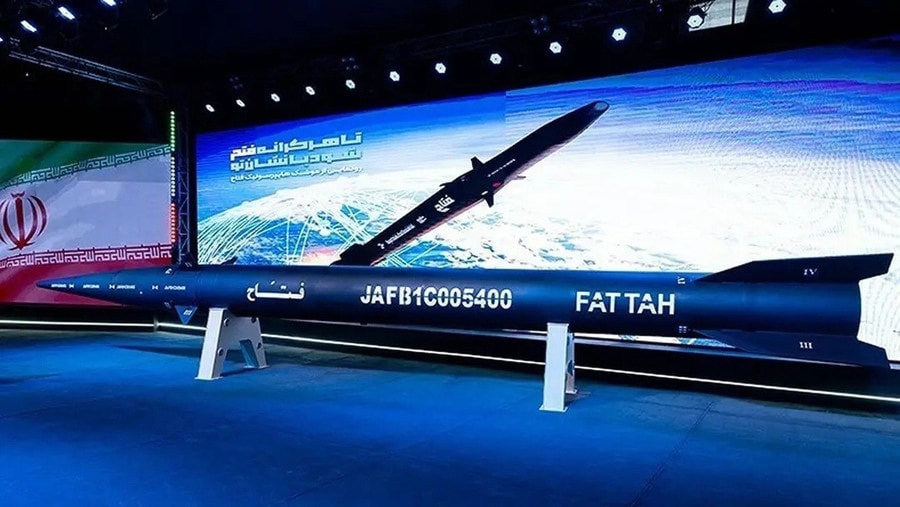
Notably, the South China Morning Post (SCMP), citing research from a group of experts, suggests that current defense systems are being overwhelmed by this new weapon. While theoretically US systems could intercept some hypersonic weapons in their terminal phase, the extremely high speed combined with stealth and the ability to change trajectory makes devising a countermeasure incredibly complex.
Gaps in the multi-layered defense structure
Currently, Israel operates a dense defense network including Iron Dome, David's Sling, Arrow, Patriot, and the US THAAD system. However, the actual effectiveness of these systems when facing new generation missiles remains a major question mark:
- Iron Dome:It achieves an interception rate of approximately 85-90% under ideal conditions, but primarily deals with short-range missiles.
- Patriot:The success rate only ranges from 40-70%.
- THAAD and Aegis:Designed to intercept conventional ballistic missiles that fly along predictable parabolic trajectories.
Conversely, hypersonic missiles are capable of gliding through the atmosphere at speeds more than five times the speed of sound. Instead of soaring into space and then plummeting back down like ballistic missiles, hypersonic glide vehicles can control their flight path like aircraft, making it difficult for defense radars to lock onto a stable target.
Technical challenges in target destruction
Defense systems like Ground-Based Midcourse Defense (GMD) and Aegis SM-3, which operate outside the atmosphere, are almost ineffective against hypersonic missiles because the enemy primarily travels within the atmosphere. In the final stage, when the target is only seconds away, systems like Patriot or THAAD must perform interceptions using extremely high kinetic energy.
Specifically, for the PAC-3 MSE system, interception requires high speed and the ability to adjust trajectory in an instant. The research team explained that when a hypersonic glide vehicle approaches a target, it can use lift to flip and abruptly change its trajectory, making it easy for the interceptor missile to miss its target.
The resilience of hypersonic weapons
Another important point highlighted in the study is the durability of hypersonic weapons. Even if the interceptor missile successfully collides, that doesn't necessarily mean the target is completely destroyed. Because they are designed to withstand extreme heat and pressure when flying at hypersonic speeds, these types of missiles typically have very robust structures and backup power systems.
The study concluded that if interceptor missiles do not hit critical weak points, hypersonic weapons are still capable of maintaining their trajectory and completing their target attack mission. This highlights the urgent need for militaries to develop next-generation sensor and interception technologies to compensate for existing vulnerabilities.


