
Misjudging Iran's missile arsenal: A strategic challenge for the United States.
US intelligence is believed to have undercounted more than 1,000 of Iran's missiles, while Tehran's actual production capacity and range far exceed previous technical estimates.
The U.S. intelligence community is facing significant challenges as assessments of Iran's arsenal reveal serious inaccuracies. Tehran has not only maintained a stable ballistic missile launch capability but has also astonished the Pentagon with both the number and actual range of its missiles, exceeding initial estimates.
Errors of over 1,000 missiles and actual production capacity.
Citing 19fortyfive, the US intelligence community appears to have underestimated Iran's missile arsenal by more than 1,000 missiles. In a 2022 public hearing, General Kenneth McKenzie estimated Iran possessed around 3,000 ballistic missiles. However, actual data suggests the scale is much larger.
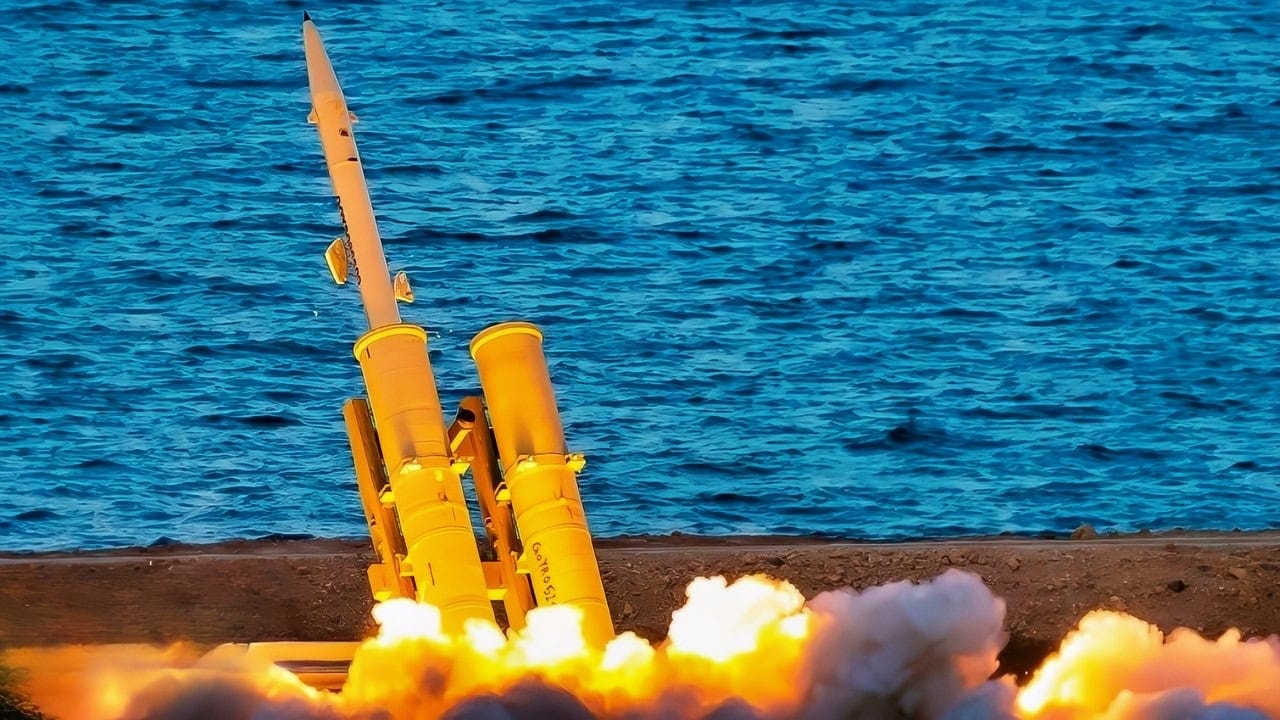
Notably, as of June 2025, Iran's production capacity reached at least 50 missiles per month. The US airstrikes are estimated to have destroyed only about one-third of the total arsenal. This suggests that the Defense Intelligence Agency (DIA) may have overestimated the effectiveness of the attacks and underestimated the enemy's regenerative capabilities and the scale of their stockpiles.
Failure to predict range and accuracy.
The errors extend beyond mere quantity to core technical specifications such as range and accuracy. Previously, the Congressional Research Service (CRS) typically accepted Iran's claims limiting the range to 3,000 km. However, actual events have proven otherwise.
Iran's missile launch toward Diego Garcia demonstrates that U.S. estimates of range were inaccurate by 50%. Furthermore, Tehran's precise targeting of security structures and industrial areas in Gulf states like Qatar and Oman proves that the accuracy of Iranian weapons is no longer just empty claims.
Underground base strategy and lessons from the past.
Much of Iran's missile infrastructure is now believed to be located deep within "underground cities." This is a sophisticated concealment strategy that analysts believe the U.S. should have anticipated, based on lessons from history.
During the 2006 war, Hezbollah deceived the Israel Defense Forces (IDF) with decoy targets and a network of tunnels built with the advice of foreign experts. Reports indicate that Iran is now receiving similar technical support to establish a robust system of tunnels, making it difficult for US satellite and aircraft reconnaissance to accurately identify the real targets.
Misjudging both the quantitative and qualitative aspects of the adversary's arsenal is raising serious questions about the effectiveness of the DIA's forecasting and the U.S.'s ability to respond to potential conflict scenarios in the region.


