
Kharg Island: Iran's inviolable oil lifeline?
About 25 kilometers off the southern coast of Iran lies a small island crisscrossed with pipelines, transit stations, and storage facilities. This is Kharg Island – the beating heart of Iran's oil export industry.
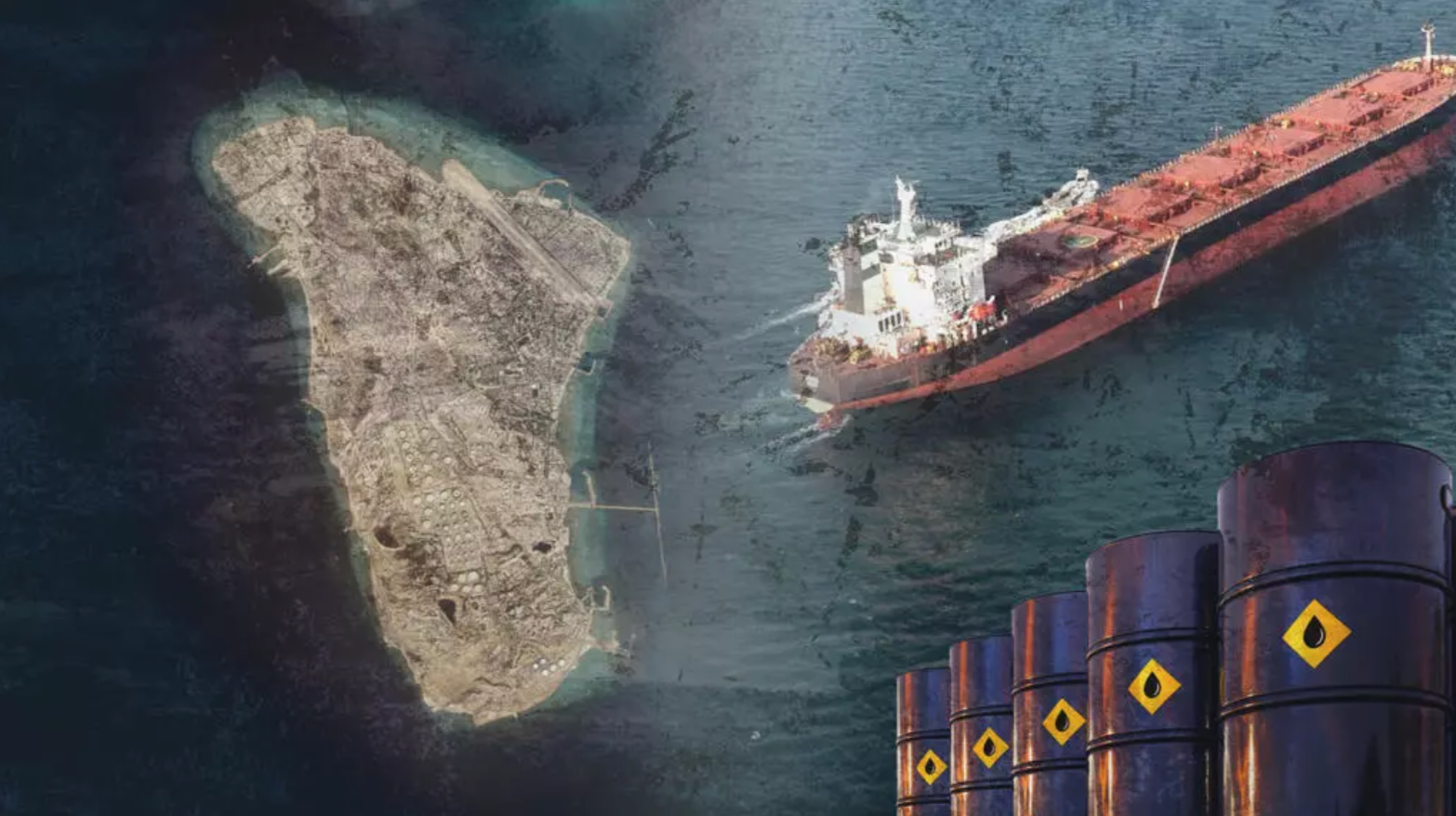
To bomb or not to bomb Kharg Island? To launch or not to launch a ground campaign? These are likely the questions that have plagued the minds of American and Israeli military planners. On March 13th (Washington time), US President Donald Trump posted a video on the social media platform Truth Social showing US airstrikes targeting Iran's Kharg Island, including strikes hitting the island's airfield and runway.
Tehran threatened on March 14 to attack cities in the United Arab Emirates, saying the U.S. had used "ports, docks and hideouts" there to launch attacks on Iran's key Kharg island, where the U.S. had struck more than 90 military targets.
Kharg, a small, arid strip of land measuring approximately 20 square kilometers near the port city of Bushehr, carries the majority of Iran's oil exports.
Wiping out this island might only take seconds, but its destructive power would devastate the Iranian economy for decades to come.
However, the Trump administration had previously hesitated about how – or even whether – to launch an attack on this tiny coral island. According to numerous news outlets, internal discussions within the Trump administration were heated regarding how to handle the Kharg Island issue.
Avoid military action?
Although former Israeli Prime Minister Yair Lapid bluntly stated last week that "all of Iran's oil fields and energy industry on Kharg Island" must be destroyed if Israel and the US want to overthrow the current regime, so far, any attacks targeting Iran's energy infrastructure have been avoided.
But why? Especially when most experts agree on the strategic importance of Kharg Island.
Neil Quilliam, a Gulf energy expert at the think tank Chatham House, describes the island as the "crown jewel" of Iran's oil industry.
Sonia Martinez-Giron, Executive Director of the Verona International Security Research Group (ITSS), also affirmed the undeniable value of Kharg to Tehran: "It holds 90% of Iran's oil exports and is the lifeline connecting its economy to the global economy."
According to Andreas Krieg, senior lecturer at the School of Security Studies, King's College London:"Kharg is one of the few places where an airstrike could immediately produce immediate economic and strategic consequences."
Meanwhile, Scott Lucas, a professor of international politics at Dublin University, argues that seizing the island would"This is equivalent to an attempt to seize every oil tanker belonging to Russia's 'dark fleet'.
The formation of Iran's lifeline.
So how did Kharg Island become such an important oil center?
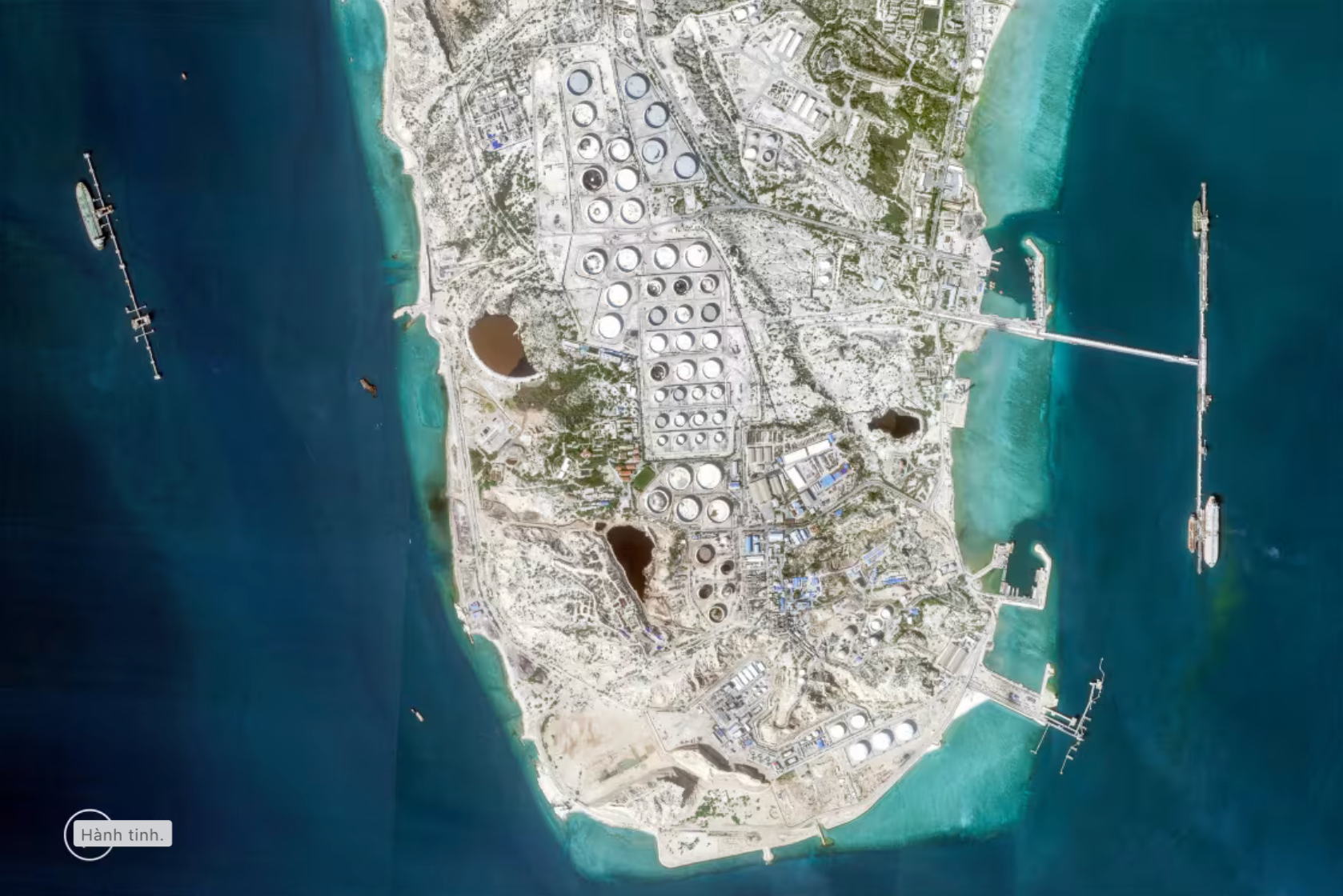
The island was originally developed into Iran's main crude oil export hub by a US-Iranian joint venture, Khark Chemical Company, under the former Shah in the 1960s. Infrastructure continued to be built up during the more than four decades of Supreme Leader Ayatollah Khamenei's rule. Today, the island is almost entirely covered with transfer stations, pipelines, and storage tanks.
The main reason Iran concentrates all of its valuable oil exports on Kharg Island lies in its geographical location.
Neil Quilliam, a Gulf energy expert at the think tank Chatham House, explains: "Because of the shallow waters of the Persian Gulf, supertankers cannot dock near land. They need to unload and load cargo at a deep-water port, and the only truly feasible port is the one on Kharg Island."
Geographical magazine, a publication of the Royal Geographical Society of Great Britain, once wrote that "the consequence is a dense concentration of energy infrastructure, making the island one of the most strategically sensitive points in the global oil network."
The most heavily guarded fortress
Before Western sanctions were imposed on Iran over its nuclear program, oil companies from around the world flocked to Kharg Island to buy crude oil. The island was particularly important to the French energy giant Total.
Over time, the island became so important to Iran that it became a priority target in the Iran-Iraq War of the 1980s. From that point on, Kharg Island was in the sights of its enemies because its fall would completely cripple the Iranian economy.
The war devastated much of the island's infrastructure, and after the conflict ended, Iran prioritized its reconstruction. Since then, Kharg Island has become one of Iran's most heavily fortified locations.
However, expert Quilliam noted: "If the US or Israel wanted to carry out airstrikes targeting this area, they are perfectly capable of doing so."
So why did they hesitate? What held back the United States and Israel?
First, according to Professor Lucas's explanation, such an attack would mean a particularly serious escalation of the conflict. "Attacking Kharg would immediately provoke a response from Iran: 'Look, we have nothing to lose but to launch a full-scale, all-out attack.' And that would mean blockading the straits. It would mean attacking oil refineries across the Middle East."
Secondly, an attack would not only harm Iran alone.
"Global oil prices are consistently hitting record highs in history," analyst Martinez-Giron commented.""Capturing Kharg Island at this time would be the final blow to the Iranian economy, and its consequences would extend beyond this war, directly impacting global security and the economy."
According to expert Martinez-Giron:"The Kharg Islands highlight the close connection between the energy sector and the food system. It's difficult to imagine how such a decision could strike a blow to the Iranian regime without jeopardizing global human security."

What about a ground attack?
Therefore, attempting to capture, rather than destroy, the facilities on Kharg Island through a ground attack is also being considered. However, experts are skeptical about whether this idea is actually being seriously discussed.
"Regarding rumors about a U.S. ground campaign, I would view them with extreme caution," expert Krieg shared."An amphibious landing would be an extreme escalation. It would require physically capturing or neutralizing a strategic island off the Iranian coast, while exposing the island to Iranian missile fire, drones, and naval retaliation. It's a much riskier and more significant move than an airstrike."
According to expert Martinez-Giron, a third, less-discussed option is likely on the negotiating table. "We're waiting to see if there are any acts of sabotage or cyberattacks targeting the oil infrastructure on the island. This move would certainly cripple the Iranian economy without triggering a direct military confrontation."


