
Wild peaches from Nghe An are scarce, and prices have increased.
As Tet approaches, when the peach blossoms in the lowlands are in full bloom, the market for mossy peach blossoms, a native variety from the high mountains of Nghe An province, begins to liven up. From the cloud-covered slopes of Tri Le, Na Ngoi, Nhon Mai, etc., mossy peach branches with ancient shapes are brought down from the mountains, carrying with them the spring atmosphere of the border region. This year, the erratic weather and leap calendar have resulted in a limited supply of peach blossoms blooming precisely for Tet, leading to higher prices.
Peach prices have risen...
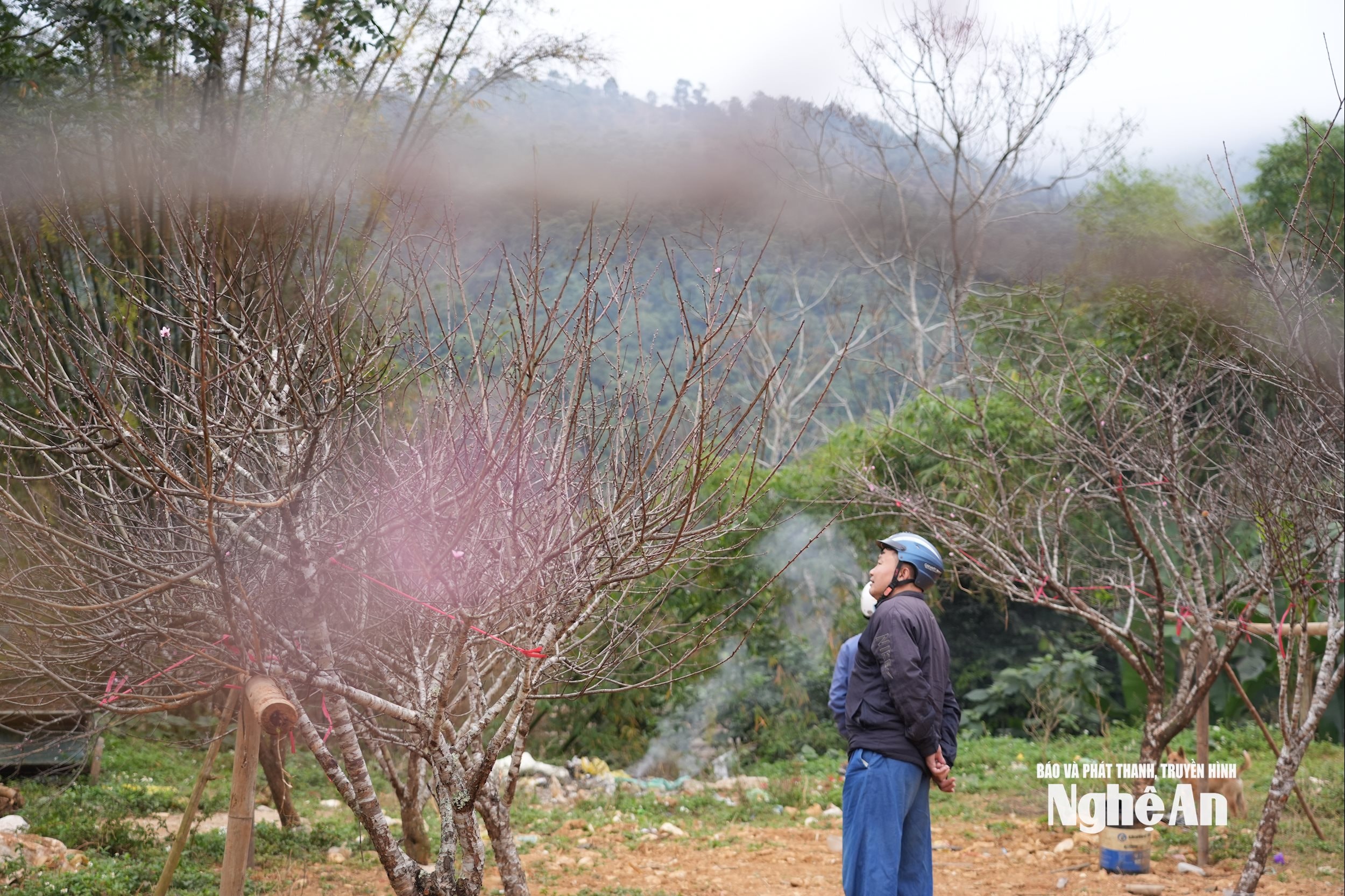
These days, the center of Tri Le commune is busier than usual. Gathering and selling points for Tet peach blossoms operate from early morning until late at night. Most of the peach blossoms sold here are transported down from the mountains by villagers in the villages of Muong Long, Huoi Moi (Tri Le), Huoi Co (Nhon Mai), Na Ngoi, etc.
According to Mr. Ngan Van Thong, a peach blossom vendor in Tri Le, this is only the first batch of peach blossoms for Tet this year. “Large branches with beautiful shapes, thick moss covering them, and dense buds cost from 12-15 million VND per branch. Smaller branches range from 3-5 million VND, while those suitable for vases cost around 700,000 to 1 million VND per branch,” Mr. Thong said.
Mr. Thong also said that the peaches are mainly purchased from the fields of the Mong people in Huoi Co, Huoi Moi, and Na Ngoi to serve the Lunar New Year of the Horse. Although called "forest peaches," they are actually a native peach variety grown by the Mong people on high mountain slopes.
Wild peach blossoms, also known as mossy peach blossoms or rocky peach blossoms, thrive in harsh climatic conditions, with year-round cloud cover and unique soil. This results in rough branches, mossy trunks, large flowers with thick petals, and vibrant, long-lasting colors. This year is a leap year, and the weather has been erratic, causing many varieties of pale-flowered and small-fruited wild peach blossoms to bloom early. At this time, only the large-fruited wild peach blossoms are still budding, expected to bloom just in time for Tet (Vietnamese New Year). In addition, increased transportation costs are also contributing to the price increase.
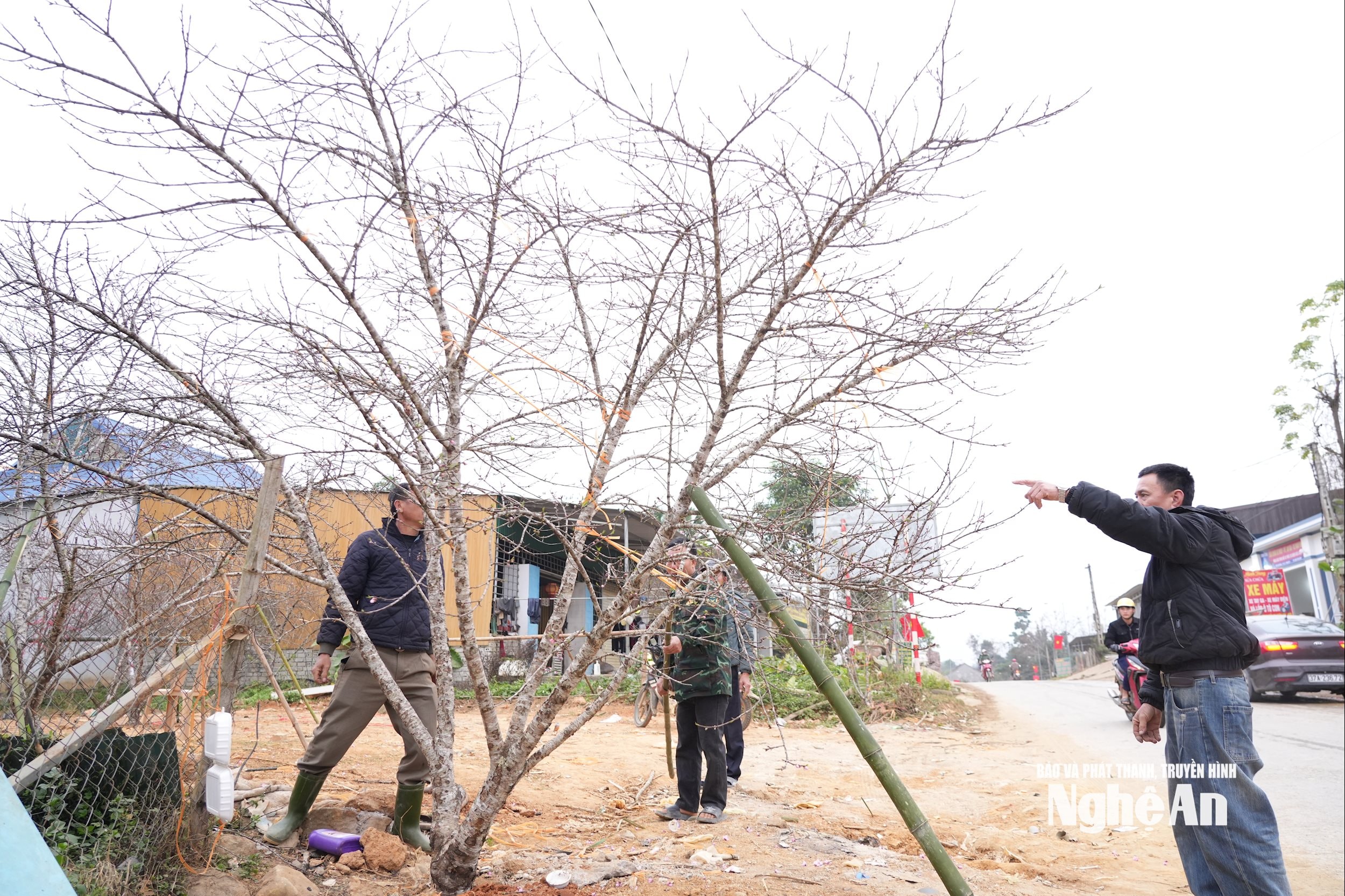
According to vendors, the average cost to transport a peach blossom branch from the garden to the collection point is about 300,000 VND per branch. For large, beautifully shaped branches that require 2-3 people to carry, the cost can reach up to a million VND. "Compared to last year, the price of wild peach blossoms has increased significantly this year, especially for branches that bloom right on Tet (Lunar New Year), have unique shapes, and beautiful mossy foliage," said Ngan Van Thong, a peach blossom vendor.
Not only in Tri Le, but also in other localities such as Que Phong and Tien Phong communes, a considerable amount of wild peach blossoms are gathered and quickly find buyers.
Mr. La Van Nhat, from Que Phong commune, said he usually goes to the Mong villages in Tri Le commune to buy peach branches and then transports them by motorbike to the center of Que Phong commune to sell. “Each trip only carries about 4 branches by motorbike. The purchase price at the garden is from 500,000 to 1,000,000 VND per branch, and it takes 50-60km through the forest to bring the peach branches to the market. This year, the price of cut peach branches is about 100-200,000 VND more per branch than last year,” Mr. Nhat shared.
.jpeg)
Despite the relatively high price, wild peach blossoms are still popular in the market. From Truong Vinh ward, Duong Xuan Phu and his group of friends traveled over 200 km to Tri Le to find and buy peach blossoms.
“In the city, bonsai peach blossoms, Nhat Tan peach blossoms, Quang Dong peach blossoms, and even mossy peach blossoms from Muong Long have all bloomed profusely, making it very difficult to find a tree that blooms right on Tet. We have selected a wild peach branch with a canopy radius of about 2.5 meters, a trunk circumference of 30 cm, with knots, moss, ferns, and parasitic vines climbing on it, priced at 17 million VND, to decorate the company; and a few smaller branches totaling 5 million VND to place in each family's home,” Mr. Phu said.
According to vendors, a key factor preventing the price of wild peach blossoms from falling this year is the willingness of buyers to pay. Unlike cultivated peach blossoms in the lowlands, wild peach blossoms are seen by many as a "Tet gift" with more spiritual value than just a simple decoration.
Buyers often accept higher prices for a unique, rare, and one-of-a-kind peach blossom branch. Ms. Phan Bich Hanh (Truong Vinh ward), who is working in Muong Xen commune, also took the opportunity to choose a wild peach blossom branch for herself. Ms. Hanh said: “I only celebrate Tet once a year, so I like peach blossom branches that look natural and soulful. Wild peach blossoms don't need to be too big; just having many buds blooming sporadically is enough to clearly convey the spring atmosphere. Wild peach blossoms don't bloom all at once, they last a long time, the petals are thick, and the colors are beautiful. I buy early even though the price is a little higher, because I'm sure the peach blossoms will bloom right on Tet.”
The fact that customers prioritize the experiential value, durability, and uniqueness of wild peach blossoms has contributed to keeping prices high, especially for branches that bloom at the right time and are limited in quantity on the market, such as this year's Tet holiday.
Highlanders earn extra income from the peach blossom harvest for Tet (Lunar New Year).
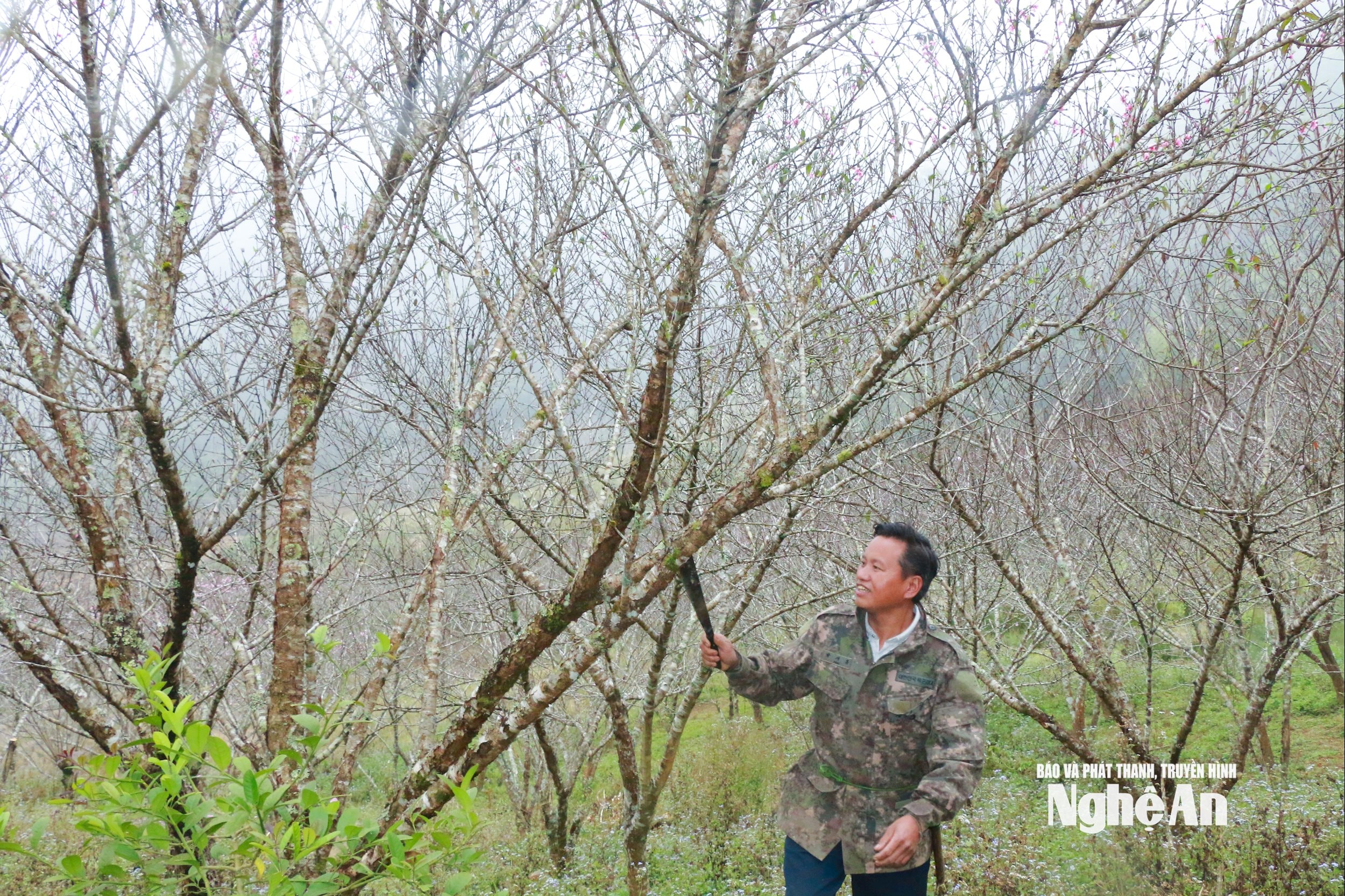
In mountainous and border villages, during the last days of the twelfth lunar month, people are busy pruning peach branches, shaping them, and tying them with strings so that the peaches can be transported down the mountain by traders to serve customers.
Mr. Xong Ba Lau, head of Buoc Mu village (Na Ngoi border commune), is one of the households that earns a decent income from peach trees. Currently, he has a peach orchard with nearly 1,000 trees. Mr. Lau said that his family grows only rock peaches and mossy peaches, many of which are over 10 years old. "We only prune the branches once a year, keeping the trunk to allow the tree to recover. After 3-4 years, the branches grow again and yield a harvest. Thanks to peaches, my family earns about 90-100 million VND per year," he said.
This year, due to the leap year, many peach trees with small fruits bloomed early and could not be harvested. Mr. Lau's family is pinning their hopes on the 300 large peach trees that are currently in bloom. "I'll start selling them around the 20th of the 12th lunar month. This year, not many peach trees bloomed right on Tet (Lunar New Year), so the price will probably be higher than last year. With about 300 trees, each with 2-3 branches, and a selling price of 300-400 thousand dong per branch at the garden, I estimate I'll earn 350-450 million dong," Mr. Lau calculated.
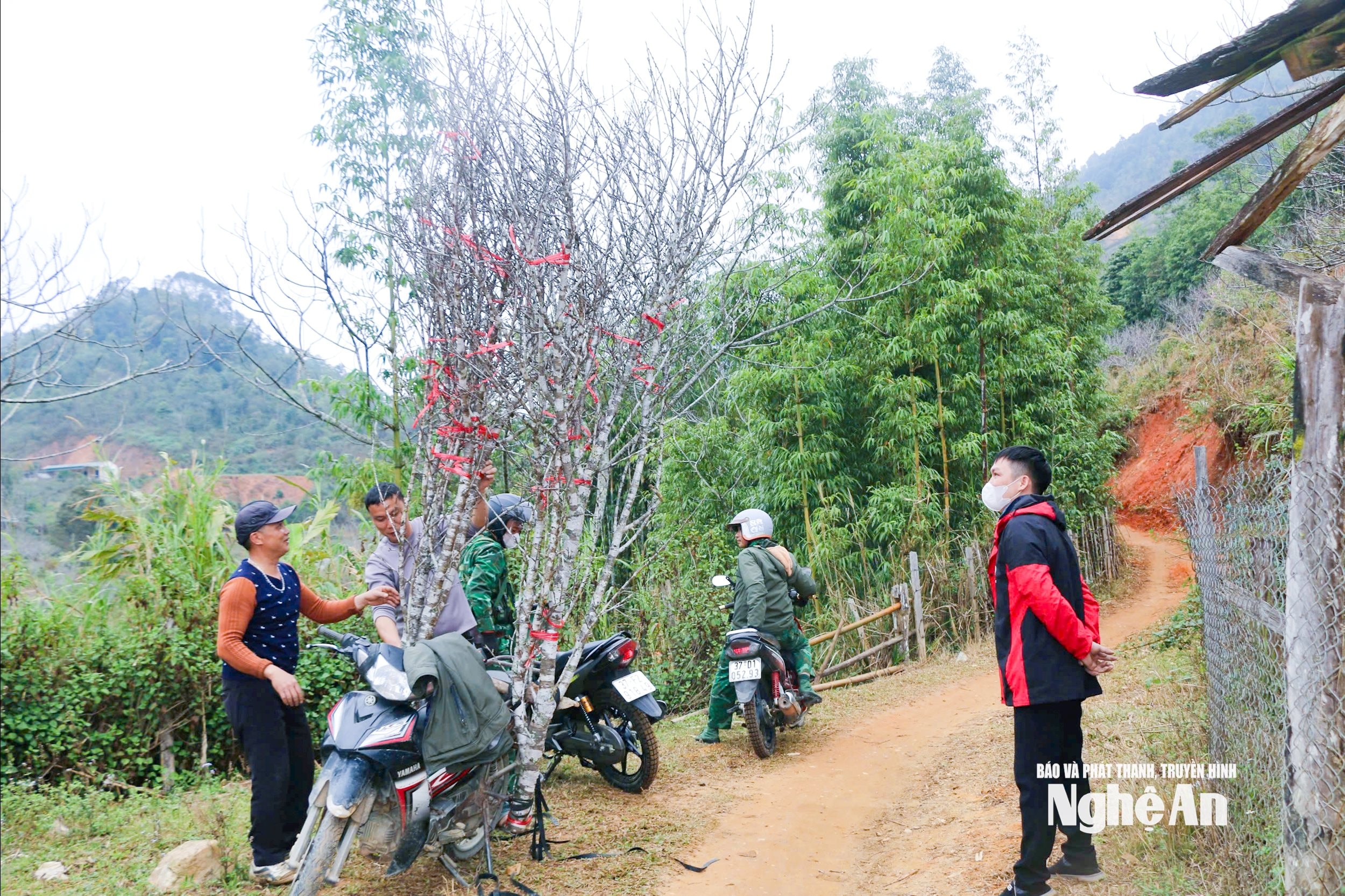
In Tri Le, peach trees are widely grown in the villages of Pa Khom and Huoi Moi. The entire village of Pa Khom currently has more than 6,000 peach trees. Some households have as many as 500 trees, such as the family of Va Ba Da, and the family of the Party Branch Secretary Va Ba De also has about 300 trees.
Every Tet holiday, customers come directly to the village to buy peach blossom branches, bringing in tens of millions of dong in income for each family. Mr. Va Ba De, from Pa Khom village, said: “Many households in Pa Khom consider peach blossoms their main livelihood. We usually sell branches rather than whole trees. Last year, the weather was bad, the peach blossoms had few buds, the flowers were poor, and there was a lot of frost, so there were no peach blossoms to sell. This year, peach blossoms blooming right on Tet are rare, and the price is much higher.”
In rocky, sloping areas where growing corn or rice is difficult, wild peach trees truly become a source of livelihood. Each peach tree represents a long-term investment, and each branch sold provides money for children's education, house repairs, buying buffaloes and cows, machinery, and expenses for Tet (Lunar New Year). In recent years, recognizing the clear economic benefits, local authorities in the highlands have actively guided people in planting and caring for peach trees using proper techniques; built model farms, provided seedlings and fertilizers, and facilitated direct purchasing by traders, reducing transportation costs.
Many concentrated peach-growing areas have gradually formed, each with its own brand, helping people feel secure and committed to long-term employment.
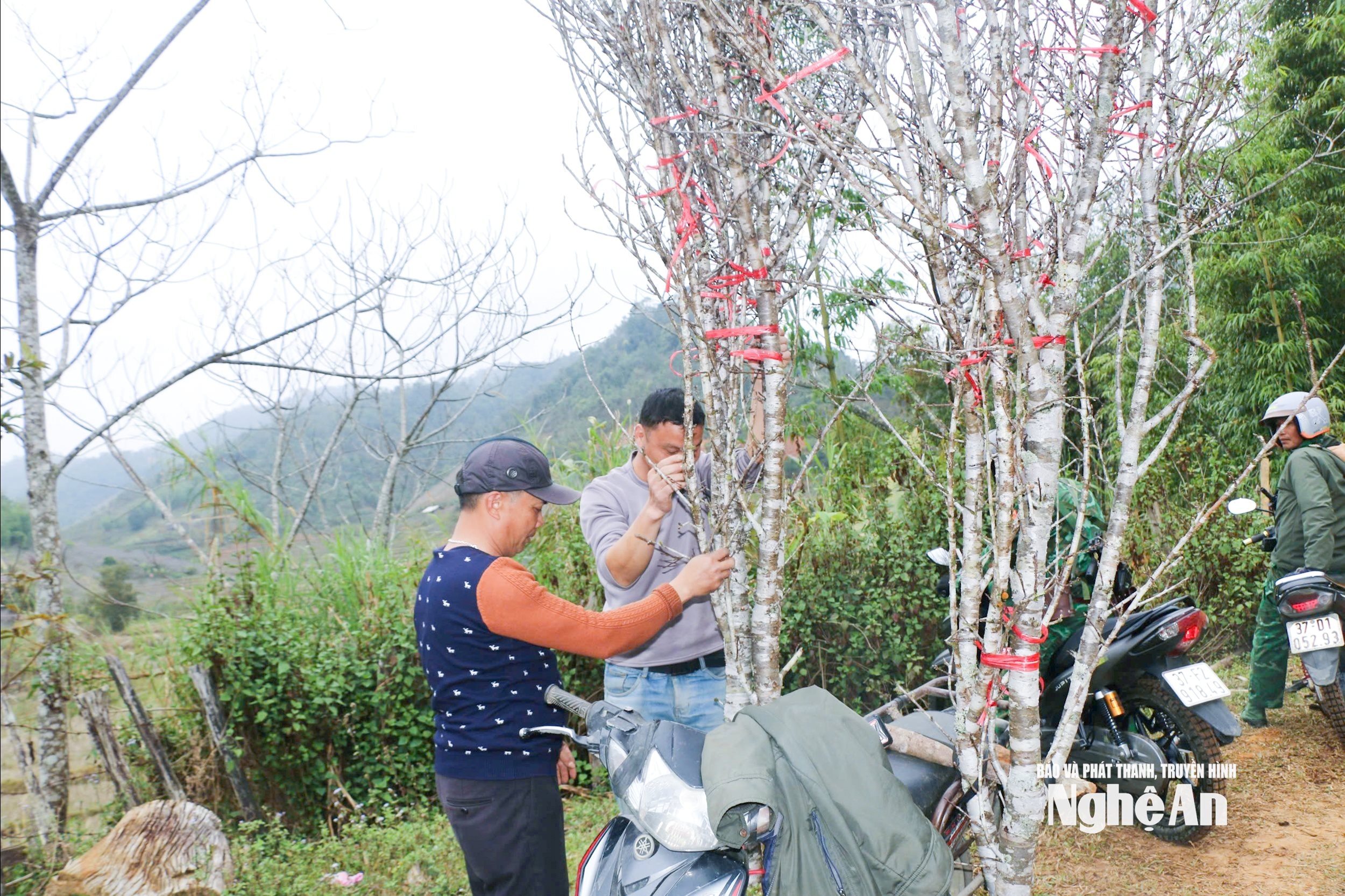
In the days leading up to Tet (Lunar New Year), it's easy to spot vehicles loaded with peach blossom branches descending the mountain roads through the mist. From a wild plant growing on rocky mountains, the peach blossom has now become a source of wealth and a symbol of Tet.
In the journey of economic development in the border region, those quiet peach orchards are a vivid testament to the self-reliance and creativity of the ethnic people, so that every spring, the pink blossoms of the peach trees bring with them the hope of prosperity and sustainability.


