
David's Sling: A closer look at Israel's Magic Wand air defense system.
David's Sling is a crucial medium-range defense in Israel's multi-layered network, specializing in intercepting ballistic missiles and UAVs using direct-impact technology.
David's Sling, also known as the "Magic Wand," is a medium-range air defense system developed by Israel to fill the gap between the Iron Dome (low-altitude) and Arrow (high-altitude) systems. The system is designed to counter sophisticated threats such as medium-range ballistic missiles, cruise missiles, and large unmanned aerial vehicles (UAVs).
International development and cooperation process
The David's Sling program was launched in 2006 by the Israeli Rafael Corporation. In 2008, Israel signed a cooperation agreement with the United States, receiving approximately $1.99 billion in aid between 2006 and 2020 for research and production. Raytheon (USA) played a key partner, participating in the development of the Stunner interceptor missile and launch system.
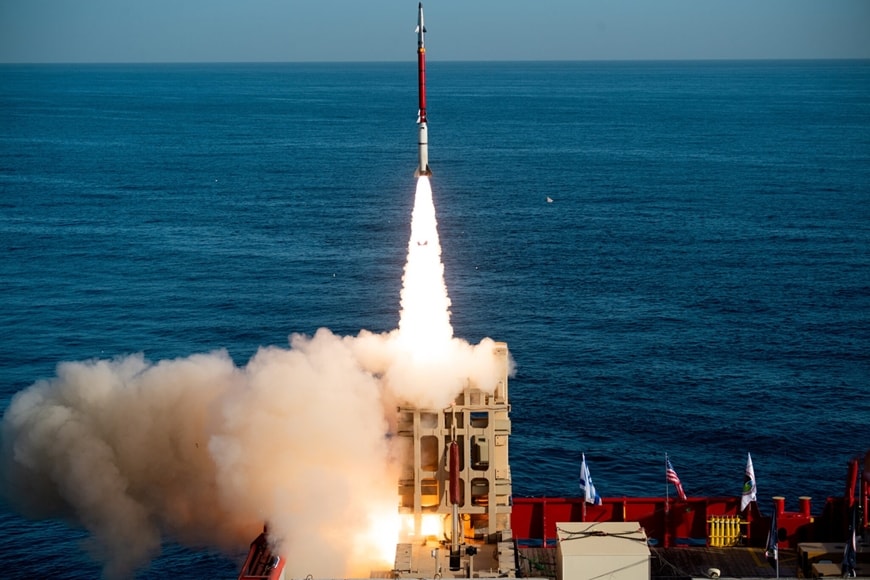
Following numerous successful trials from 2012 to 2017, the system officially entered service with the Israeli Air Force in March 2017. David's Sling saw its first combat deployment in July 2018, intercepting an OTR-21 Tochka missile launched from Syria.
Structure and main combat components
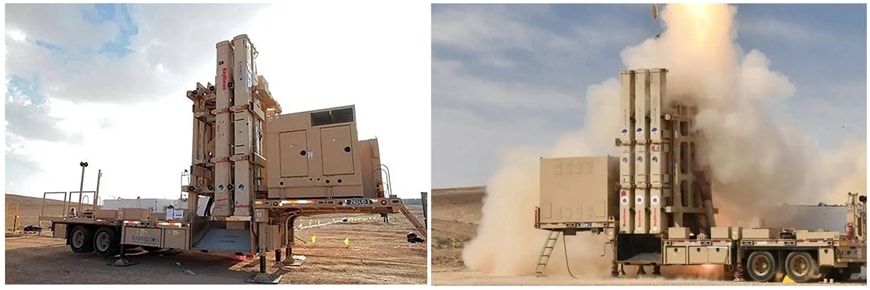
A standard David's Sling battery includes a mobile launcher vehicle (TEL), an ELM-2084 fire control radar, a Golden Almond combat management center, and Stunner missiles. The entire system is mounted on a military truck chassis, allowing for flexible deployment and rapid mobility on the battlefield.
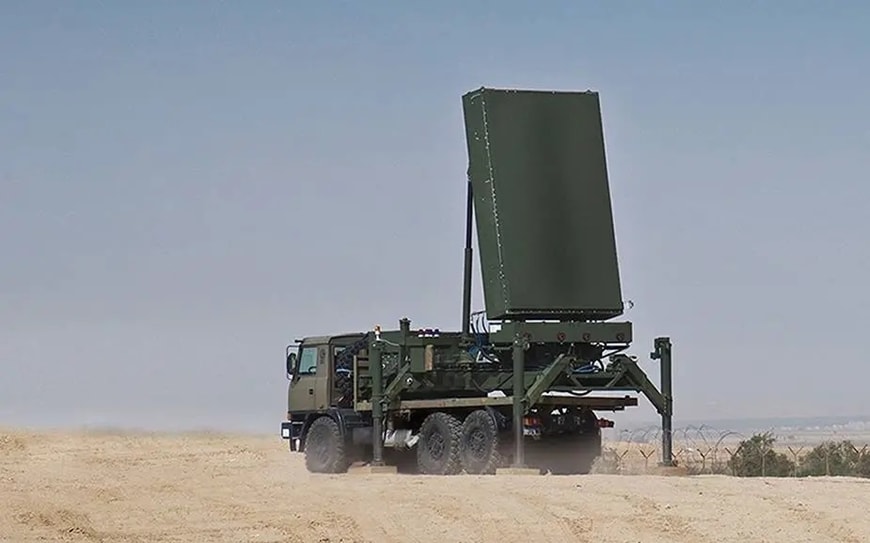
EL/M-2084 Multi-role Radar
The system utilizes the EL/M-2084 active electronically scanned array (AESA) radar developed by Elta Systems. This radar is capable of detecting targets at distances of 250 to 300 km. In surveillance mode, it can track up to 1,100 targets simultaneously; while in fire control mode, it tracks 200 targets per minute to guide missiles.
Golden Almond Command Center
Considered the "brain" of the system, the Golden Almond center, developed by Elbit Systems, is responsible for processing data from the sensors. After analyzing the trajectory and impact point of the threat, the system will decide to launch a vertical Stunner interceptor missile.
Stunner: A missile interceptor without a warhead.
The most significant difference of the Stunner – the "heart" of the system – is its hit-to-kill mechanism for eliminating targets, rather than using a warhead. This method completely neutralizes the target and minimizes the risk from explosive shrapnel.
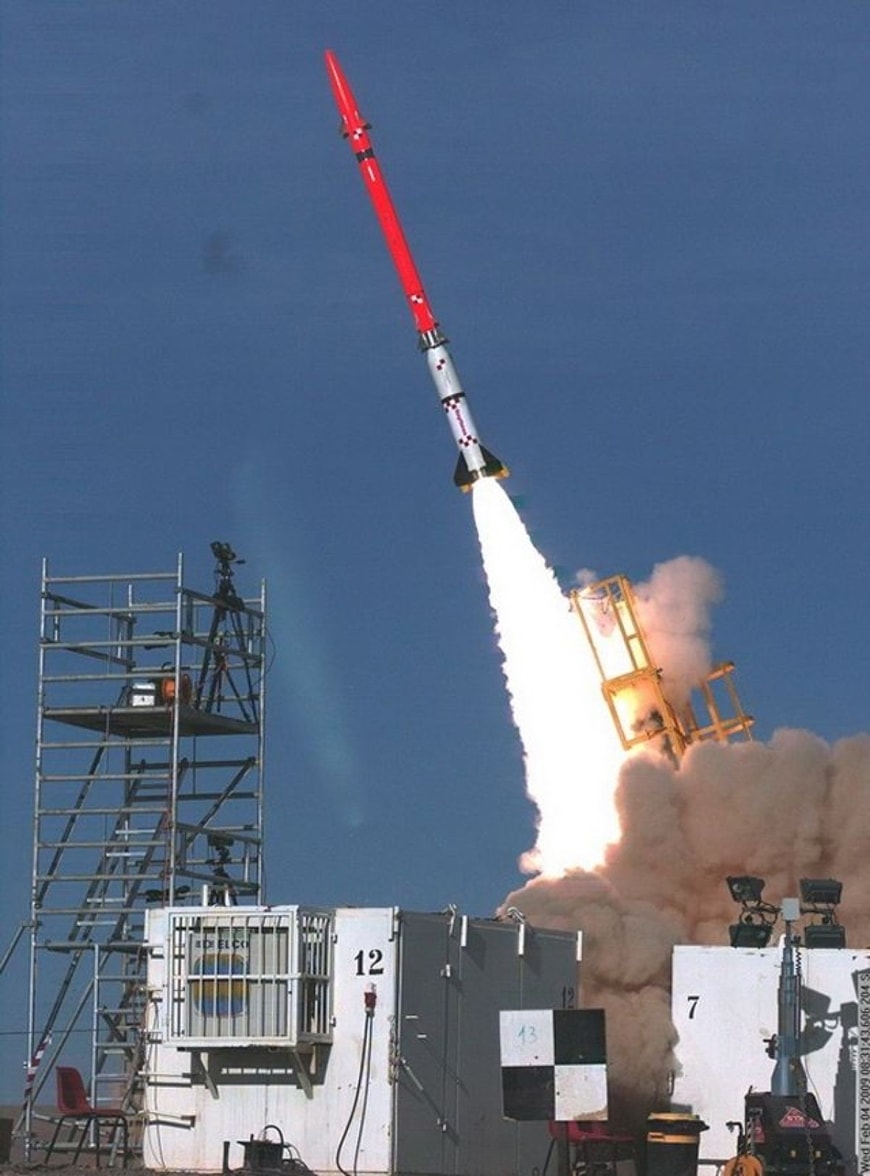
The Stunner missile is 4.6 meters long, uses a triple-pulse solid-fuel engine, allowing it to reach a maximum speed of up to 9,200 km/h (equivalent to over Mach 7.5). With a range of 40 to 300 km and a ceiling of 15 km, the Stunner can destroy even modern tactical ballistic missiles such as the Iskander or DF-15.
The missile's nose cone has an asymmetrical, dolphin-like design and incorporates a dual seeker: an electro-optical/infrared thermal imaging sensor and an active radar seeker. This combination allows the missile to operate accurately in all weather conditions and makes it difficult to deceive electronic jamming measures.

According to estimates from the manufacturer Raytheon, each Stunner missile costs approximately $1 million. The variant for the international market, known as SkyCeptor, is assessed to be capable of defeating at least 92% of currently available tactical ballistic missiles.


