
Tutoring and supplementary education: Need to be targeted and relevant to reality.
After nearly a year of implementing Circular 29, the practice of tutoring and supplementary classes both inside and outside of schools has changed considerably. However, Circular 29 also has shortcomings that create difficulties for parents, students, teachers, and educational institutions.
The more difficult the situation becomes, the more difficult it gets.
Ms. Nguyen Thi Minh (from Do Luong commune) has two children of school age, one in 8th grade and the other in 11th grade. Previously, before Circular 29 was issued, the children's extracurricular activities were mainly at school, and they could travel to and from school independently. However, since the second semester of the 2024-2025 school year, they have both switched to attending extracurricular classes at a center in the former Do Luong town, nearly 4km from their home.
Regarding this change, Ms. Minh said: "My child only takes extra classes in Literature, Math, and English, but I've already spent a whole week taking her to and from school and don't have time for anything else. The tuition at the center has also increased by 20,000-30,000 VND per session, so my salary as a cook at the elementary school is only enough to cover my child's extra classes."
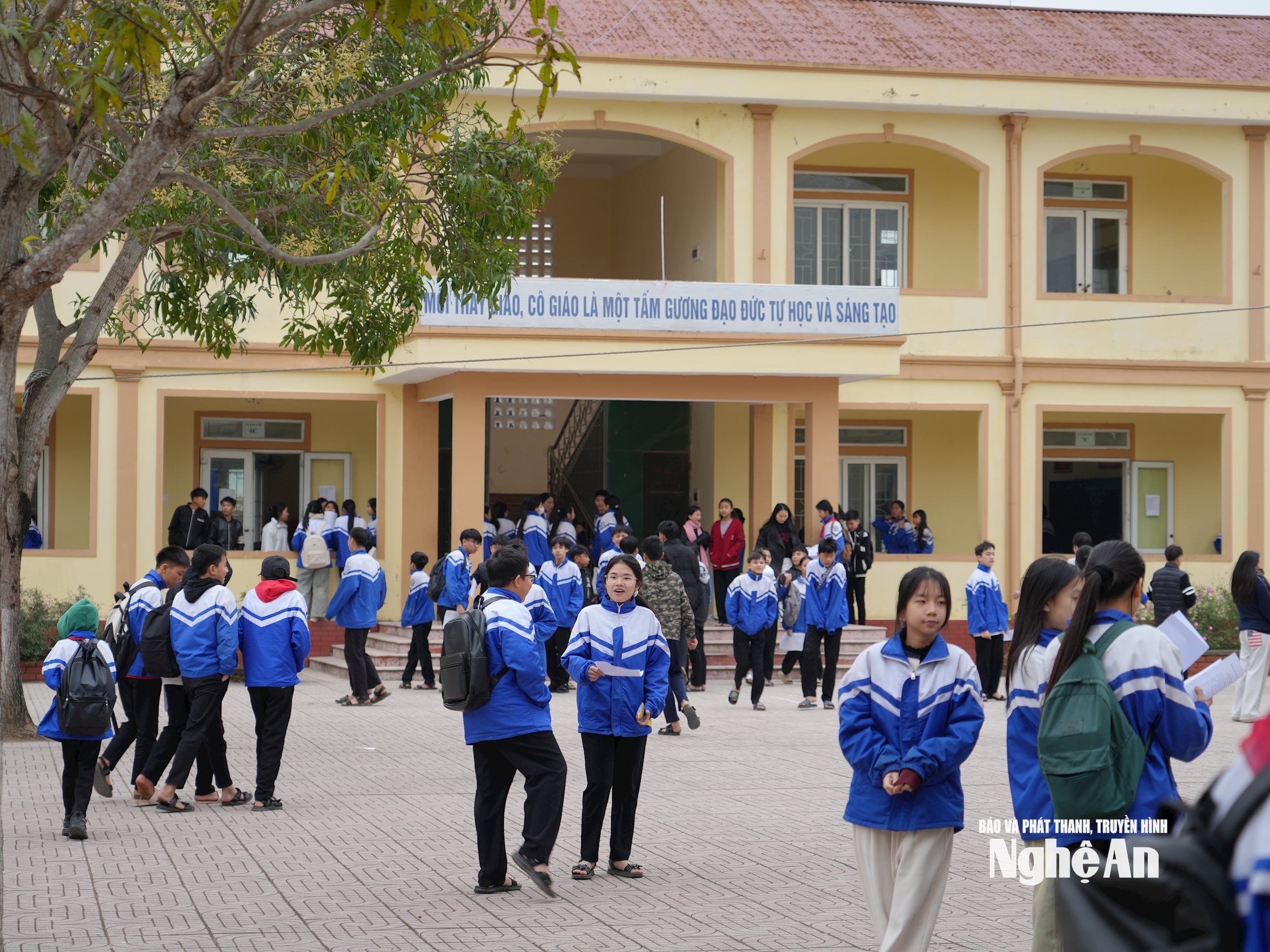
As a final-year student, Tran Hai Dang (9A class - Nghi Long Secondary School, Trung Loc commune) is also taking extra classes in Math, English, and Physics. Because he can't attend extra classes with teachers at school, he is currently having to seek tutoring from teachers in the former Quan Hanh town, nearly 5 km from his home. Tuition fees in the town center are also more expensive than attending extra classes at school or with teachers at home.
This male student also said that, having won an honorable mention in Physics at the provincial excellent student competition and aiming for a specialized school, he still tries to attend extra classes. However, in his class, not many students can afford to attend extra classes because their families cannot provide transportation and the financial means to cover the costs. Meanwhile, the local entrance exam for 10th grade is highly competitive, with most students registering to take the exam at Nguyen Duy Trinh High School - the school with the highest admission score and competition ratio in the area.
Instead of teaching at home, afterCircular 29Following the directive, most teachers switched to teaching at the center. Ms. Nguyen Thi Hang, a teacher in a mountainous commune, also admitted: "When we switched to teaching at the center, we were better off because we didn't have to worry about procedures and other conditions regarding facilities. Teachers' income didn't decrease either because tuition fees at the center are usually higher than at home. The only disadvantage is for the students because they have to pay more for extra classes."
Throughout the province, although no official statistics are available, after the implementation of supplementary tutoring under Circular 29, with its rather strict regulations, the number of tutoring centers in localities has increased significantly. These centers typically gather experienced teachers in the area and organize supplementary tutoring for all students in need. In addition, some teachers who teach independently still rent classrooms at the center for convenience. Renting from the center incurs additional costs, which are then factored into the students' tuition fees.
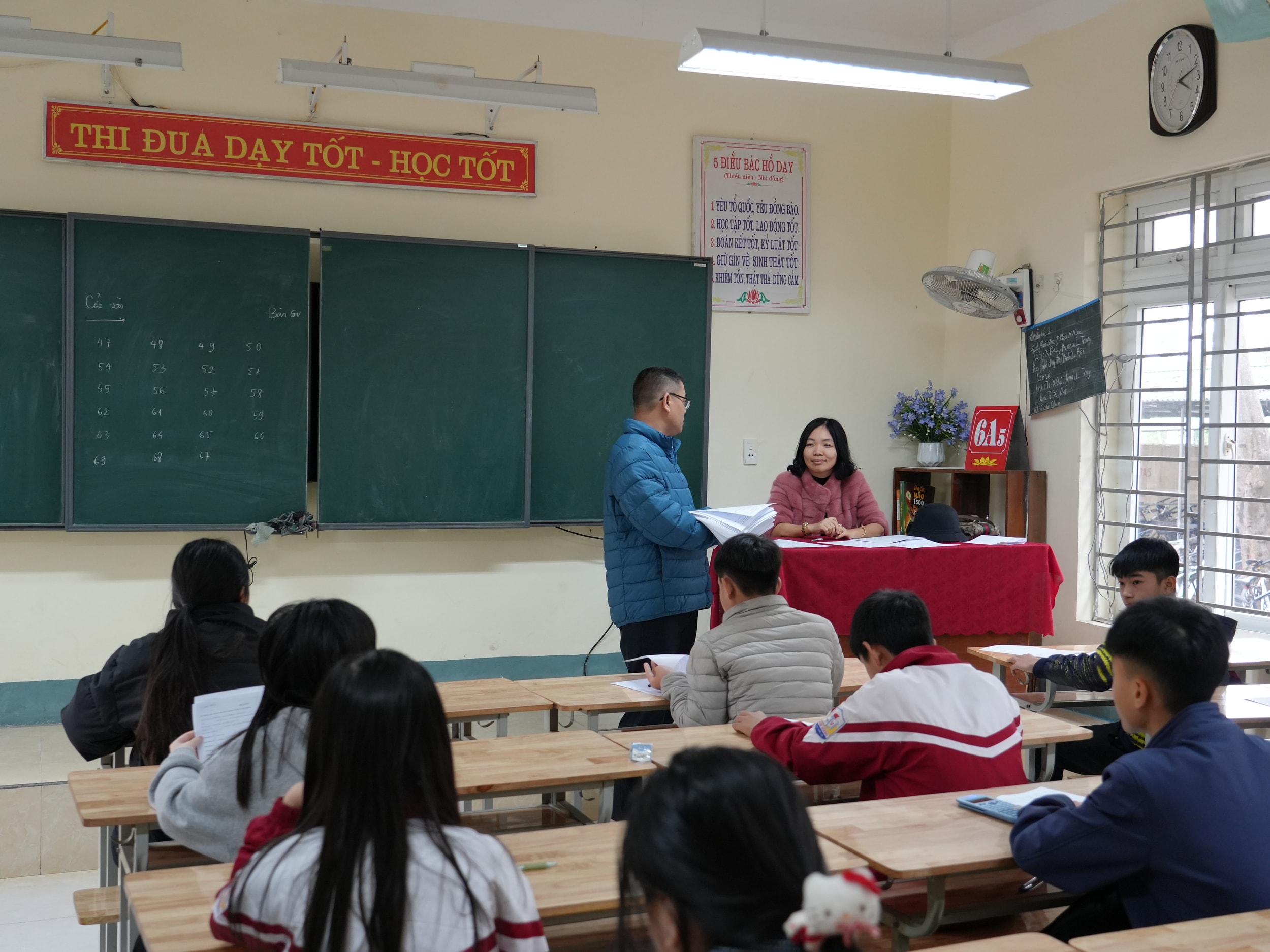
This explains why tuition fees at these centers are often much higher than at schools or at teachers' homes. Furthermore, quality control at these centers is difficult to measure and lacks strict supervision.
Adapt to suit practical needs.
The 2025-2026 school year will be the second year that Circular 29 is implemented. Based on her teaching experience, Ms. Nguyen Thi Noi, homeroom teacher of class 8C at Nghi Long Secondary School, said that previously 100% of her students attended extra classes at the school, but now most of them study at home, and the number of students attending tutoring centers can be counted on the fingers of one hand.
According to Ms. Noi, when the school stopped offering extra classes, many parents called to express their concerns because their children were not receiving supplementary knowledge. The school is located in a rural area, and most parents are factory workers or shift workers, so they don't have the means to transport their children to and from school. "If they only study in class, the students mainly learn theory, with little practice, making it difficult to develop problem-solving skills. The number of students with good self-study habits is not large. In reality, we still hope to offer extra classes to support students, instead of letting them study at home without direction," Ms. Noi shared.
In relation to this issue, in early January 2026, the Ministry of Education and Training published a draft Circular amending and supplementing Circular 29.
Notably, a recurring theme in the draft is strengthening the management of teachers' extracurricular tutoring; linking tutoring activities to professional ethical standards, duties, rights, and prohibited actions for teachers as stipulated in the Law on Teachers. Furthermore, the draft also adds regulations on the reporting responsibilities of teachers participating in extracurricular tutoring outside of school. This includes a requirement to clearly report on the relationship with the entity registered as the business owner of the tutoring facility.
Regarding extracurricular tutoring within schools, the draft clarifies the accountability of the principal. Accordingly, the head of the school is granted the authority to be proactive and flexible in organizing and implementing it, including the right to propose increasing the duration of extracurricular tutoring within the school based on actual needs, the school's teaching conditions, and the suggestions of teachers, parents, and students.
"Circular 29 stipulates that the number of lessons per week for gifted students, remedial classes for weak students, and exam preparation for final-year students should not exceed 2 lessons per week. This aims to reduce the burden on students, but in practice, it has proven ineffective. Perhaps schools should be given more autonomy based on agreements with parents."
In addition to teaching the two prescribed lessons, schools in rural and disadvantaged areas should create conditions for teachers to provide extra lessons to students within the school according to their wishes.
Mr. Nguyen Duc Tuan - Principal of Nghi Long Secondary School
.jpg)
According to Mr. Tuan's explanation, when teaching at school, teachers can identify students' weaknesses and determine what knowledge they need to improve. Furthermore, the cost of teaching at school is lower than outside of school.
Agreeing with some of the changes in the draft of Circular 29, Mr. Nguyen Van Son - Principal of Nghi Huong Secondary School, Cua Lo Ward, also believes that the adjustments in the draft are close and relevant to the reality in schools. Furthermore, the role of the principal is clearly defined in managing teachers who give extra lessons, in allocating the number of extra lessons, and in the duration of extra lessons in schools.
Previously, Circular 29 did not clearly define the functions of school administrators, and in reality, schools did not know what teachers taught, how many students they taught, or whether they met the standards stipulated in the regulations regarding teaching conditions and curriculum.
Meanwhile, the principal also lacks the authority to inspect and supervise. Therefore, the draft requiring teachers to report extracurricular tutoring outside of school, and adding regulations on establishing and publicizing hotlines to receive complaints at all levels, is appropriate.
This solution aims to strengthen social oversight, promptly receive and address feedback and suggestions, contribute to preventing violations, and ensure that regulations on tutoring and supplementary classes are implemented seriously and in accordance with the law.
Mr. Nguyen Van Son - Principal of Nghi Huong Secondary School, Cua Lo Ward
It is understood that before issuing the revised Circular 29, the Ministry of Education and Training sent requests for opinions to several Departments of Education and Training to assess the impact and listen to feedback from local management practices. Based on these contributions, the Ministry will study and incorporate as many valid opinions as possible to finalize the draft, ensuring its feasibility and suitability to practical conditions.


