
Tutoring and extra classes from an educator's perspective.
Extra tutoring is a real need; a significant number of students achieve success and academic excellence partly thanks to it; weak students need extra tutoring to supplement their knowledge; and gifted students need extra tutoring to gain higher, more in-depth knowledge… provided that learners have legitimate needs and motivations for learning, and teachers are passionate and impartial in their mission of educating future generations…
Teachers also have the right to additional income like other professions, exchanging their dedication and knowledge for a legitimate source of income outside of class hours, thereby developing their abilities and enabling society to utilize intellectual resources; the school can have additional welfare funds for holidays, festivals, weddings, funerals, and other occasions, as well as support for electricity and water bills, and the upgrading of facilities and equipment…TutoringWithout a certain value, it would hardly have a reason to exist.
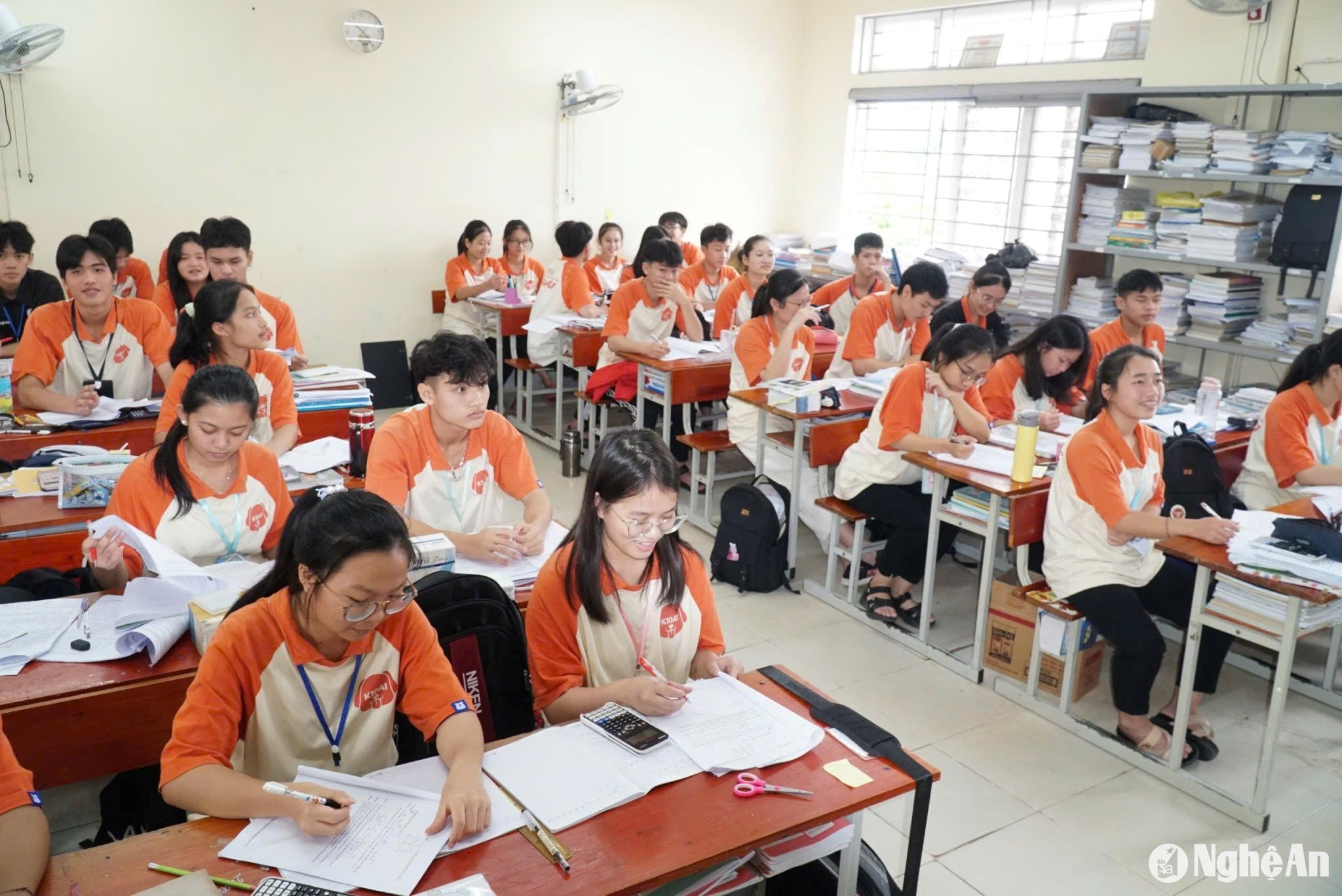
However, when extra classes fill the entire week, leaving no time for rest and a balance between mental and physical well-being, it becomes a cause for concern.
Many students come to class feeling tired, drowsy, and stressed due to the intense workload. This inadvertently stifles their ability to learn and research independently, fostering a rigid "teacher dictates, student copies" mindset. This leads to a lack of confidence, passive thinking, and hinders their independence, making them feel like machines and bewildered in everyday life. They only know how to study and rely on their parents until they start their own families. Attending extra classes, achieving "high grades," and feeling "happy" and proud, inadvertently creates illusions about academic ability in many students and parents about their children's potential. Is this perhaps a consequence of the obsession with achievement that society is currently criticizing?
When regulations on tutoring and supplementary classes were first issued, many teachers lamented the loss of their income. This concern is legitimate. But before becoming professionals, let's prioritize our mission as educators, aiming for the noble goal of training future generations for the country who are both morally upright and professionally competent. While things may not be perfect, the State will take care of everything; there's health insurance, a pension in old age, and support from agencies and organizations during difficult times…
The subsidy era is long gone, yet it makes me think of education today. If you're a teacher, you "naturally" have to teach extra classes. You teach one class in the morning, and then another in the afternoon. The administrators are afraid of conflict, and they try to "equalize" benefits to keep things quiet, while the teachers' qualifications, methods, and pedagogical skills are truly uneven, not to mention the huge and obvious disparities. Teaching is like a talking textbook. Many classes have to grit their teeth and endure teachers who don't meet the necessary requirements and are not given a choice. That's why there are so many letters and petitions demanding resignations or teacher changes.
Exam results show that many top-scoring and second-highest-scoring students come from rural areas with difficult economic conditions and have never attended extra tutoring. To say that schools don't organize exam preparation, leading to lower quality, or that schools don't provide mass exam preparation for all students, is unfair. In reality, the demand for advanced studies is not high, around 20-30%. The rest, partly due to insufficient ability, partly due to family circumstances, or because of post-secondary education pathways, choose vocational training or overseas employment. University education is excellent; it's an environment for students to train, strive, and grow. However, not all students need to pursue a university education to succeed in their careers. Therefore, they all share the common goal of graduating from high school. This also aligns with the demands of the labor market.
The new general education program not only focuses on equipping students with cultural knowledge, but also concentrates on developing their qualities and competencies, aiming to help students not only excel academically but also develop comprehensively.
In addition to traditional subjects, schools need to organize more recreational activities, sports, drawing, music, etc., to encourage enthusiastic student participation. Teachers should adhere to the prescribed class schedules to ensure students acquire the necessary knowledge and meet the requirements of the educational program.
Eliminating extra tutoring and supplementary classes in the context of educational reform and improving training quality contributes to reducing pressure on students, giving them time to rest, participate in extracurricular activities and develop life skills; it also reduces the financial burden on families, especially those with low incomes.
This limits inequality in education, where economically disadvantaged students may be at a disadvantage; it promotes quality education during regular class time, encouraging teachers to use more effective teaching methods so that students can grasp the lesson in class; it helps prevent the commercialization of education, which affects professional ethics and erodes parental and societal trust in the education system; and it helps diversify creative learning methods, experiential learning, practical research, and self-study.
Modern education focuses on developing creative thinking, soft skills, and self-learning abilities rather than rote memorization. Eliminating extra tutoring will move towards a learner-centered education. Instead of chasing grades, students can spend time exploring personal interests, participating in extracurricular activities, and developing life skills. This not only helps them develop holistically but also ignites a genuine passion for learning. Furthermore, reducing academic pressure allows families more time to bond with, support, and accompany their children on their journey to adulthood.


