
To prevent historical sites from falling into oblivion after restoration.
Behind layers of moss and carvings stained by time, many historical and cultural relics in Nghe An are being revived through restoration and preservation projects. But a relic only truly "lives" when its doors are always open, when people seek it out, when students are told its history, and when its cultural values continue to be present and constantly spread in contemporary life.
From structures that have been "reawakened"
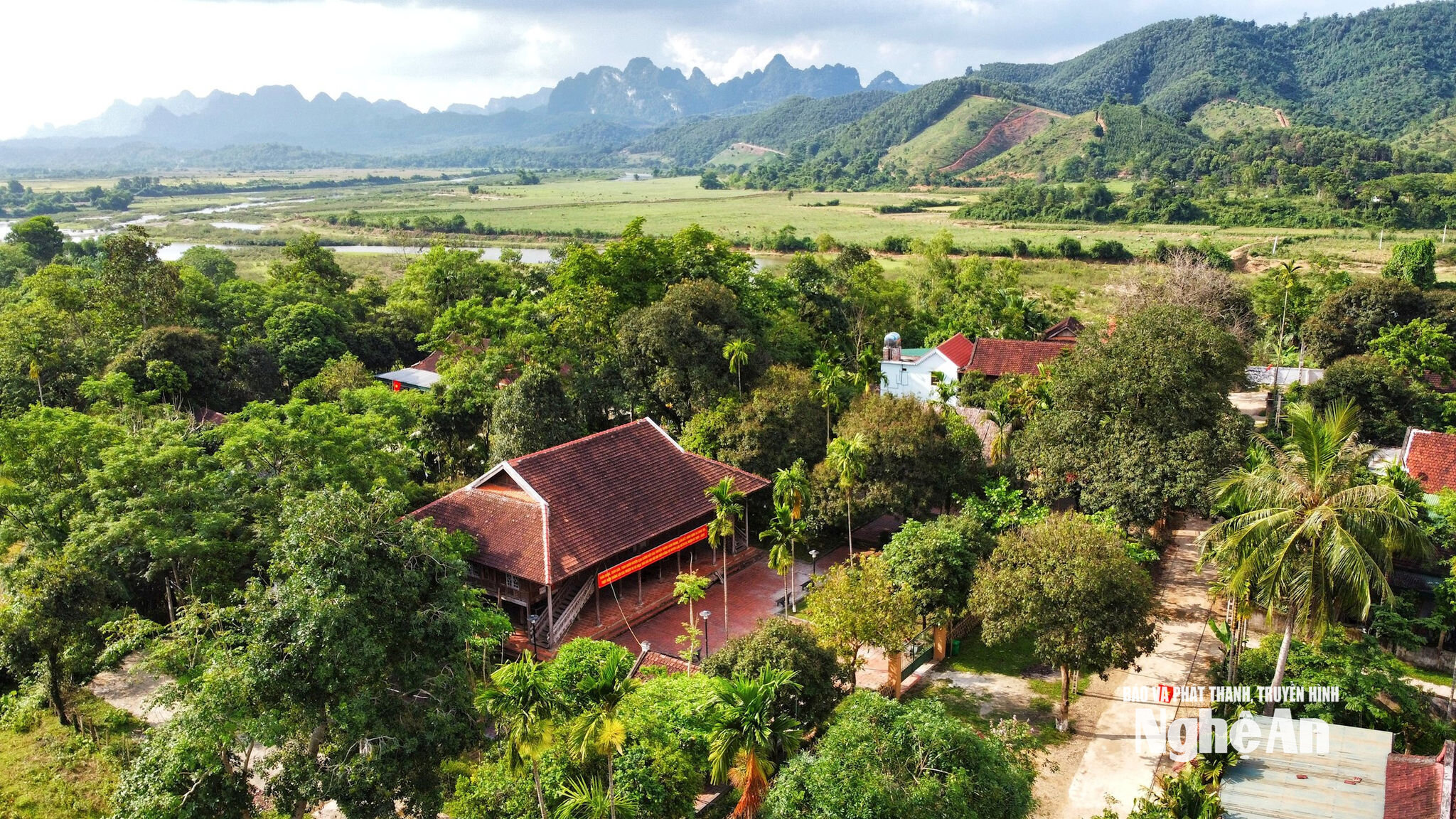
One early autumn morning, Hoanh Son communal house in Thien Nhan commune stood silently beside the Lam River. Its soaring curved roof, wooden rafters and columns, and intricate carvings retained the solemn atmosphere of a structure that has stood the test of time.
This is the temple dedicated to Uy Minh Vương Lý Nhật Quang, a figure who made significant contributions to the development and construction of the ancient Nghệ An region. Beyond its historical value, Hoành Sơn Temple is also highly regarded for its architecture and wood carving art, making it one of the representative structures within the Nghệ An historical site system.
.jpg)
Time and the impact of nature have caused many parts of the temple to deteriorate severely. In 2024, Nghe An province invested 24 billion VND in restoring and renovating the historical site.
After more than a year of construction, the project was completed in September 2025. The temple's appearance was improved, but the core elements of traditional architecture were preserved. Notably, after its "revival," Hoanh Son Temple is gradually returning to community life.
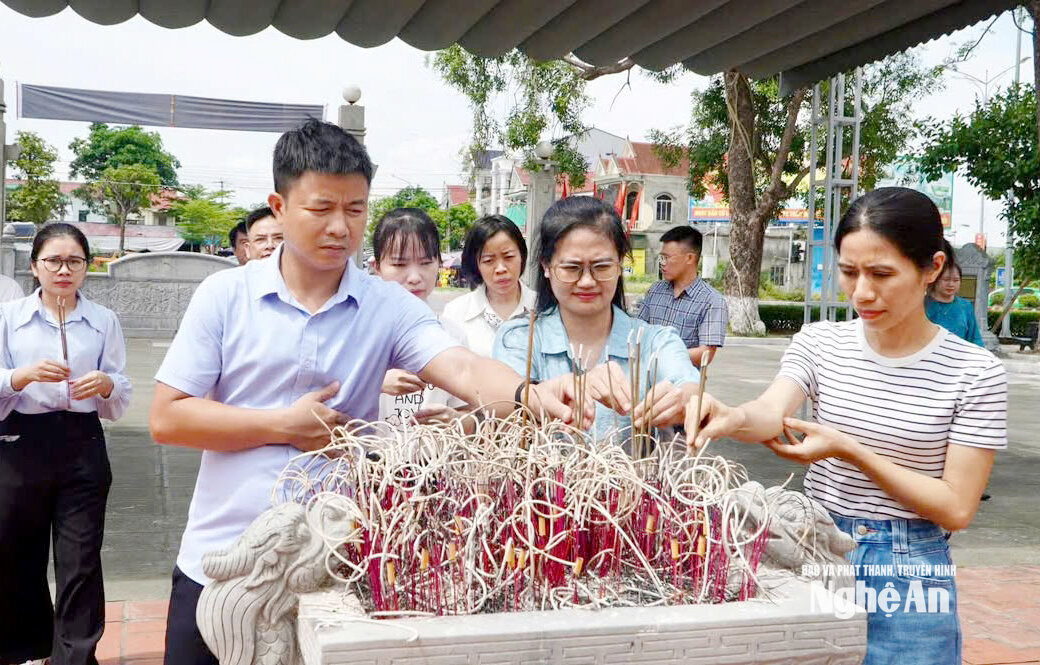
According to Mr. Nguyen Van Chinh, Chairman of the People's Committee of Thien Nhan commune, the Ky Phuc Festival is held annually with traditional rituals and folk games, attracting a large number of locals and tourists. On the 15th and 1st of each lunar month, people from within and outside the locality come to offer incense and commemorate Uy Minh Vuong Ly Nhat Quang. Many groups of visitors and students also come to visit and learn about the history, architecture, and stories associated with the relic.
Thus, the value of the project goes beyond simply having another beautifully renovated communal house. More importantly, it is gradually becoming a space for the community to meet, practice their faith, explore history, and showcase the cultural values of their homeland.
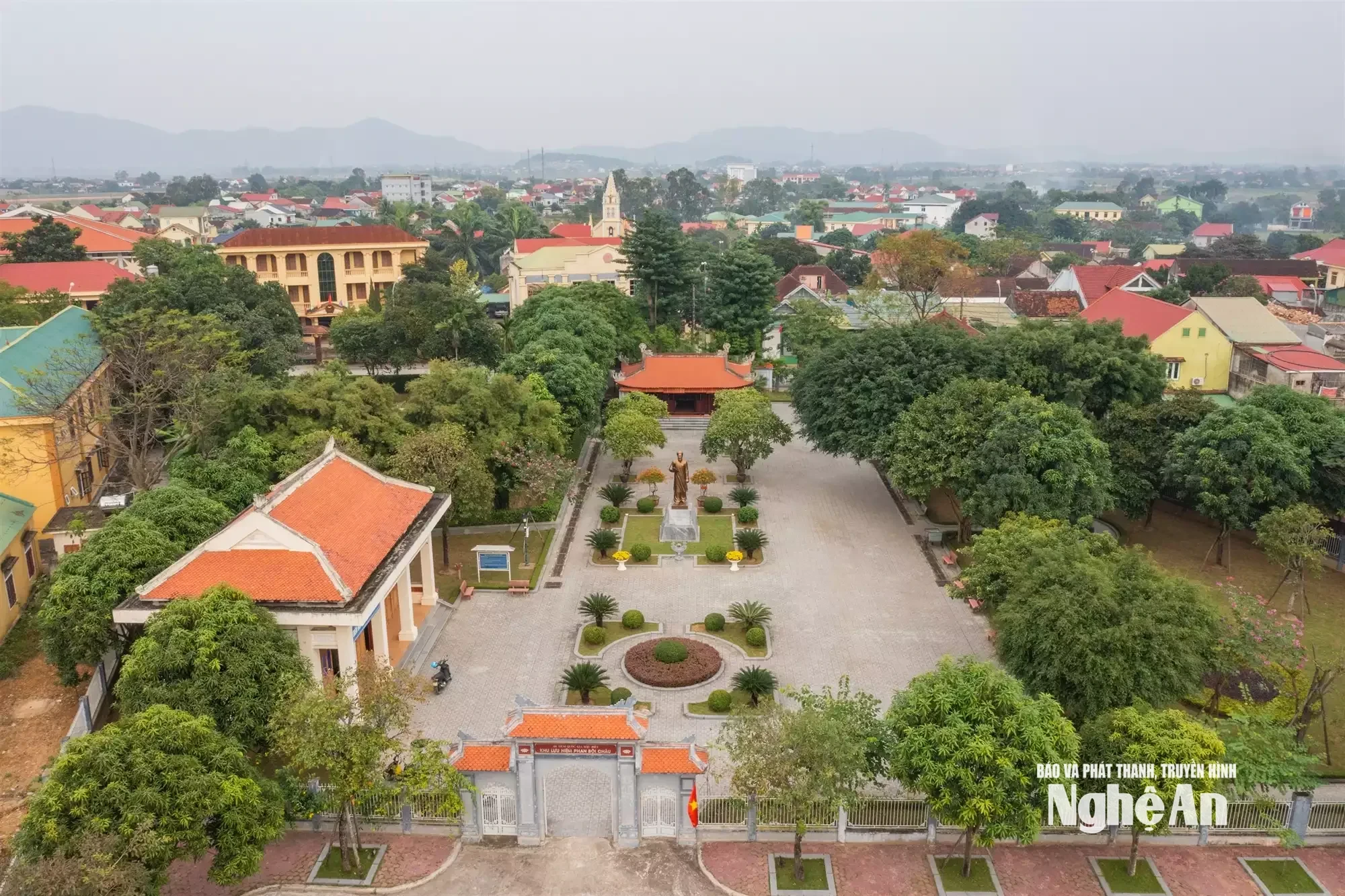
From Thien Nhan, our journey to discover restored historical sites led us to Van An commune, home to the special national historical site of the memorial to the patriotic scholar Phan Boi Chau. After investment and renovation, the area has become more spacious and well-maintained, yet still retains the rustic charm of a rural region associated with Phan Boi Chau's childhood and family.
The thatched house, along with the memorial house, the bronze statue of Phan Boi Chau, and a system of documents and artifacts, is preserved to create a memorial space rich in historical depth.
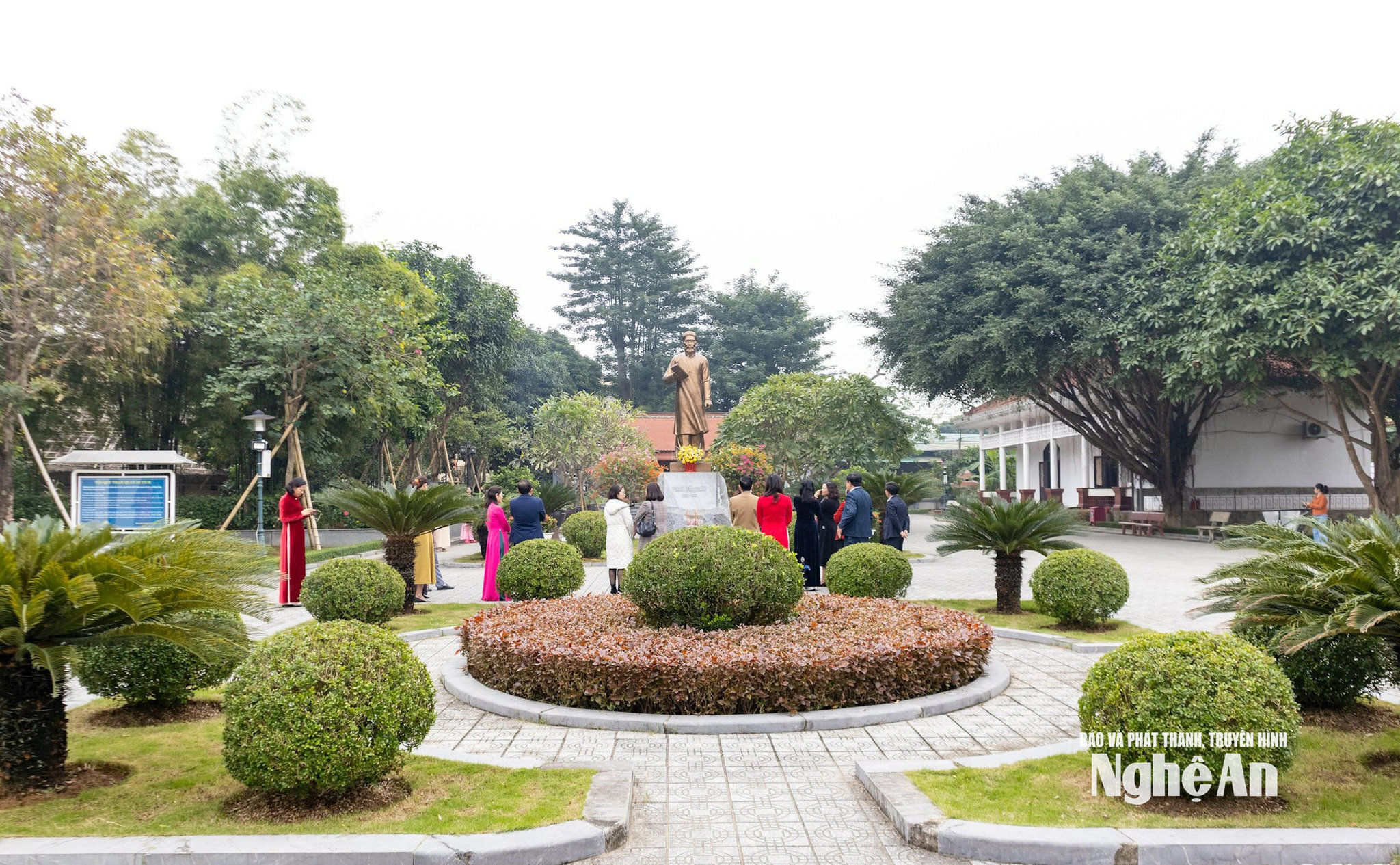
According to Ms. Nguyen Thi Le Thu, a caretaker at the historical site, after the expansion and addition of new facilities, the number of visitors has increased significantly. Every month, the memorial site welcomes many groups of visitors from within and outside the province, including many students who come to offer incense and learn about the life and career of the patriotic scholar.
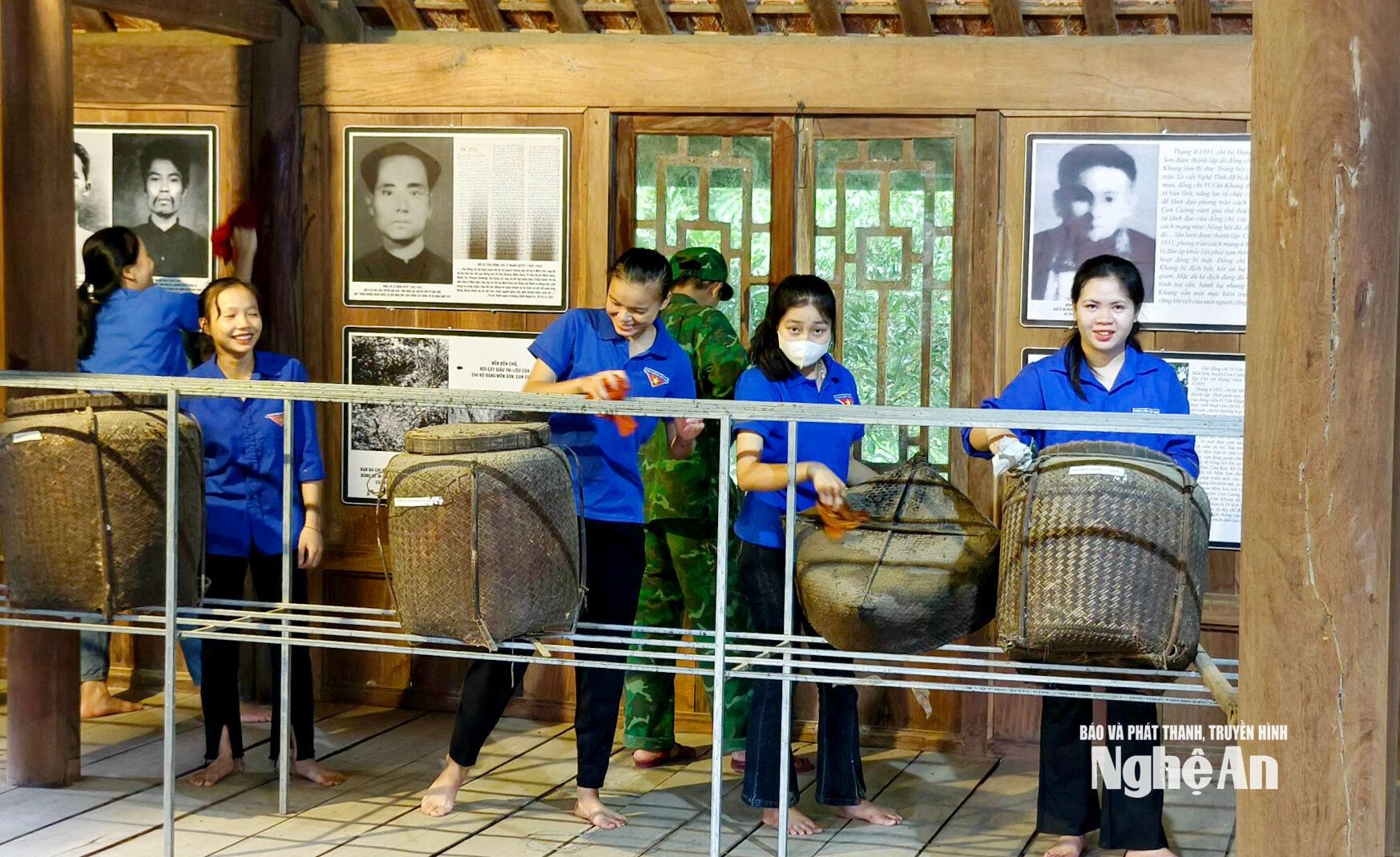
What gives the historical site its vitality is not only the preserved artifacts but also the way it brings history closer to the younger generation. Extracurricular activities, Youth Union and Young Pioneers' induction ceremonies, and experiential learning sessions help bring stories about Phan Boi Chau from the confines of textbooks to life in the very space that witnessed a part of his life.
From Hoanh Son communal house to the Phan Boi Chau Memorial Area, one can see a direction being chosen by many historical sites in Nghe An: Restoration for preservation, but not stopping at preservation; investing in the construction while simultaneously finding ways to bring the historical site back into everyday life.
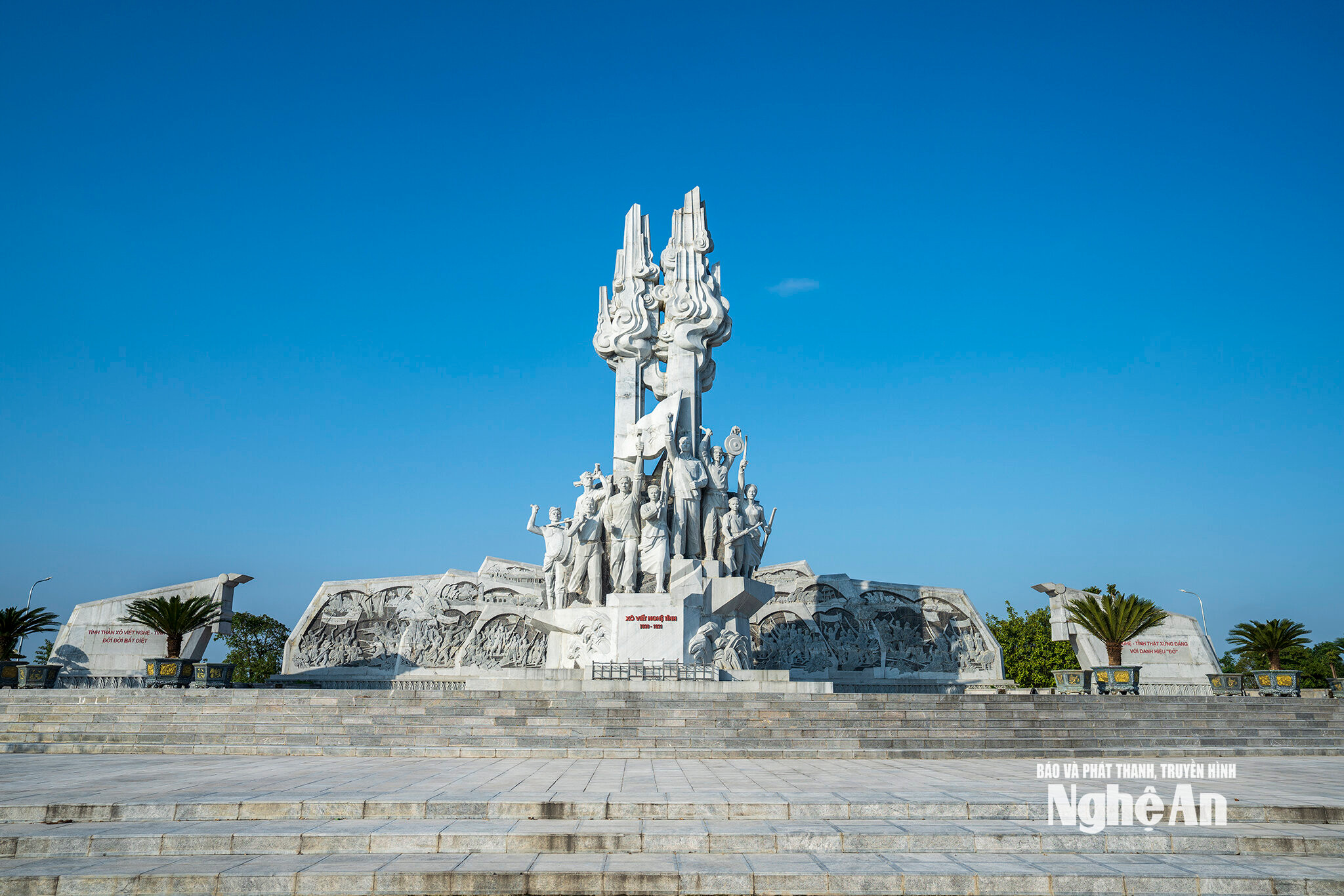
Along with that are the Soviet-Nghe Tinh Square (Hung Nguyen commune), the church and tomb of Comrade Ho Tung Mau (Quynh Anh commune), the house of Mr. Vi Van Khang (Mon Son commune)... After renovation, these structures not only have a new appearance but are also gradually becoming places for traditional education, cultural and religious activities, and tourist destinations.
After restoration, what should be done to keep the historical site "alive"?
According to a report by the Provincial Relics Management Board, during the period 2020-2025, Nghe An province invested in the restoration, preservation, and urgent repair of 85 relics using state budget funds. These figures show that resources for heritage preservation are receiving increasing attention.
However, there is still a gap between a well-preserved structure and a truly valuable historical site. In some places, after restoration, the site becomes more spacious, but the activities inside haven't changed much. Many places only really attract visitors during festivals, while on ordinary days, the historical site is quite deserted.
Vo Liet Temple in Kim Bang commune is one example. After investment in restoration, the landscape and facilities have improved, better meeting the cultural and religious needs of the people. However, apart from traditional festivals, the number of visitors is still not high. The site is not regularly connected to tourist routes; experiential activities, historical education, and guided tours for visitors are still limited.
At Trung Can communal house in Thien Nhan commune – a national historical and architectural relic that has recently undergone restoration – the situation is similar. According to Mr. Nguyen Van Chinh, Chairman of the People's Committee of Thien Nhan commune, the communal house is mainly crowded during festivals and Tet (Lunar New Year); on ordinary days, very few visitors come. "Despite being recognized as a national relic, Trung Can communal house is still not a tourist destination, especially for visitors from other provinces," Mr. Chinh said.
This situation is also evident in some communal houses, temples, and memorial houses in Quy Chau, Con Cuong, Do Luong, etc. The facilities have improved after renovation, but activities to promote their value remain modest.
According to Mr. Pham Cong Vinh, Deputy Head of the Provincial Relics Management Board, one of the reasons is that investment in some places still focuses on the "construction" aspect, while the "exploitation" aspect has not received adequate attention.
When the construction was completed, the locality lacked the resources to organize regular activities; the tour guide team did not meet the requirements; and coordination between the historical sites and the education and tourism sectors was not close enough. Communication and promotion efforts were not commensurate with the value of many historical sites, leaving many "red addresses" outside the exploration itineraries of tourists.
For historical sites to truly become a resource for development, restoration needs to be linked to a long-term strategy for promoting their value. Each site must have a plan for exploitation that suits its unique characteristics; the application of digital technology in introduction and explanation should be enhanced; cultural and educational activities focusing on traditions and heritage experiences should be organized; and connections with other destinations should be made to form unique cultural tourism routes.”
Mr. Pham Cong Vinh - Deputy Head of the Relics Management Board of Nghe An Province
From that perspective, the story of Hoanh Son Temple or the Phan Boi Chau Memorial Area shows a noteworthy direction: historical sites should not only be places to "offer incense," but should become spaces for experiencing, learning, connecting, and engaging in dialogue with history.
To achieve this, each historical site needs to find its own "key." Some places focus on festivals and community activities; others develop heritage education programs; and still others connect with traditional crafts, cuisine, landscapes, and nearby tourist attractions to create a complete product.
At that time, the budget allocated for restoration not only created sustainably preserved structures but also opened a new life cycle for the historical sites. From a place preserving the past, the sites became a part of present-day life – where history is retold, culture is practiced, and the values of our ancestors continue to be passed on to future generations.


