
To ensure the festival retains its spiritual elements and preserves the national cultural identity.
(Baonghean)Ms. Hoang Thi Quynh Anh - Deputy Director of the Department of Culture, Sports and Tourism, answered an interview with Nghe An newspaper about the following issues.Ensuring spiritual elements and preserving national cultural identity in spring festivals.
Reporter:In 2016, the province had 24 festivals, but the most concentrated were in the spring with 13 festivals stretching from the mountainous to the lowland areas, including many large festivals such as the Cờn Temple, Quả Temple, Vua Mai Temple, Chín Gian Temple... So, what specific plans has the Department developed for decentralizing the organization of festival activities?
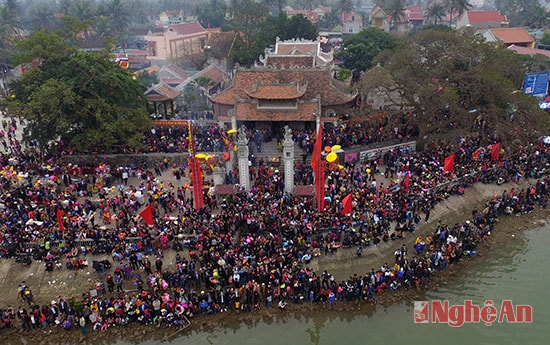 |
| Cờn Trong Temple was bustling with tourists attending the 2016 festival. |
Ms. Hoang Thi Quynh Anh:Currently, nationwide, according to the review results, there are nearly 8,000 festivals organized at various levels (commune, district, provincial, and some national-scale festivals held every five years), of which folk festivals account for over 85%, mainly organized by villages and communes. In Nghe An province, there are currently 24 festivals licensed by the province (only 0.3% of the total number of festivals nationwide), of which 17 are folk festivals held at the beginning of spring, mainly organized at the commune level. Thus, compared to the rest of the country, Nghe An's festivals have not been revived as much as those in the Kinh Bac region (such as Hai Duong with nearly 300 festivals, Thai Binh with nearly 400 festivals...).
The decentralization of festival organization has been implemented by the Department of Culture, Sports and Tourism, in consultation with the Provincial People's Committee, since 2007. The management and organization of festivals, linked to the preservation and promotion of historical relics, involves close coordination between the Department of Culture, Sports and Tourism, the People's Committees at the district level, and directly with functional forces at the commune level where the festivals are held. Professional guidance on the organization of the ceremonial and festive parts is provided by two units under the Department: the Management Board of Historical Relics and Scenic Spots and the Provincial Cultural Center; and the people participate in the organization. Therefore, most festival activities in the province are well organized, with the ceremonial part ensuring solemnity and reverence, and the festive part ensuring joy, healthiness, and diversity in traditional folk games and activities.
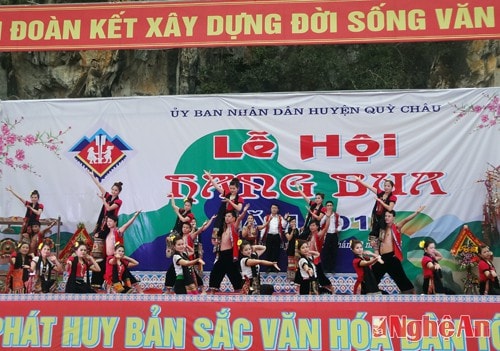 |
| The 2016 Hang Bua Festival officially opened with great fanfare. |
Reporter:Although specific responsibilities have been assigned, in order to ensure a safe, economical, and culturally rich festival season, what directives has the Department of Culture, Sports and Tourism, as the managing agency, issued regarding the management and organization of festivals in each locality, Madam?
Ms. Hoang Thi Quynh Anh:To ensure a safe, economical festival season that preserves the traditional cultural values of the nation, the Department of Culture, Sports and Tourism promptly advised the Provincial People's Committee to issue a directive to strengthen the management of festival organization in 2016 and issued its own directives to ensure strict implementation of the Party and State's directives on festivals. Specifically:
Advised the Provincial People's Committee to issue document 634/People's Committee of the CityOn February 1, 2016, the Department of Culture, Sports and Tourism issued Notice No. 71/TB-SVHTTDL dated January 8, 2016, regarding strengthening the management, organization, and implementation of civilized conduct in festivals. This included the issuance of Notice No. 72/TB-SVHTTDL assigning responsibilities for directing and inspecting spring festivals; and Plan No. 241/KH-SVHTTDL dated January 29, 2016, for inspecting the management and organization of festivals in the province. Two inspection teams were established, and close coordination with local forces was maintained to inspect festivals according to Decision No. 240/QĐ-SVHTTDL dated January 29, 2016. In particular, the Department advised the Provincial People's Committee to issue Decision No. 18/2016/QD.UBND on receiving, managing, and using donations at historical and cultural relics and scenic spots in the province to replace the outdated Decision 195, and Nghe An is the first province in the country to issue this regulation.
For localities with festivals, the Department has directed the development of detailed plans, scripts, and programs, the establishment of organizing committees, and the assignment of direct responsibilities for managing and organizing festivals in the locality, especially ensuring civilized conduct during festivals in accordance with legal regulations.
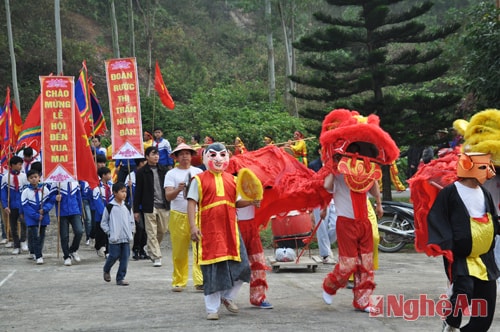 |
| Processions participating in the King Mai Festival |
Reporter:Up to this point, many festivals have taken place in our province, such as the King Mai Festival, the Qua Temple Festival, the Corn Temple Festival, the Van Cua Rao Temple Festival, etc. Although the Department and relevant agencies, especially the localities where these festivals are held, have implemented many solutions to minimize fortune-telling, burning votive paper, placing small change on altars, introducing games with prizes into festivals, and street vending, these phenomena still persist, significantly affecting the identity of traditional festivals. Given this situation, what specific solutions has the department implemented, Madam?
Ms. Hoang Thi Quynh Anh:In recent years, although management and organization in the province have seen positive changes, ensuring compliance with state regulations, some festivals still experience unsightly incidents. As the managing agency, the department has implemented specific solutions in recent times:
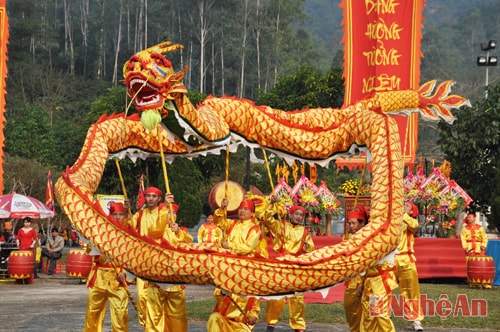 |
| The lion dance performance, accompanied by the majestic Van An drum ensemble, at the King Mai Festival 2016. |
Firstly: Strengthen leadership, guidance, coordination in management, and inspection of festival activities. Continue to advise and issue management documents to effectively implement Directive 41-CT/TW dated February 5, 2015, of the Party Central Committee on strengthening the Party's leadership over the management and organization of festivals; Prime Minister's Official Dispatch 229/CĐ-TTG dated February 12, 2015, on strengthening the management and organization of festivals; and Circular No. 15/2015/TT-BVHTTDL dated December 22, 2015, of the Ministry of Culture, Sports and Tourism on regulations on festival organization. Joint Circular No. 04/2014/TTLT-BVHTTDL-BNV dated May 30, 2014, issued by the Ministry of Culture, Sports and Tourism and the Ministry of Home Affairs, provides guidance on implementing civilized lifestyles at religious establishments and other directives from the Provincial People's Committee on festival management.
Closely coordinate with districts and communes where festivals are held in the management and organization of festivals, and resolutely handle any issues that arise on the spot. Strictly enforce regulations on festival permits. Promptly address existing problems during festivals such as excessive offerings of paper effigies causing disorder and affecting the aesthetics and solemnity of the historical site. Guide people to light incense, place offerings, and donate money in the designated areas. Resolutely prevent the exchange of small denominations of money, food and beverage services, games with prizes (which can easily be disguised as gambling), and the exploitation of spiritual culture for superstitious practices within festivals and historical sites. Organize training on festival management and organization for the management boards/teams of historical sites and festival organizing committees.
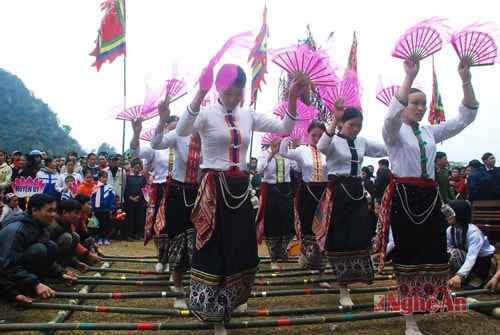 |
| Bamboo pole dance at the Bua Cave festival. |
Secondly: Strengthen communication, propaganda, and education about the meaning and content of festivals and historical sites. Publish cultural publications introducing historical sites, festivals, and worshipped figures so that festival participants can better understand these sites and festivals. Disseminate information through mass media; supplement the system of signs and boards guiding people and tourists participating in festivals to observe civilized behavior at places of worship and festivals. Encourage people and tourists, especially service businesses, to sign commitments regarding environmental hygiene, protection of historical sites, civilized behavior, and ensuring fair prices and quality of goods.
Thirdly: Research and restore festivals according to their traditional identity, create scientific dossiers for some festivals to submit to the Ministry of Culture, Sports and Tourism for ranking as national intangible cultural heritage. Organize scientific seminars on festival organization associated with promoting the value of historical sites and developing tourism. Direct the arrangement of statues, ritual objects, worship spaces, and ceremonial spaces according to regulations, creating favorable conditions for people to witness and participate. Develop scripts and practice rituals in accordance with national cultural traditions. For festival activities, attention should be paid to folk games of the region.
Fourth: Focus on socializing festivals, gradually bringing them closer to the people. Promote the proactive role of the community in organizing festivals under the management, guidance, and supervision of state agencies in culture, sports, and tourism.
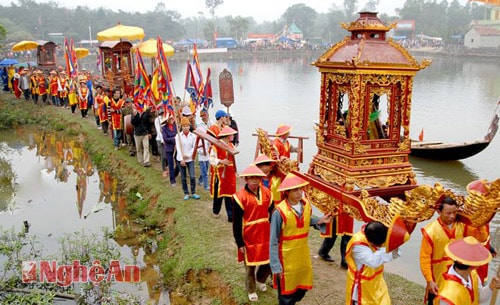 |
| The Duc Hoang Temple Festival in Phuc Thanh commune. |
Sixth: Conduct research to develop unique tourism products for each festival. Fifth: Plan the system of historical sites and the overall festival, ensuring the preservation and restoration of original elements while creating attractive tourist destinations. For historical sites with festivals, it is necessary to plan the festivals, invest in them, and create attractive destinations for tourists, preventing commercial trends from affecting the spiritual and humanistic culture of the festivals. For village festivals and folk festivals organized annually or periodically by villages, a written report must be submitted to the People's Committee at the commune level before organization; festivals organized at the commune level must be reported to the Department of Culture and Information at the district level for management and guidance.
Reporter:Thank you very much for this conversation!
Thanh Thuy(perform)
| RELATED NEWS |
|---|


