
If car owners underinflate their tires, they suffer double losses.
According to research, a 0.6 bar drop in tire pressure can increase fuel consumption by 4% and reduce tire lifespan by 50%. Furthermore, underinflated tires pose numerous safety risks on the road.
According to research, a 0.6 bar drop in tire pressure can increase fuel consumption by 4% and reduce tire lifespan by 50%. Furthermore, underinflated tires pose numerous safety risks on the road.
Tires are an extremely important part of a vehicle; they are the only part that comes into contact with the road. Not only do they have to withstand the heavy load of the car and the reaction force from the road surface, but they also endure rolling friction as the vehicle moves. Therefore, tire quality, and especially tire pressure, greatly affects the rolling friction of the vehicle, leading to issues with fuel consumption and tire durability.
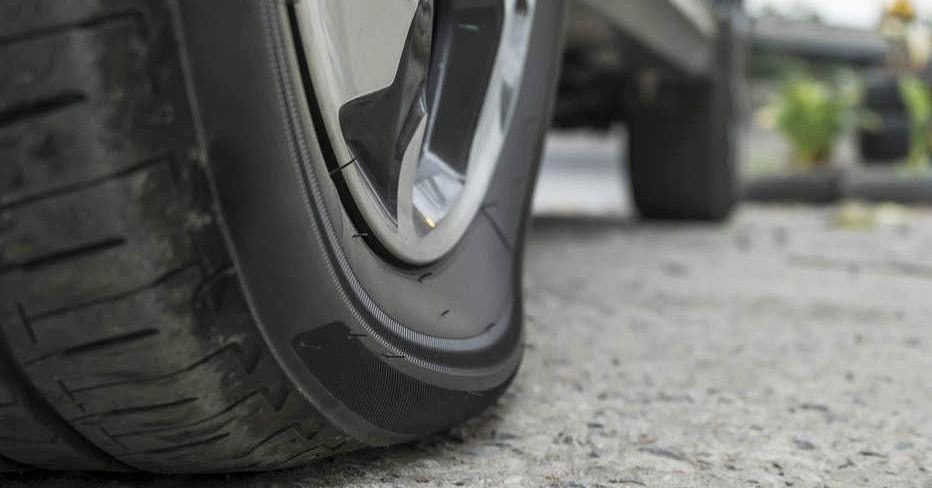 |
Underinflated tires reduce the car's efficiency. (Illustrative image) |
According to Associate Professor Dr. Dam Hoang Phuc - Director of the Automotive Engineering Training Program (Hanoi University of Science and Technology), energy loss due to rolling resistance accounts for an average of about 4% of the vehicle's total energy. This loss increases with vehicle load and speed, and is even greater when tire pressure is not maintained correctly.
According to research presented by Mr. Phuc, a simultaneous reduction in tire pressure of 0.6 Bar (kg/cm2) can increase fuel consumption by up to 4% and reduce tire lifespan by up to 50%. This means that if a car consumes approximately 10 liters/100km but the tires are underinflated by just 0.6 Bar, it will consume 10.4 liters/100km.
At the same time, if tires are underinflated for a long time, we will have to spend money on replacing them sooner. Therefore, maintaining the correct tire pressure as recommended by the manufacturer is extremely important, not only helping the car save fuel and reduce CO2 emissions into the environment, but also increasing the lifespan of the tires.
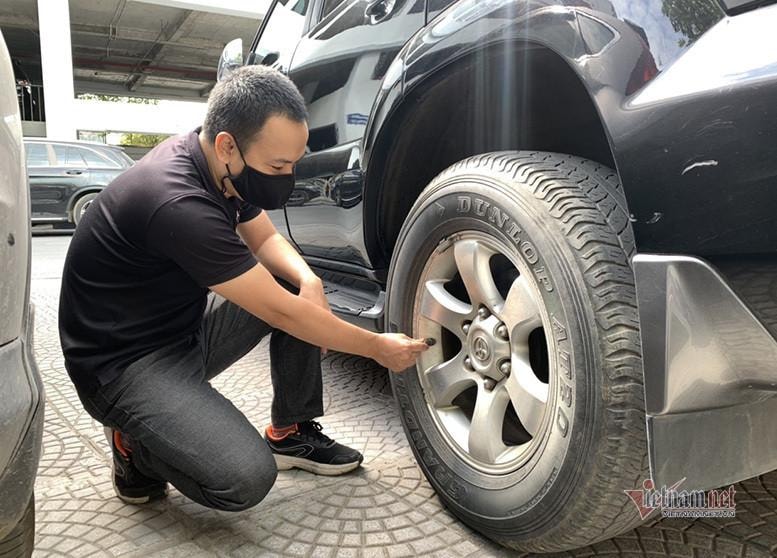 |
Drivers should check tire pressure and add extra pressure (if needed) before departure. Photo: Hoang Hiep |
Automotive experts also point out that unevenly underinflated tires can cause steering instability, which is very dangerous and inconvenient when driving on the road. In addition, underinflated tires cause the sidewalls to bend excessively, potentially damaging the internal structure of the tire carcass, making them very susceptible to punctures or blowouts when encountering sharp objects.
In general, driving with underinflated tires, whether on one or more wheels, should be avoided as it will cause the driver to suffer double losses.
Experts offer the following advice to car owners:
- Regularly check tire pressure before departure, ensuring it is within the manufacturer's recommended specifications. These specifications are usually found in the vehicle's owner's manual or printed on the windshield, running boards, etc., depending on the car. Generally, the recommended tire pressure for passenger cars is around 2.1-2.4 bar.
- If possible, equip your vehicle with a tire pressure monitoring system (TPMS) to obtain the most accurate pressure readings. Also, always keep a mini air pump in your car so you can add air immediately if your tires are low.
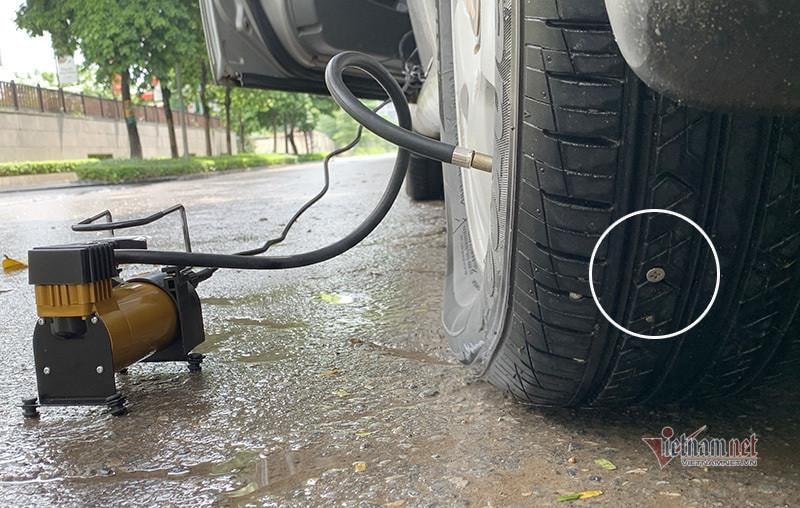 |
A flat tire caused by a nail is a fairly common occurrence. Photo: Hoang Hiep |
- If you discover a nail has punctured your tire, absolutely do not try to remove the nail yourself, as this will cause your tire to lose air even faster. Instead, use a mini pump to inflate the tire and then go to the nearest tire shop for repair.
- If your tires are excessively worn or past their expiration date, don't hesitate to replace them with new ones for peace of mind on the road. Car tires should only be used continuously for less than 5 years and no more than 10 years after the manufacturing date.
- Pay attention to both your spare tire and your tire changing kit, and make sure they are both in good working order.


